
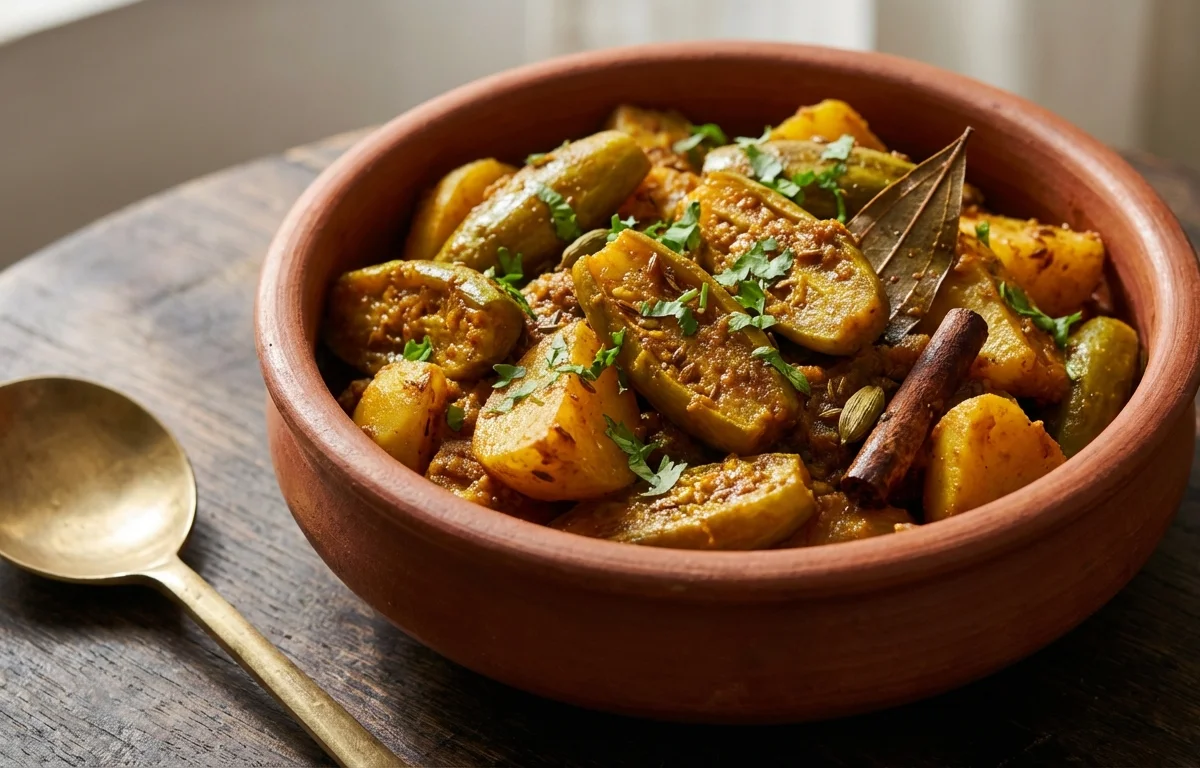
Aloo Potala Kasa
A homestyle Bengali dry curry where pointed gourd and potatoes are cooked with onion, ginger, tomato, and warm spices until the masala clings to every piece. It is simple, comforting, and perfect with rice or roti.
For 4 servings
- prep · ~15 min
Prep the vegetables and spices.
1.Peel the potato and cut it into medium wedges.2.Scrape the potol lightly, trim the ends, and cut each one lengthwise into halves.3.Chop the onion and tomato, grate the ginger, and slit the green chili. - fry · ~8 min
Brown the potato and potol.
1.Heat mustard oil in a kadai over medium heat until it just begins to smoke lightly.2.Add the potato and potol and fry for 6 to 8 minutes, stirring now and then, until lightly golden on the edges.3.Take them out to a plate and keep aside.TIPLight browning gives the finished kasa better flavor and helps the vegetables hold their shape. - temper · ~1 min
Temper the oil.
In the same kadai, add bay leaf and cumin seeds. Let the cumin sizzle for a few seconds until fragrant.
- saute · ~6 min
Cook the onion and ginger.
1.Add the chopped onion and cook until soft and light golden, about 5 minutes.2.Add the grated ginger and slit green chili.3.Cook for 1 minute until the raw smell fades. - saute · ~5 min
Cook the tomato and powdered spices.
1.Add the chopped tomato and cook until soft and pulpy.2.Add turmeric powder, red chili powder, cumin powder, coriander powder, salt, and sugar.3.Mix well and cook for 2 to 3 minutes until the masala looks thick and glossy.TIPIf the spices start sticking, splash in a spoonful of water instead of adding extra oil. - simmer · ~12 min
Cook the vegetables in the masala.
1.Return the fried potato and potol to the kadai.2.Mix well so the masala coats every piece.3.Add water, cover, and cook on low heat until the vegetables are tender and the moisture reduces. - saute · ~4 min
Dry the masala and finish the kasa.
Remove the lid and cook uncovered for 3 to 4 minutes, stirring gently, until the masala clings to the vegetables. Sprinkle garam masala and mix once.
- garnish
Garnish with cilantro.
- serve
Serve hot with rice or roti.
What to keep in mind.
7 tips from the recipe — small details that make a real difference to the final dish.
- 1Heat the mustard oil until it just smokes, then lower the heat; this mellows its sharp raw taste without losing the Bengali character.
- 2Lightly scrape the potol instead of peeling deeply so it keeps its shape and absorbs masala better.
- 3Fry the potato and potol only until the edges turn pale golden; over-frying can make them tough by the end.
- 4Cook the onion to light golden, not dark brown, so the gravy stays sweet and homestyle rather than bitter.
- 5If the masala catches while the tomato cooks, loosen it with a spoonful of water instead of extra oil.
- 6For the right kasa texture, uncover at the end and stir gently until the masala coats each piece with almost no loose liquid.
- 7This dish tastes even better after a short rest, as the potato and potol soak up the ginger-cumin masala.
Adapt it for your goals.
No-onion
Skip the onion and use a little extra tomato and ginger for a lighter, simpler everyday version with a cleaner spice profile.
low oilLow-oil
Shallow-brown the vegetables in less oil and add small splashes of water while bhunoing the masala; useful for a lighter weeknight curry.
spicierSpicier
Increase green chili or red chili powder slightly for a hotter kasa that pairs especially well with plain steamed rice.
with panch phoronWith-panch-phoron
Replace cumin seeds with panch phoron for a more aromatic Bengali tempering and a slightly more complex finish.
Why this is on our healthy list.
Vegetable-Forward Side Dish
Pointed gourd, tomato, onion, and potato make this a hearty sabzi with a good mix of vegetables rather than a heavy cream-based curry.
Digestive Spice Support
Ginger, cumin, and coriander are traditional spices often used to add warmth and make vegetable dishes feel easier to digest.
Plant-Based and Dairy-Free
This recipe relies on vegetables, spices, and mustard oil, making it suitable for those looking for a simple dairy-free plant-based curry.
Frequently asked questions
It is strongly recommended for this dish. The initial frying adds flavor, helps the vegetables stay intact, and gives the finished curry its proper dry kasa texture.



-curry.webp)
.webp)