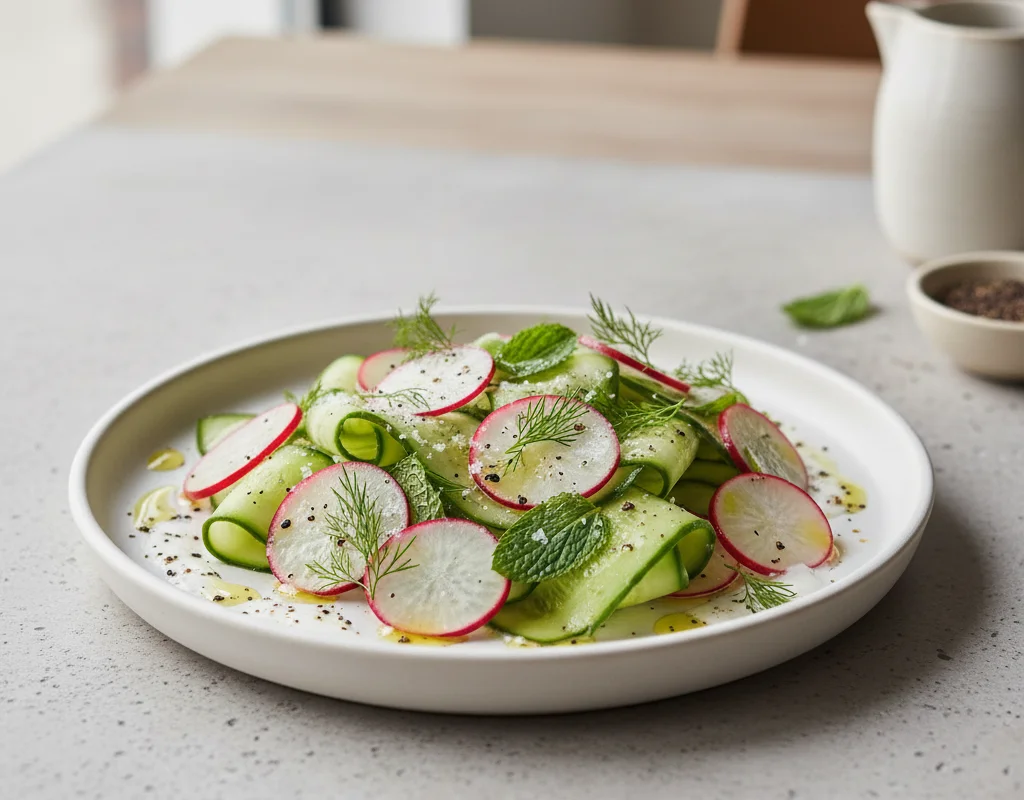
Other1 recipes
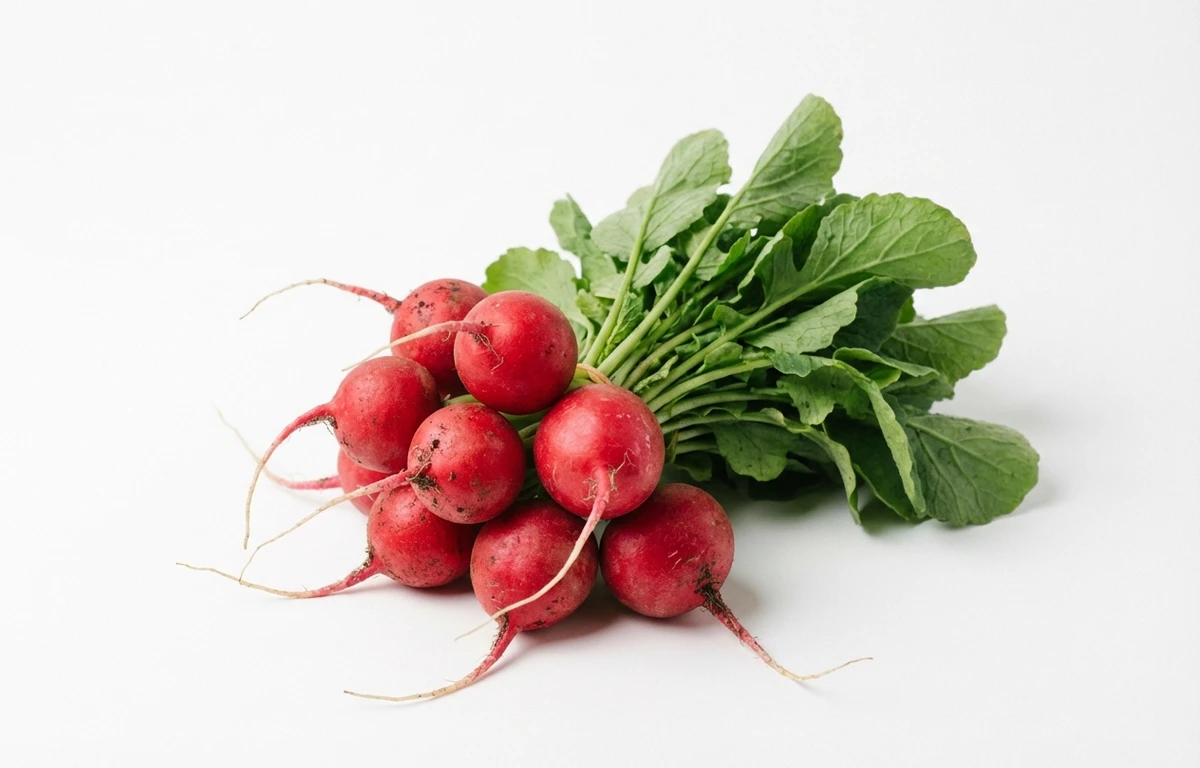
radishes.
VegetarianVeganGluten-freeDairy-freeNut-freePeanut-freeSoy-freeEgg-freeShellfish-freeHoney-freeAlcohol-freeHalalKosher
ALSO KNOWN AS
red radishesgarden radishestable radishes
SERVING
CALORIES
16
PROTEIN
0.68g
CARBS
3.4g
FAT
0.10g
FIBER
1.6g
This ingredient is flagged as naturally gluten-free. Per 100 g, it provides 1.3 µg of vitamin K.
NUTRITION PROFILE · per 100 g
Everything in this ingredient.
MACRONUTRIENTS
Calories16kcal—
Protein0.68g1%
Carbohydrates3.4g1%
Fiber1.6g6%
Sugar1.9g4%
Total fat0.10g0%
Saturated fat0.03g0%
Trans fat0g—
Cholesterol0mg0%
Water95.3g—
MINERALS
Sodium39mg2%
Potassium233mg5%
Calcium25mg2%
Iron0.34mg2%
Magnesium10mg2%
Phosphorus20mg2%
Zinc0.28mg3%
Copper0.05mg6%
Manganese0.07mg3%
Selenium0.60µg1%
VITAMINS
Vitamin A0µg0%
Vitamin C14.8mg16%
Vitamin D0µg0%
Vitamin E0mg0%
Vitamin K1.3µg1%
Thiamin (B1)0.01mg1%
Riboflavin (B2)0.04mg3%
Niacin (B3)0.25mg2%
Pantothenic acid (B5)0.17mg3%
Vitamin B60.07mg4%
Folate (B9)25µg6%
Vitamin B120µg0%
%DV based on a 2,000 cal diet. Source: USDA FoodData Central. A dash in the %DV column means there’s no established Daily Value for that nutrient.
MEASUREMENT CONVERSIONS
How much is what.
1 cup116g
1 oz28.4g
1 lb453.6g
1 piece10g
HEALTH BENEFITS
Why eat it.
- ✓Contains natural nitrates that may improve blood flow
- ✓Acts as a natural diuretic to help flush toxins
COOKING TIPS
In the kitchen.
- 1Soak sliced radishes in ice water for 20 minutes to increase crispness and reduce spiciness
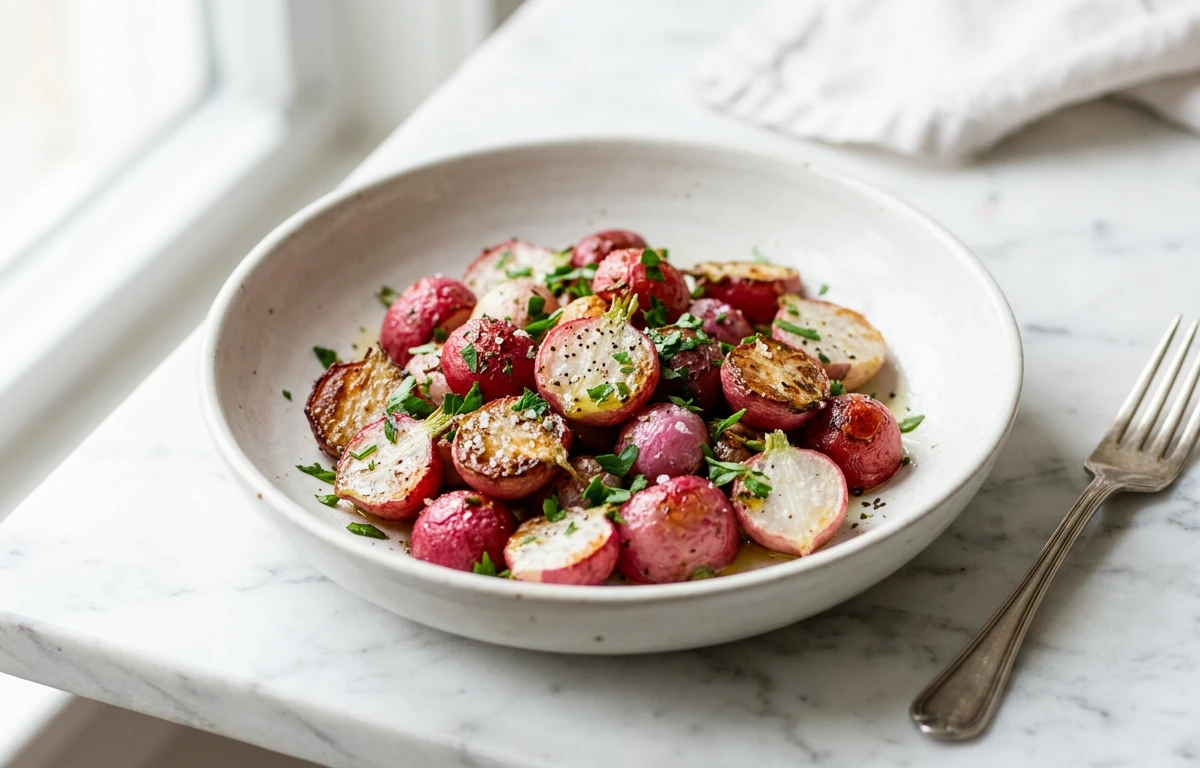
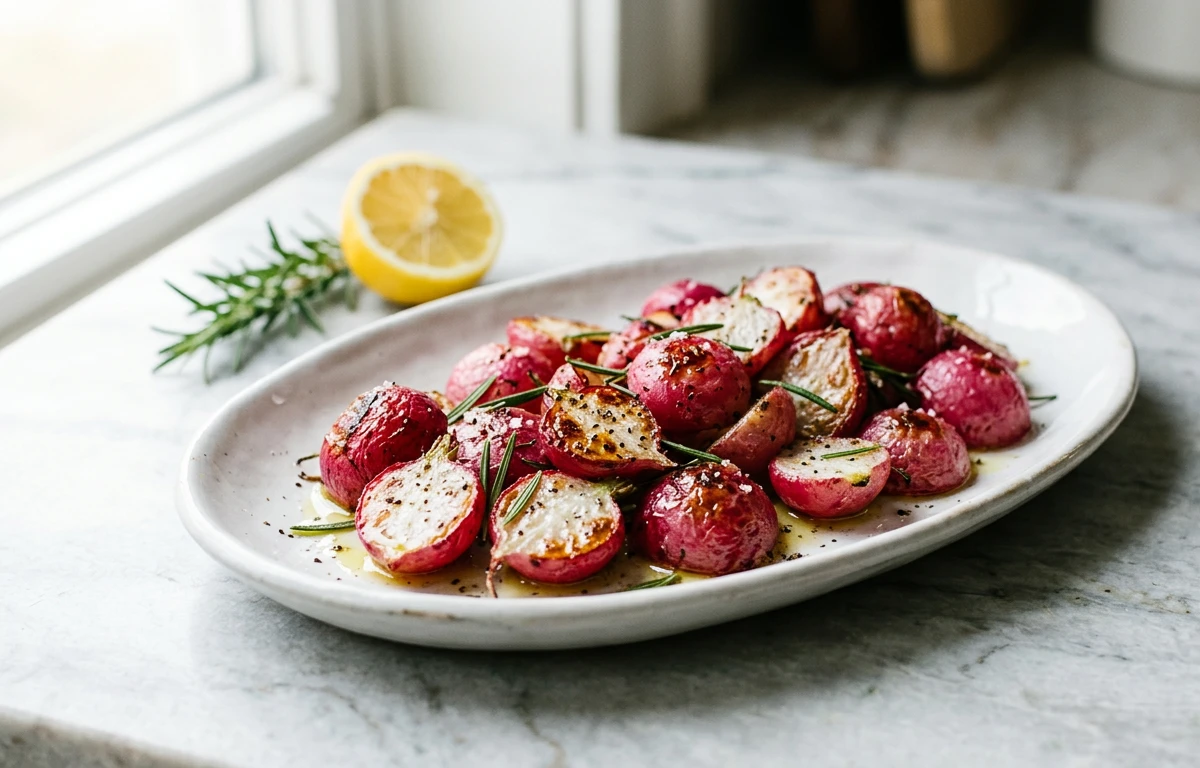
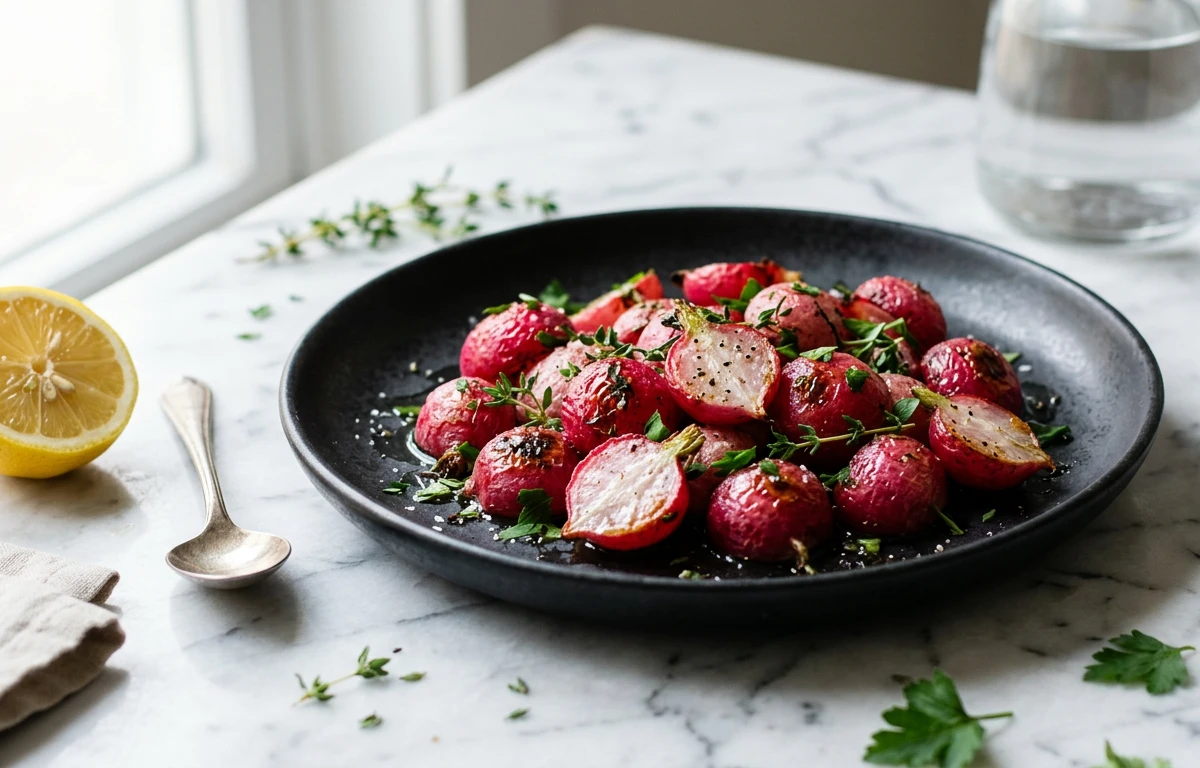
- 2Try roasting them with olive oil and salt to mellow their sharp flavor into a sweet, turnip-like taste
- 3Use the green tops in pestos or sautés as they are fully edible and nutritious
STORAGE
Keep it fresh.
- Remove the green tops immediately as they draw moisture from the root
- Store in a sealed plastic bag in the refrigerator crisper drawer
- For maximum crispness, store trimmed radishes submerged in a bowl of water in the fridge
FAQ
Frequently asked questions.
How long do radishes last in the fridge?
If the greens are removed, radishes can stay fresh and crisp for 1 to 2 weeks in a plastic bag in the refrigerator.
Can you eat radish leaves?
Yes, radish greens are edible and have a peppery flavor similar to arugula. They can be used in salads, pestos, or sautéed.
How do I pick the best radishes?
Look for radishes that are firm to the touch, have smooth skin without cracks, and bright green, perky leaves if they are still attached.
Why are some radishes spicier than others?
The spiciness comes from isothiocyanates. Radishes grown in hotter weather or left in the ground longer tend to be much sharper.
What is a good substitute for red radishes?
Daikon radish, jicama, or water chestnuts provide a similar crunch, while turnips can substitute for the flavor when cooked.
Can radishes be frozen?
Raw radishes do not freeze well because of their high water content. If you must freeze them, blanch them first, though they will lose their signature crunch.
How do you reduce the 'bite' or heat of a radish?
Peeling the radish or soaking slices in cold water for 30 minutes can significantly reduce the peppery heat.
Are radishes considered a root vegetable?
Yes, the radish is a root vegetable from the Brassicaceae family, which also includes cabbage and broccoli.
Are radishes allowed on a keto diet?
Yes, radishes are very low in net carbs (about 2g per 100g), making them an excellent keto-friendly potato substitute when roasted.
RECIPES
Cook with radishes.
1 recipes · sorted by what’s quick