Protein10 recipes
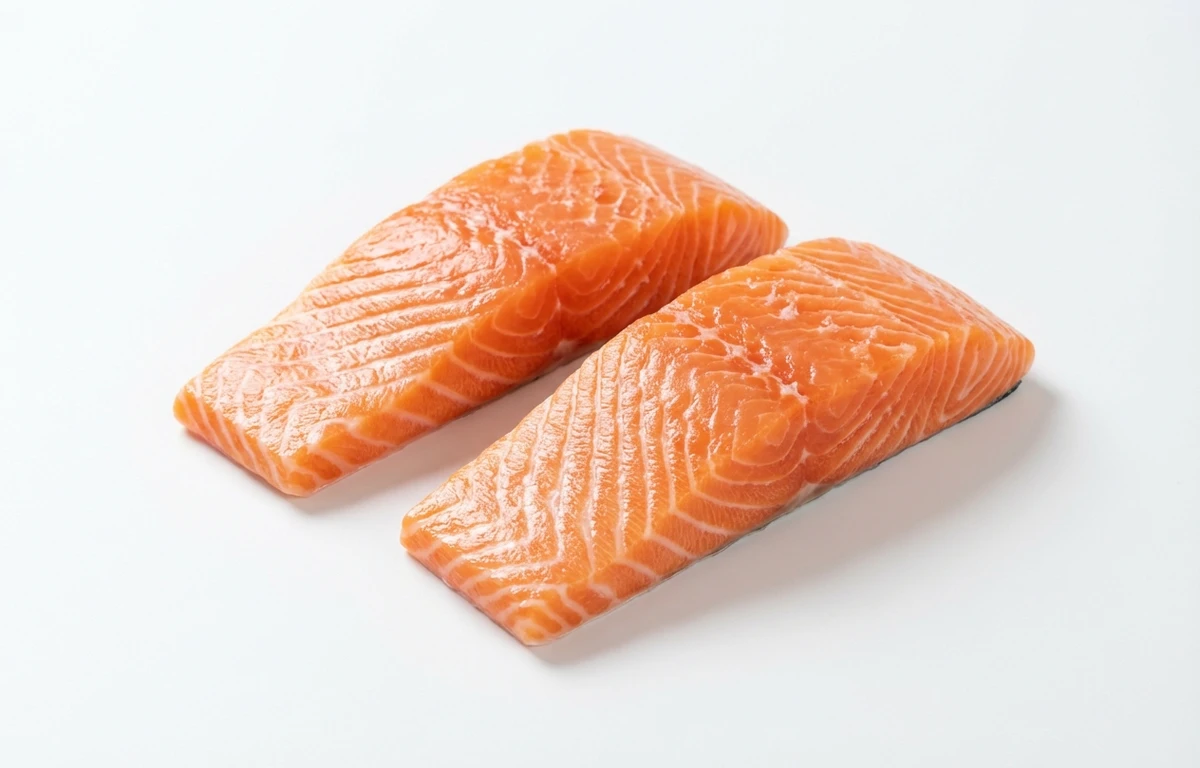
salmon fillets.
VegetarianVeganGluten-freeDairy-freeNut-freePeanut-freeSoy-freeEgg-freeShellfish-freeHoney-freeAlcohol-free
ALSO KNOWN AS
salmon filletatlantic salmon filletsraw salmon fillets
SERVING
CALORIES
208
PROTEIN
20.4g
CARBS
0g
FAT
13.4g
FIBER
0g
NUTRITION PROFILE · per 100 g
Everything in this ingredient.
MACRONUTRIENTS
Calories208kcal—
Protein20.4g41%
Carbohydrates0g0%
Fiber0g0%
Sugar0g0%
Total fat13.4g17%
Saturated fat3.1g16%
Trans fat0g—
Cholesterol55mg18%
Water64.8g—
MINERALS
Sodium59mg3%
Potassium363mg8%
Calcium9.0mg1%
Iron0.30mg2%
Magnesium27mg6%
Phosphorus243mg19%
Zinc0.40mg4%
Copper0.05mg6%
Manganese0.01mg0%
Selenium24.4µg44%
VITAMINS
Vitamin A12µg1%
Vitamin C0mg0%
Vitamin D11µg55%
Vitamin E1.1mg7%
Vitamin K0.10µg0%
Thiamin (B1)0.20mg17%
Riboflavin (B2)0.10mg8%
Niacin (B3)8.7mg54%
Pantothenic acid (B5)1.6mg32%
Vitamin B60.60mg35%
Folate (B9)25µg6%
Vitamin B123.2µg133%
%DV based on a 2,000 cal diet. Source: USDA FoodData Central. A dash in the %DV column means there’s no established Daily Value for that nutrient.
MEASUREMENT CONVERSIONS
How much is what.
1 oz28.4g
1 lb453.6g
1 piece170g
HEALTH BENEFITS
Why eat it.
- ✓Rich in Omega-3 fatty acids for heart health
- ✓High-quality protein source for muscle repair
- ✓Excellent source of B vitamins for energy metabolism
- ✓Contains astaxanthin, a powerful antioxidant
- ✓Good source of potassium to help manage blood pressure
COOKING TIPS
In the kitchen.
- 1Cook to an internal temperature of 145°F (63°C) for safety and moisture
- 2Start skin-side down in a hot pan to achieve a crispy texture
- 3Let the fillet rest for a few minutes after cooking to retain juices
STORAGE
Keep it fresh.
- Store in the coldest part of the refrigerator for 1-2 days maximum
- Freeze in airtight vacuum-sealed bags for up to 3 months for best quality
- Keep raw salmon separate from cooked foods to prevent cross-contamination
FAQ
Frequently asked questions.
How long does raw salmon last in the fridge?
Raw salmon fillets should be consumed within 1 to 2 days of purchase if kept refrigerated.
Can I freeze salmon fillets?
Yes, salmon freezes well. Wrap it tightly in plastic wrap and then aluminum foil or a freezer bag to prevent freezer burn.
How can I tell if salmon has gone bad?
Spoiled salmon will have a strong 'fishy' or ammonia-like smell, a slimy texture, or dull, discolored flesh.
What is a good substitute for salmon?
Arctic char or rainbow trout are the best substitutes as they have similar fat content and texture.
Should I leave the skin on when cooking?
Leaving the skin on provides a safety layer between the flesh and the heat, helping to keep the fish moist and flavorful.
Is salmon high in mercury?
Salmon is generally considered low in mercury compared to larger predatory fish like tuna or swordfish.
How do I remove the pin bones?
Use clean tweezers or needle-nose pliers to pull the small, clear bones out in the direction they are pointing.
What is the white stuff that comes out of salmon when cooking?
That is albumin, a harmless protein that coagulates and surfaces when the muscle fibers contract during heating.
RECIPES
Cook with salmon fillets.
10 recipes · sorted by what’s quick