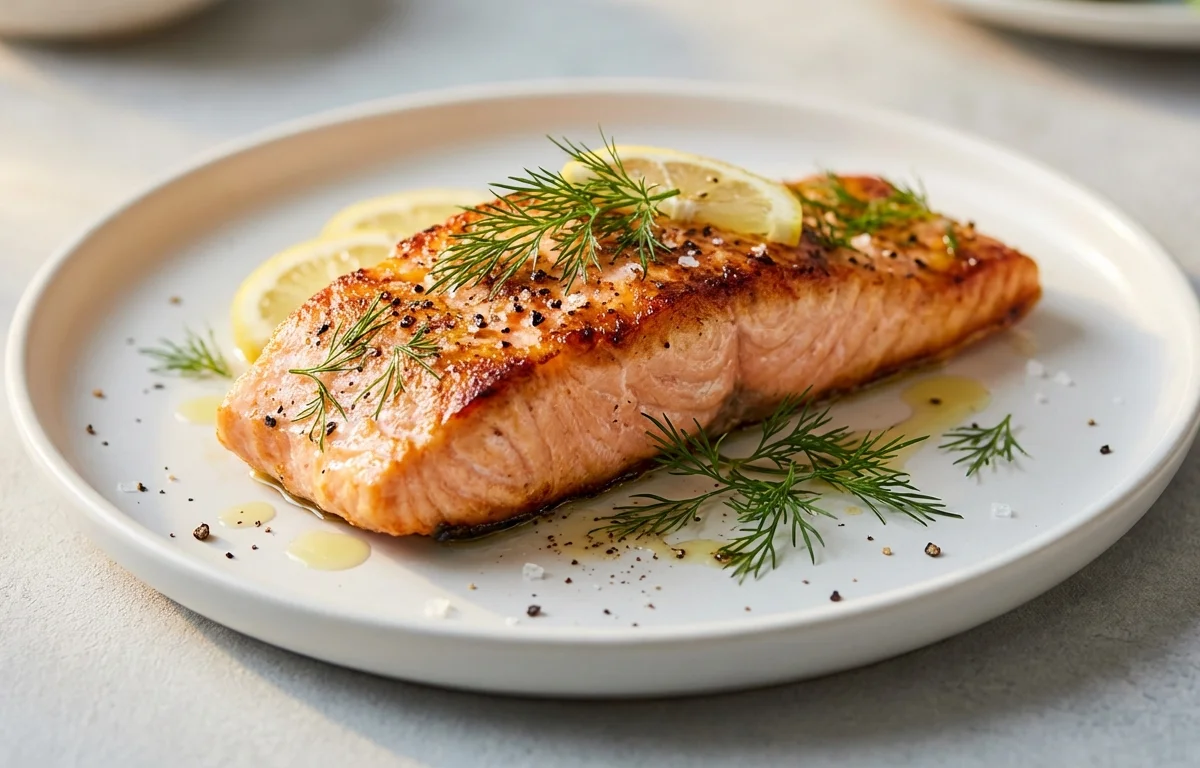
Lemon Dill Salmon
Bright, buttery salmon fillets baked until flaky and topped with a fragrant lemon-dill sauce. The citrus and fresh herbs cut through the richness of the fish perfectly. A quick, elegant dinner that comes together in under 30 minutes.
For 4 servings
- prep
Preheat the oven and prepare the baking dish.
Preheat the oven to 400°F (200°C). Lightly grease a medium baking dish with a little butter or oil.
- mix
Make the lemon-dill butter sauce.
1.In a small bowl, combine melted butter, lemon juice, lemon zest, minced garlic, and half of the chopped dill.2.Whisk well until everything is blended together. - prep
Season the salmon fillets.
Pat the salmon fillets dry with a paper towel. Place them in the prepared baking dish, skin-side down. Season evenly with salt and freshly ground black pepper.
TIPPatting the fish dry helps the sauce cling better and prevents steaming. - bake · ~13 min
Bake the salmon with the lemon-dill sauce.
1.Pour the lemon-dill butter mixture evenly over the salmon fillets.2.Place the dish in the preheated oven and bake for 12 to 15 minutes.3.Check for doneness; the fish should flake easily with a fork and reach an internal temperature of 145°F (63°C). - garnish
Garnish with fresh dill and lemon slices.
Remove the dish from the oven. Spoon any pan juices over the top of the fillets, then sprinkle with the remaining fresh dill and arrange the lemon slices around the fish.
- serve
Serve immediately.
Transfer the salmon to plates and serve hot with your choice of sides.
What to keep in mind.
5 tips from the recipe — small details that make a real difference to the final dish.
- 1Pat the salmon fillets dry thoroughly to ensure the butter sauce clings and the fish sears, not steams.
- 2Leave the skin on during baking; it acts as a protective barrier and crisps up if you finish under the broiler.
- 3Use a fish spatula to transfer fillets—they flake easily once cooked and the skin can stick.
- 4Let the salmon rest for 2 minutes after baking so the juices redistribute and the fillets stay moist.
- 5Spoon the pan juices over the fillets just before serving for an extra hit of lemon-butter flavor.
Adapt it for your goals.
Low-oil
Replace the butter with olive oil or a dairy-free margarine for a lighter fat profile, perfect for those watching saturated fat.
herb swapHerb-swap
Substitute dill with fresh parsley, chives, or tarragon for a different herbal note—parsley keeps it bright, tarragon adds a mild anise flavor.
cajun styleCajun-style
Add 1 teaspoon of Cajun seasoning to the butter sauce and skip the dill for a spicy, smoky twist that pairs well with rice and greens.
dairy freeDairy-free
Use a high-quality vegan butter or coconut oil in place of butter to keep the recipe dairy-free while retaining richness.
sheet pan mealSheet-pan-meal
Add asparagus or green beans to the baking dish in the last 8 minutes of cook time for a complete one-pan dinner.
Why this is on our healthy list.
Rich in Omega-3s
Salmon is one of the best sources of omega-3 fatty acids, which support heart health and reduce inflammation.
High-Quality Protein
A single serving of salmon provides about 30 grams of complete protein, essential for muscle repair and satiety.
Vitamin D Source
Salmon is one of the few natural food sources of vitamin D, important for bone health and immune function.
Antioxidant Boost from Herbs
Fresh dill and lemon zest provide antioxidants and vitamin C, helping to protect cells from oxidative stress.
Frequently asked questions
Yes, but thaw them completely in the refrigerator overnight and pat very dry before seasoning to avoid excess moisture in the dish.