Condiment10 recipes
salsa.
VegetarianVeganGluten-freeDairy-freeNut-freePeanut-freeSoy-freeEgg-freeShellfish-freeHoney-freeAlcohol-free
ALSO KNOWN AS
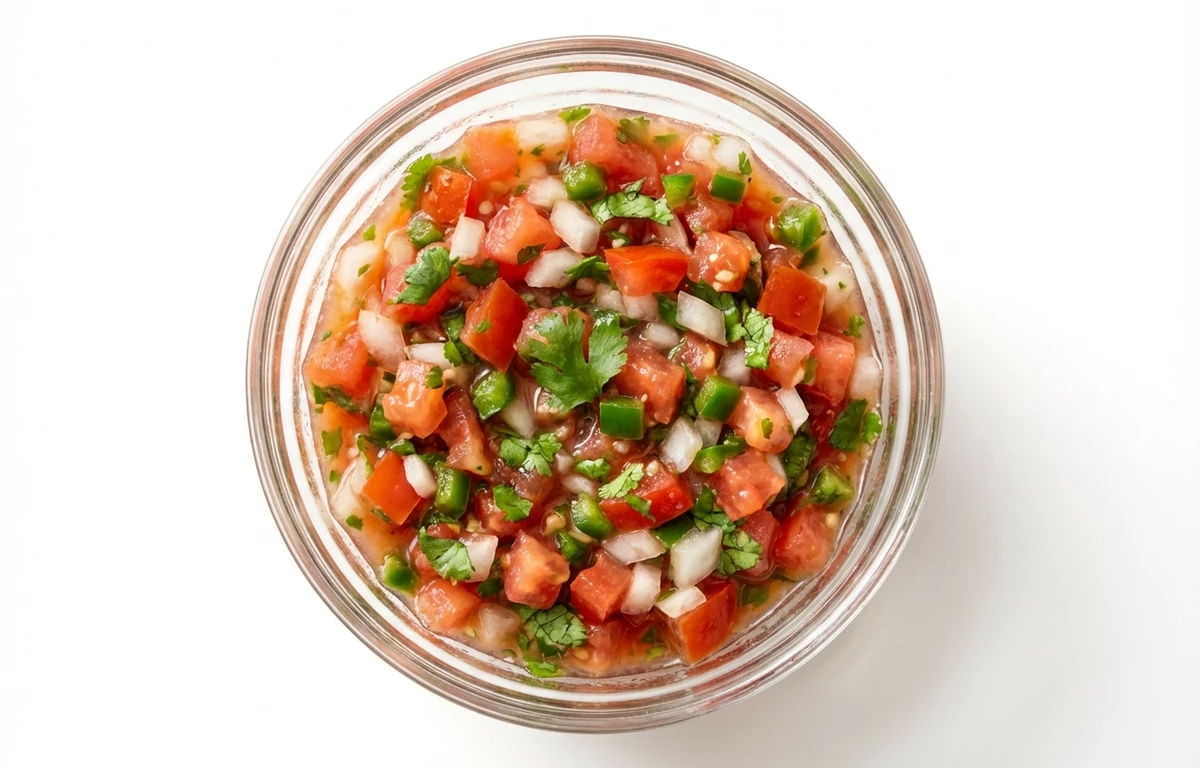
tomato salsa
SERVING
CALORIES
29
PROTEIN
1.4g
CARBS
6.7g
FAT
0.19g
FIBER
1.8g
NUTRITION PROFILE · per 100 g
Everything in this ingredient.
MACRONUTRIENTS
Calories29kcal—
Protein1.4g3%
Carbohydrates6.7g2%
Fiber1.8g6%
Sugar3.8g8%
Total fat0.19g0%
Saturated fat0.03g0%
Cholesterol0mg0%
Water89.3g—
MINERALS
Sodium656mg29%
Potassium258mg5%
Calcium28mg2%
Iron0.42mg2%
Magnesium15.2mg4%
Phosphorus32mg3%
Zinc0.20mg2%
Copper0.07mg8%
Manganese0.11mg5%
VITAMINS
Vitamin A24µg3%
Vitamin C10.5mg12%
Vitamin D0µg0%
Vitamin E1.2mg8%
Vitamin K4.2µg4%
Thiamin (B1)0.04mg3%
Riboflavin (B2)0.05mg4%
Niacin (B3)1.1mg7%
Pantothenic acid (B5)0.20mg4%
Vitamin B60.18mg11%
%DV based on a 2,000 cal diet. Source: USDA FoodData Central. A dash in the %DV column means there’s no established Daily Value for that nutrient.
MEASUREMENT CONVERSIONS
How much is what.
1 cup240g
1 tablespoon15.8g
1 teaspoon5.3g
1 oz28.4g
1 lb453.6g
1 ml1.1g
1 liter1050g
1 piece50g
HEALTH BENEFITS
Why eat it.
- ✓Rich in antioxidants like lycopene from tomatoes and vitamin C from peppers and lime juice, which help combat oxidative stress.
- ✓Low in calories and fat, making it a healthy alternative to creamy sauces and dressings.
- ✓Contains capsaicin from chili peppers, which may boost metabolism and provide anti-inflammatory benefits.
- ✓Can contribute to daily vegetable intake and hydration due to its high content of tomatoes, onions, and peppers.
COOKING TIPS
In the kitchen.
- 1Use as a classic dip for tortilla chips or a topping for tacos, nachos, and quesadillas.
- 2Incorporate into marinades for chicken, fish, or steak to add moisture and a zesty flavor before grilling or baking.
- 3Stir into scrambled eggs, omelets, or breakfast burritos for a vibrant start to the day.
- 4Use as a simple, healthy sauce for baked potatoes, grilled vegetables, or mixed into rice and beans.
STORAGE
Keep it fresh.
- Store fresh, homemade salsa (pico de gallo) in an airtight container in the refrigerator for up to 5 days.
- Keep opened jars of commercially produced salsa refrigerated and consume within 1-2 weeks for best quality.
- Unopened jarred salsa should be stored in a cool, dark place like a pantry and is typically shelf-stable for over a year; always check the expiration date.
FAQ
Frequently asked questions.
Is salsa healthy?
Yes, salsa is a highly nutritious condiment that is naturally low in calories and fat. It is packed with vegetables like tomatoes, onions, and peppers, providing essential vitamins and antioxidants like lycopene and Vitamin C.
Is salsa good for weight loss?
Salsa is an excellent food for weight loss because it provides a lot of flavor for very few calories (about 29 calories per 100g). It can be used as a healthy substitute for high-calorie dressings, mayonnaise, or creamy dips.
Is salsa vegan and gluten-free?
Most traditional salsas are naturally vegan and gluten-free as they are made from vegetables, citrus, and spices. However, always check the labels of store-bought brands for added thickeners or stabilizers that might contain gluten or animal-derived ingredients.
Is salsa keto-friendly?
Salsa is generally keto-friendly when consumed in moderation, containing roughly 6.7g of carbs per 100g. Be careful with store-bought varieties, as some brands add sugar which can significantly increase the carb count.
What are the main health benefits of salsa?
Salsa is rich in lycopene from tomatoes, which supports heart health, and Vitamin C from peppers, which boosts the immune system. Additionally, the capsaicin in chili peppers may help increase metabolism and provide anti-inflammatory effects.
How long does salsa last in the refrigerator?
Fresh, homemade salsa typically lasts 3 to 5 days in the fridge. Commercially processed, jarred salsa can last between 2 to 4 weeks once opened, provided it is kept tightly sealed and refrigerated.
Can I freeze salsa?
You can freeze salsa, but the texture will change and become much more watery once thawed. Frozen salsa is best used for cooking in soups, stews, or casseroles rather than as a fresh dip for chips.
How can I tell if salsa has gone bad?
Signs of spoilage include a sour or off-smell, visible mold growth, or an unusually dark or brownish color. If the salsa appears fizzy or the jar lid is bulging, it has likely fermented and should be discarded.
Is salsa high in sodium?
While fresh salsa is naturally low in sodium, many store-bought versions use high amounts of salt as a preservative. If you are monitoring your salt intake, look for 'low-sodium' labels or make your own at home to control the ingredients.
What can I use salsa for besides a dip?
Salsa is a versatile ingredient that can be used as a marinade for meats, a topping for baked potatoes or eggs, or mixed into rice and beans. It also works well as a low-calorie salad dressing or a flavor base for slow-cooker chicken.
RECIPES
Cook with salsa.
10 recipes · sorted by what’s quick