Other1 recipes
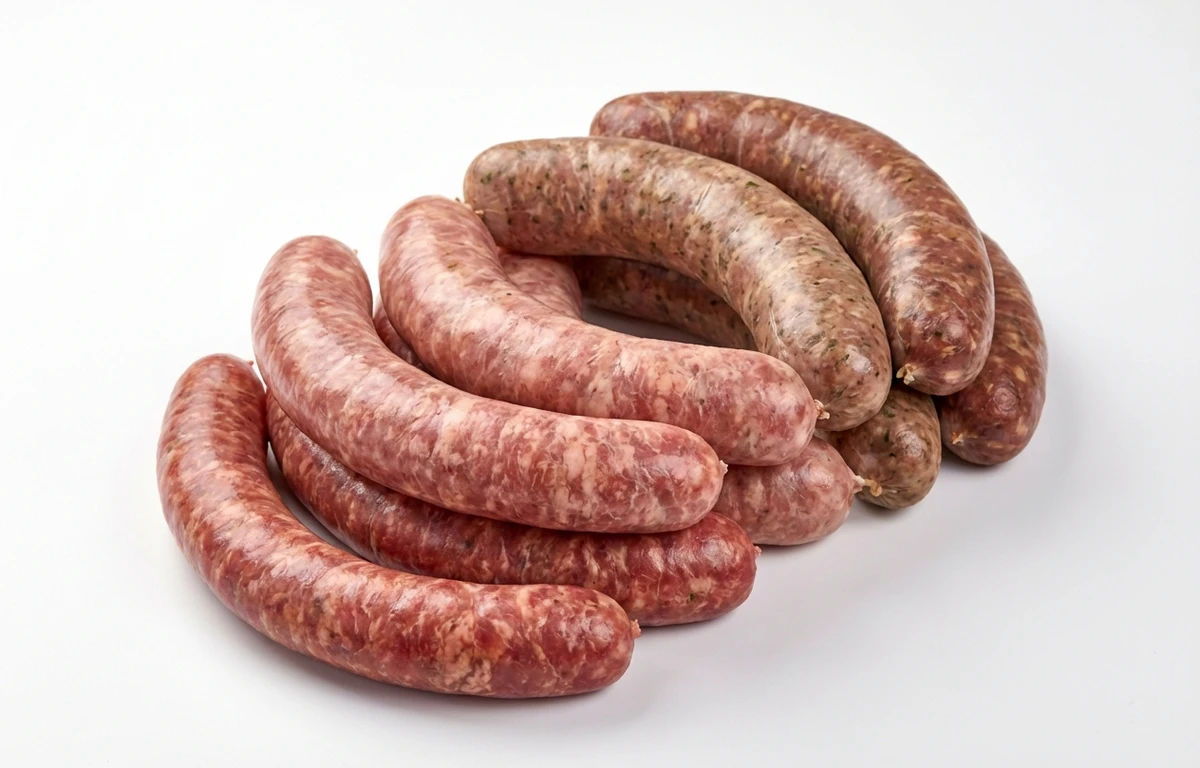
sausages.
VegetarianVeganGluten-freeDairy-freeNut-freePeanut-freeSoy-freeShellfish-free
ALSO KNOWN AS
linkswurstbanger
SERVING
CALORIES
309
PROTEIN
12g
CARBS
0.94g
FAT
28.2g
FIBER
0g
Per 100 g, it provides 0 µg of vitamin K.
NUTRITION PROFILE · per 100 g
Everything in this ingredient.
MACRONUTRIENTS
Calories309kcal—
Protein12g24%
Carbohydrates0.94g0%
Fiber0g0%
Sugar0.94g2%
Total fat28.2g36%
Saturated fat9.3g47%
Trans fat0.23g—
Cholesterol61mg20%
Water56.5g—
MINERALS
Sodium827mg36%
Potassium483mg10%
Calcium11mg1%
Iron0.59mg3%
Magnesium11mg3%
Phosphorus157mg13%
Zinc1.3mg12%
Copper0.18mg20%
Manganese0.01mg0%
Selenium18.3µg33%
VITAMINS
Vitamin A0µg0%
Vitamin C0mg0%
Vitamin D1.1µg6%
Vitamin E0.25mg2%
Vitamin K0µg0%
Thiamin (B1)0.21mg18%
Riboflavin (B2)0.18mg14%
Niacin (B3)2.8mg18%
Pantothenic acid (B5)0.54mg11%
Vitamin B60.18mg11%
Folate (B9)1.0µg0%
Vitamin B120.66µg28%
%DV based on a 2,000 cal diet. Source: USDA FoodData Central. A dash in the %DV column means there’s no established Daily Value for that nutrient.
MEASUREMENT CONVERSIONS
How much is what.
1 oz28.4g
1 lb453.6g
1 piece55g
HEALTH BENEFITS
Why eat it.
- ✓Rich source of complete protein, essential for muscle repair and growth.
- ✓Provides significant amounts of B vitamins, particularly B12 for nerve function and B3 (niacin) for energy metabolism.
COOKING TIPS
In the kitchen.
- 1To prevent casings from bursting, cook sausages slowly over medium-low heat rather than high heat.
- 2Avoid piercing the casing while cooking to retain the flavorful juices and fat, which keeps the sausage moist.
- 3For even cooking, consider simmering sausages in water or beer for 5-10 minutes before grilling or pan-searing to finish.
- 4Ensure sausages are cooked to a safe internal temperature, typically 160°F (71°C) for pork and beef, and 165°F (74°C) for poultry.
STORAGE
Keep it fresh.
- Store fresh, uncooked sausages in the refrigerator at or below 40°F (4°C) and use within 1-2 days.
- For longer storage, freeze sausages for up to 2 months. Wrap them tightly in plastic wrap or a freezer bag to prevent freezer burn.
- Cooked sausages can be safely stored in an airtight container in the refrigerator for 3-4 days.
FAQ
Frequently asked questions.
Are sausages healthy?
Sausages provide high-quality protein, B vitamins, and essential minerals like iron and zinc. However, they are often high in saturated fat (28.23g per 100g) and sodium, so they should be consumed in moderation as part of a balanced diet.
How much protein is in sausages?
Sausages contain approximately 12g of protein per 100g. This is a complete protein source, providing all essential amino acids necessary for muscle repair, growth, and overall body maintenance.
Are sausages keto-friendly?
Yes, sausages are generally keto-friendly as they are high in fat and very low in carbohydrates, containing less than 1g of carbs per 100g. However, always check the label for fillers like breadcrumbs or cornstarch which can increase the carb count.
Are sausages gluten-free?
Not all sausages are gluten-free. Many varieties use breadcrumbs or rusk as a binder or filler, which contains wheat. If you have a gluten intolerance, look for sausages specifically labeled 'gluten-free'.
How do you know when sausages are fully cooked?
The safest method is using a meat thermometer to ensure the internal temperature reaches 160°F (71°C) for pork/beef or 165°F (74°C) for poultry. Visually, the meat should be firm, the juices should run clear, and there should be no pinkness in the center.
How long do sausages last in the fridge?
Raw sausages should be cooked or frozen within 1 to 2 days of purchase. Once cooked, sausages can be safely stored in an airtight container in the refrigerator for 3 to 4 days.
Can you freeze sausages?
Yes, sausages freeze very well. Raw sausages maintain their best quality for 1 to 2 months in the freezer, while cooked sausages can be frozen for up to 3 months. Always thaw them in the refrigerator before reheating or cooking.
RECIPES
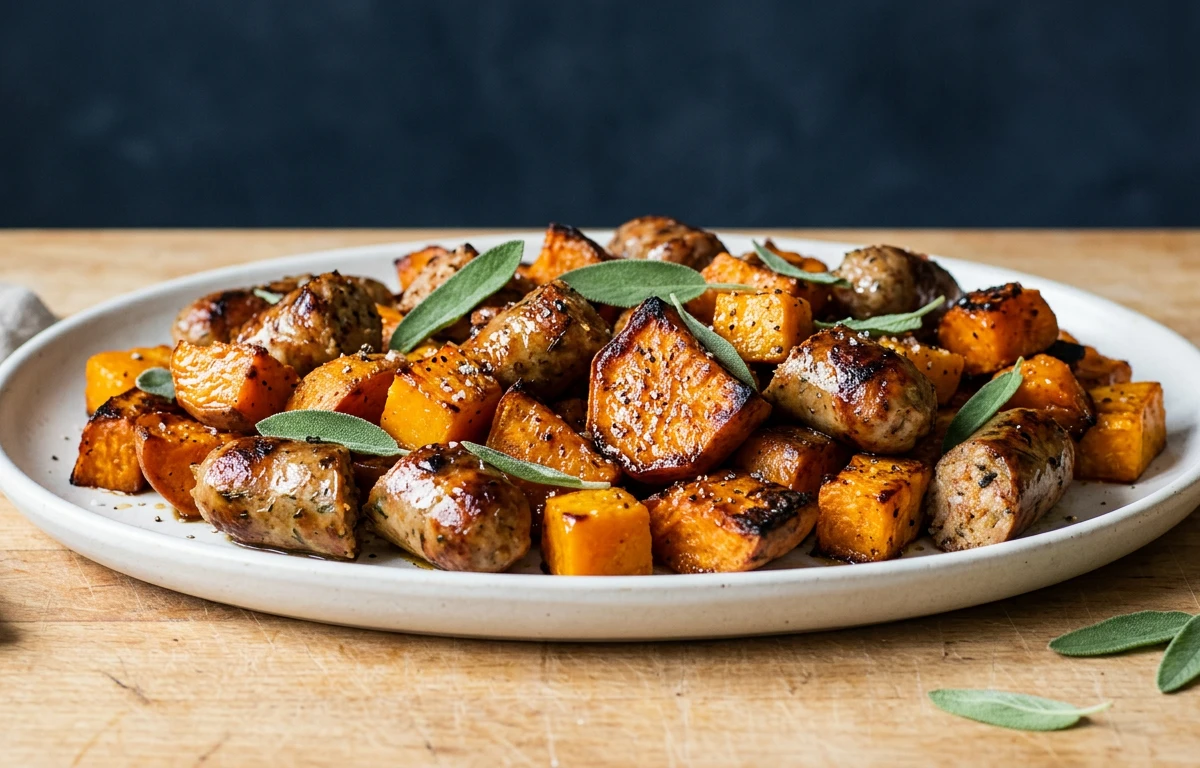
Cook with sausages.
1 recipes · sorted by what’s quick