Vegetable10 recipes
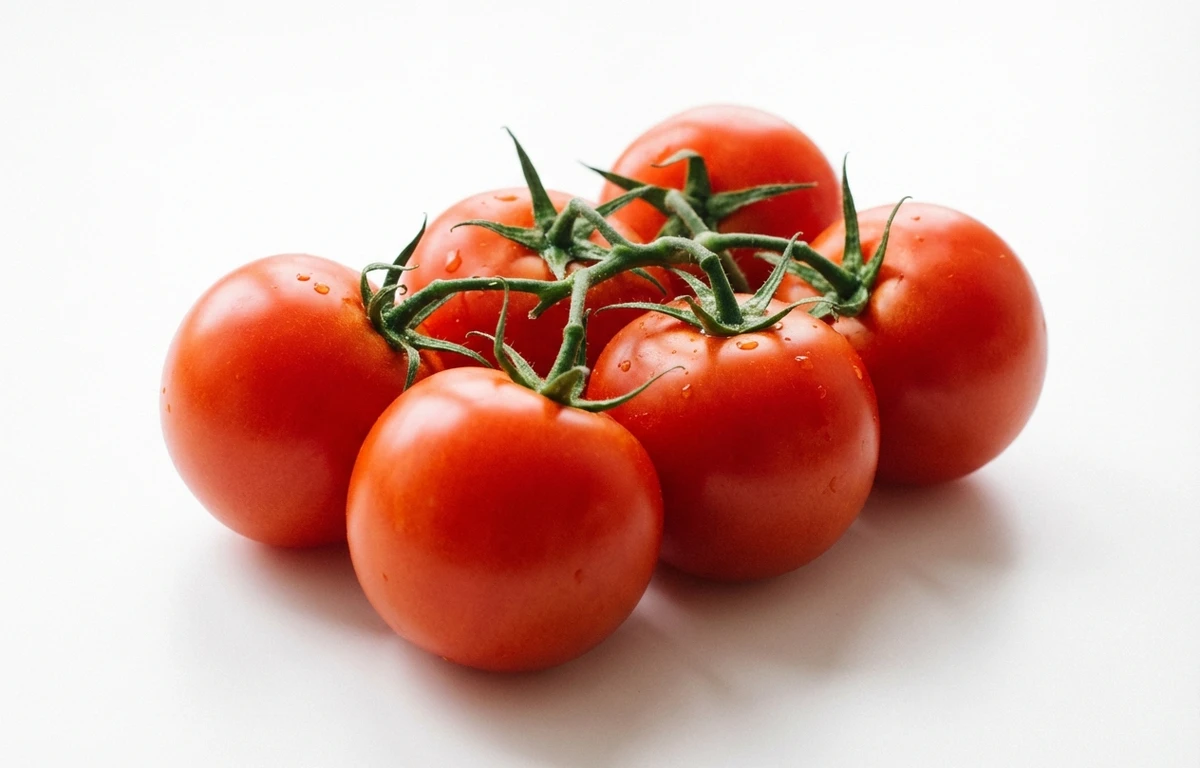
tomatoes.
VegetarianVeganGluten-freeDairy-freeNut-freePeanut-freeSoy-freeEgg-freeShellfish-freeHoney-freeAlcohol-free
ALSO KNOWN AS
Tamatarripe tomatored tomatoripe tomatoeslarge ripe tomatoesLarge Tomatoestomatos
SERVING
CALORIES
18
PROTEIN
0.90g
CARBS
3.9g
FAT
0.20g
FIBER
1.2g
This ingredient is flagged as naturally gluten-free. Per 100 g, it provides 7.9 µg of vitamin K.
NUTRITION PROFILE · per 100 g
Everything in this ingredient.
MACRONUTRIENTS
Calories18kcal—
Protein0.90g2%
Carbohydrates3.9g1%
Fiber1.2g4%
Sugar2.6g5%
Total fat0.20g0%
Saturated fat0.03g0%
Trans fat0g—
Cholesterol0mg0%
Water94.5g—
MINERALS
Sodium5.0mg0%
Potassium237mg5%
Calcium10mg1%
Iron0.30mg2%
Magnesium11mg3%
Phosphorus24mg2%
Zinc0.17mg2%
Copper0.06mg7%
Manganese0.11mg5%
Selenium0µg0%
VITAMINS
Vitamin A42µg5%
Vitamin C13.7mg15%
Vitamin D0µg0%
Vitamin E0.54mg4%
Vitamin K7.9µg7%
Thiamin (B1)0.04mg3%
Riboflavin (B2)0.02mg2%
Niacin (B3)0.59mg4%
Pantothenic acid (B5)0.09mg2%
Vitamin B60.08mg5%
Folate (B9)15µg4%
Vitamin B120µg0%
%DV based on a 2,000 cal diet. Source: USDA FoodData Central. A dash in the %DV column means there’s no established Daily Value for that nutrient.
MEASUREMENT CONVERSIONS
How much is what.
1 cup180g
1 tablespoon11.3g
1 teaspoon3.8g
1 oz28.4g
1 lb453.6g
1 ml0.8g
1 liter750g
1 piece123g
HEALTH BENEFITS
Why eat it.
- ✓Good source of potassium, which helps to control blood pressure and fluid balance.
- ✓Contains Vitamin K and calcium, which are important for maintaining strong bones.
COOKING TIPS
In the kitchen.
- 1Cooking tomatoes, such as in sauces or when roasting, increases the bioavailability of the antioxidant lycopene.
- 2To easily peel tomatoes, score an 'X' on the bottom, blanch in boiling water for 30-60 seconds, then plunge into an ice bath. The skins will slip off easily.
- 3The natural acidity in tomatoes can brighten flavors and help tenderize meats in stews and braises.
- 4For a concentrated flavor in salads, slice tomatoes and lightly salt them, letting them sit for 15-20 minutes to draw out excess water.
STORAGE
Keep it fresh.
- Store whole, ripe tomatoes at room temperature away from direct sunlight for optimal flavor and texture; avoid refrigeration as it can make them mealy.
- Once cut, store tomatoes in an airtight container in the refrigerator and use within 2-3 days.
FAQ
Frequently asked questions.
How many calories and carbs are in tomatoes?
Tomatoes are very low in calories, containing approximately 18 calories per 100g. They are also low in carbohydrates, with only about 3.9g of carbs and 0.2g of fat per 100g serving, making them a light addition to any meal.
Are tomatoes keto-friendly?
Yes, tomatoes can be included in a ketogenic diet in moderation. With only 3.9g of total carbs per 100g, they are low enough to fit within daily carb limits while providing essential micronutrients like Vitamin K and potassium.
Should I store tomatoes in the refrigerator?
It is generally recommended to store tomatoes at room temperature to preserve their flavor and texture. Refrigeration can cause the texture to become mealy and may dampen the tomato's natural aroma and sweetness.
How do I know if a tomato is ripe and fresh?
A ripe tomato should have a deep, consistent color and feel heavy for its size. It should be firm but yield slightly to gentle pressure, and it should have a pleasant, earthy fragrance near the stem end.
RECIPES
Cook with tomatoes.
10 recipes · sorted by what’s quick