Loading...
Per 100g
Nutrition data source: USDA FoodData Central
Common measurement equivalents in grams
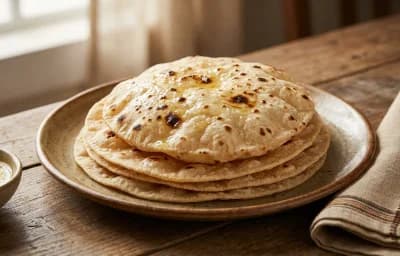
Wonderfully soft whole wheat flatbreads infused with fresh herbs and garlic. This simple recipe is perfect for scooping up curries and dals, offering a flavorful twist on the classic chapati. Ready in just over 30 minutes!
A vibrant and easy weeknight meal! Crispy whole wheat flatbreads are topped with a simple homemade tomato sauce, melted mozzarella, and a colorful mix of fresh vegetables. Ready in about 30 minutes.

Soft whole wheat flatbreads stuffed with a savory mix of spiced potatoes and crunchy onions. A classic North Indian breakfast, perfect with a dollop of butter, yogurt, and pickle. Comfort food at its finest!
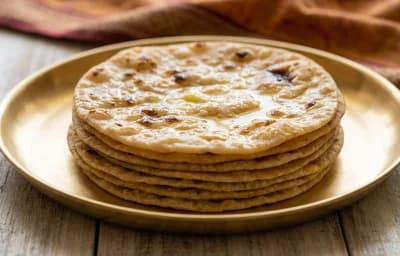
Soft, thin, and delicate whole wheat flatbreads, puffed to perfection and generously brushed with ghee. This everyday Gujarati staple, also known as Phulka, is the perfect companion for any dal, shaak, or curry.
At room temperature, it lasts 1-2 days if wrapped well. In the fridge, it stays fresh for 4-5 days, and in the freezer, it can last up to 3 months.
No, whole wheat contains gluten. Those with celiac disease or gluten sensitivity should avoid it.
Reheat on a hot pan for 30 seconds per side, or microwave for 15-20 seconds wrapped in a damp paper towel.
They are largely the same; both are unleavened whole wheat flatbreads. 'Roti' is a generic term, while 'Chapati' often refers specifically to the version rolled thin and cooked on a tawa.
Traditional whole wheat flatbread (roti) is naturally vegan as it is made from flour, water, and sometimes salt. Just ensure no ghee or butter is brushed on top.
This usually happens if the dough is too dry, the griddle isn't hot enough, or you cooked it for too long at a low temperature.
Generally yes, as it contains more fiber, vitamins, and minerals because the bran and germ of the wheat kernel are retained.
Corn tortillas, oat-based flatbreads, or gluten-free wraps are good alternatives depending on dietary needs.
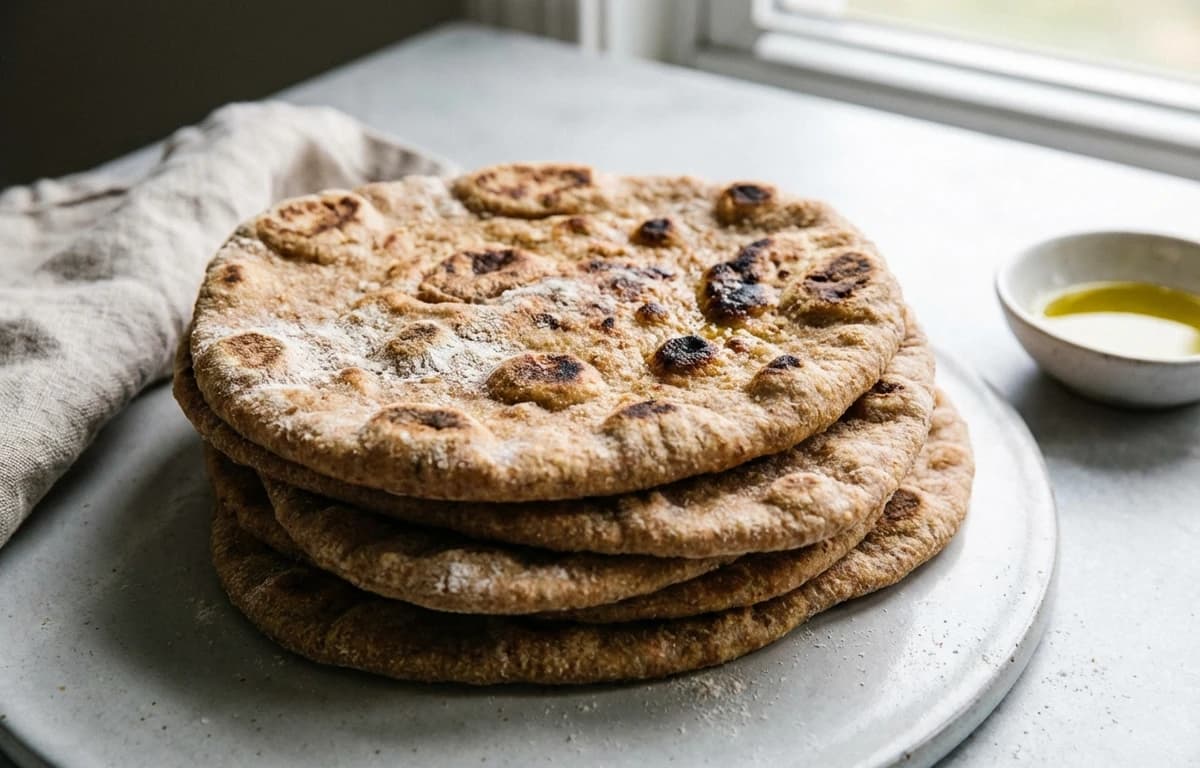
whole wheat flatbread is a versatile ingredient found in cuisines around the world. With 264 calories per 100g and 9.1 grams of protein, it's a nutritious addition to many dishes.
Explore more ingredients in the grain category with complete nutrition information.
View all grain →Discover 1 recipes featuring whole wheat flatbread with step-by-step instructions.
Browse recipes →A medium-sized whole wheat flatbread (approx. 40g) contains about 100-110 calories.
Homemade flatbread contains no preservatives. Store-bought versions may contain calcium propionate or sorbic acid to extend shelf life.