Loading...
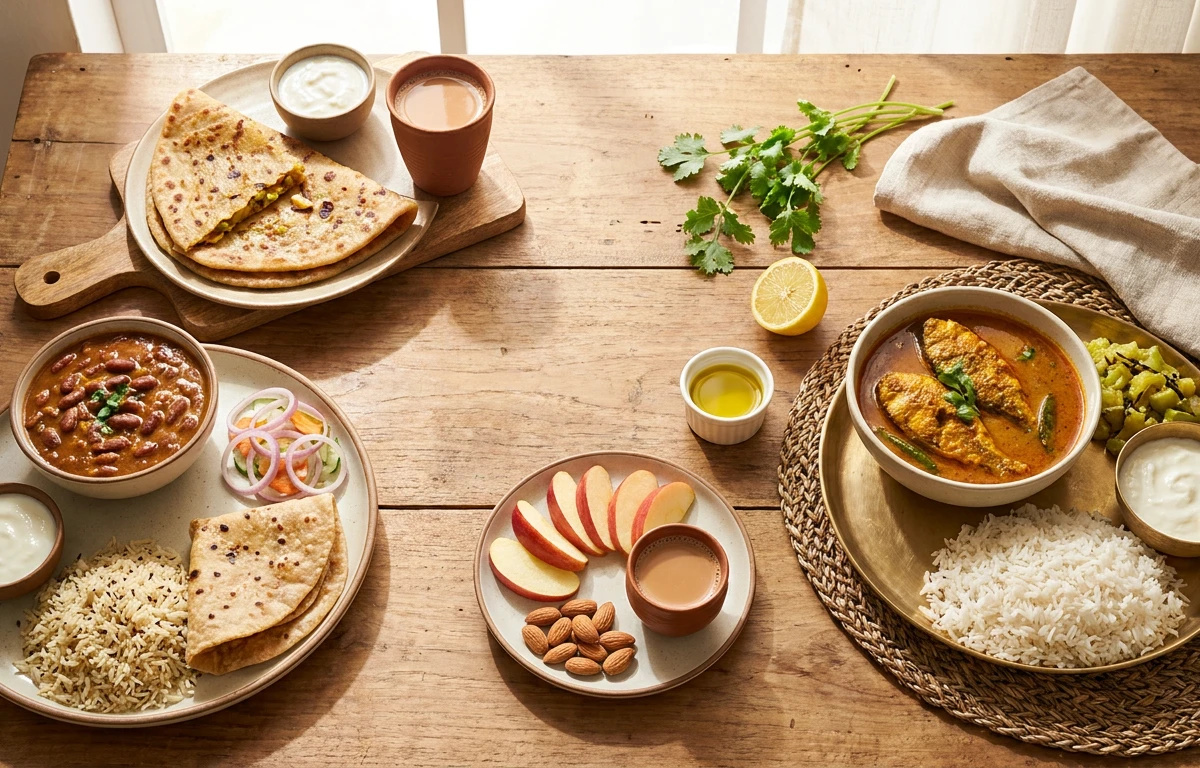
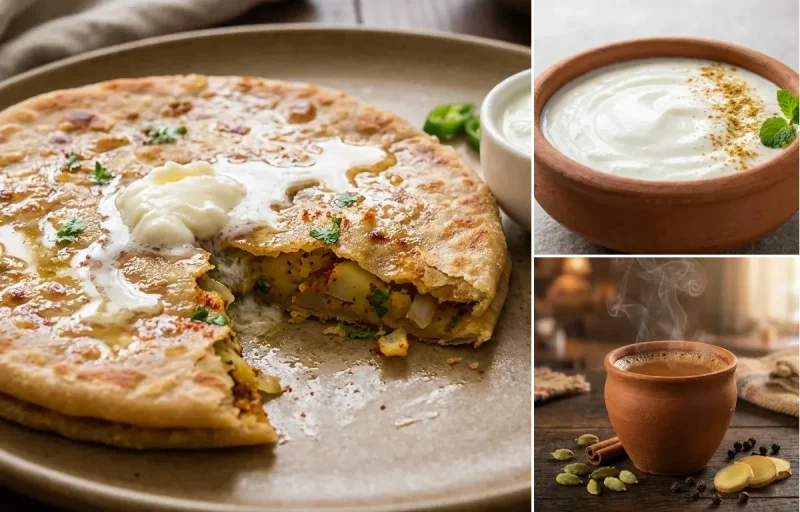
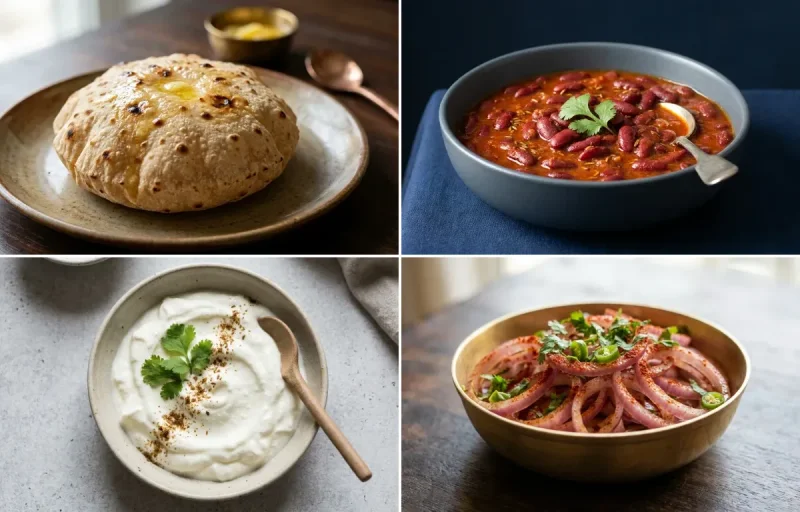
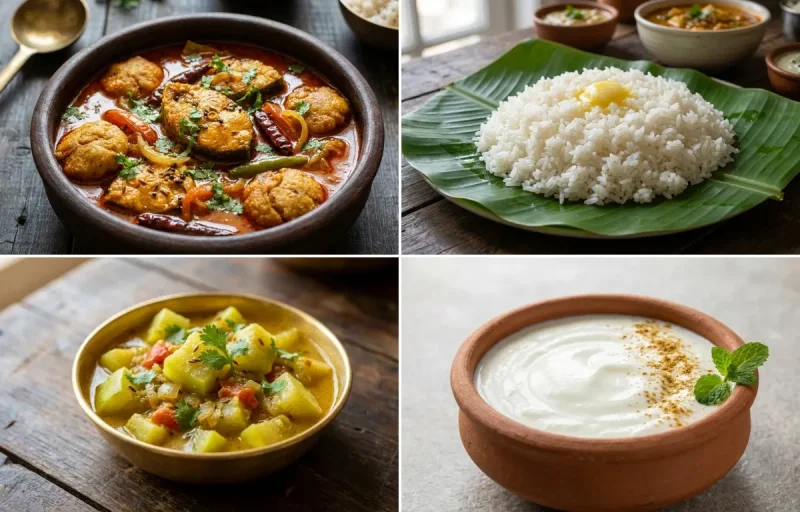
This 14-day Indian newly-married couple meal plan is for the practical reality of two people learning to share a kitchen — often combining different regional backgrounds, different spice tolerances, different food memories, and different prior eating habits. Daily target 2,000 kcal/adult split 500/600/300/600 across breakfast, lunch, snack, dinner. **The plan rotates regional cuisines across the fortnight** — North Punjabi (chole, paneer, parathas), South Tamil/Andhra (sambhar, dosa, curd rice), East Bengali (machher jhol, posto, mishti dahi), West Gujarati/Maharashtrian (dhokla, thepla, varan-bhaat) — so neither partner feels their cuisine is sidelined. By Day 14 you'll have eaten meaningfully from all four major regional traditions.
**The realistic structural pattern** for most newly-married couples: one of you cooks more, the other helps with prep, both contribute to the menu planning. The plan **does not assume both partners cook equally** — that's an aspirational target most couples reach after a year or two, not on Day 1. What it does assume: both partners are willing to **try the other's regional food, share the grocery shopping decisions, and eat the weekly meal together when possible** (3-4 evenings per week minimum). Cooking together 2-3 times a week is associated with better relationship satisfaction in dietary behaviour research, though the effect size is modest and the causal direction is debated.
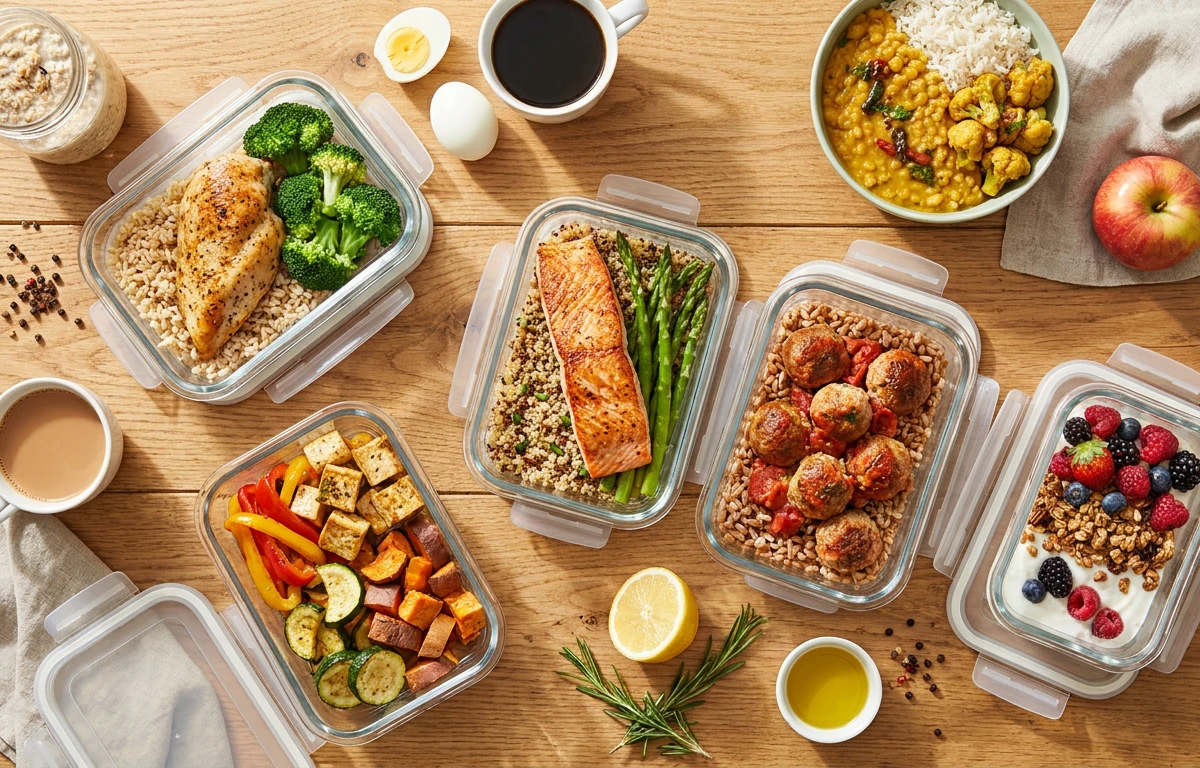
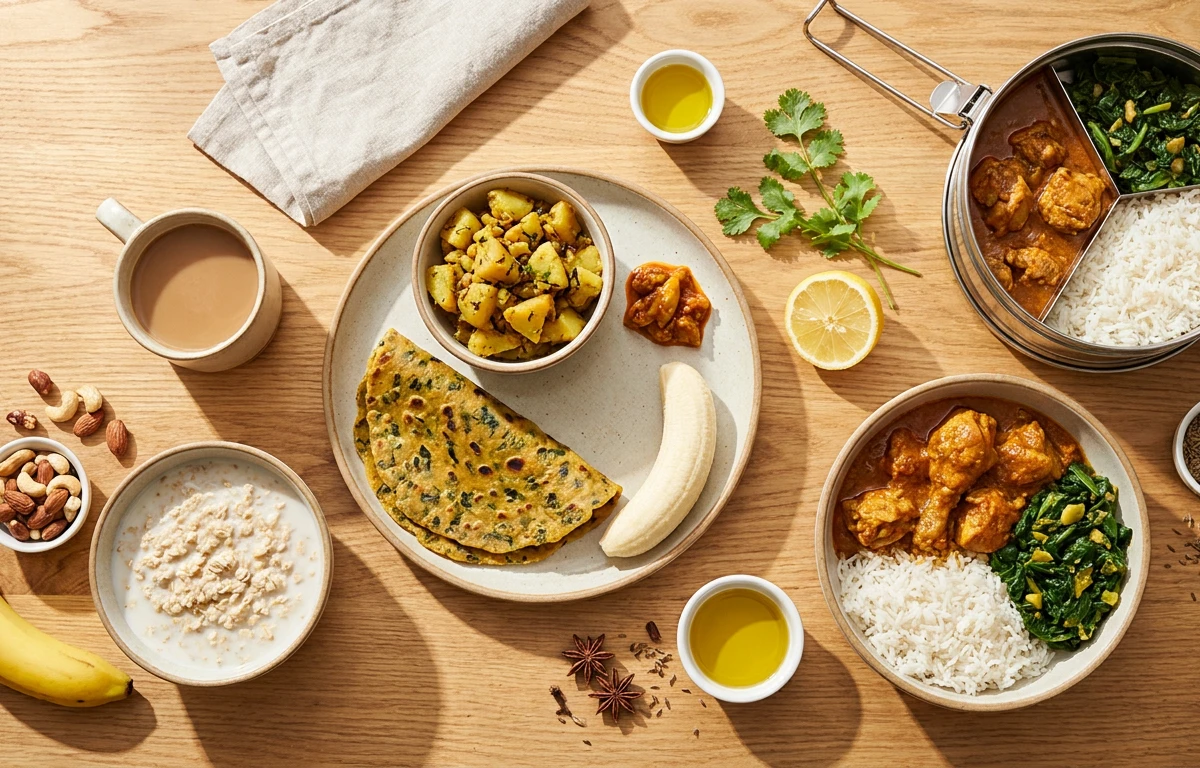
**Portion math for two**: cooking for two is genuinely harder than scaling family recipes — most dal recipes scale awkwardly below 4 servings. The plan's portion guidance assumes you cook **1 day of leftovers ahead** (lunch tomorrow = dinner tonight's scaled-up dal-sabzi). This is the realistic workflow for working couples — cook 1.5-2× quantity in one session, eat half today, refrigerate half for tomorrow's lunch tiffin or dinner. **Don't try to cook fresh for every meal for two** — it's exhausting, wasteful, and not what any working Indian couple actually does.
**In-laws and visiting family**: when your or your partner's parents visit, the plan adapts naturally — most dishes are familiar comfort food, spice can be reduced for elder palates, and grandparents typically prefer the simpler weekday meals (roti-sabzi-dal) over the weekend specials. **Don't try to impress in-laws with fancy weekly menus** the week they visit — stick to your normal pattern and add one familiar comfort dish from their region.
**Fasting and observance days**: many newly-married Indian women observe **Karva Chauth** (one autumn day), **Sawan Mondays** (4-5 days/month in monsoon), or other regional fasts. Husbands may join supportively. The plan does **not** cover fasting days specifically — for sargi + post-fast meals, use the dedicated fasting-friendly guide. Plan around fasting days by eating normally on either side; don't try to lose weight or skip meals through a fasting cycle.
**Honeymoon-phase weight management**: most newly-married couples gain 3-5 kg in the first year, often without realising — combination of more frequent eating out, festival eating without your previous controlling household structure, and the slight calorie surge of cooking-for-two eating habits. **The plan's 2,000 kcal/adult baseline is maintenance for most 60-75 kg adults**. If you're tracking weight gain after 3-4 months, scale down portions 10-15% rather than skipping meals or cutting entire food categories.
**Consult a registered dietitian** if either partner has specific medical conditions or dietary needs. This plan assumes two generally healthy adults.
Click any day to see the full meal breakdown with macros. Days are interchangeable — eat all 14 within 2 weeks in any order.
Most of the week’s cooking happens on Sunday. Doing the prep up-front means weekday meals come together in 10 minutes or less.
The first year of married eating shapes lifetime food habits as a couple. Rotate regions, alternate who cooks, and use this plan as a starting template — adjust based on individual tastes that emerge. Cooking together 2-3x/week is associated with stronger relationship satisfaction in dietary research.
Save this plan, generate a custom grocery list, and let us text you the prep schedule for Sunday.