Loading...
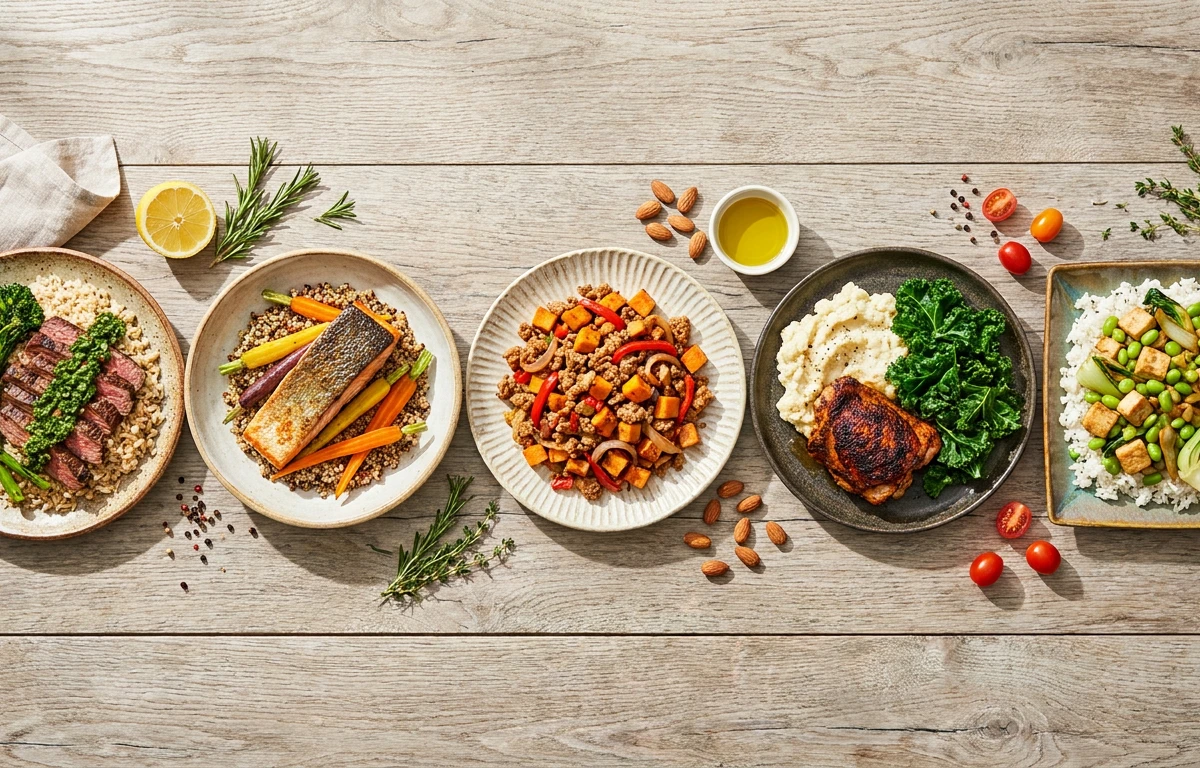
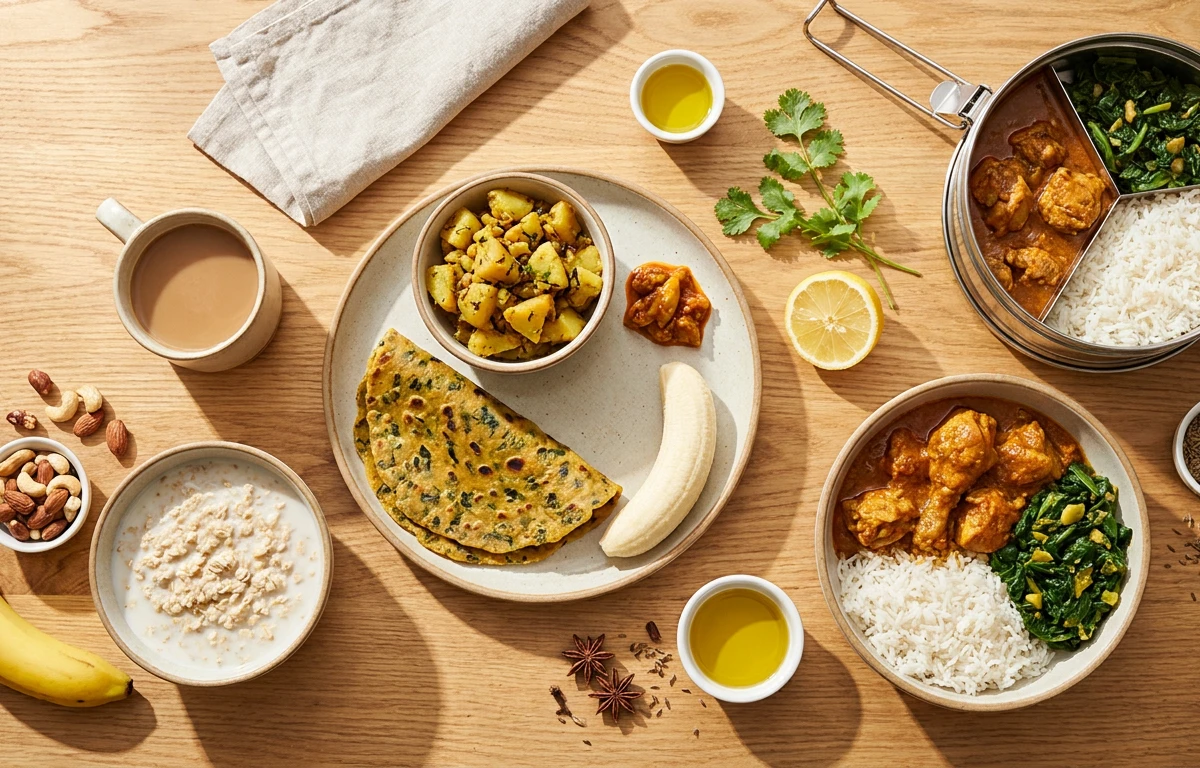
This 14-day Indian weight-loss meal plan targets **1,500 kcal/day with ~110 g protein** to drive steady fat loss while preserving lean muscle through the calorie deficit. Daily split 380/450/220/450 across breakfast, lunch, snack, dinner. Carbs come from millets (bajra, jowar, ragi) and brown rice in measured portions; protein is front-loaded at breakfast (eggs or paneer) and lunch (dal + paneer/chicken); fibre runs 30-40 g/day from vegetables and whole grains to maintain satiety on a smaller calorie budget [1].
**Who 1,500 kcal is right for**: this is **a real deficit, not a maintenance level**. For most adults, maintenance sits at 1,800-2,400 kcal/day depending on size, sex, and activity. **1,500 kcal/day creates a 300-700 kcal daily deficit**, predicting **0.4-0.7 kg/week sustainable weight loss** for most adults with BMI ≥ 25. **For shorter or smaller adults** (1.5 m, 55 kg), 1,500 may approach maintenance — expect slower loss. **For larger adults** (1.85 m, 95 kg), 1,500 is a steep deficit — works for 4-6 weeks but trigger early review with a dietitian before pushing further.
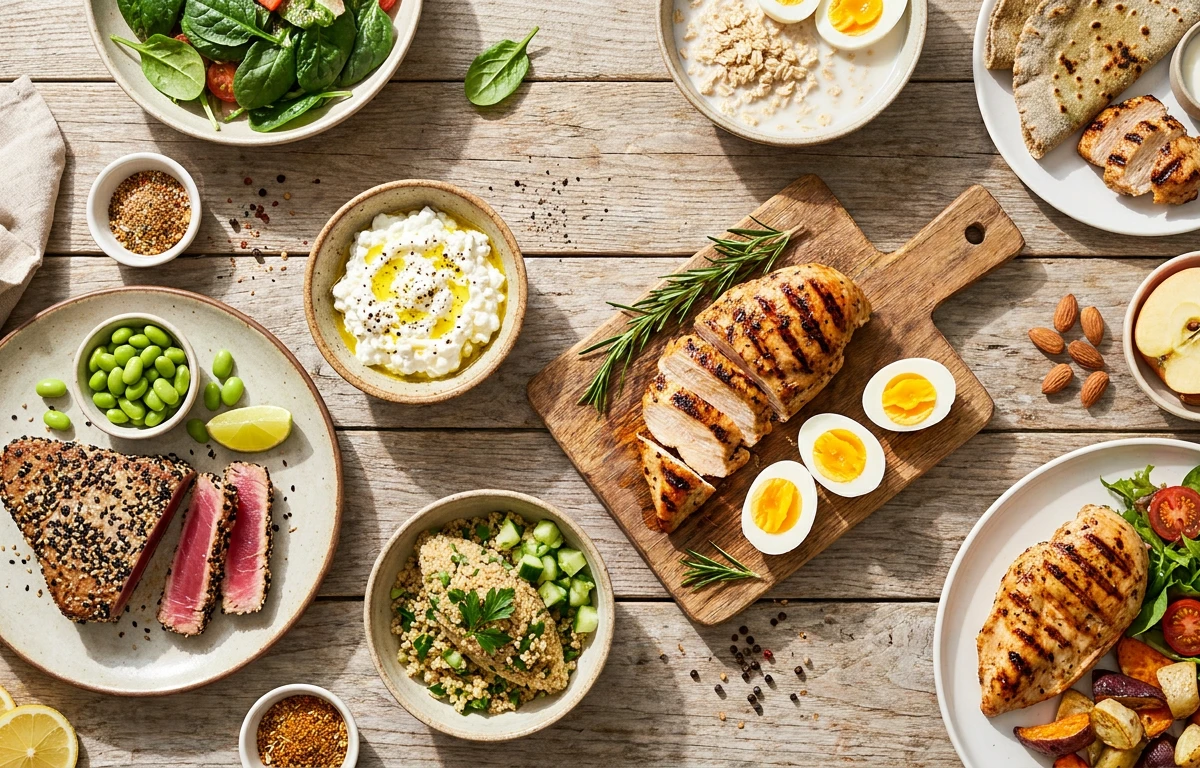
**Why protein at 110 g/day in a 1,500 kcal plan**: muscle preservation during calorie deficit is the single biggest predictor of long-term weight-loss success [2]. **Lean mass lost during deficit doesn't easily come back**; what comes back during regain is fat. The 110 g target (roughly 1.6-2.0 g/kg target body weight) sits at the protein level shown to preserve lean mass in deficit across multiple meta-analyses [3]. **This is high for an Indian diet** — most habitual Indian intake is 45-65 g/day. Achievement requires deliberate planning: eggs daily, paneer or chicken at lunch, dal at every meal, dahi for snacks. Without this protein focus, 1,500 kcal becomes muscle loss + lower metabolism + harder rebound.
**Diet breaks and refeed days** matter on 14+ days of deficit. The plan **does not** build in scheduled refeeds, but **2-3 maintenance days per month (eat ~2,000 kcal) are recommended** to preserve metabolic adaptation and psychological sustainability. Use these on weekends or after particularly hard training days. **Don't 'binge' on refeed days** — eat at maintenance, not above.
**GLP-1 medications (Ozempic, Mounjaro, Saxenda)**: if you're on a GLP-1, this plan's protein focus is even more critical because GLP-1-driven weight loss accelerates lean mass loss [4]. Some people on GLP-1s find 1,500 kcal hard to actually consume due to appetite suppression — you may need to lean on liquid sources (whey, milk) to hit protein targets. Coordinate with your endocrinologist or prescribing physician.
**Plateau handling**: weight loss is rarely linear. **Expect 3-7 day weight plateaus** where the scale doesn't move even when fat loss is continuing. **Real plateaus (3+ weeks no change) require adjustment** — either drop calories by another 100-150/day, increase activity, or take a 7-10 day maintenance break to reset hormones. Don't panic-cut to 1,200 kcal/day; that path leads to metabolic adaptation and binge-rebound cycles.
**Consult a registered dietitian or physician** before starting any weight-loss plan, especially if you have a history of disordered eating, diabetes, thyroid conditions, polycystic ovary syndrome, or are on weight-affecting medications.
Click any day to see the full meal breakdown with macros. Days are interchangeable — eat all 14 within 2 weeks in any order.
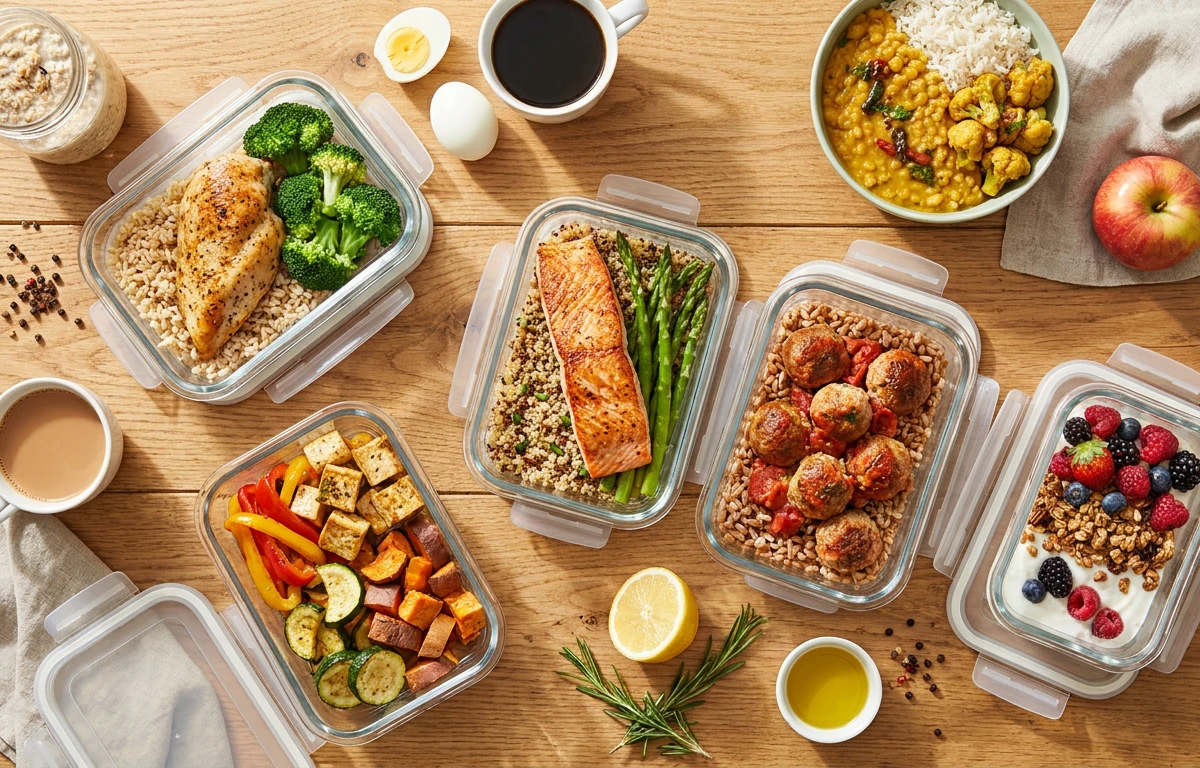
Most of the week’s cooking happens on Sunday. Doing the prep up-front means weekday meals come together in 10 minutes or less.
Sustainable weight loss is ~0.5 kg/week over 12-16 weeks. Track weight weekly (not daily — water fluctuates). At target weight, increase calories by 200-300 to maintenance. The high-protein, millet-based, vegetable-dense pattern is sustainable long-term, not just for the weight-loss phase.
Save this plan, generate a custom grocery list, and let us text you the prep schedule for Sunday.