Beer Bratwurst, Smoked Pork Chops, Sauerkraut, Sweet and Sour Red Cabbage and German Potato Salad - Nutrition Info & Recipe | CraftMyMeals | CraftMyMeals
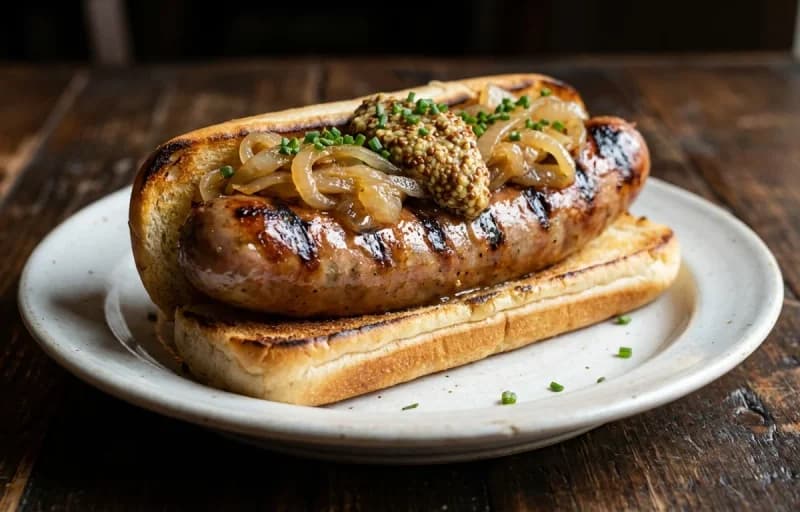
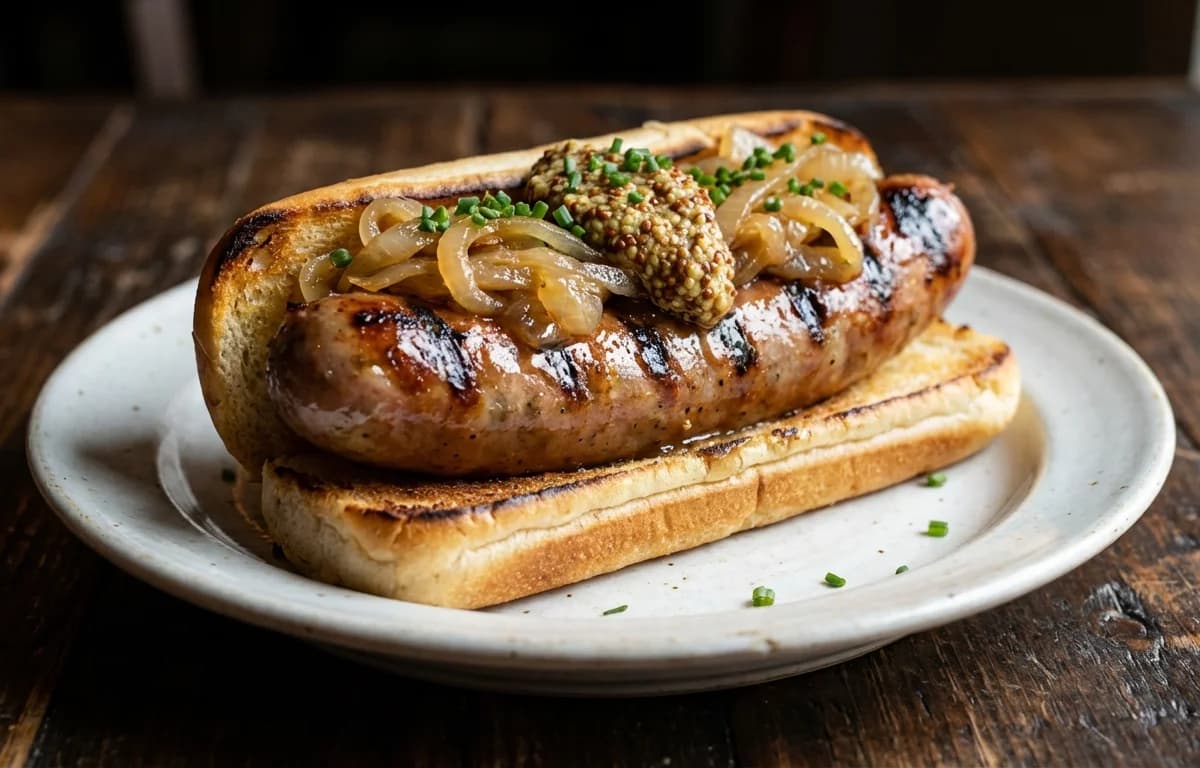
Juicy bratwurst sausages gently simmered in a savory beer and onion bath, then grilled to perfection for a smoky char. A classic cookout favorite that's simple to make and bursting with flavor.
Prep10 min
Cook25 min
Servings4
Serving size: 1 serving
552cal
19gprotein
35gcarbs
34g
Ingredients
4 piece Bratwurst Sausage (Uncooked, about 1 lb (450g) total)
12 fl oz Lager Beer (Pilsner or other light lager recommended)
1 large Yellow Onion (Thinly sliced)
2 tbsp Unsalted Butter
4 piece Bratwurst Buns (Hoagie rolls can be substituted)
0.5 tsp Salt (To taste)
0.25 tsp Black Pepper (Freshly ground)
Instructions
1
Sauté Onions
In a large skillet or Dutch oven, melt the butter over medium heat.
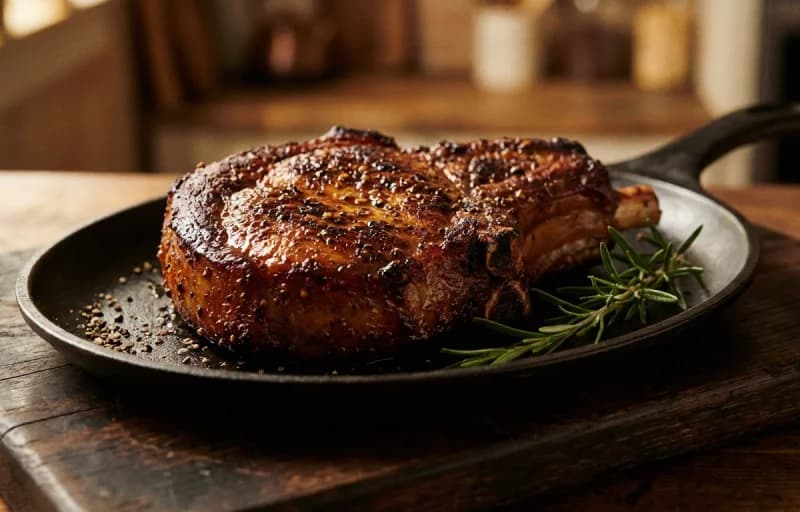
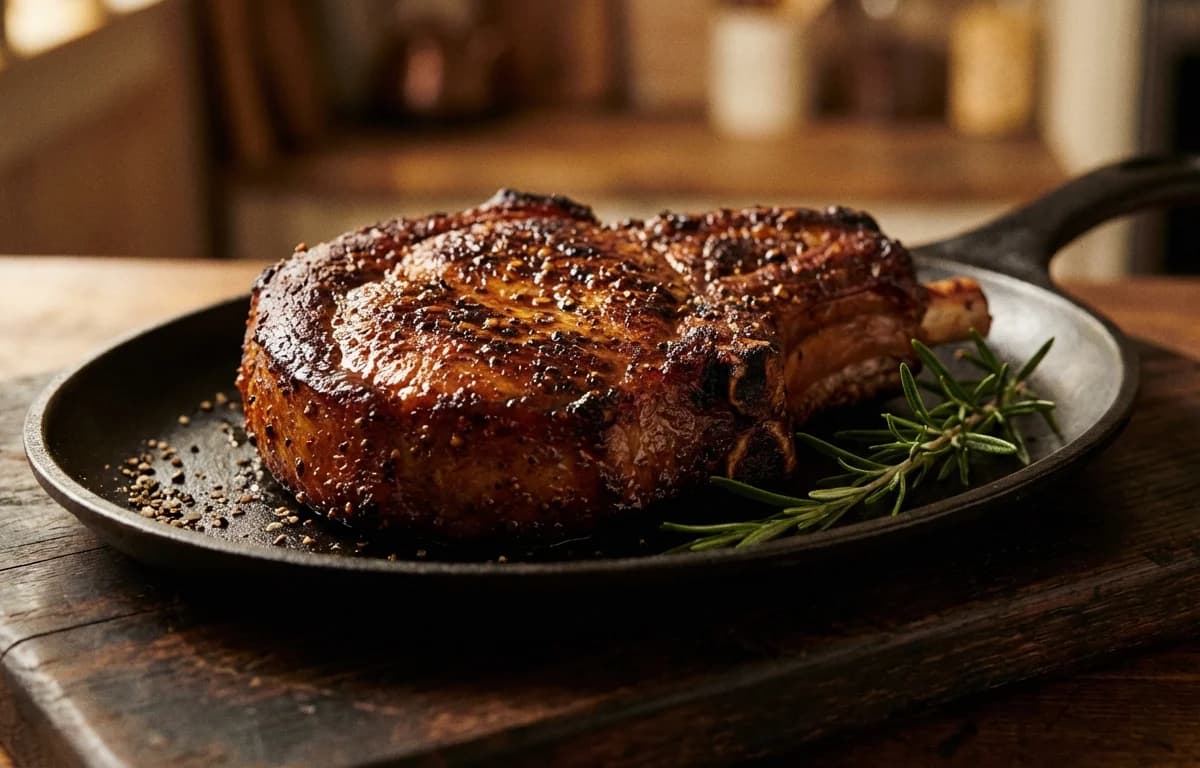
Thick-cut pork chops seasoned with a sweet and smoky dry rub, then slow-smoked to tender, juicy perfection. A classic Southern barbecue favorite that's surprisingly easy to make at home.
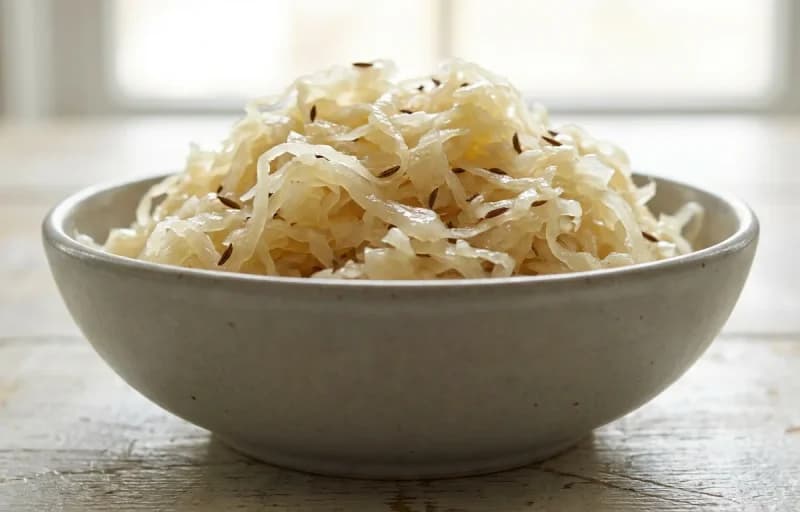
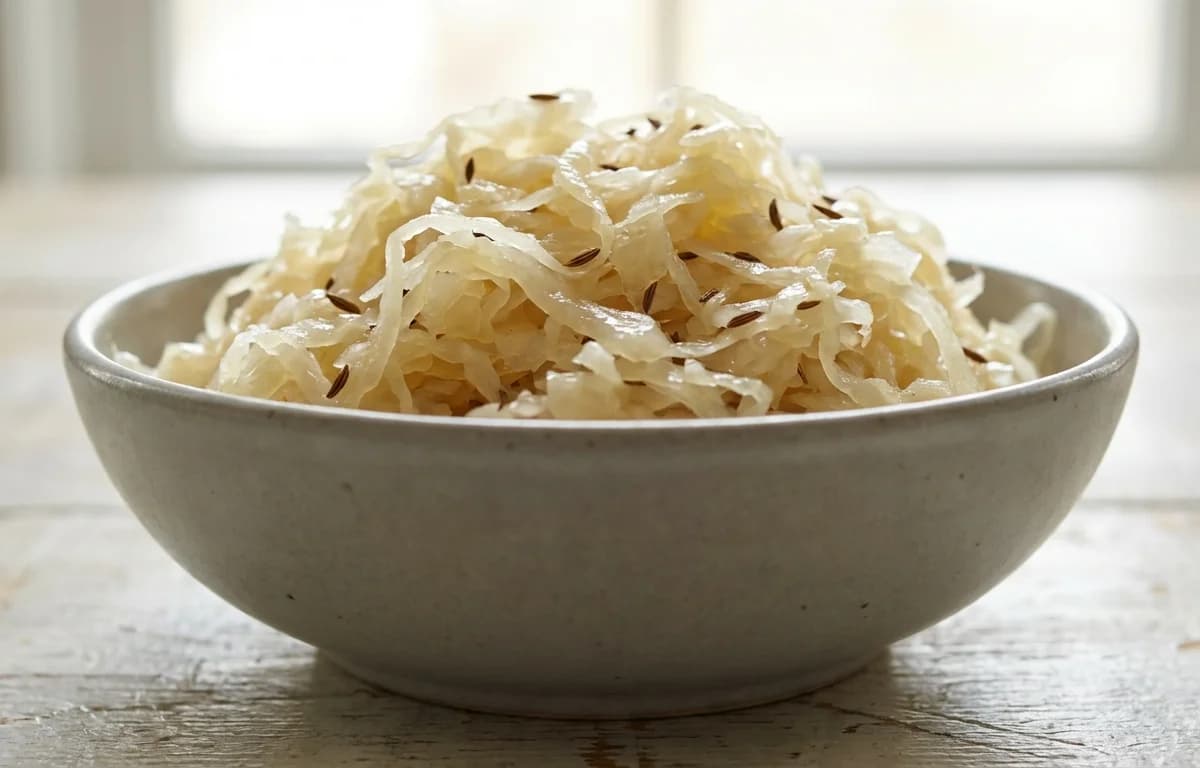
Crisp, tangy, and packed with probiotics, this homemade sauerkraut is surprisingly easy to make with just two ingredients. A classic fermented side dish that adds a zesty punch to sausages, sandwiches, and more.
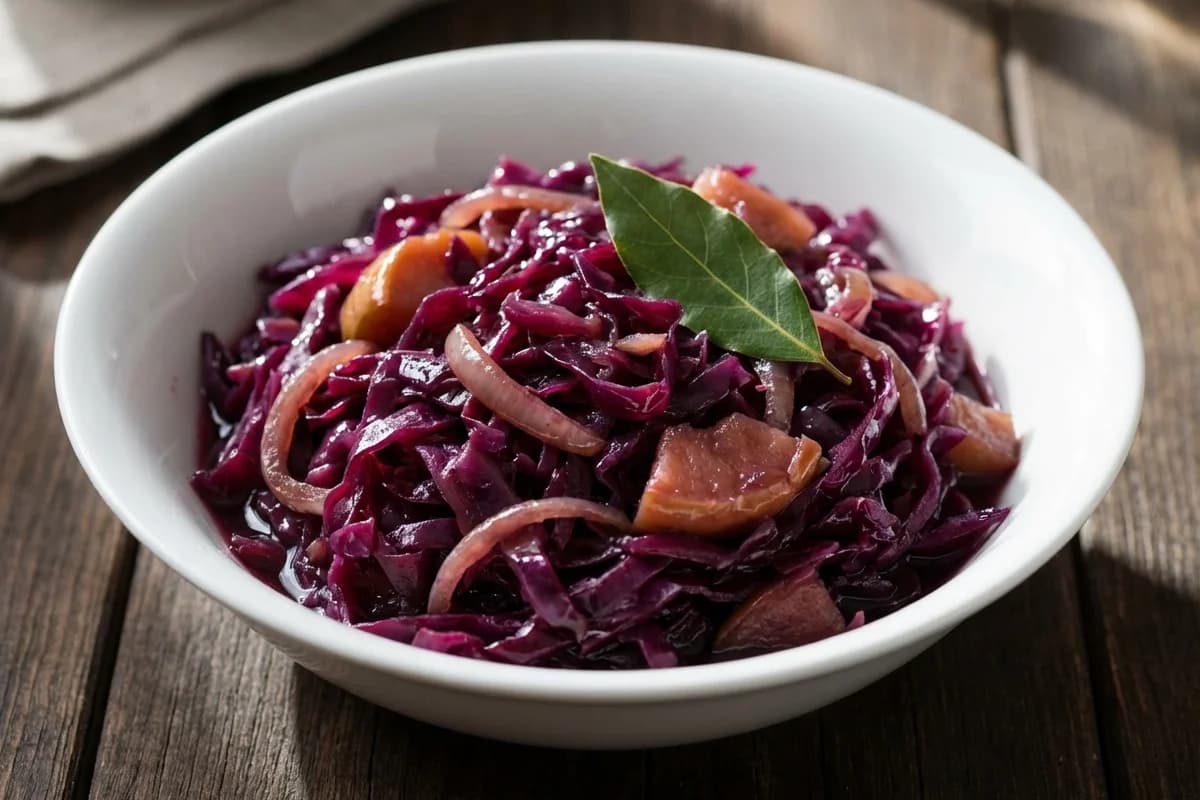
A vibrant and flavorful side dish of tender braised red cabbage, perfectly balanced with sweet apples and tangy vinegar. This German-American classic, known as Rotkohl, is the perfect accompaniment to roasted meats, sausages, and holiday feasts.
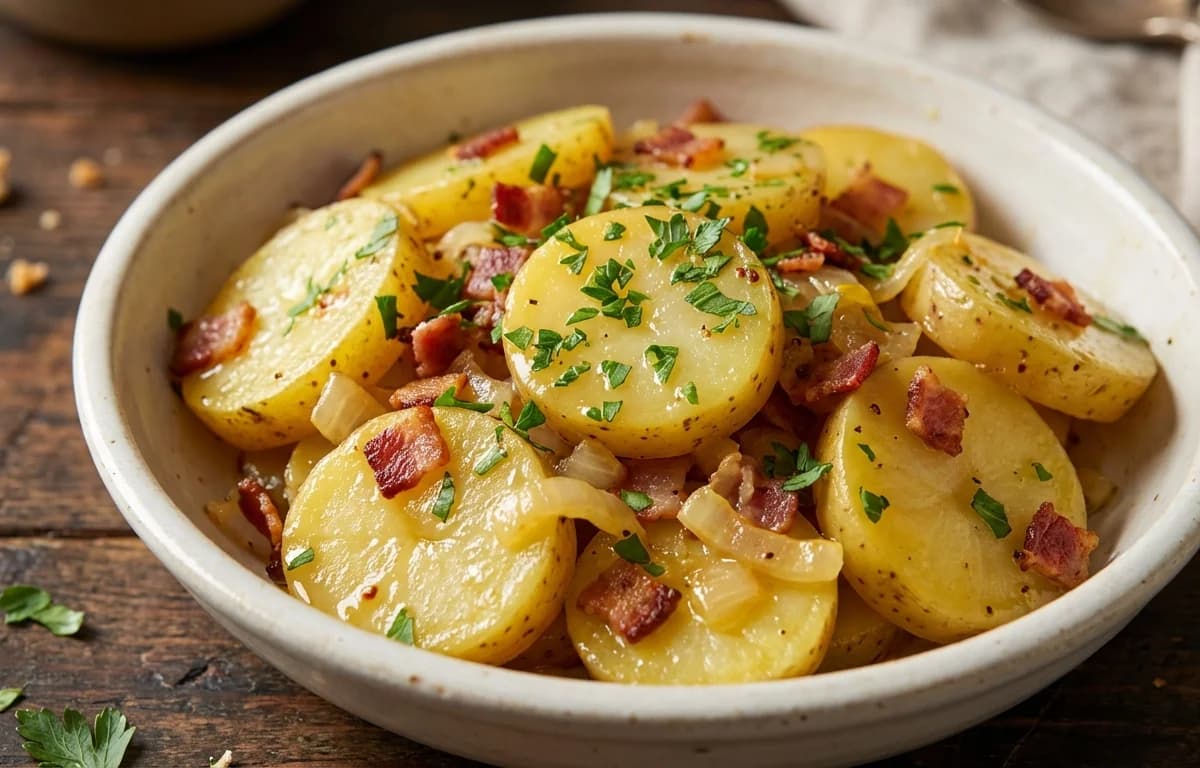
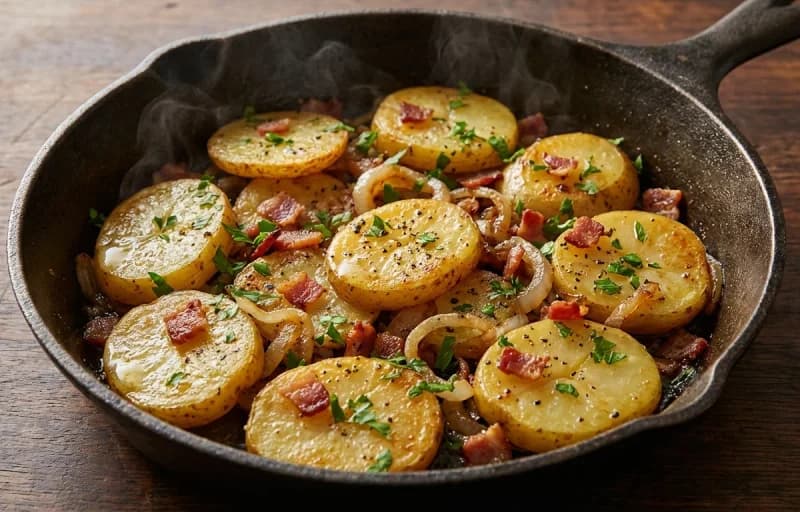
A warm, tangy potato salad with crispy bacon and a savory vinegar dressing. This classic German-American side dish is perfect for picnics, potlucks, and pairs wonderfully with sausages.
This german_american dish is perfect for dinner. With 1687.85 calories and 80.97g of protein per serving, it's a nutritious choice for your meal plan.
fat
Add the thinly sliced onions, salt, and pepper.
Cook, stirring occasionally, for 5-8 minutes until the onions are soft, translucent, and just beginning to brown.
2
Simmer Bratwurst
Nestle the uncooked bratwurst into the skillet with the onions.
Pour the beer over the brats. The liquid should come about three-quarters of the way up the sides of the sausages.
Increase the heat to bring the beer to a gentle simmer. Do not let it come to a rolling boil.
Once simmering, immediately reduce the heat to low, cover the skillet, and let the brats cook for 15 minutes, turning them once halfway through.
The brats are cooked when they are firm and an instant-read thermometer inserted into the center registers 160°F (71°C).
3
Grill for Char
Preheat an outdoor grill or an indoor grill pan to medium heat (about 375°F or 190°C).
Using tongs, carefully remove the simmered brats from the beer bath and place them on the hot grill grates.
Grill for 5-10 minutes, turning every 2-3 minutes, until they are beautifully browned with distinct grill marks on all sides.
While the brats are grilling, keep the onions warm in the skillet over low heat.
4
Assemble and Serve
Optional: During the last minute of grilling, place the bratwurst buns, cut-side down, on the grill to toast them lightly.
Place each grilled bratwurst into a warm bun.
Top generously with the beer-braised onions.
Serve immediately with your favorite condiments, such as spicy brown mustard or sauerkraut.
483cal
47gprotein
19gcarbs
24gfat
Ingredients
4 piece Bone-in Pork Chops (Thick-cut, about 1.5 inches thick)
1 tbsp Olive Oil
0.25 cup Brown Sugar (Packed)
2 tbsp Smoked Paprika
1 tbsp Garlic Powder
1 tbsp Onion Powder
1.5 tsp Salt
1 tsp Ground Black Pepper
0.5 tsp Cayenne Pepper
Instructions
1
Prepare the Dry Rub
In a small bowl, combine the packed brown sugar, smoked paprika, garlic powder, onion powder, salt, black pepper, and cayenne pepper.
Mix thoroughly with a fork or whisk until all the spices are evenly distributed and no clumps of sugar remain.
2
Season the Pork Chops
Pat the pork chops completely dry on all sides with paper towels. This helps the rub adhere and promotes a better crust.
Lightly coat each pork chop with olive oil.
Generously apply the dry rub to all surfaces of the pork chops, including the sides. Gently press the rub into the meat to ensure it sticks.
Let the seasoned chops sit at room temperature for about 15-20 minutes while you prepare the smoker.
3
Prepare the Smoker
Preheat your smoker or grill for indirect cooking to a stable temperature of 225°F (107°C).
Add your choice of wood chips or chunks (such as apple, cherry, or hickory) according to your smoker's instructions to generate a consistent, light smoke.
4
Smoke the Pork Chops
Place the pork chops directly on the smoker grates, ensuring there is space between them for smoke to circulate.
Close the lid and smoke for approximately 60 to 90 minutes.
The chops are ready when a digital meat thermometer inserted into the thickest part of the meat (without touching the bone) reads 145°F (63°C).
5
Rest and Serve
Carefully remove the pork chops from the smoker and transfer them to a clean cutting board or platter.
Tent the chops loosely with aluminum foil and let them rest for 10 minutes. This crucial step allows the juices to redistribute, resulting in a more tender and flavorful chop.
1 tbsp Caraway Seeds (Optional, for classic flavor)
Instructions
1
Prepare Cabbage and Jar
Sterilize a 1-quart (or 1-liter) wide-mouth glass jar and its lid by washing with hot, soapy water and rinsing thoroughly. Allow to air dry completely.
Discard the wilted or damaged outer leaves of the cabbage. Peel off one or two clean, large outer leaves and set them aside.
Quarter the cabbage through the core. Cut out the dense core from each quarter.
Thinly slice the cabbage into shreds, about 1/8-inch thick. A mandoline slicer works well for uniform cuts, but a sharp knife is also effective.
2
Salt and Massage
Place the shredded cabbage in a large, non-reactive bowl (stainless steel or glass).
Sprinkle the non-iodized sea salt and optional caraway seeds over the cabbage.
Begin massaging and squeezing the cabbage with clean hands for 5 to 10 minutes. This process breaks down the cabbage's cell walls, causing it to wilt and release its natural juices, which will become the brine.
3
Pack the Jar
Grab handfuls of the wilted cabbage and pack it tightly into the sterilized jar. Use your fist or a wooden tamper to press down firmly after each addition, removing air pockets.
Pour any brine left in the bottom of the bowl into the jar. The brine level should rise above the cabbage.
Ensure the cabbage is fully submerged under the brine by at least 1 inch. This is crucial to prevent mold.
Fold the reserved whole cabbage leaf and place it on top of the shredded cabbage, tucking it down the sides to keep the small pieces from floating.
Place a fermentation weight (or a small, clean glass jar that fits inside the larger one) on top of the whole leaf to keep everything submerged.
4
Ferment
Cover the jar. If using a standard lid, screw it on loosely to allow fermentation gases to escape. If using an airlock lid, follow its instructions.
Place the jar on a plate or in a shallow dish to catch any potential overflow from active fermentation.
Store the jar in a cool, dark place, ideally between 60-70°F (15-21°C), away from direct sunlight.
Check daily for the first few days. Press down on the weight if needed to keep the cabbage submerged. You should see bubbles forming after 2-3 days.
Allow to ferment for 1 to 4 weeks. Taste test after 1 week. The longer it ferments, the tangier it will become. Ferment until it reaches your desired flavor.
5
Store
Once you're happy with the taste, remove the fermentation weight and the top cabbage leaf.
Wipe the rim of the jar clean, screw the lid on tightly, and transfer the sauerkraut to the refrigerator.
Refrigeration will halt the fermentation process. The sauerkraut will keep for at least 6 months in the fridge, with its flavor continuing to mature.
1 medium head Red Cabbage (About 2 lbs (900g), cored and thinly sliced)
2 tbsp Vegetable Oil (Or butter for a richer flavor)
1 medium Onion (Finely chopped)
1 large Granny Smith Apple (Peeled, cored, and grated)
0.5 cup Apple Cider Vinegar
0.25 cup Brown Sugar (Packed)
0.5 cup Water
1 leaf Bay Leaf
0.25 tsp Ground Cloves
1 tsp Salt (Or to taste)
0.5 tsp Black Pepper (Freshly ground)
Instructions
1
Prepare the vegetables. Using a sharp knife or a mandoline, thinly slice the red cabbage, discarding the tough core. Finely chop the onion. Peel, core, and grate the apple.
2
In a large Dutch oven or heavy-bottomed pot, heat the vegetable oil over medium heat. Add the chopped onion and sauté for 5-7 minutes until softened and translucent.
3
Add the sliced cabbage to the pot in batches, stirring after each addition to help it wilt slightly. Once all the cabbage is in, add the grated apple, brown sugar, water, bay leaf, ground cloves, salt, and pepper. Stir everything together until well combined.
4
Bring the mixture to a gentle simmer. Once simmering, reduce the heat to low, cover the pot tightly, and let it braise for 50 minutes, stirring occasionally to prevent sticking.
5
After 50 minutes, stir in the apple cider vinegar. Continue to cook, covered, for another 15-20 minutes, or until the cabbage is very tender and the flavors have melded.
6
Remove the pot from the heat and discard the bay leaf. Taste and adjust the seasoning as needed—you may want more salt for savoriness, sugar for sweetness, or vinegar for tang. Serve warm.
900 g Yukon Gold Potatoes (about 4-5 medium potatoes, scrubbed)
1 tbsp Salt (for boiling potatoes)
225 g Thick-Cut Bacon (about 8 slices)
1 medium Yellow Onion (finely chopped)
120 ml Apple Cider Vinegar
60 ml Water
2 tbsp Granulated Sugar (adjust to taste)
1 tbsp Dijon Mustard
0.5 tsp Black Pepper (freshly ground)
3 tbsp Fresh Parsley (chopped, plus more for garnish)
Instructions
1
Cook the potatoes: Place the whole, unpeeled potatoes in a large pot. Cover with cold water by at least 1 inch and add 1 tablespoon of salt. Bring to a boil over high heat, then reduce heat to a simmer. Cook for 15-20 minutes, or until the potatoes are just fork-tender. Be careful not to overcook them. Drain the potatoes and let them cool just enough to handle.
2
Cook the bacon: While the potatoes are boiling, chop the bacon into 1/2-inch pieces. Cook in a large skillet over medium heat until brown and crispy, about 8-10 minutes. Use a slotted spoon to transfer the crispy bacon to a paper towel-lined plate. Reserve about 4 tablespoons (1/4 cup) of the rendered bacon fat in the skillet and discard the rest.
3
Prepare the warm dressing: Add the finely chopped onion to the skillet with the reserved bacon fat. Sauté over medium heat for 4-5 minutes until softened and translucent. Whisk in the apple cider vinegar, water, sugar, and Dijon mustard. Bring the mixture to a gentle simmer. Season with 0.75 teaspoon of salt and 0.5 teaspoon of black pepper. Let it simmer for 1-2 minutes to allow the flavors to meld, then remove from heat.
4
Assemble the salad: While the potatoes are still warm, peel them (the skins should slip off easily) and slice into 1/4-inch thick rounds. Place the warm potato slices in a large bowl. Pour the warm dressing over the potatoes. Add most of the crumbled bacon and the chopped fresh parsley, reserving a little of each for garnish. Gently toss to combine, being careful not to break the potato slices. The warm potatoes will absorb the dressing beautifully.
5
Serve: Garnish with the remaining bacon and parsley. This salad is best served warm or at room temperature. Enjoy!