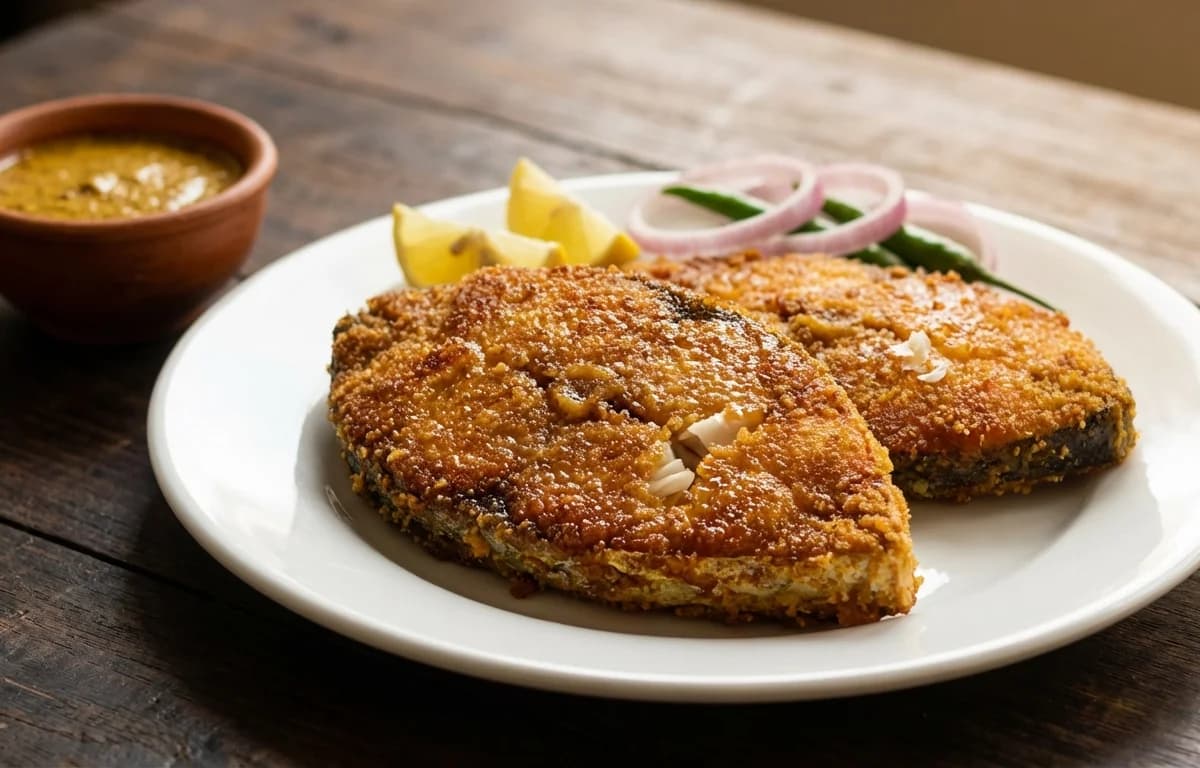
Tender, flaky Bhetki fillets marinated in zesty spices and coated in a golden, crispy crumb. This iconic Kolkata street food is a beloved appetizer, perfect with a side of kasundi and onion rings.
Prep45 min
Cook15 min
Soak30 min
Servings4
Serving size: 1 fillet
512cal
39gprotein
47gcarbs
Ingredients
600 g Bhetki Fish Fillets (About 4 thick, even-sized fillets)
1 tbsp Ginger Paste
1 tbsp Garlic Paste
1 tsp Green Chilli Paste (Adjust to your spice preference)
2 tbsp Lemon Juice (Freshly squeezed)
1.5 tsp Salt (Divided for marinade and flour coating)
0.75 tsp Black Pepper Powder (Freshly ground, divided)
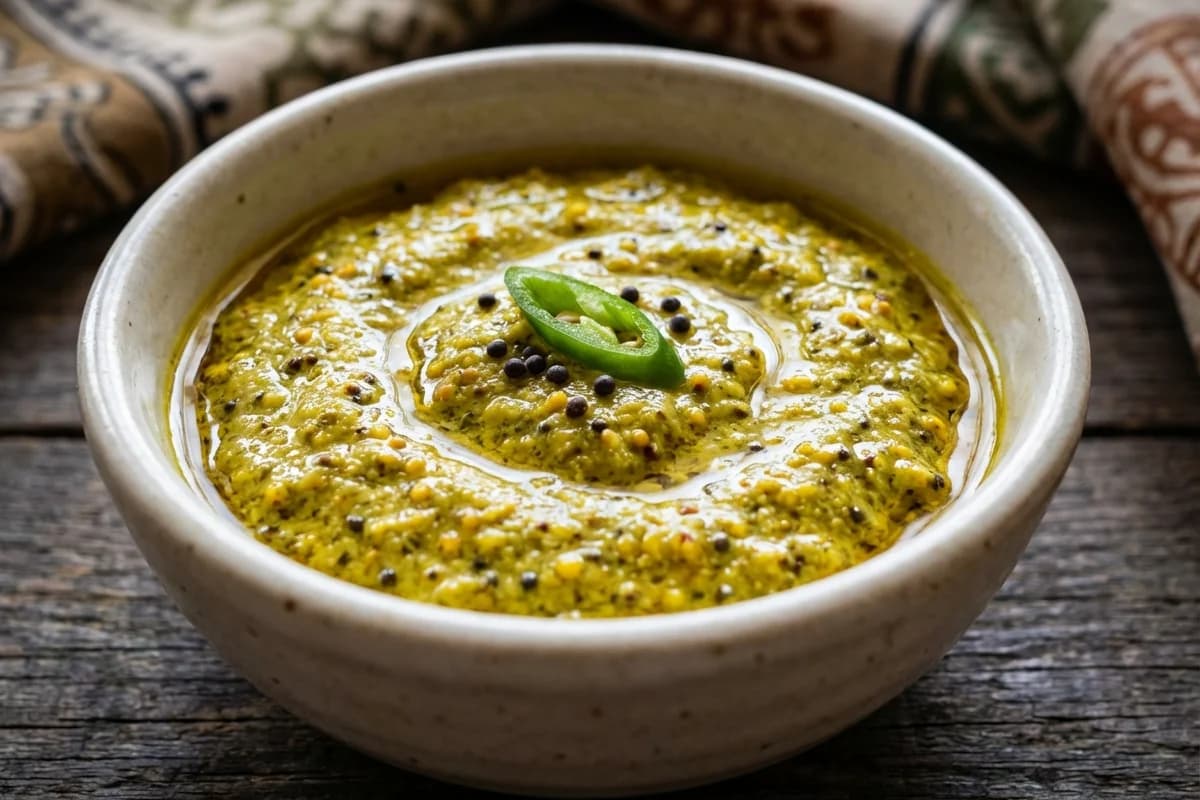
A fiery and pungent mustard sauce from Bengal, made by grinding mustard seeds with green chilies and spices. This iconic condiment adds a sharp, tangy kick to snacks, sandwiches, and fish preparations.
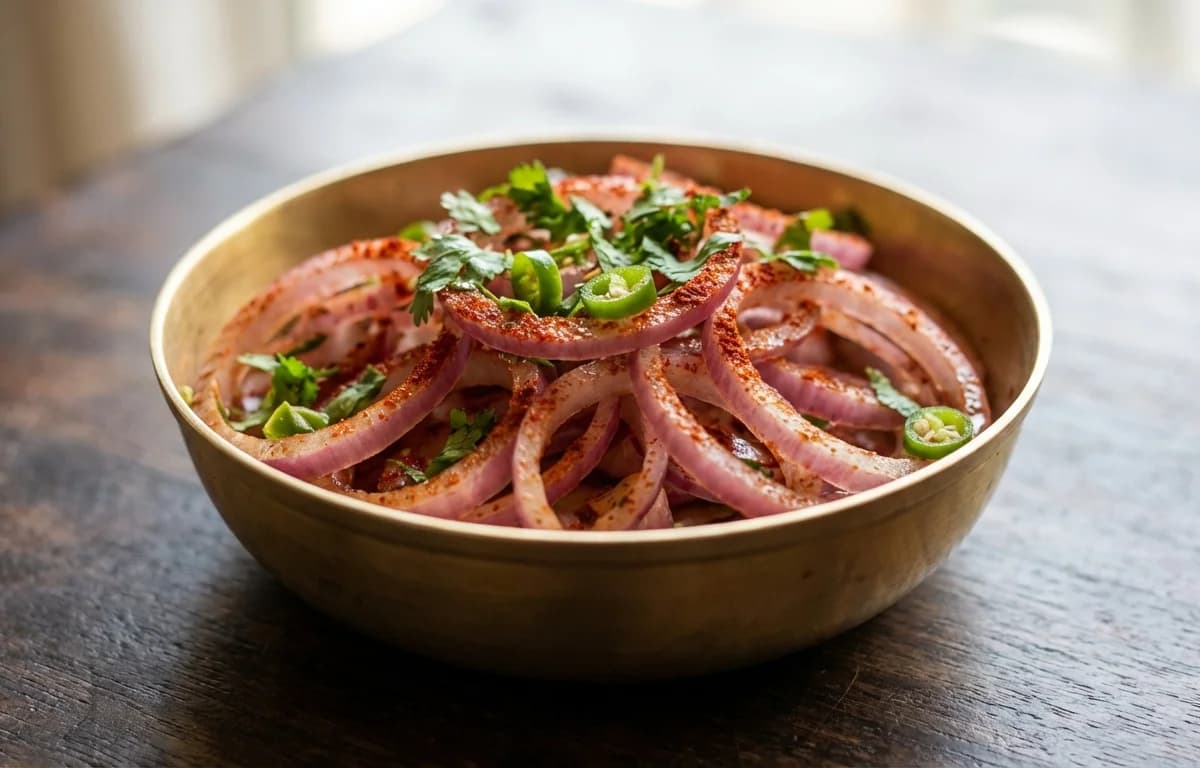
Crisp, tangy rings of onion tossed with fresh lemon juice, herbs, and a hint of spice. This classic Indian side salad, known as Laccha Pyaz, is the perfect refreshing accompaniment to rich curries and grilled kebabs.
About Bhetki Fish Fry, Bengali Kasundi and Onion Salad
Crispy Bhetki Fish Fry with tangy kasundi and fresh onion salad – an aromatic, protein-packed delight!
This bengali dish is perfect for snack. With 752.68 calories and 44.160000000000004g of protein per serving, it's a nutritious choice for your meal plan.
19gfat
1 pc Egg (Large, lightly beaten)
1.5 cup Breadcrumbs (Use Panko for extra crispiness)
2 cup Vegetable Oil (For deep frying)
Instructions
1
Marinate the Fish
Rinse the bhetki fillets and pat them completely dry with paper towels. This is crucial for a crispy coating.
In a non-reactive bowl, combine the ginger paste, garlic paste, green chilli paste, lemon juice, 1 teaspoon of salt, and 0.5 teaspoon of black pepper.
Gently rub this marinade onto all sides of the fish fillets, ensuring they are evenly coated.
Cover the bowl and refrigerate to marinate for at least 30 minutes, or up to 2 hours for deeper flavor.
2
Prepare the Breading Station
Set up three separate shallow dishes or plates.
In the first dish, whisk together the all-purpose flour, corn starch, the remaining 0.5 teaspoon of salt, and 0.25 teaspoon of black pepper.
In the second dish, lightly beat the egg.
In the third dish, spread the breadcrumbs in an even layer.
3
Coat the Fish Fillets
Take one marinated fillet at a time, allowing any excess marinade to drip off.
First, dredge the fillet in the flour mixture, coating it completely. Gently shake off any excess flour.
Next, dip the flour-coated fillet into the beaten egg, ensuring it's fully submerged and coated.
Finally, place the fillet in the breadcrumbs. Press firmly on all sides to ensure a thick, even crust. Set the coated fillet aside on a clean plate.
For best results, let the coated fillets rest in the refrigerator for 15-20 minutes. This helps the coating adhere better during frying.
4
Deep Fry to Perfection
Pour the vegetable oil into a deep pan or kadai and heat over medium-high heat to about 350°F (175°C).
If you don't have a thermometer, test the oil by dropping in a breadcrumb; it should sizzle vigorously and turn golden in about 30 seconds.
Carefully slide 1 or 2 coated fillets into the hot oil, being careful not to overcrowd the pan.
Fry for about 3-4 minutes on each side, until the crust is a deep golden brown and the fish is cooked through.
The internal temperature of the fish should reach 145°F (63°C).
5
Drain and Serve
Using a slotted spoon or tongs, carefully remove the fried fillets from the oil.
Place them on a wire rack to drain excess oil. This keeps the bottom from getting soggy.
Serve immediately while hot and crispy, accompanied by kasundi (Bengali mustard sauce), thinly sliced onion rings, and lemon wedges.
8
Serving size: 0.25 cup
206cal
4gprotein
6gcarbs
19gfat
Ingredients
0.5 cup Black Mustard Seeds (Also known as Rai)
0.25 cup Yellow Mustard Seeds (Also known as Sarson)
6 pcs Green Chilies (Adjust quantity based on spice preference)
0.5 cup Mustard Oil (Use cold-pressed for authentic pungency)
3 tbsp White Vinegar (Acts as a preservative and adds tang)
1 tsp Turmeric Powder (Adds color and earthy flavor)
1.5 tsp Salt (Adjust to taste)
0.25 cup Water (Use cold water for grinding, add as needed)
Instructions
1
Soak the Mustard Seeds
Combine the black and yellow mustard seeds in a bowl. Rinse them under cold running water 2-3 times.
Cover the seeds with 2 cups of water and let them soak for at least 4-6 hours, or overnight. This step is crucial for a smooth paste and reduces bitterness.
Once soaked, drain the water completely using a fine-mesh sieve. Do not use the soaking water for grinding.
2
Grind the Kasundi Paste
Transfer the drained mustard seeds to a high-powered blender or wet grinder.
Add the green chilies (stems removed), turmeric powder, and salt.
Add a few tablespoons of cold water to begin grinding. Grind in short pulses of 15-20 seconds each to prevent the mixture from heating up, which can cause bitterness.
Scrape down the sides of the jar periodically. Add more cold water, a little at a time, until you achieve a very smooth, thick, and creamy paste. The entire grinding process should take about 5-7 minutes.
3
Mature the Kasundi
Transfer the ground paste into a clean, dry, and sterilized glass jar.
Pour the mustard oil and white vinegar over the paste.
Using a clean, dry spoon, mix vigorously until the oil and vinegar are fully incorporated and the kasundi has a uniform consistency.
Seal the jar tightly and let it sit in a cool, dark place at room temperature for 24-48 hours. This allows the flavors to meld and the characteristic pungency to develop.
4
Store and Serve
After the maturation period, the kasundi is ready to be enjoyed.
Store the jar in the refrigerator to maintain its freshness and pungency. It will keep well for up to 2-3 months.
Always use a clean, dry spoon to scoop out the kasundi to prevent contamination.
Serve as a dipping sauce for fried snacks like fish fry, telebhaja, or pakoras, or use it as a spread in sandwiches.