
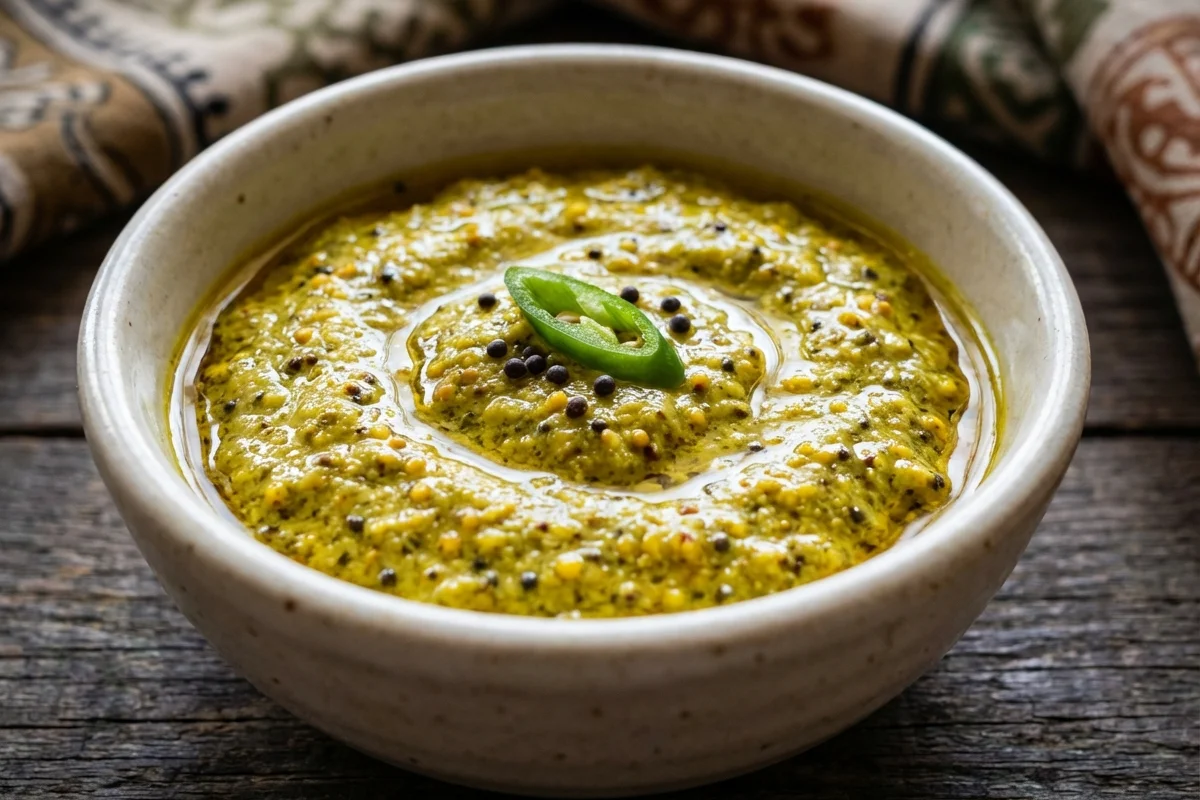
Bengali Kasundi
Sharp, pungent Bengali mustard sauce with a deep, earthy kick and a little heat. This classic condiment is blended from soaked mustard seeds and spices, then rested so the flavors mellow and come together beautifully.
For 8 servings
- prep · ~1 min
Soak the mustard seeds.
Wash the yellow mustard seeds and black mustard seeds well. Soak them in enough water overnight so they soften and lose some bitterness.
TIPDiscard the soaking water before grinding for a cleaner, less harsh flavor. - boil · ~5 min
Boil the water and let it cool.
Bring 1/2 cup water to a boil, then cool it until just warm. This helps make the kasundi safer to store and keeps the flavor clean.
- mix · ~4 min
Grind the kasundi paste.
1.Drain the soaked mustard seeds fully.2.Add the mustard seeds, green chili, garlic, turmeric powder, salt, and sugar to a grinder jar.3.Pour in the vinegar and a little of the cooled boiled water.4.Grind to a smooth, thick paste without making it too runny.TIPUse short pulses while grinding so the mustard does not turn bitter from overheating. - mix · ~1 min
Adjust the consistency.
Transfer the paste to a clean bowl or jar and stir in a little more cooled boiled water only if needed. The kasundi should be thick but spoonable.
- rest · ~1440 min
Rest the kasundi to develop flavor.
Cover the jar and leave it at room temperature for 24 hours. The sharp mustard flavor settles and the condiment develops its classic pungent taste.
TIPUse a clean, dry spoon every time to keep the kasundi fresh longer. - serve · ~1 min
Refrigerate and serve.
After resting, refrigerate the kasundi and serve it with snacks, fried vegetables, fish, or sandwiches.
What to keep in mind.
6 tips from the recipe — small details that make a real difference to the final dish.
- 1Drain the soaked mustard seeds very well before grinding, or the kasundi can turn thin and washed out.
- 2Use only just-warm boiled water; hot water can dull the sharp mustard bite and change the texture.
- 3Pulse the grinder in short bursts so the mustard paste stays pungent instead of turning harsh and bitter.
- 4Keep the paste thick and spoonable; overly runny kasundi tastes weaker and separates more easily in the jar.
- 5Let the jar rest undisturbed for the full 24 hours so the vinegar, garlic, and mustard can mellow together.
- 6Store in a very clean glass jar and always use a dry spoon to help it stay fresh longer in the fridge.
Adapt it for your goals.
Garlic-free
Skip the garlic for a cleaner, more mustard-forward kasundi that pairs especially well with fried fish and vegetable fritters.
extra hotExtra-hot
Add more green chili for a sharper, spicier condiment if you like kasundi with a stronger kick.
smootherSmoother
Strain the ground paste through a fine sieve for a silkier kasundi that spreads better in sandwiches and wraps.
jainJain
Omit the garlic to make a Jain-friendly version while keeping the signature mustard heat and vinegar tang.
Why this is on our healthy list.
Mustard Seed Antioxidants
Yellow and black mustard seeds provide naturally occurring plant compounds that add both pungency and antioxidant value.
Low-Quantity Flavor Booster
Kasundi delivers bold taste in small spoonfuls, making it an easy way to add flavour without relying on heavy sauces.
Garlic and Chili Benefits
Garlic and green chili contribute aromatic compounds and plant-based nutrients while keeping the condiment vibrant and sharp.
Frequently asked questions
Bitterness usually comes from not draining the soaking water well or overheating the mustard while grinding. Short pulses and fresh soaking help keep the flavour cleaner.





-curry.webp)
.webp)