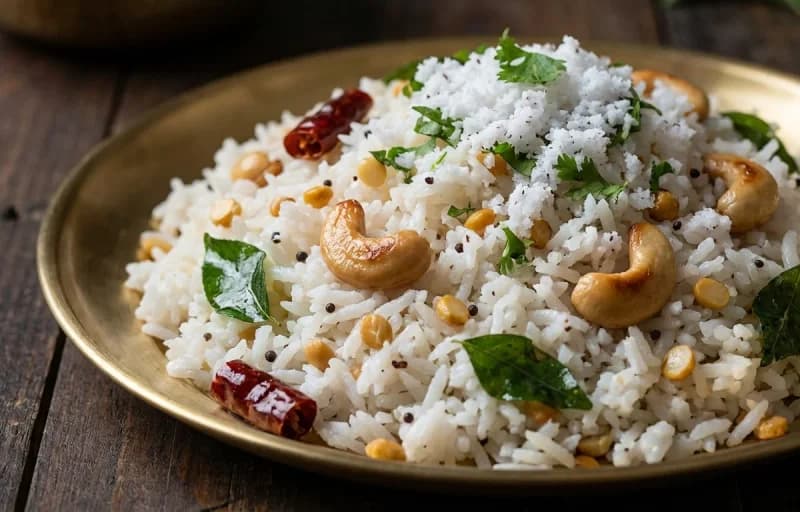
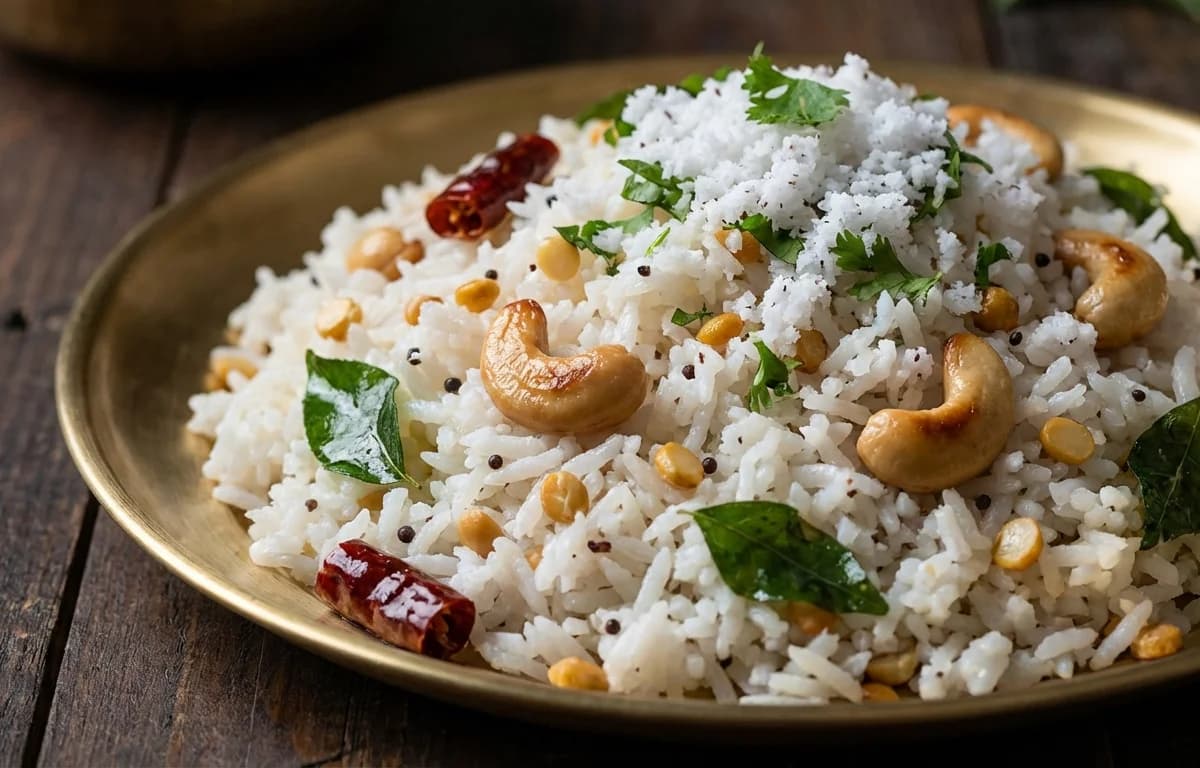
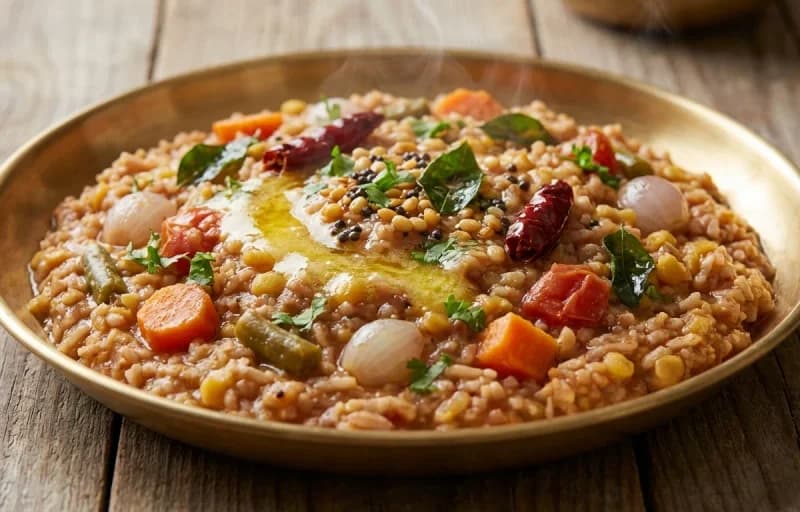
A fragrant South Indian rice dish where fluffy rice is tossed with fresh coconut and a crunchy tempering of lentils and spices. A quick and delicious way to use leftover rice, perfect for lunchboxes or as a side dish.
Prep10 min
Cook15 min
Servings4
Serving size: 1 serving
406cal
7gprotein
57gcarbs
17g
Ingredients
4 cup Cooked Rice (Use cooled, day-old Sona Masuri or Basmati rice for best results)
2 tbsp Coconut Oil
1 tsp Mustard Seeds
1 tsp Urad Dal (Split and skinned black gram lentils)
1 tbsp Chana Dal (Split and skinned Bengal gram lentils)
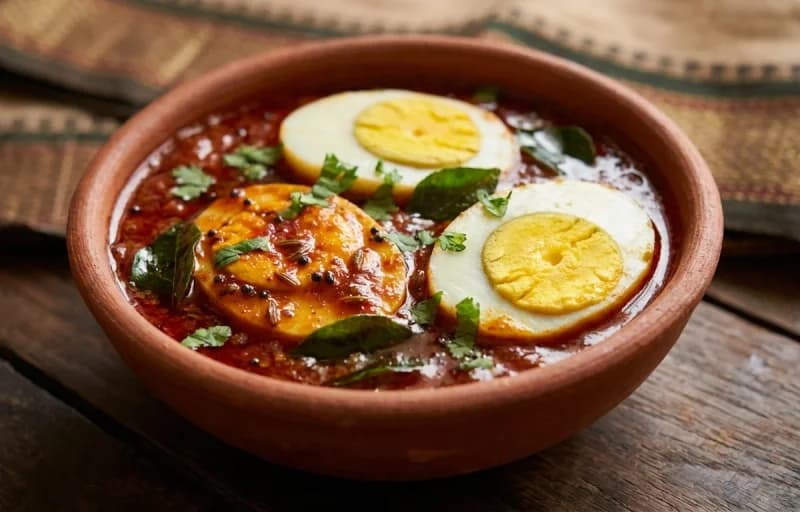
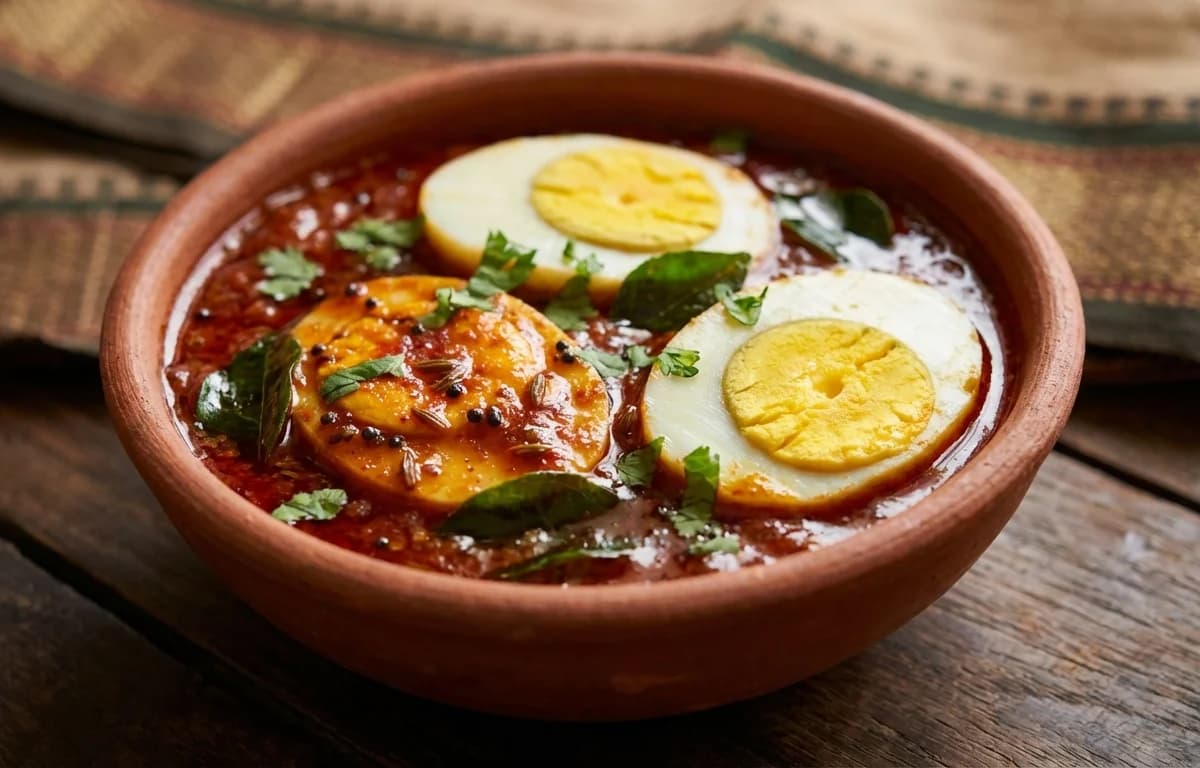
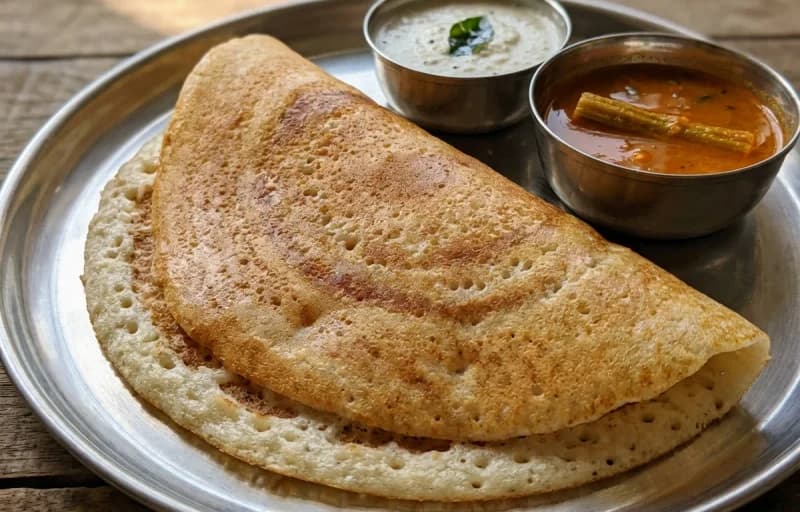
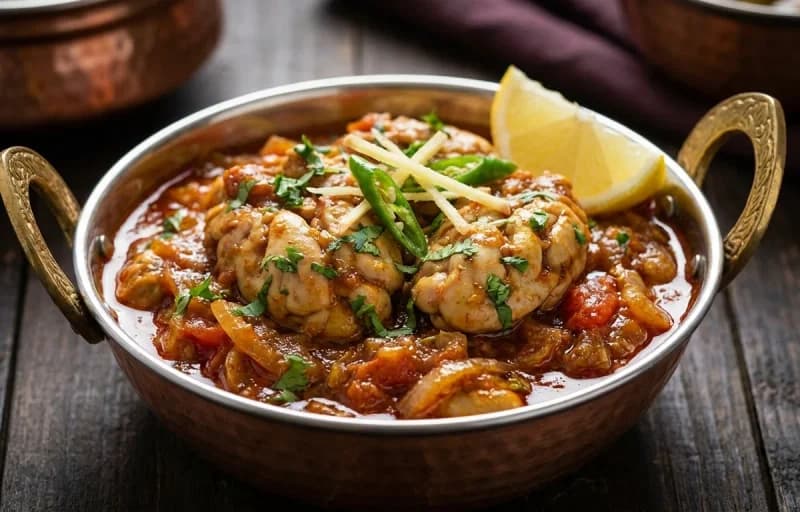
A flavorful South Indian egg curry where hard-boiled eggs are simmered in a rich, spicy onion-tomato gravy. This comforting dish is perfect with steamed rice, chapatis, or dosas for a hearty meal.
Prep15 min
Cook25 min
Servings4
Serving size: 1 serving(2 eggs and about 3/4 cup of masala gravy)
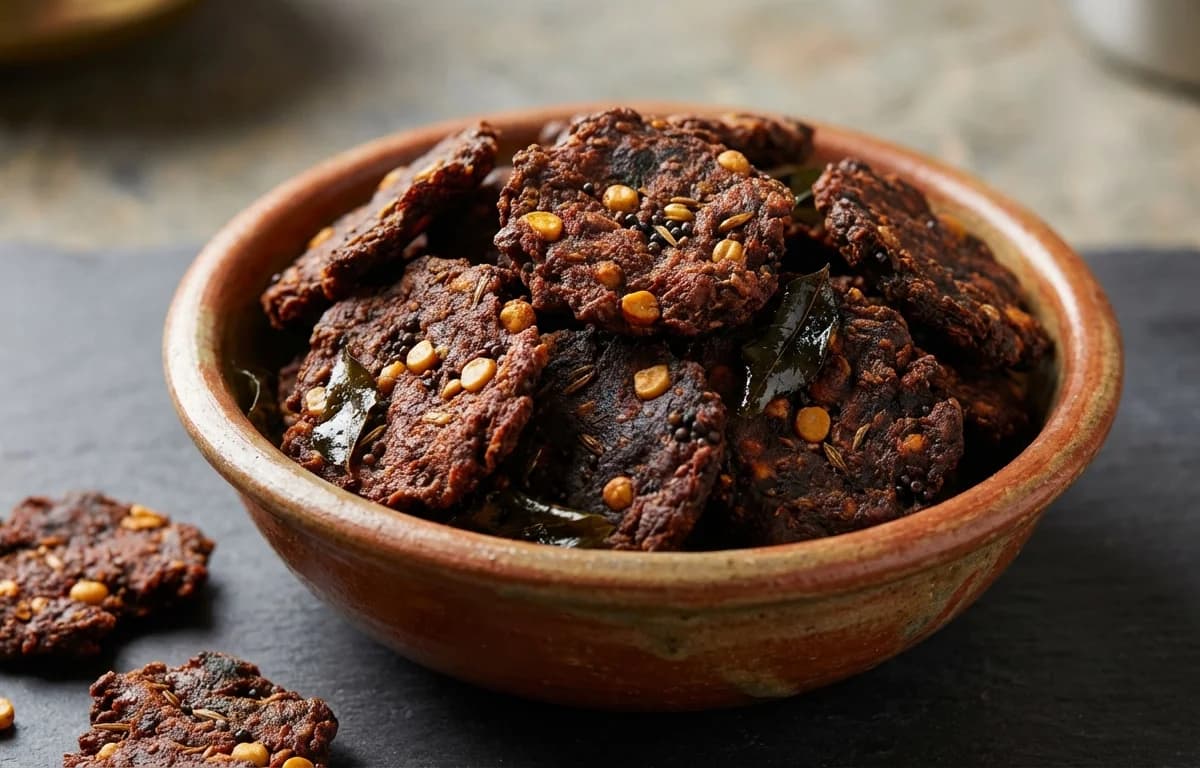
A traditional South Indian sun-dried seasoning made with shallots, garlic, and a blend of aromatic spices. Vadagam adds a unique, deep umami flavor when used for tempering sambar, kuzhambu, and curries. A pantry staple in Tamil households, this recipe follows the authentic multi-day sun-drying process.
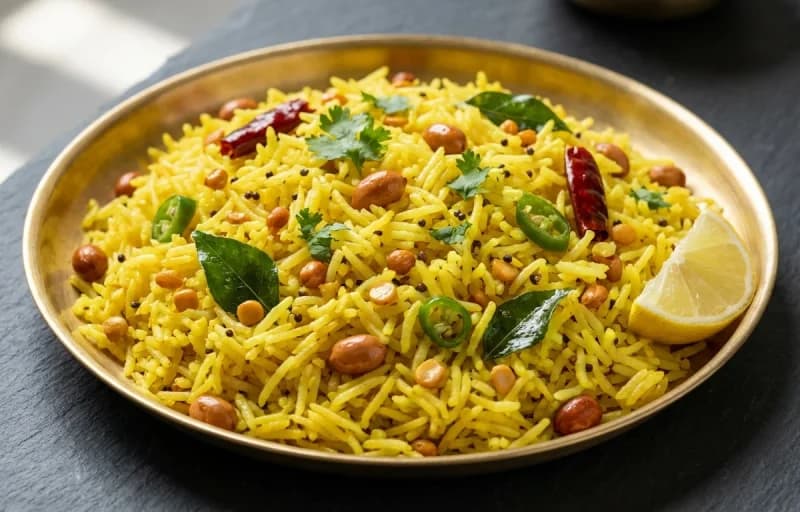
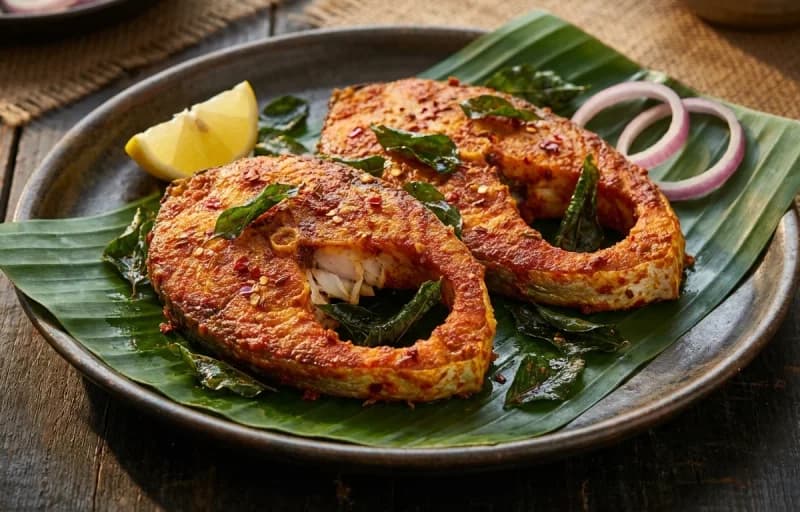
Aromatic Coconut Rice with perfectly spiced, protein-packed Muttai Masala – a soul-satisfying meal!
This tamil dish is perfect for lunch. With 736.6 calories and 23.26g of protein per serving, it's a nutritious choice for your meal plan.
fat
1 cup Grated Coconut (Freshly grated is best, but frozen (thawed) works too)
1 tsp Salt (Adjust to taste)
2 tbsp Coriander Leaves (Freshly chopped, for garnish)
1 tsp Lemon Juice (Optional, for a tangy finish)
Instructions
1
Prepare the rice. If using freshly cooked rice, spread it on a large plate or tray to cool completely. Gently fluff with a fork to separate the grains. This is crucial to prevent the final dish from becoming mushy.
2
Heat coconut oil in a wide, heavy-bottomed pan (kadai) over medium heat. Once the oil is hot, add the mustard seeds and allow them to splutter completely, which should take about 30 seconds.
3
Add the urad dal, chana dal, and cashews to the pan. Sauté continuously for 2-3 minutes, until the dals and cashews turn a light golden brown and become aromatic. Be careful not to burn them.
4
Lower the heat and add the broken dried red chilies, fresh curry leaves, and hing. Sauté for another 30 seconds until the curry leaves turn crisp and fragrant.
5
Add the grated coconut to the pan. Sauté on low heat for 1-2 minutes until it is just heated through and fragrant. Do not let the coconut change color, as this will alter the taste and texture.
6
Add the cooled, fluffed rice and salt to the pan. Mix everything together gently with a spatula or a light hand, ensuring you don't break the rice grains. Cook for 2-3 minutes, until the rice is heated through and evenly coated with the coconut mixture.
7
Turn off the heat. If using, stir in the fresh lemon juice. Garnish with freshly chopped coriander leaves. Serve warm.
296cal
15gprotein
13gcarbs
21gfat
Ingredients
8 pcs Eggs (hard-boiled and peeled)
2 medium Onion (finely chopped)
3 medium Tomatoes (pureed)
1.5 tbsp Ginger Garlic Paste
2 pcs Green Chillies (slit lengthwise)
3 tbsp Vegetable Oil
1 tsp Mustard Seeds
1 tsp Cumin Seeds
10 pcs Curry Leaves
0.5 tsp Turmeric Powder
1 tsp Kashmiri Red Chilli Powder (adjust to taste)
1.5 tsp Coriander Powder
0.75 tsp Garam Masala
1 tsp Salt (or to taste)
1 cup Water
3 tbsp Coriander Leaves (chopped, for garnish)
Instructions
1
Prepare and Sauté the Eggs
Make 2-3 shallow slits on each hard-boiled, peeled egg. This helps them absorb the masala.
In a small bowl, mix 1/4 tsp of the turmeric powder and 1/4 tsp of the red chilli powder. Gently toss the slit eggs in this mixture to coat them.
Heat 1 tbsp of oil in a pan over medium heat. Sauté the coated eggs for 2-3 minutes until they form a light golden, slightly crisp layer. Remove from the pan and set aside.
2
Prepare the Masala Base
In the same pan, heat the remaining 2 tbsp of oil over medium heat. Add the mustard seeds and let them splutter completely.
Add the cumin seeds and curry leaves, and sauté for 30 seconds until fragrant.
Add the finely chopped onions and slit green chillies. Sauté for 7-8 minutes, stirring occasionally, until the onions are soft and golden brown.
Add the ginger-garlic paste and cook for another minute until the raw smell disappears.
3
Cook the Gravy
Add the tomato puree to the pan. Cook for 5-6 minutes, stirring frequently, until the mixture thickens and oil begins to separate from the sides.
500 g Shallots (Peeled, also known as chinna vengayam)
100 g Garlic (Peeled)
2 tbsp Mustard Seeds
2 tbsp Urad Dal
2 tbsp Chana Dal
1 tbsp Cumin Seeds
1 tsp Fenugreek Seeds
0.5 cup Curry Leaves (Fresh, washed and thoroughly patted dry)
1 tbsp Turmeric Powder
1 tsp Asafoetida (Also known as hing)
2 tbsp Rock Salt (Preferred for preservation, can be substituted with sea salt)
0.25 cup Castor Oil (Essential for authentic flavor and preservation)
Instructions
1
Prepare Aromatics (15 minutes)
In a food processor or using a mortar and pestle, coarsely crush the peeled shallots and garlic. Avoid making a fine paste; a chunky, uneven texture is crucial for the final product.
Ensure the curry leaves are completely dry before use. If freshly washed, pat them dry with a towel and let them air dry for an hour.
2
Mix Ingredients (10 minutes)
In a large, wide, non-reactive bowl (glass or stainless steel), combine the crushed shallots and garlic.
Add all the dry ingredients: mustard seeds, urad dal, chana dal, cumin seeds, fenugreek seeds, dry curry leaves, turmeric powder, asafoetida, and rock salt.
Pour in the castor oil. Using your hands, mix everything thoroughly until every ingredient is well-coated with oil and spices. The mixture should be homogenous.
3
Initial Sun-Drying (3 Days)
Spread the mixture evenly on a large tray or a clean cotton cloth. The layer should be relatively thin to promote even drying.
Cover the tray with a fine net or muslin cloth to protect it from dust, insects, and birds.
Place it in direct, strong sunlight for the entire day (at least 6-8 hours).
Reduce the heat to low. Add the remaining turmeric powder, Kashmiri red chilli powder, coriander powder, and salt. Mix well and cook for 1 minute until the spices are aromatic.
Pour in 1 cup of water, stir well, and bring the gravy to a boil.
4
Simmer and Finish
Reduce the heat, cover the pan, and let the gravy simmer for 5-7 minutes to allow the flavors to meld and the gravy to thicken.
Gently add the sautéed eggs to the gravy. Sprinkle the garam masala over the top.
Stir gently to coat the eggs, cover, and cook on low heat for another 2-3 minutes.
5
Garnish and Serve
Turn off the heat and garnish with freshly chopped coriander leaves.
Let the curry rest for 5 minutes before serving hot with your choice of rice or bread.
Each evening, bring the tray indoors. The next morning, mix the contents well with a spoon or your hands and spread it out in the sun again. Repeat this process for 3 full days.
4
Form Balls and Continue Drying (4-5 Days)
After 3 days, the mixture will have lost significant moisture and become darker, but should still be pliable enough to shape.
Take small portions of the mixture (about a tablespoon) and press firmly between your palms to shape them into tight, compact balls, approximately 1 to 1.5 inches in diameter.
Arrange these balls on the tray, leaving some space between them for air circulation.
Continue to sun-dry the balls for another 4-5 days, turning them once or twice a day to ensure they dry evenly on all sides.
5
Final Check and Storage (5 minutes)
The vadagam is ready when the balls are rock-hard, completely dry, and have turned a deep brown or almost black color.
A good test is to shake a few balls in your closed palm; you should hear a distinct rattling sound, indicating they are fully dehydrated.
Once completely dry, store the vadagam in a clean, airtight glass or steel container at room temperature. It will last for over a year, with the flavor deepening over time.