
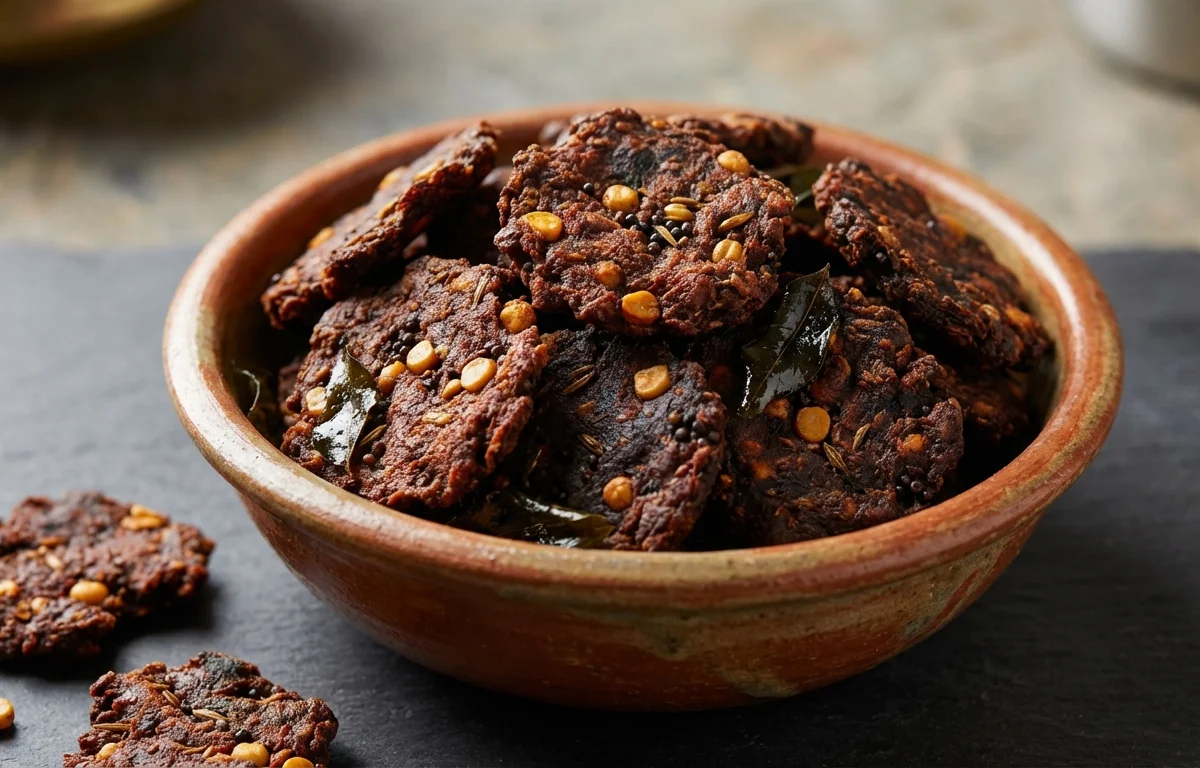
Vadagam
Sun-dried South Indian seasoning balls made with small onions, urad dal and spices. Crumbled and fried in hot oil, they add deep savory flavor and a lovely aromatic kick to kuzhambu, poriyal and simple rice dishes.
For 8 servings
- prep · ~120 min
Soak the urad dal.
Wash the urad dal well and soak it in water for 2 hours. Drain completely so the mixture stays thick.
TIPExtra water makes the vadagam slow to dry and can cause spoilage. - mix · ~5 min
Grind the dal and spices.
1.Add the drained urad dal to a grinder.2.Add mustard seeds, fenugreek seeds, fennel seeds, cumin seeds and asafoetida.3.Grind to a coarse, thick paste without adding water if possible. - mix · ~3 min
Mix in the onions and salt.
Transfer the ground mixture to a bowl. Add the chopped small onions, salt and castor oil, then mix well until the onions are evenly coated.
- rest · ~30 min
Rest the mixture briefly.
Leave the mixture for 30 minutes so the onions release a little moisture and the flavors come together.
- assemble · ~10 min
Shape small vadagam balls.
Pinch small portions of the mixture and shape them into tiny rough balls. Arrange them on a clean plate or cloth with space between each one.
- other
Sun-dry the vadagam.
Dry the shaped vadagam in strong sun for 3 to 5 days, bringing them indoors at night. Turn them once daily until they are fully dry, firm and no longer moist inside.
TIPDry them until completely hard; even a little trapped moisture can shorten storage life. - serve · ~1 min
Store and use as needed.
Cool the dried vadagam fully and store in a clean airtight jar. To use, crumble a little and fry it in hot oil before adding to kuzhambu, poriyal or rice dishes.
What to keep in mind.
7 tips from the recipe — small details that make a real difference to the final dish.
- 1Drain the soaked urad dal thoroughly before grinding; a wet batter makes the vadagam slow to dry and more likely to spoil.
- 2Keep the paste coarse rather than smooth so the dried balls fry up aromatic and crumble easily into kuzhambu or poriyal.
- 3After the 30-minute rest, if the onion mixture turns too loose, shape smaller balls so they dry through faster.
- 4Dry on a clean cotton cloth or plate with space between each ball to prevent sticking and help even sun exposure.
- 5Bring the vadagam indoors every evening; night moisture can undo a full day of drying and shorten shelf life.
- 6The vadagam is ready for storage only when the center feels fully hard with no soft or damp spot when broken open.
- 7When cooking, fry only a small crumbled piece in hot oil until fragrant; it can turn bitter if darkly browned.
Adapt it for your goals.
Spicier
Add a little dried red chilli while grinding for a hotter vadagam that gives extra kick to tamarind kuzhambu and simple rice.
garlicGarlic
Mix in a small amount of finely chopped garlic with the onions for a deeper, more pungent seasoning ball.
mini vadagamMini-vadagam
Shape very tiny balls instead of larger rough ones if you want faster drying and easier portioning for everyday tempering.
oil free mixOil-free-mix
Skip the castor oil if preferred, but dry the vadagam extra carefully and use it sooner since the oil also helps preservation.
Why this is on our healthy list.
Protein from Urad Dal
Urad dal adds plant protein and makes this seasoning more sustaining than a spice-only tempering mix.
Digestive Spice Support
Cumin, fennel, asafoetida and fenugreek are traditional digestive spices that also bring layered flavor to rich gravies.
Onion-Based Flavor Depth
Small onions provide savory sweetness and pungency, helping create strong flavor without needing heavy seasoning each time.
Frequently asked questions
Traditional sun-drying gives the best result. If the weather is poor, use the warmest airy spot possible, but make sure each ball dries completely hard before storing.


