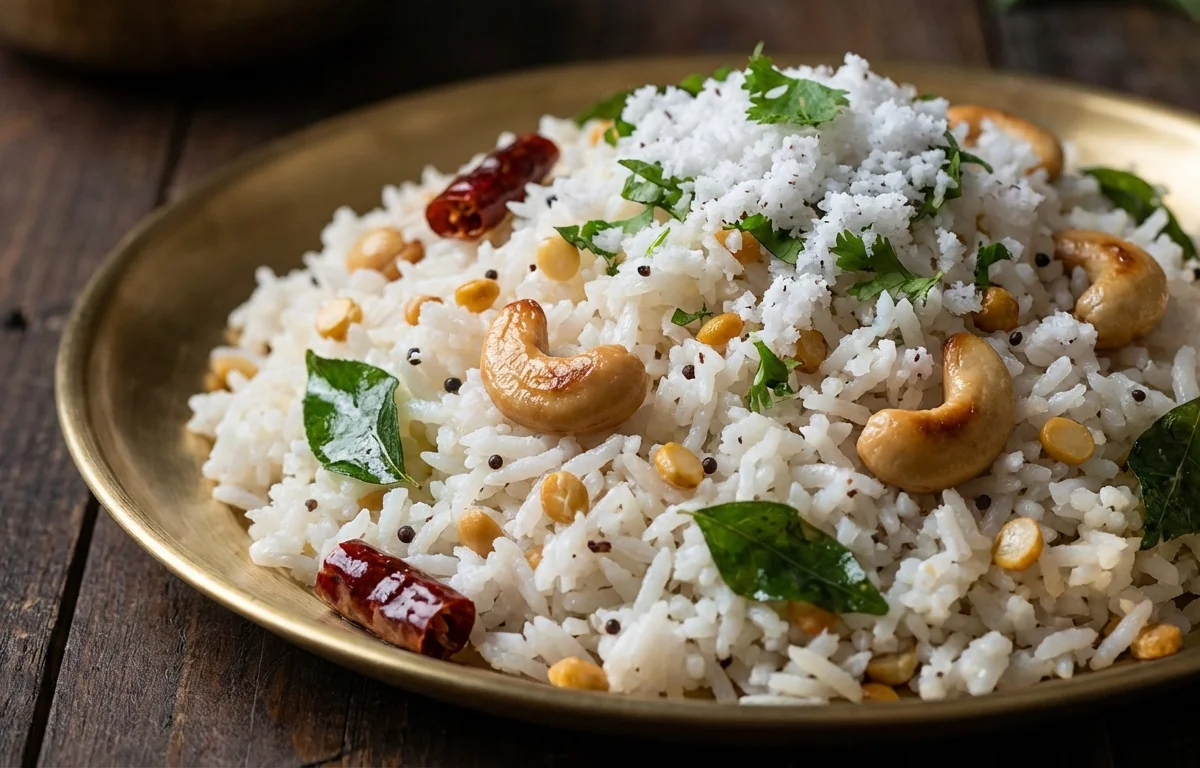
Coconut Rice
Fragrant rice tossed with fresh coconut, curry leaves, and a simple tempering makes a light, comforting South Indian favorite. It comes together quickly and pairs beautifully with pickle, papad, or a mild curry.
For 4 servings
- prep
Rinse and soak the rice.
Wash the rice until the water runs mostly clear, then soak it in fresh water for 15 minutes. Drain well before cooking.
- boil · ~15 min
Cook the rice until just tender.
Bring 2 cups water to a boil, add the drained rice and salt, then cook covered on low heat until the grains are tender and the water is absorbed. Spread the rice on a plate and cool it slightly so the grains stay separate.
- temper · ~4 min
Make the tempering.
1.Heat oil in a wide pan over medium heat.2.Add mustard seeds and let them splutter.3.Add urad dal, chana dal, and cashews, then cook until lightly golden.4.Add green chili, ginger, and curry leaves and cook for 30 seconds.TIPKeep the heat moderate so the dals turn golden without burning. - saute · ~1 min
Warm the coconut briefly.
Add the grated coconut to the pan and cook for 30 to 40 seconds, just until warmed through and fragrant. Do not brown it.
- mix · ~2 min
Fold in the rice.
Add the cooled rice to the pan and toss gently until the tempering and coconut coat the grains evenly. Mix in the coriander leaves and turn off the heat.
- serve
Serve the coconut rice warm.
What to keep in mind.
6 tips from the recipe — small details that make a real difference to the final dish.
- 1Spread the cooked rice to cool before mixing; warm, steamy rice turns mushy when tossed with coconut.
- 2Let the mustard seeds fully splutter before adding dals, or the tempering will taste flat and raw.
- 3Keep the heat medium while frying urad dal, chana dal, and cashews so all three turn evenly golden.
- 4Cook the grated coconut only briefly; browning it changes the dish from fresh and delicate to toasty and heavy.
- 5Slit rather than chop the green chilies if you want aroma and mild heat without too many spicy bites.
- 6If making ahead, store the rice and tempering separately and combine just before serving for the best texture.
Adapt it for your goals.
Vegan
This recipe is already vegan; serve it with pickle and papad for a complete plant-based South Indian meal.
low oilLow-oil
Reduce the oil slightly and roast the cashews separately or skip them for a lighter version with the same coconut-curry leaf profile.
jainJain
Omit the ginger and green chilies if needed, and rely on curry leaves, coconut, and cashews for fragrance and texture.
no nutsNo-nuts
Skip the cashews and increase the chana dal a little for crunch if cooking for someone with nut allergies.
Why this is on our healthy list.
Good Fats from Coconut
Fresh coconut adds richness and satisfying texture, along with natural fats that make the rice more filling.
Digestive Support from Ginger
The chopped ginger adds sharp flavor and is traditionally valued for making savory rice dishes feel lighter.
Plant Protein and Crunch
Urad dal, chana dal, and cashews contribute a little protein and texture, making the dish more balanced than plain rice.
Frequently asked questions
Yes. Leftover rice works very well because the grains are already cool and firm, which makes mixing easier and keeps the texture fluffy.