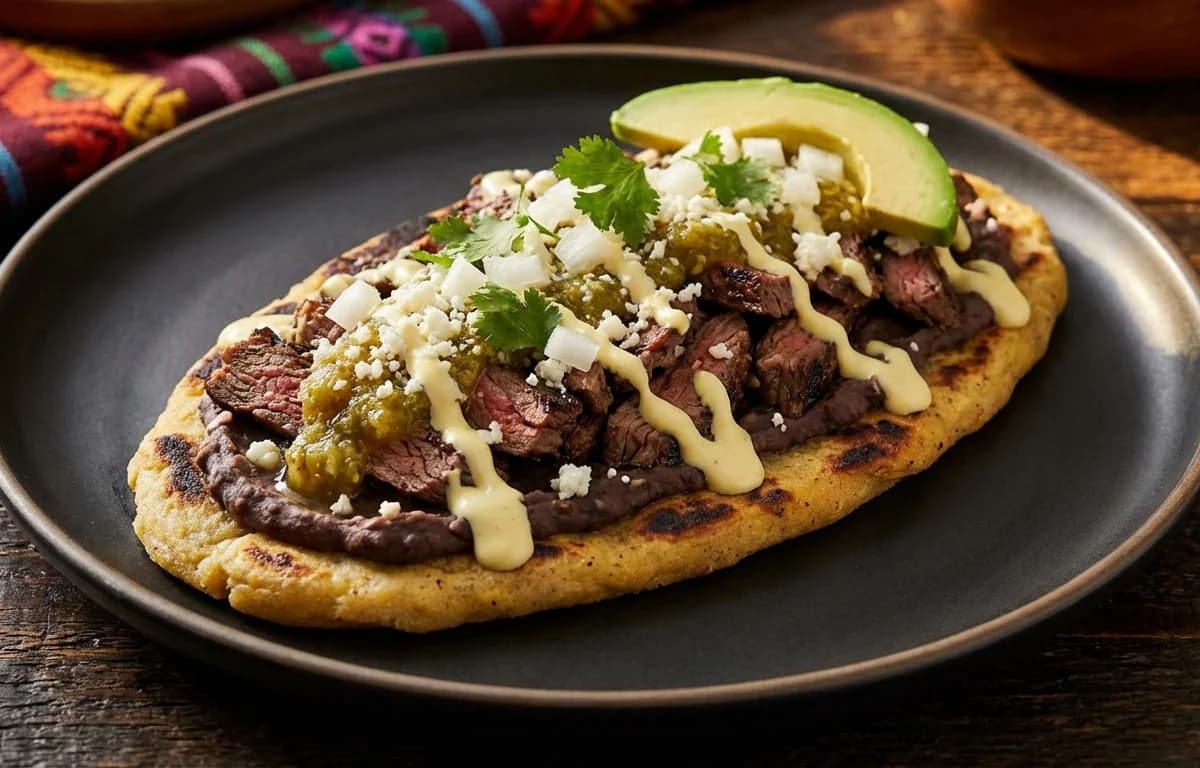
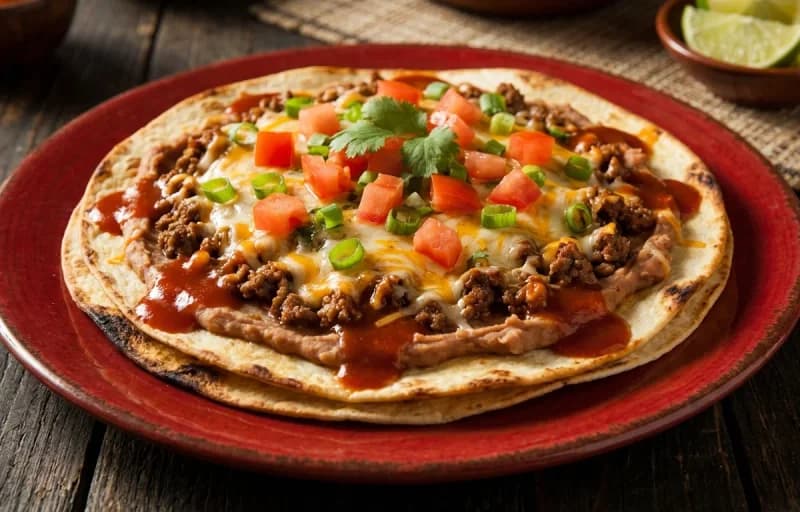
Thick, oblong masa cakes, crisped on the outside and soft inside, piled high with refried beans, grilled steak, and fresh toppings. A beloved Mexican street food classic made easy at home.
Prep30 min
Cook30 min
Servings4
Serving size: 1 serving
1031cal
40gprotein
78gcarbs
63g
Ingredients
2 cup Masa Harina (For corn tortillas)
1.5 cup Warm Water (More or less as needed)
2 tbsp Lard (Melted)
1 tsp Baking Powder
1.75 tsp Salt (Divided: 1 tsp for masa, 0.75 tsp for steak)
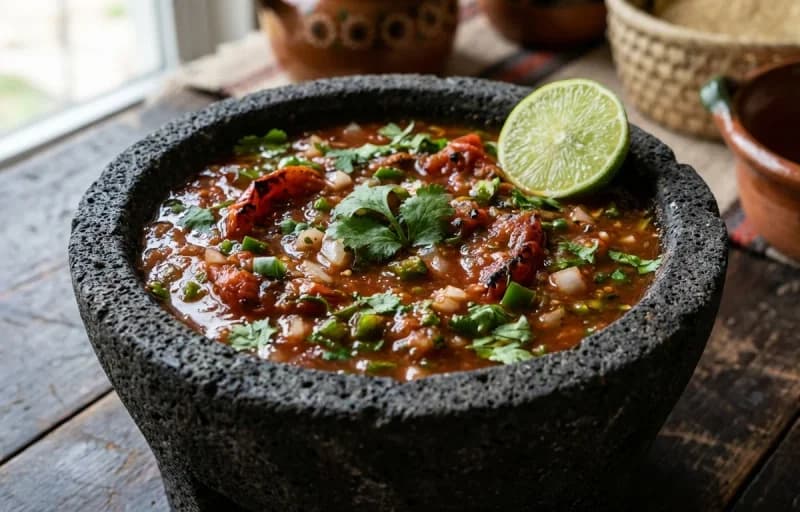
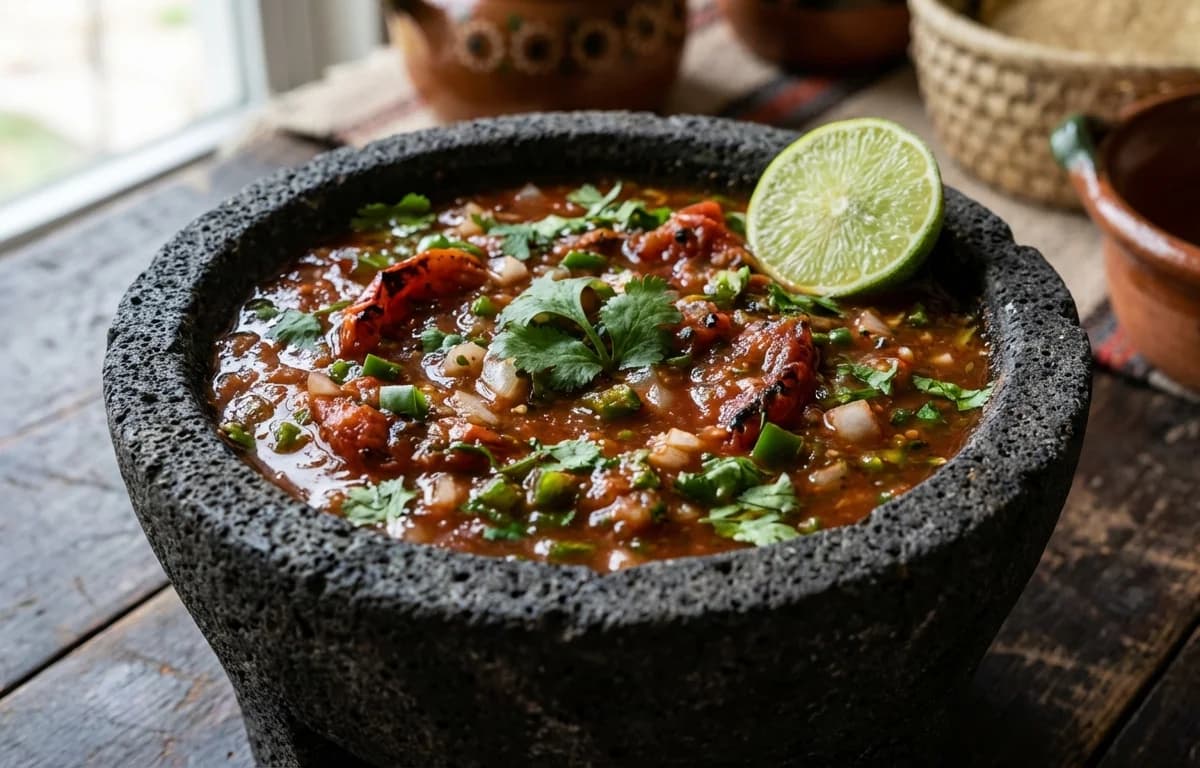
A vibrant, zesty salsa just like your favorite Mexican restaurant! Made in minutes with fire-roasted tomatoes, fresh cilantro, onion, and a kick of jalapeño. Perfect for dipping chips or topping tacos.
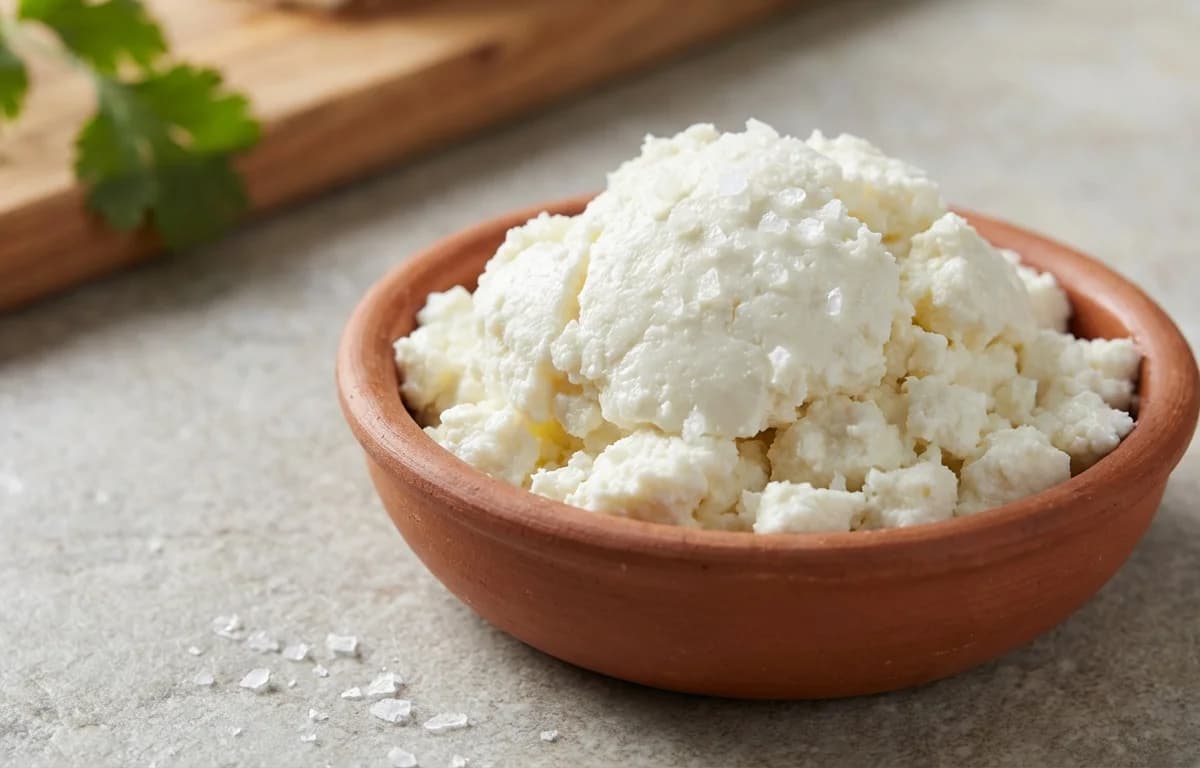
A simple, homemade fresh cheese with a mild, milky flavor and a crumbly texture. Perfect for sprinkling over tacos, enchiladas, or salads, this recipe requires just a few basic ingredients and is ready in about an hour.
About Huaraches, Restaurant-Style Salsa and Queso Fresco
Savory huaraches with steak & cactus, perfectly spiced salsa and queso fresco. A soul-satisfying energy boost!
This mexican_american dish is perfect for dinner. With 1214.56 calories and 49.4g of protein per serving, it's a nutritious choice for your meal plan.
fat
1 tsp Ground Cumin
0.5 tsp Black Pepper (Freshly ground)
0.5 cup Vegetable Oil (For shallow frying)
15 oz Refried Beans (1 can, warmed)
1 cup Salsa Verde
1 cup Cotija Cheese (Crumbled)
0.5 cup Mexican Crema
0.5 medium White Onion (Finely chopped)
0.25 cup Cilantro (Freshly chopped, for garnish)
1 large Avocado (Sliced, for serving)
Instructions
1
Marinate the Steak
In a shallow dish or resealable bag, combine the skirt steak, lime juice, orange juice, minced garlic, ground cumin, 0.75 tsp of salt, and black pepper.
Ensure the steak is evenly coated with the marinade.
Let it marinate for at least 30 minutes at room temperature, or for a more developed flavor, up to 4 hours in the refrigerator.
2
Prepare the Masa Dough
In a large bowl, whisk together the masa harina, baking powder, and the remaining 1 tsp of salt.
Pour in the melted lard and about 1.25 cups of the warm water. Use your hands to mix until a shaggy dough forms.
Gradually add more warm water, 1 tablespoon at a time, kneading after each addition until the dough is smooth, soft, and pliable, similar to the texture of play-doh. It should not be sticky or crack at the edges when pressed.
Cover the bowl with a damp kitchen towel and let the dough rest for 15-20 minutes to fully hydrate.
3
Shape and Cook the Huaraches
Divide the rested dough into 4 equal portions and roll each into a ball.
Place one ball between two pieces of plastic (from a cut-open plastic bag) in a tortilla press. Press gently to form an oblong shape. Alternatively, use your hands or a rolling pin to shape the dough into an oval about 1/4-inch thick and 6-7 inches long.
Heat the vegetable oil in a large, heavy-bottomed skillet or comal over medium-high heat. The oil should shimmer but not smoke.
Carefully lay the huaraches in the hot oil, working in batches of 1 or 2 to avoid overcrowding. Cook for 3-5 minutes per side, until they are golden brown, crisp on the outside, and cooked through on the inside.
Transfer the cooked huaraches to a wire rack to drain excess oil.
4
Grill the Steak
While the huaraches are cooking, heat a grill or cast-iron skillet over high heat until very hot.
Remove the steak from the marinade, allowing any excess to drip off. Discard the remaining marinade.
Grill the steak for 3-5 minutes per side for a medium-rare finish, depending on its thickness. The internal temperature should read 135°F (57°C).
Transfer the cooked steak to a cutting board and let it rest for 10 minutes. This is crucial for juicy, tender meat.
After resting, slice the steak thinly against the grain.
5
Assemble and Serve
To assemble, take a warm huarache base and spread a generous layer of warmed refried beans over the top.
Arrange a portion of the sliced grilled steak over the beans.
Garnish generously with salsa verde, a drizzle of Mexican crema, crumbled cotija cheese, finely chopped white onion, and fresh cilantro.
Serve immediately with slices of fresh avocado on the side.
37cal
1gprotein
8gcarbs
0gfat
Ingredients
794 g Canned Fire Roasted Tomatoes (One 28 oz can, undrained)
75 g White Onion (About 1/2 medium onion, roughly chopped)
1 pc Jalapeño (Seeded and roughly chopped)
2 clove Garlic (Peeled)
0.5 cup Coriander Leaves (Loosely packed)
2 tbsp Lime Juice (Freshly squeezed, from about 1 lime)
1 tsp Ground Cumin
1 tsp Salt (Or to taste)
0.5 tsp Sugar (Optional, to balance acidity)
Instructions
1
Combine all ingredients in a blender or food processor. Add the undrained canned tomatoes, chopped white onion, seeded jalapeño, garlic cloves, cilantro, fresh lime juice, ground cumin, salt, and optional sugar.
2
Pulse to the desired consistency. Secure the lid and pulse 8-10 times for about 1 second each. This creates the classic restaurant-style texture. Be careful not to over-blend, which can make the salsa watery and foamy.
3
Chill to meld the flavors. Transfer the salsa to a non-reactive bowl or jar. Cover and refrigerate for at least 30 minutes, or up to 4 hours. This step is crucial for allowing the flavors to deepen and come together.
4
Taste, adjust, and serve. After chilling, taste the salsa and adjust seasoning if necessary, adding more salt or lime juice to your preference. Serve chilled with tortilla chips or as a topping for your favorite dishes.
1 gallon Whole Milk (Pasteurized milk works best. Avoid using ultra-pasteurized (UHT) milk as it will not curdle properly.)
0.33 cup White Vinegar (You can substitute with an equal amount of fresh lime juice for a slightly different flavor.)
1.5 tsp Salt (Use non-iodized salt like sea salt or kosher salt for the best flavor.)
Instructions
1
Heat the Milk
Pour the gallon of whole milk into a large, heavy-bottomed, non-reactive pot (like stainless steel).
Heat over medium heat, stirring frequently with a spatula to prevent the milk from scorching on the bottom.
Bring the milk to a temperature between 185-195°F (85-90°C). Use a kitchen thermometer for accuracy. Small bubbles will form at the edges, but do not let it come to a rolling boil. This should take about 15-20 minutes.
2
Curdle the Milk
Remove the pot from the heat.
Gently stir in the white vinegar. The milk should begin to curdle and separate almost instantly.
Stop stirring and let the pot sit completely undisturbed for 10 minutes. This allows the curds (solids) to fully separate from the whey (liquid).
3
Strain the Curds
Line a large colander with two layers of cheesecloth and place it over a large bowl or in a clean sink to catch the whey.
Carefully pour the curd and whey mixture into the cheesecloth-lined colander.
Let the curds drain for 5-10 minutes to release most of the whey.
4
Salt and Press the Cheese
Sprinkle the salt over the drained curds in the cheesecloth and use a spoon to gently mix it in.
Gather the corners of the cheesecloth to form a bundle. Twist the top to gently squeeze out more whey.
Shape the cheese into a disc inside the cloth. For a softer, more crumbly cheese, it's ready to be used now.
For a firmer, sliceable cheese, place the bundle back in the colander, fold the excess cloth over the top, place a small plate on it, and add a weight (like a couple of cans) on top. Press for 30-60 minutes.
5
Chill and Store
Unwrap your finished block of queso fresco. It can be used immediately.
To store, wrap tightly in plastic wrap or place in an airtight container. Refrigerate for up to one week.