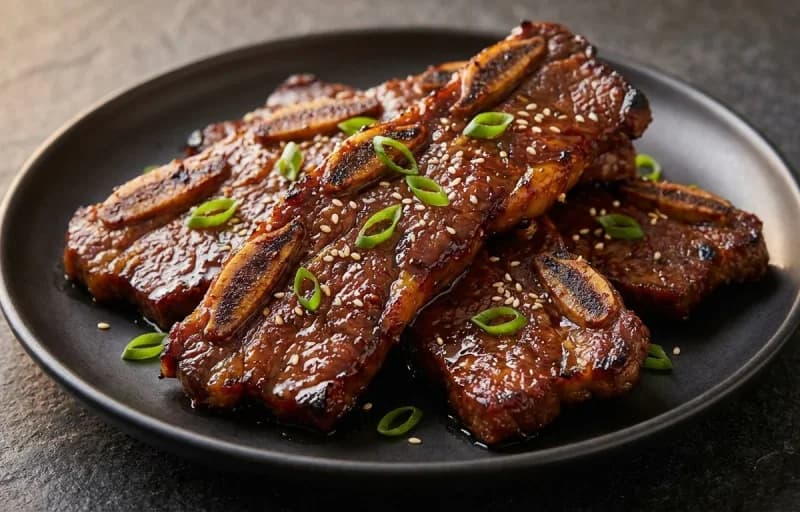
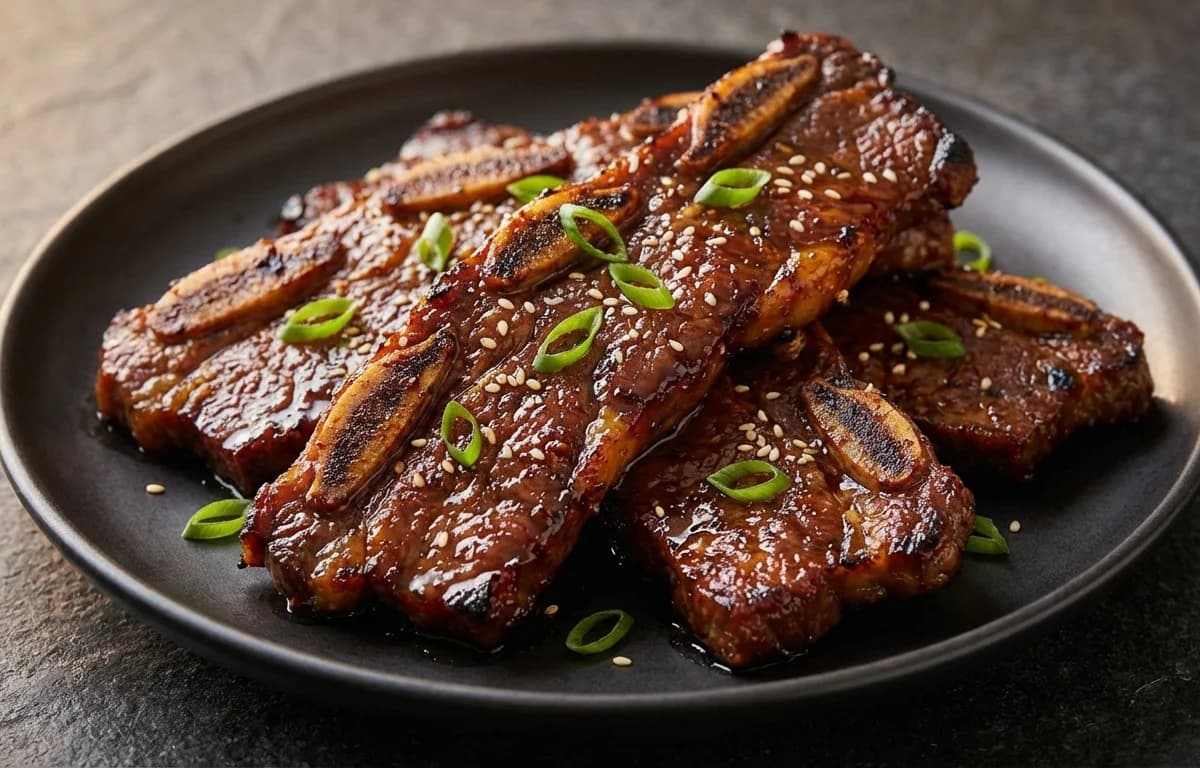
Tender, juicy, and savory-sweet Korean BBQ short ribs marinated in a classic soy, pear, and garlic sauce. This flanken-cut beef recipe is a guaranteed crowd-pleaser and perfect for your next summer cookout.
Prep20 min
Cook15 min
Soak240 min
Servings4
Serving size: 1 serving
1149cal
73gprotein
24gcarbs
Ingredients
1 kg Beef Short Ribs (Flanken-cut, about 1/2-inch thick)
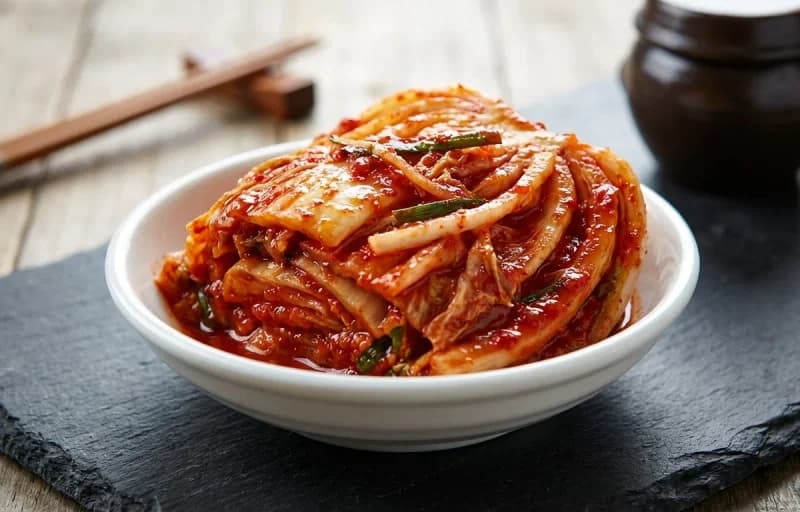
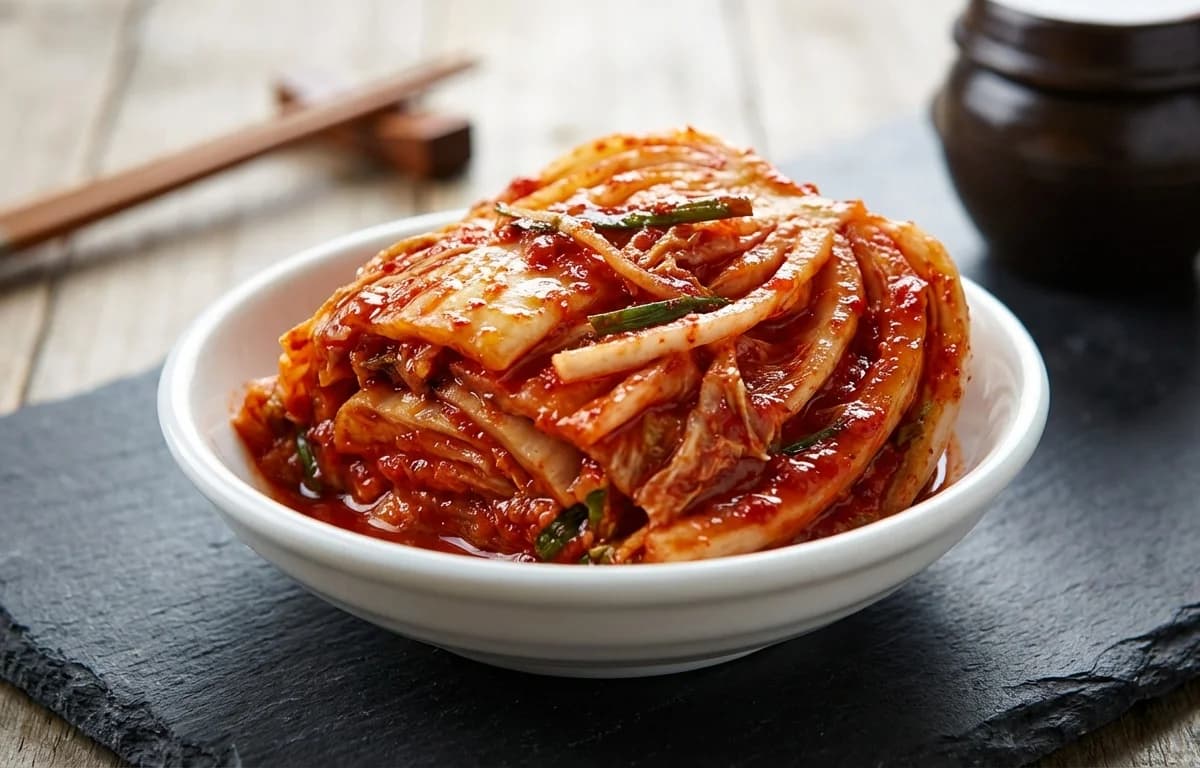
A classic Korean staple featuring crisp napa cabbage fermented in a fiery, umami-rich paste of gochugaru, fish sauce, and garlic. Perfect for adding a spicy, tangy kick to any meal, from rice bowls to stews.
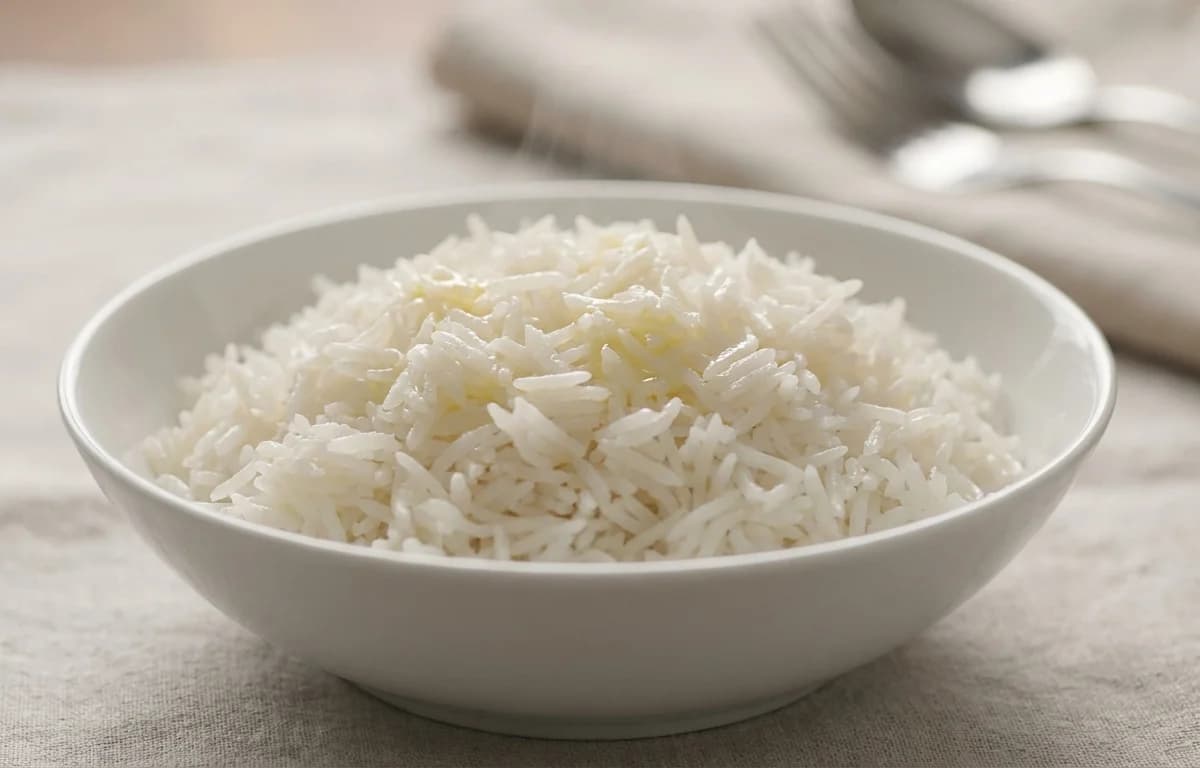
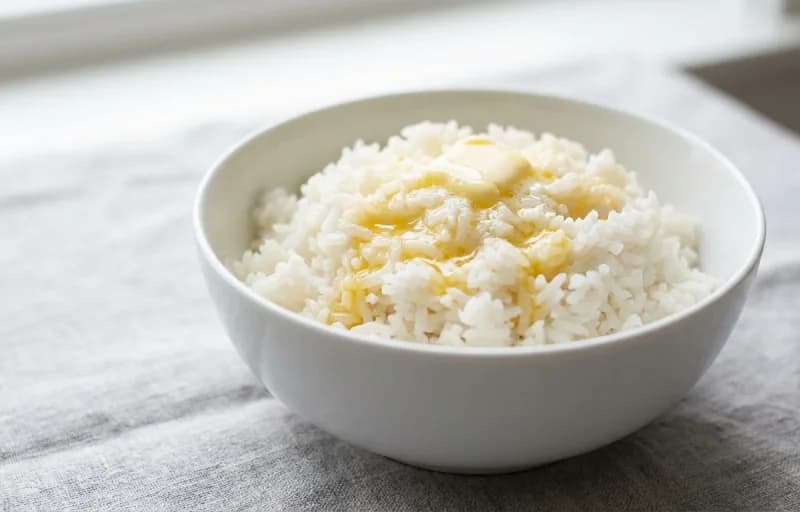
Perfectly fluffy, long-grained basmati rice with a delicate aroma. This simple, foolproof recipe gives you separate, non-sticky grains every time, making it the perfect base for any curry or dal.
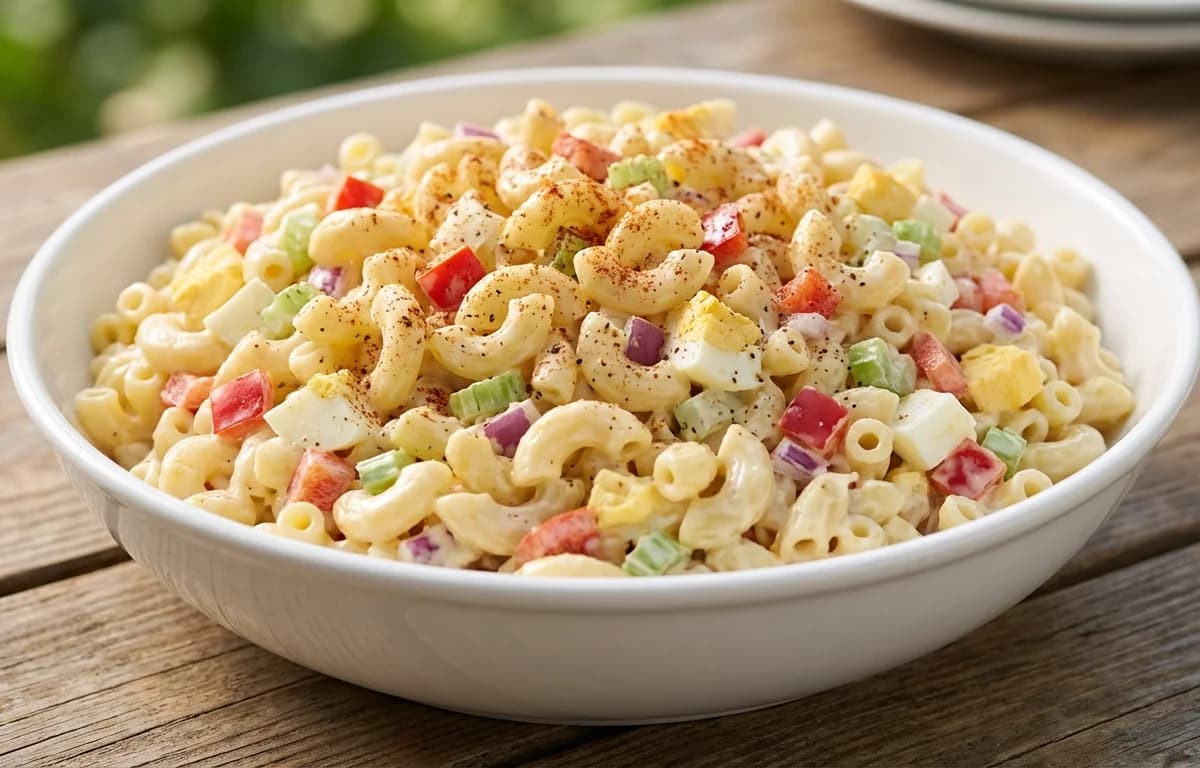
A classic American side dish perfect for picnics and barbecues. Creamy, tangy, and loaded with crunchy vegetables and tender macaroni, this salad is always a crowd-pleaser and comes together in no time.
About Kalbi Short Ribs, Napa Cabbage Kimchi, Steamed Basmati Rice and Macaroni Salad
Melt-in-mouth Kalbi Ribs with tangy, gut-friendly kimchi and creamy macaroni salad – pure bliss!
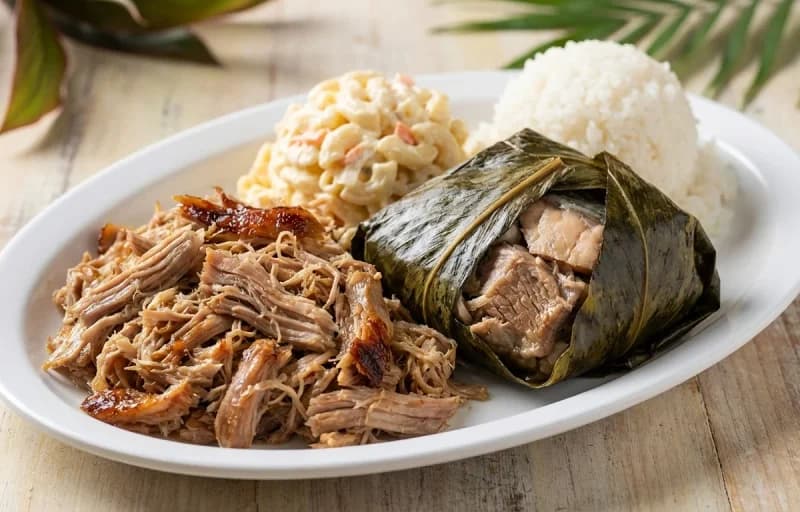
This hawaiian dish is perfect for dinner. With 1989.69 calories and 90.98000000000002g of protein per serving, it's a nutritious choice for your meal plan.
83gfat
3 stalks Green Onions (Roughly chopped, plus more for garnish)
1 tsp Black Pepper (Freshly ground)
1 tbsp Toasted Sesame Seeds (For garnish)
Instructions
1
Create the Marinade
In a blender, combine the soy sauce, water, brown sugar, mirin, sesame oil, garlic cloves, ginger, Asian pear, and roughly chopped green onions.
Blend on high for 30-60 seconds until the mixture is completely smooth.
Pour the marinade into a large, non-reactive bowl or baking dish and stir in the freshly ground black pepper.
2
Marinate the Short Ribs
Place the flanken-cut short ribs into the marinade one by one, ensuring each piece is fully coated.
Cover the dish tightly with plastic wrap or transfer the ribs and marinade to a large zip-top bag, pressing out any excess air.
Refrigerate for at least 4 hours, but ideally 8-12 hours for optimal flavor. Do not marinate for more than 24 hours as the pear can make the meat texture too soft.
3
Prepare for Grilling
Remove the ribs from the refrigerator 30 minutes before cooking to allow them to come to room temperature.
Preheat your grill (charcoal or gas) to a medium-high heat, around 400-450°F (200-230°C).
Clean the grill grates thoroughly and lightly oil them with a high-smoke-point oil to prevent sticking.
4
Grill the Kalbi
Remove the ribs from the marinade, allowing the excess to drip off. Discard the used marinade.
Place the ribs on the hot grill in a single layer, being careful not to overcrowd.
Grill for 3-4 minutes per side. The sugar in the marinade will create a beautiful char and caramelization. Watch closely to prevent burning.
The ribs are done when they are nicely charred and cooked through.
5
Rest and Serve
Transfer the cooked Kalbi to a cutting board and let them rest for 5-10 minutes. This allows the juices to redistribute, ensuring a tender bite.
Using kitchen shears or a sharp knife, cut the ribs between the bones into individual pieces.
Garnish generously with toasted sesame seeds and thinly sliced green onions.
Serve immediately with steamed rice and your favorite Korean side dishes (banchan) like kimchi.
Servings32
Serving size: 1 serving
23cal
1gprotein
4gcarbs
1gfat
Ingredients
1 large Napa Cabbage (about 4 lbs)
1 cup Coarse Sea Salt (for brining, not iodized table salt)
2 tbsp Sweet Rice Flour
1 cup Water (for making the porridge)
1 tbsp Granulated Sugar
1 cup Gochugaru (Korean red pepper flakes, adjust to taste)
0.25 cup Fish Sauce
2 tbsp Saeujeot (salted fermented shrimp, minced)
12 cloves Garlic (finely minced)
1 inch piece Ginger (peeled and finely minced)
0.5 medium Korean Pear (peeled and grated)
1 cup Korean Radish (peeled and julienned)
8 stalks Scallions (cut into 1-inch pieces)
Instructions
1
Salt and Wilt the Cabbage (1.5 - 2 hours)
Cut the napa cabbage lengthwise into quarters and remove the tough core at the base.
Cut the quarters crosswise into 2-inch wide pieces.
In a very large bowl, toss the cabbage pieces with the coarse sea salt, ensuring salt gets between all the layers. Add enough cold water to just cover the cabbage and stir to dissolve the salt.
Let the cabbage brine for 1.5 to 2 hours, turning it over in the bowl every 30 minutes to ensure even salting.
After 2 hours, the cabbage should be wilted and flexible (a piece should bend easily without snapping).
Rinse the cabbage thoroughly under cold running water 3-4 times to remove all excess salt. Drain well in a colander for at least 30 minutes, gently squeezing to remove excess water.
2
Prepare the Sweet Rice Porridge (5 minutes)
In a small saucepan, whisk together the sweet rice flour and 1 cup of water until no lumps remain.
Bring to a simmer over medium heat, stirring constantly. Cook for 3-4 minutes until it thickens into a smooth, glue-like paste.
Stir in the sugar and cook for 1 more minute until it's fully dissolved.
1.5 cup Basmati Rice (Use good quality, aged basmati rice for best results)
2.25 cup Water (For the absorption cooking method)
0.75 tsp Salt (Adjust to taste)
1 tsp Ghee (Optional, for flavor and to prevent sticking)
Instructions
1
Rinse and Soak the Rice (35 minutes)
Place the basmati rice in a large bowl. Add cold water and gently swirl the rice with your fingers. Drain the cloudy water. Repeat this process 3-4 times until the water runs mostly clear. This removes excess starch and prevents stickiness.
Cover the rinsed rice with fresh water and let it soak for 30 minutes. Soaking allows the grains to absorb water, ensuring they cook evenly and elongate beautifully.
After 30 minutes, drain the rice completely using a fine-mesh sieve and set aside.
2
Cook the Rice (15 minutes)
In a medium, heavy-bottomed saucepan with a tight-fitting lid, combine the drained rice, 2.25 cups of fresh water, salt, and ghee (if using).
Bring the mixture to a rolling boil over medium-high heat, uncovered.
As soon as it boils, give it one gentle stir, then immediately reduce the heat to the lowest possible setting. Cover the saucepan tightly with the lid.
Let the rice simmer for 12-15 minutes, or until all the water has been absorbed. Do not lift the lid during this time to prevent steam from escaping.
3
Rest and Fluff (10 minutes)
Turn off the heat but leave the saucepan on the stove, still covered. Let the rice rest and steam for 10 minutes. This step is crucial for finishing the cooking process and achieving a perfect texture.
After resting, remove the lid. Use a fork to gently fluff the rice, separating the long, delicate grains.
Serve hot as a perfect accompaniment to curries, dals, or grilled dishes.
1.5 cup mayonnaise (Use full-fat for the best creamy texture)
3 stalks celery (Finely chopped)
1 medium red onion (Finely diced)
1 medium red bell pepper (Finely diced)
4 large hard-boiled eggs (Peeled and chopped)
3 tbsp white vinegar (Apple cider vinegar can also be used)
2 tbsp dijon mustard
1 tbsp granulated sugar (Balances the acidity)
0.5 tsp black pepper (Freshly ground is best)
0.5 tsp paprika (For garnish)
Instructions
1
Cook the Macaroni: Bring a large pot of water to a rolling boil. Add 1 tablespoon of salt, then stir in the elbow macaroni. Cook according to package directions until al dente, typically 8-10 minutes. Drain immediately in a colander and rinse thoroughly with cold running water until completely cool. This stops the cooking process and prevents the pasta from becoming mushy. Shake well to remove excess water.
2
Prepare the Dressing: While the pasta cooks, prepare the dressing. In a medium bowl, whisk together the mayonnaise, white vinegar, Dijon mustard, granulated sugar, 1 teaspoon of salt, and black pepper until the mixture is smooth and creamy.
3
Combine Ingredients: In a large mixing bowl, combine the cooled macaroni, finely chopped celery, diced red onion, diced red bell pepper, and chopped hard-boiled eggs.
4
Mix and Chill: Pour the prepared dressing over the macaroni and vegetable mixture. Use a rubber spatula to gently fold everything together until all ingredients are evenly coated. Cover the bowl tightly with plastic wrap and refrigerate for at least 2 hours to allow the flavors to meld. For the best flavor, chill for 4 hours or overnight.
5
Serve: Just before serving, give the salad a final stir. If it seems a bit dry after chilling (the pasta will absorb some dressing), you can stir in an extra tablespoon of mayonnaise to restore creaminess. Garnish with a sprinkle of paprika and serve chilled.
Remove from the heat and set aside to cool completely. This is crucial; hot porridge can kill the beneficial bacteria needed for fermentation.
3
Mix the Kimchi Paste (5 minutes)
In a large mixing bowl (large enough to hold all the cabbage), combine the completely cooled rice porridge, gochugaru, fish sauce, saeujeot (salted shrimp), minced garlic, minced ginger, and grated Korean pear.
Stir everything together until it forms a uniform, thick, and fragrant red paste.
4
Combine Paste with Vegetables (10 minutes)
Add the julienned Korean radish and chopped scallions to the kimchi paste and mix well.
Add the drained and rinsed cabbage to the bowl.
Wearing kitchen gloves, gently but thoroughly massage the paste onto every piece of cabbage, ensuring everything is evenly coated.
5
Pack and Ferment (1-3 days at room temp)
Tightly pack the coated cabbage into a large glass jar, fermentation crock, or other non-reactive container. Press down firmly as you go to remove air pockets and encourage brine to rise.
Leave at least 2 inches of headspace at the top of the jar to allow for expansion and bubbling during fermentation.
Wipe the rim of the jar clean and seal it. If using a standard lid, do not tighten it all the way to allow gas to escape.
Let the jar sit at a cool room temperature, away from direct sunlight, for 1 to 3 days.
Check it daily. You should see bubbles forming. Open the jar once a day ('burp' it) to release built-up gases and press the kimchi down with a clean spoon to keep it submerged in brine.
After 1-3 days, taste the kimchi. Once it has reached your desired level of sourness, transfer it to the refrigerator. Refrigeration will slow the fermentation process significantly.
The kimchi is ready to eat immediately but its flavor will continue to develop and deepen over the next 1-2 weeks.