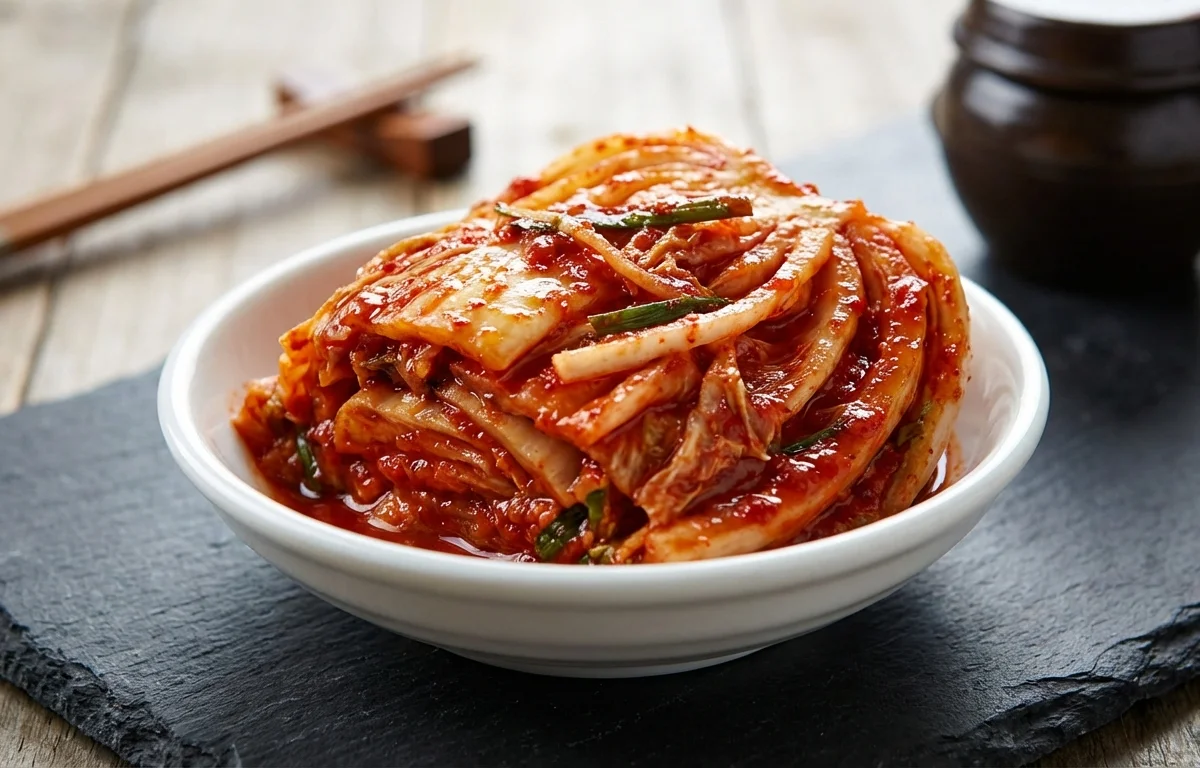
Napa Cabbage Kimchi
Crunchy, spicy, and wonderfully tangy, this classic Korean fermented napa cabbage kimchi is packed with bold umami flavor. The cabbage is salted, rinsed, then coated in a vibrant paste of gochugaru, garlic, ginger, and fish sauce before slowly fermenting to develop its signature sour kick. A staple in Korean kitchens that gets better with age.
For 12 servings
- prep · ~120 min
Salt the napa cabbage.
1.Cut the cabbage lengthwise into quarters, then remove the core from each quarter.2.Chop the quarters into 2-inch wide bite-sized pieces.3.Place cabbage in a large bowl and toss with the coarse sea salt, making sure salt gets between the leaves.4.Pour 4 cups of water over the cabbage, then let it sit at room temperature for 2 hours, turning the cabbage every 30 minutes.TIPProper salting draws out moisture and creates the crunch. The leaves should be flexible enough to bend without snapping. - prep · ~10 min
Rinse and drain the cabbage.
1.Rinse the salted cabbage thoroughly under cold running water 3 times, removing all visible salt.2.Drain well in a colander and gently squeeze out excess water.3.Set aside to drain further while preparing the paste. - boil · ~5 min
Make the rice flour porridge.
1.In a small saucepan, combine 2 tablespoons sweet rice flour with 1 cup of water.2.Whisk until smooth, then cook over medium heat, stirring constantly.3.Remove from heat once it thickens and bubbles appear (about 3-4 minutes).4.Stir in the sugar until dissolved, then let the porridge cool completely.TIPThe porridge acts as a binder and helps the paste cling to the cabbage leaves. - mix · ~5 min
Prepare the kimchi paste.
1.In a large bowl, combine the cooled rice porridge, gochugaru, fish sauce, minced garlic, and minced ginger.2.Mix well into a thick, bright red paste.3.Add the julienned daikon radish, carrot, and green onion pieces to the paste.4.Toss the vegetables with the paste until evenly coated. - mix · ~5 min
Coat the cabbage with the paste.
1.Add the drained cabbage to the bowl with the vegetable-paste mixture.2.Wearing gloves, use your hands to thoroughly massage the paste into every cabbage piece, ensuring each leaf is well coated.3.Mix until the cabbage is evenly bright red and no white patches remain.TIPWearing gloves protects your hands from staining and the gochugaru burn. - assemble · ~5 min
Pack the kimchi for fermentation.
1.Pack the seasoned cabbage tightly into a clean glass jar or airtight container.2.Press down firmly as you pack to remove air pockets.3.Leave about 1-2 inches of headspace at the top for expansion during fermentation.4.Seal the container and wipe the outside clean.TIPPressing out air pockets prevents spoilage and ensures even fermentation. - rest · ~2880 min
Ferment the kimchi.
1.Leave the sealed container at room temperature (65-72°F is ideal) for 1-2 days.2.You'll see bubbles forming and smell a tangy, pickled aroma — that means fermentation is active.3.Open the jar once a day to release built-up gas and press the cabbage back down under the brine.TIPThe ideal fermentation temperature is 65-72°F. Warmer = faster ferment, cooler = slower. - rest · ~10080 min
Refrigerate and age.
1.After 1-2 days at room temperature, taste the kimchi. It should be tangy and pleasantly sour.2.Transfer the jar to the refrigerator.3.Kimchi will continue to ferment slowly in the fridge and reach peak flavor after about 1 week.TIPFresh kimchi (geotjeori) can be eaten immediately, but aged kimchi develops deeper, more complex flavors perfect for stews and fried rice.
What to keep in mind.
8 tips from the recipe — small details that make a real difference to the final dish.
- 1Use coarse sea salt, not table salt, to draw out moisture without making the cabbage too salty.
- 2Rinse the salted cabbage at least three times to remove excess salt, or the kimchi will be overly salty.
- 3Let the rice flour porridge cool completely before mixing with gochugaru, or the heat will dull the chili's flavor.
- 4Wear kitchen gloves when massaging the paste to prevent skin staining and irritation from gochugaru.
- 5Pack the kimchi tightly into the jar, pressing firmly to eliminate air pockets that can cause mold.
- 6Burp the jar daily during room-temperature fermentation to release carbon dioxide and prevent pressure buildup.
- 7For best flavor, refrigerate the kimchi for at least one week after the initial ferment to let it mature.
- 8If you see white film (kahm yeast) on top, skim it off—it's harmless but can affect taste.
Adapt it for your goals.
Vegan
Replace fish sauce with soy sauce or a vegan fish sauce made from seaweed and mushrooms for a plant-based kimchi that's still deeply savory.
low sodiumLow-sodium
Reduce the salt for salting to 1/2 cup and use low-sodium fish sauce or salted kelp powder, though note that less salt may shorten fermentation time.
extra crunchyExtra-crunchy
Add 1 cup of cubed Korean radish (mu) or apple chunks to the paste for a pop of sweetness and a contrasting firm texture.
spicy gochugaru freeSpicy-gochugaru-free
Swap gochugaru for a mix of smoked paprika and a pinch of cayenne, but expect a milder, less authentic heat and no vibrant red color.
Why this is on our healthy list.
Rich in Probiotics
The natural fermentation process produces beneficial lactic acid bacteria that support gut health and digestion.
Source of Vitamin C
Napa cabbage and daikon radish provide a good amount of vitamin C, which supports immune function.
Low in Calories
Kimchi is very low in calories while being nutrient-dense, making it a great addition to weight-management diets.
Contains Antioxidants
Gochugaru (Korean chili flakes) and garlic are rich in compounds like capsaicin and allicin that have antioxidant and anti-inflammatory properties.
Frequently asked questions
Yes, you can eat it right away as 'fresh kimchi' (geotjeori), but the signature sour and tangy flavors develop only after fermenting for at least 1-2 days at room temperature.