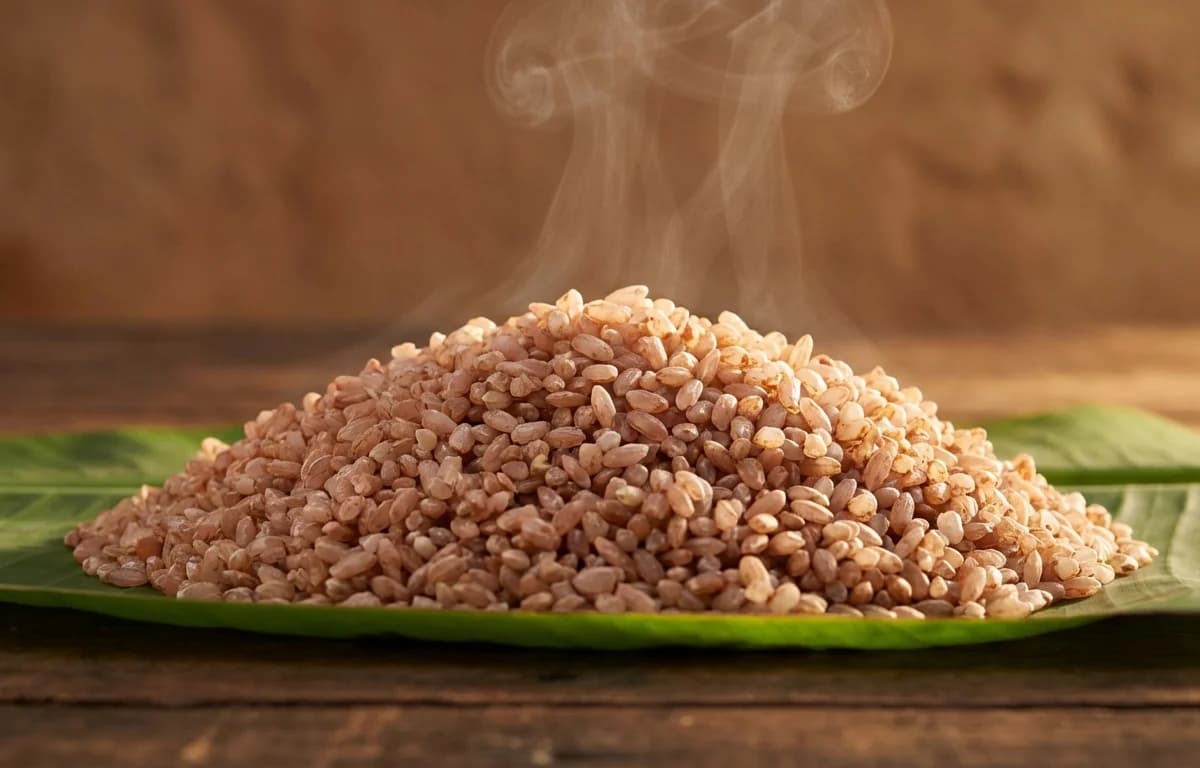
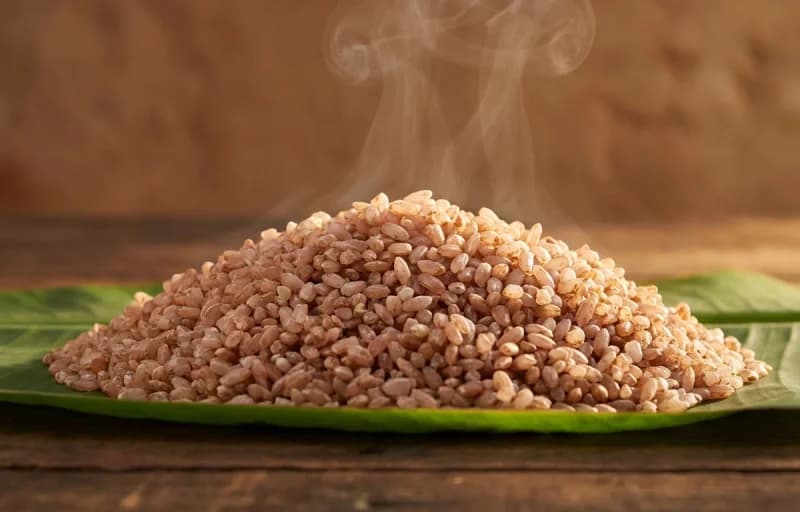
A staple in Kerala, this nutritious red parboiled rice has a unique earthy flavor and firm texture. Perfectly cooked, it's the ideal accompaniment to South Indian curries like sambar and avial.
Prep35 min
Cook25 min
Soak30 min
Servings4
Serving size: 1 serving
246cal
5gprotein
53gcarbs
Ingredients
1.5 cup Matta Rice (Also known as Kerala Red Rice or Rosematta Rice)
4 cup Water (For pressure cooking)
0.5 tsp Salt (Optional, to taste)
Instructions
1
Rinse and Soak the Rice
Place the matta rice in a large bowl. Rinse it under cold running water 4-5 times, rubbing the grains gently between your palms, until the water runs mostly clear.
Add fresh water to the bowl to cover the rice by at least 2 inches. Let it soak for a minimum of 30 minutes, or up to 2 hours for a softer texture.
After soaking, drain the water completely using a colander.
2
Pressure Cook the Rice
Transfer the drained rice to a 3-liter or larger pressure cooker.
Add 4 cups of fresh water and the optional salt. Stir once.
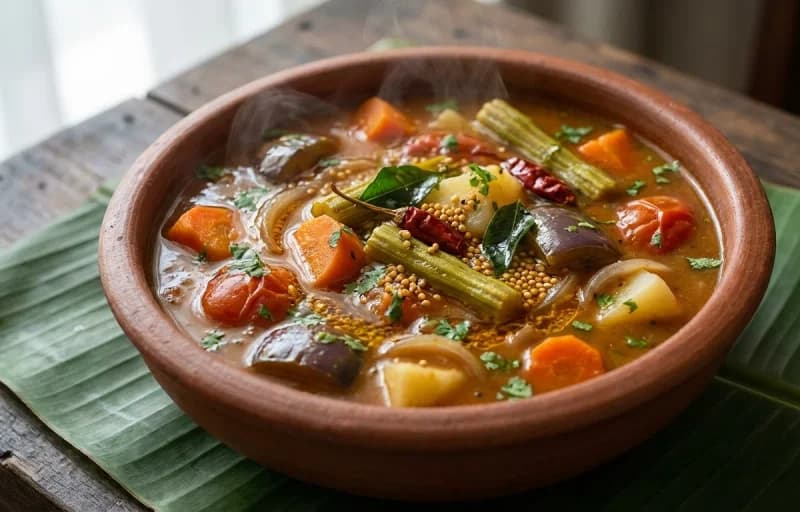
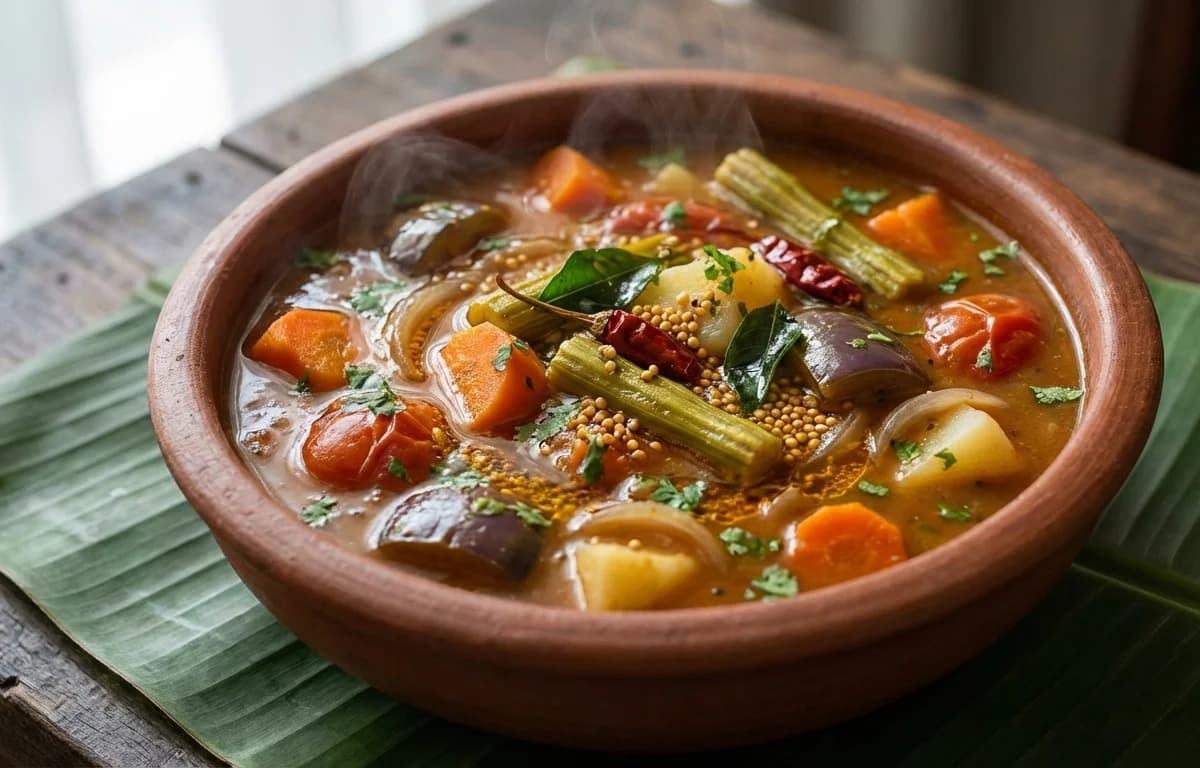
A hearty South Indian stew made with lentils, mixed vegetables, and a special blend of spices. This tangy and flavorful sambar is the perfect accompaniment for rice, idli, or dosa.
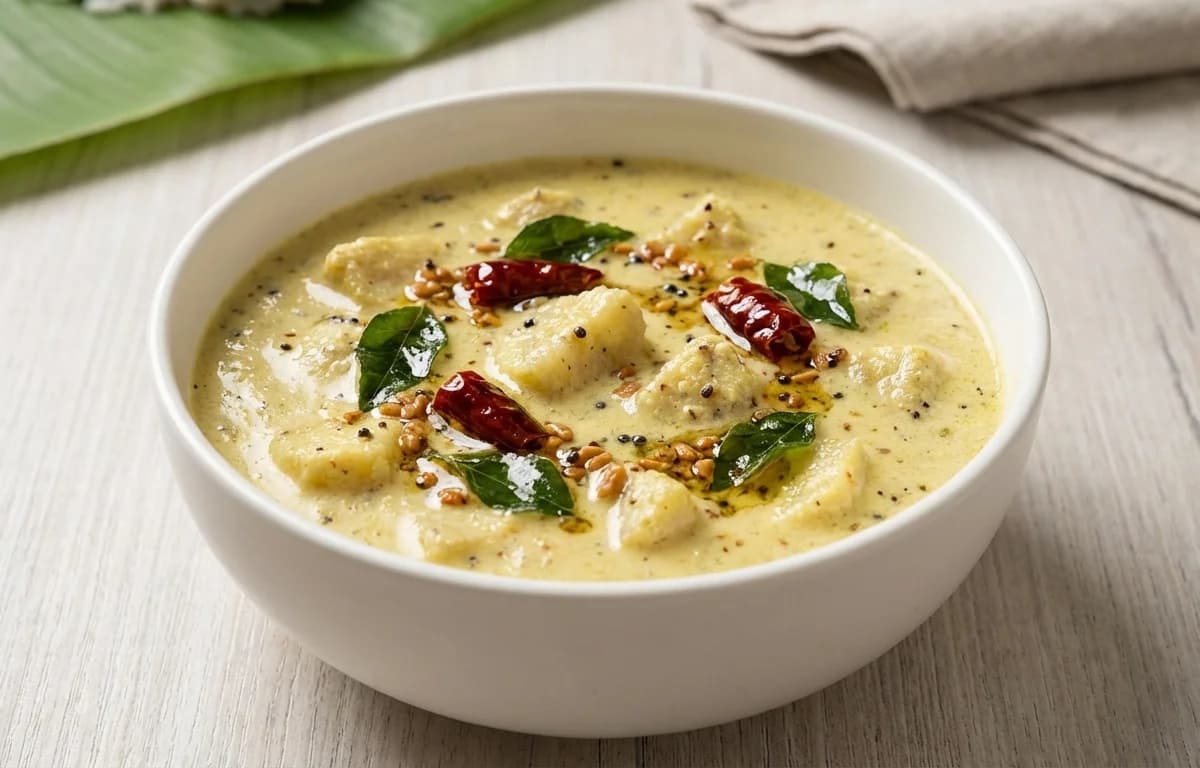
A classic Kerala Sadya dish featuring tender yam and raw plantain in a thick, tangy yogurt and coconut gravy. This traditional curry is a beautiful balance of sour, spicy, and savory flavors.
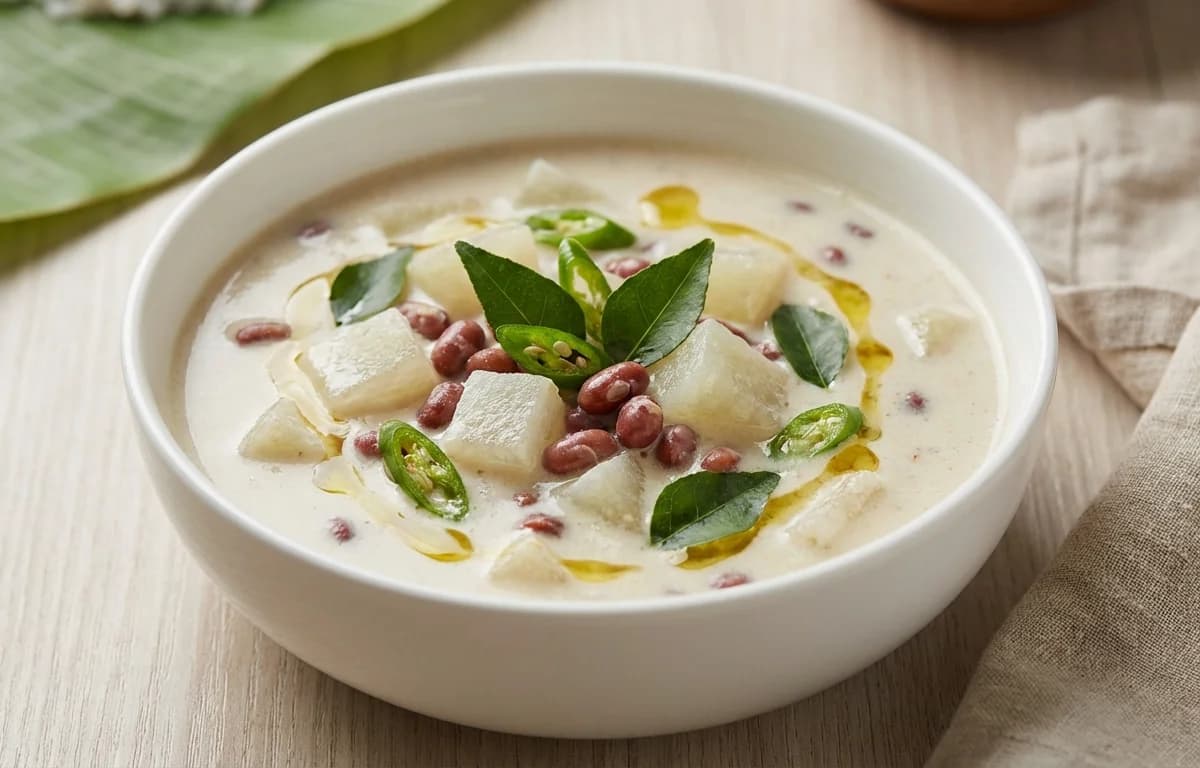
A classic, mild curry from the heart of Kerala, Olan is a staple in the traditional Sadya feast. Made with tender ash gourd and red cowpeas simmered in creamy coconut milk, it's a simple, elegant, and comforting dish.
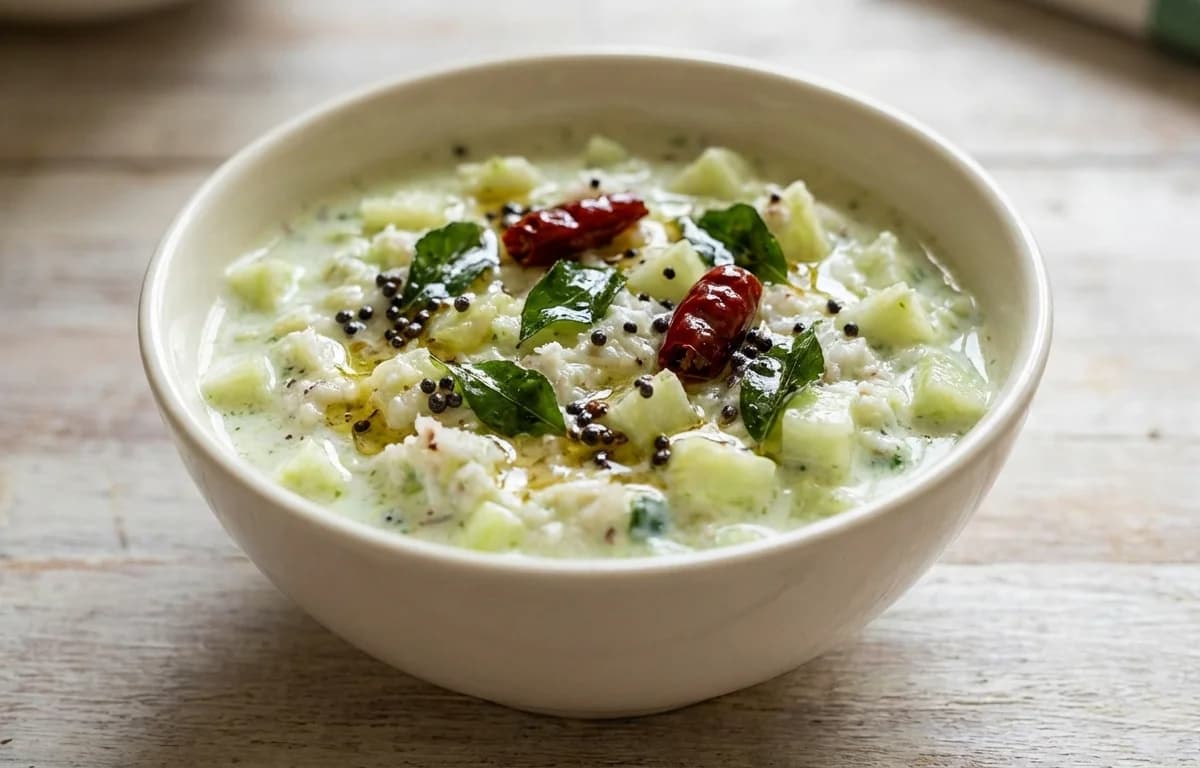
A cooling Kerala classic, this refreshing yogurt and cucumber side dish is flavored with a fragrant paste of coconut, mustard, and green chilies. A must-have for any Onam Sadya, it's ready in minutes.
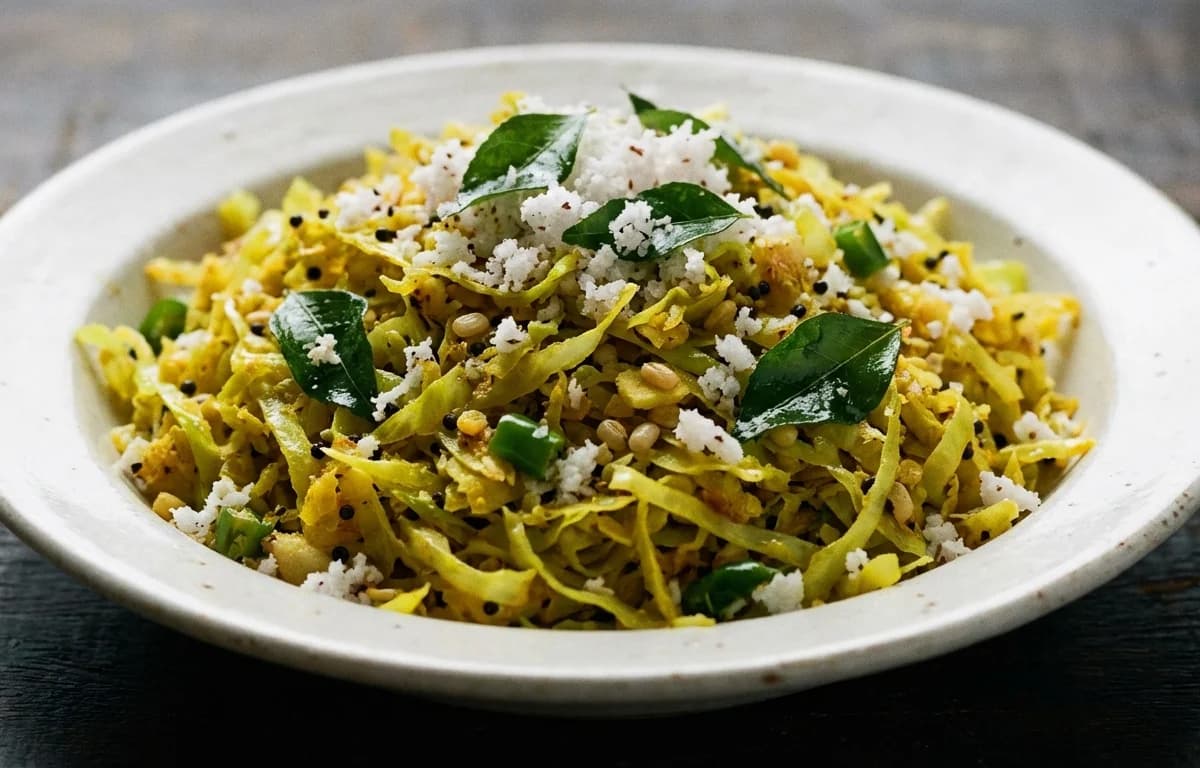
A classic Kerala stir-fry made with finely shredded cabbage, grated coconut, and fragrant spices. This simple, healthy side dish comes together quickly and pairs perfectly with rice and sambar for an authentic South Indian meal.
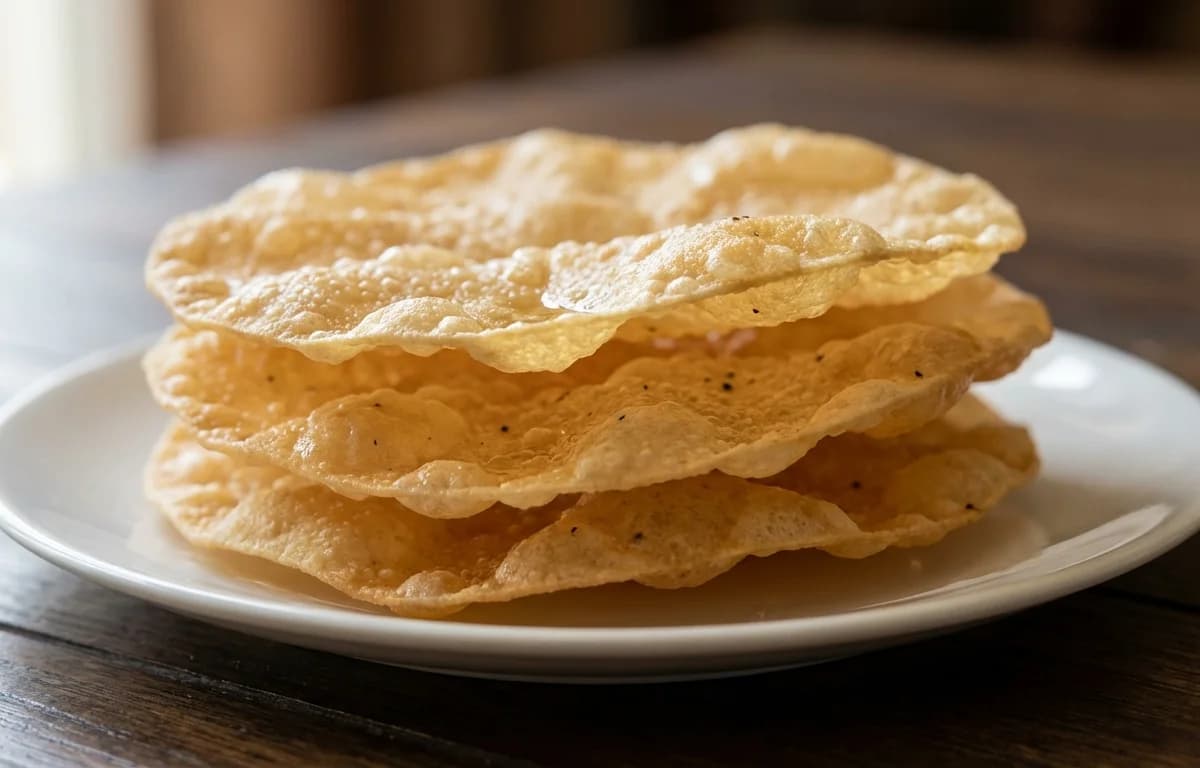
A thin, crispy lentil wafer, an essential and beloved accompaniment in South Indian meals. This versatile snack can be deep-fried for a classic crunch, roasted over an open flame for a smoky flavor, or microwaved for a quick, oil-free option. Ready in just minutes!
About Matta Rice, Vegetable Sambar, Kerala Kalan, Olan, Cucumber Pachadi, Cabbage Thoran and Pappadam
A fiber-rich South Indian spread with tangy sambar and crispy pappadam – soul-satisfying!
This kerala dish is perfect for lunch. With 1549.72 calories and 39.85g of protein per serving, it's a nutritious choice for your meal plan.
2gfat
Secure the lid of the pressure cooker and place the weight on the vent. Cook on high heat until you hear the first whistle.
After the first whistle, reduce the heat to low and let it simmer for 10-12 minutes.
Turn off the heat and allow the pressure to release naturally. This can take 15-20 minutes. Do not attempt to quick-release the pressure.
3
Fluff and Serve
Once the pressure has completely subsided, carefully open the cooker lid.
The rice should be perfectly cooked and absorbed all the water. Gently fluff the grains with a fork or a spatula.
Serve hot with your favorite Kerala curries like Sambar, Avial, or Pulissery.
4
Serving size: 1 serving
331cal
14gprotein
52gcarbs
9gfat
Ingredients
1 cup Toor Dal (rinsed thoroughly)
0.5 tsp Turmeric Powder
5 cup Water (divided, adjust for desired consistency)
1 pc Drumstick (cut into 2-inch pieces)
1 medium Carrot (peeled and cubed)
0.5 cup Pumpkin (peeled and cubed)
0.5 cup Green Beans (trimmed and cut into 1-inch pieces)
0.75 cup Pearl Onions (peeled)
2 medium Tomato (chopped)
2 pcs Green Chili (slit lengthwise)
1.5 tbsp Tamarind Paste (dissolved in 1/2 cup warm water)
3 tbsp Sambar Powder (use a good quality brand)
1.5 tsp Salt (or to taste)
1 tsp Jaggery (powdered, optional but recommended)
2 tbsp Sesame Oil (also known as gingelly oil)
1 tsp Mustard Seeds
0.5 tsp Urad Dal
0.25 tsp Fenugreek Seeds
2 pcs Dried Red Chili (broken in half)
0.25 tsp Hing (asafoetida)
1 sprig Curry Leaves
2 tbsp Coriander Leaves (freshly chopped, for garnish)
Instructions
1
Pressure Cook the Dal
Place the rinsed toor dal in a pressure cooker. Add 2.5 cups of water and 1/2 teaspoon of turmeric powder.
Secure the lid and pressure cook on medium heat for 4-5 whistles, or approximately 15 minutes, until the dal is completely soft and mushy.
Allow the pressure to release naturally. Open the cooker and whisk the dal vigorously until it is smooth and creamy. Set aside.
2
Cook the Vegetables
In a large, heavy-bottomed pot, add 2 cups of water and bring to a boil.
Add the harder vegetables: drumsticks, carrots, and green beans. Cook for 5-6 minutes.
Add the softer vegetables: pearl onions, pumpkin, and chopped tomatoes. Cook for another 5-7 minutes until all vegetables are tender but still hold their shape.
3
Combine and Simmer
Pour the cooked, mashed dal into the pot with the vegetables. Stir to combine.
Add the tamarind water (paste dissolved in 1/2 cup warm water), sambar powder, salt, and jaggery. Mix well.
Prepare the coconut mixture. In a small grinder, combine the grated coconut, shallots, green chilies, ginger, garlic, cumin seeds, and turmeric powder. Pulse 2-3 times to get a coarse, crumbly mixture. Avoid over-grinding it into a fine paste. Set aside.
2
Temper the spices. Heat coconut oil in a wide pan or kadai over medium heat. Once hot, add the mustard seeds and allow them to splutter completely. Add the urad dal and sauté until it turns a light golden brown. Finally, add the broken dried red chilies and curry leaves, and sauté for another 30 seconds until fragrant.
3
Cook the cabbage. Add the finely shredded cabbage and salt to the pan. Mix everything well to ensure the cabbage is evenly coated with the tempering spices.
4
Steam the cabbage. Sprinkle 2 tablespoons of water over the cabbage, cover the pan with a lid, and reduce the heat to low-medium. Cook for 5-7 minutes, or until the cabbage is tender but still retains a slight crunch.
5
Add the coconut mixture. Uncover the pan, add the ground coconut mixture, and stir gently to combine everything well.
6
Finish the dish. Continue to cook uncovered for another 3-4 minutes, stirring occasionally. This step helps evaporate any excess moisture and cooks the raw coconut mixture. Turn off the heat once the thoran is dry.
8 pieces Urad Dal Pappadam (Plain or with peppercorns (kali mirch) are common choices.)
1 cup Vegetable Oil (For deep frying. Use a neutral oil with a high smoke point like sunflower or canola oil.)
Instructions
1
Choose your preferred cooking method. Pappadam can be deep-fried, roasted over a gas flame, or cooked in a microwave. Each method yields a slightly different texture and flavor.
2
Method 1: Deep Frying (Classic Method)
Pour vegetable oil into a kadai or a small, deep pan to a depth of about 1 inch. Heat over medium-high flame for 2-3 minutes.
To test the oil temperature, drop a tiny piece of pappadam into it. If it sizzles and expands immediately, the oil is ready.
Using tongs, gently slide one pappadam into the hot oil. Lightly press the center with the tongs to ensure even cooking. It will puff up in 3-5 seconds.
Quickly flip it over and cook for another 2-3 seconds. It should be a pale cream color, not brown.
Remove the pappadam with tongs, allowing excess oil to drip back into the pan. Place it on a plate lined with paper towels to absorb any remaining oil.
Repeat the process for all pappadams, frying one at a time.
3
Method 2: Roasting over Open Flame (Smoky Flavor)
Turn on a gas stove to a low-medium flame.
Using a pair of long metal tongs, hold one pappadam about 2-3 inches above the flame.
Continuously and quickly move the pappadam over the flame, flipping it every few seconds to cook it evenly and prevent burning.
The pappadam will start to bubble, change color, and become crisp in about 20-30 seconds.
Once it's cooked with a few characteristic charred spots, it's ready. Be vigilant as it can burn in an instant.
4
Method 3: Microwaving (Oil-Free Method)
Place one or two pappadams on a microwave-safe plate, ensuring they do not overlap.
For a more even cook, you can lightly brush both sides with a tiny amount of oil, but this is optional.
Microwave on high power for 30-45 seconds. The pappadam will cook and become crisp.
Keep a close watch as cooking times vary greatly between microwaves. If it's not fully cooked, microwave in 10-second intervals until done.
5
Serve the freshly prepared pappadams immediately. They are best enjoyed while warm and crispy alongside a main meal of rice and curry, or as a standalone snack.
Add the slit green chilies. Bring the mixture to a gentle boil.
Reduce the heat to low and let the sambar simmer for 8-10 minutes, allowing the flavors to meld together. Adjust water if the consistency is too thick.
4
Prepare the Tempering (Tadka)
In a small pan (tadka pan), heat the sesame oil over medium heat.
Once hot, add the mustard seeds and wait for them to splutter completely.
Add the urad dal and fenugreek seeds. Sauté for 30 seconds until the urad dal turns light golden. Be careful not to burn the fenugreek seeds.
Add the broken dried red chilies, curry leaves, and hing. Sauté for another 15-20 seconds until the curry leaves are crisp and aromatic.
5
Finish and Serve
Immediately pour the hot tempering over the simmering sambar. You should hear a satisfying sizzle.
Stir gently to incorporate the tempering. Garnish with freshly chopped coriander leaves.
Turn off the heat and let the sambar rest for at least 10-15 minutes before serving. This helps the flavors deepen.
Serve hot with steamed rice, idli, dosa, or vada.
4
Incorporate the Yogurt
Reduce the heat to the absolute lowest setting. This step is crucial to prevent curdling.
Pour the whisked sour yogurt into the pot.
Stir continuously and gently for 2-3 minutes until the yogurt is fully incorporated and the curry is heated through. Do not let it bubble or boil.
5
Add Final Seasonings
Turn off the heat completely. Stir in the coarsely crushed black pepper and the roasted fenugreek powder.
Mix well to distribute the spices evenly, then cover the pot.
6
Prepare the Tempering (Tadka)
In a small pan (tadka pan), heat the coconut oil over medium heat.
Add the mustard seeds and wait for them to splutter completely.
Add the broken dried red chilies and curry leaves. Sauté for 30 seconds until the leaves are crisp and the chilies have darkened slightly.
7
Finish and Rest the Kalan
Immediately pour the hot tempering over the prepared Kalan.
Cover the pot at once to trap the aromas. Let the Kalan rest for at least 15-20 minutes for the flavors to meld beautifully.
Serve warm with steamed rice as part of a traditional Kerala meal.
Stir gently to mix everything together without mashing the vegetables.
Allow the curry to simmer for another 2-3 minutes for the flavors to meld.
4
Finish with Thick Coconut Milk
Reduce the heat to the absolute lowest setting.
Pour in the thick coconut milk and add the fresh curry leaves.
Stir gently and warm the curry through for about 1 minute. It is crucial not to let it boil, as this can cause the thick coconut milk to curdle.
5
Rest and Serve
Turn off the heat. Drizzle the virgin coconut oil over the top of the Olan.
Cover the pot and let it rest for at least 10 minutes. This step is essential for the flavors to infuse completely.
Serve the Olan warm as a part of a traditional Kerala Sadya or with steamed rice.
Heat the coconut oil in a small pan (tadka pan) over medium heat.
Once the oil is hot, add 1/2 tsp of mustard seeds and allow them to splutter completely, which takes about 30 seconds.
Add the broken dried red chilies and the sprig of curry leaves. Sauté for another 20-30 seconds until the curry leaves turn crisp and aromatic. Be careful not to burn them.
5
Finish and Serve
Pour the hot tempering immediately over the cucumber and yogurt mixture.
Mix gently to incorporate the flavors. For best results, let the pachadi rest for at least 15-20 minutes before serving.
Serve chilled or at room temperature as a side dish with rice.
Serve immediately. Cabbage Thoran is best served hot as a side dish with steamed rice, sambar, or rasam.