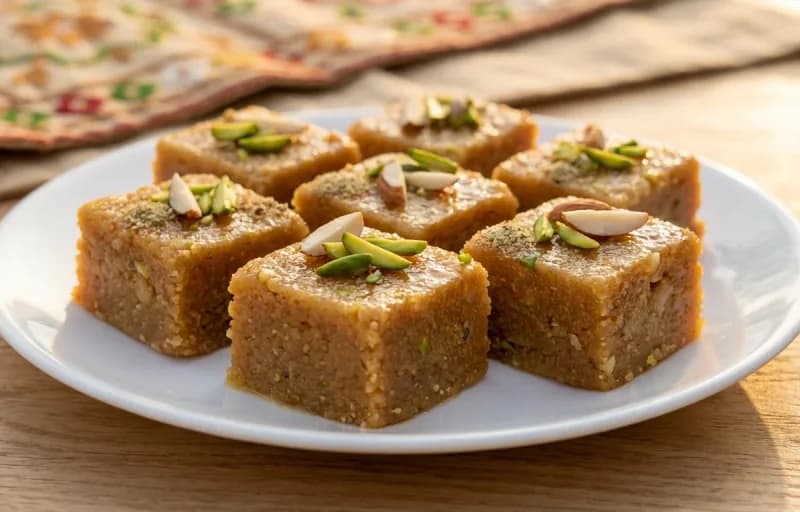
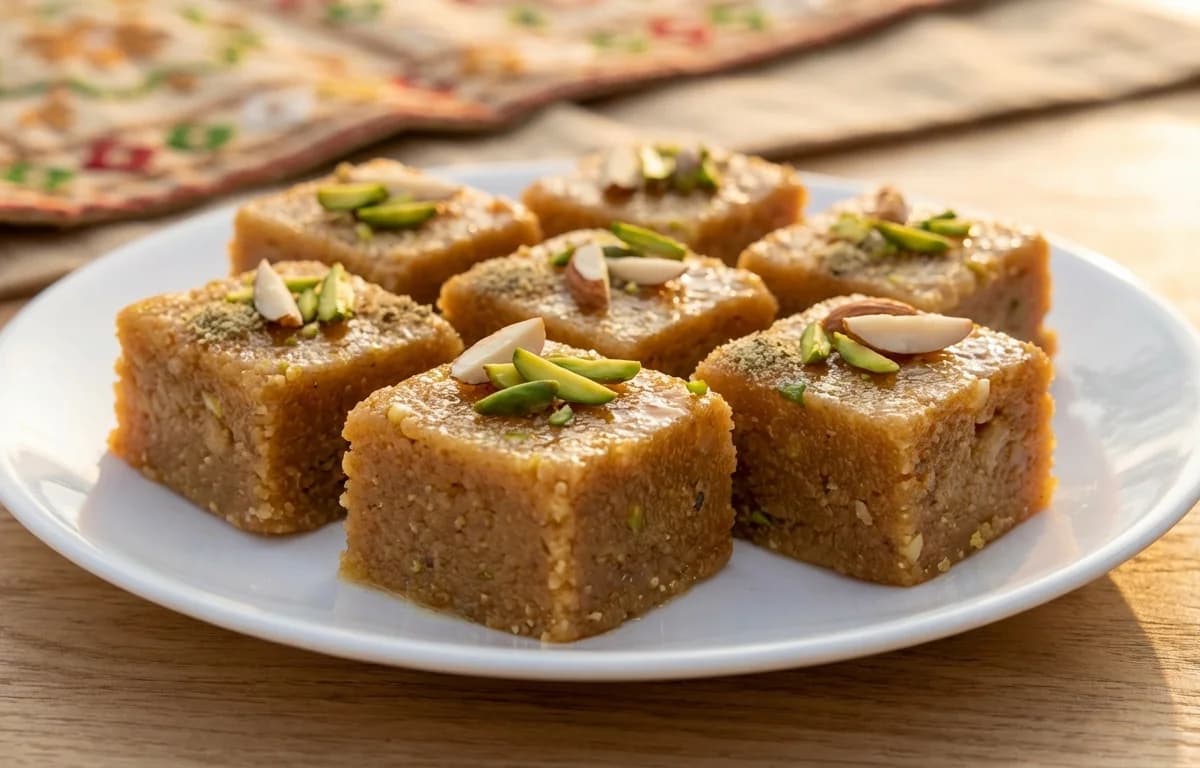
A rich, grainy, and fudgy sweet from Gujarat, made by slow-roasting gram flour in ghee and setting it with a fragrant sugar syrup. This traditional dessert is a staple during festivals like Diwali and Janmashtami.
Prep15 min
Cook40 min
Servings8
Serving size: 1 serving
516cal
6gprotein
54gcarbs
32g
Ingredients
2 cup besan (coarse variety preferred (ladoo besan))
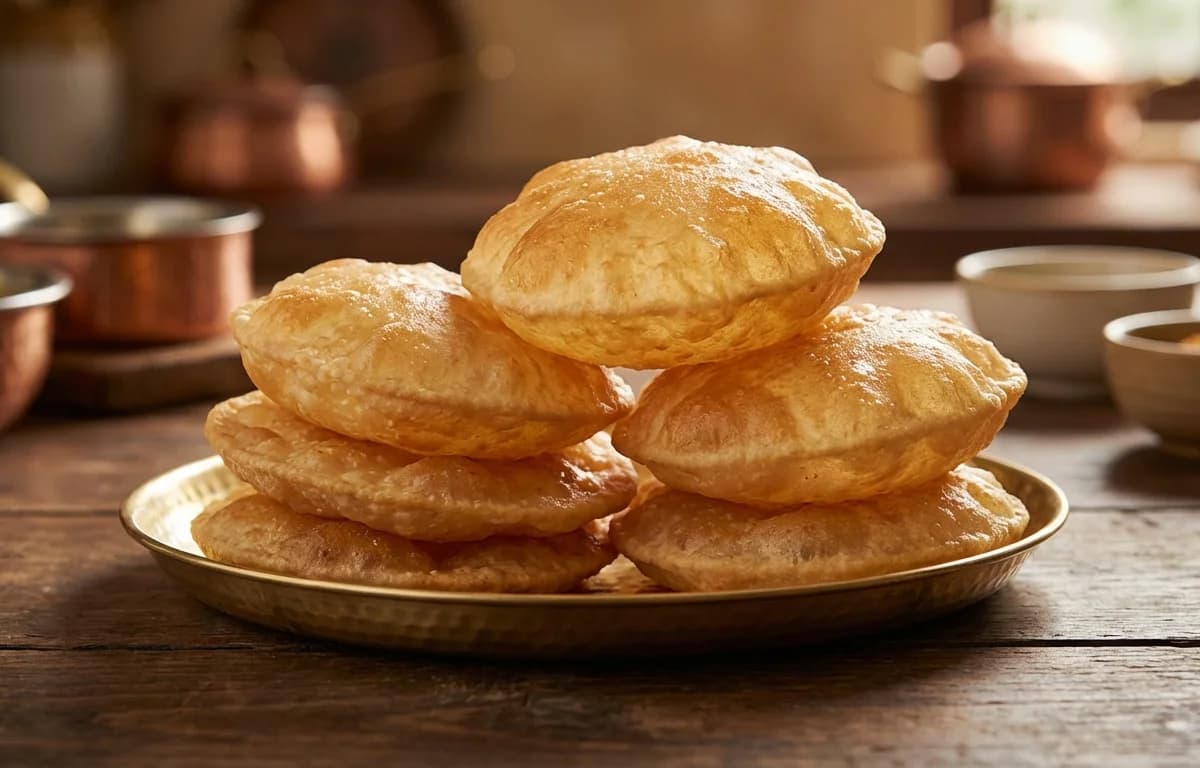
Golden, puffy, and irresistibly crisp, these deep-fried Indian breads are a festive favorite. Made from a simple whole wheat dough, they pair perfectly with savory curries like chole or a sweet shrikhand.
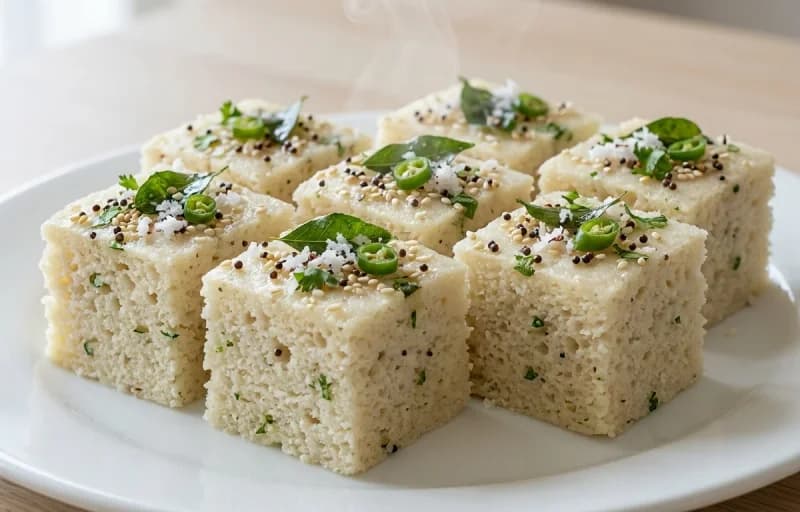
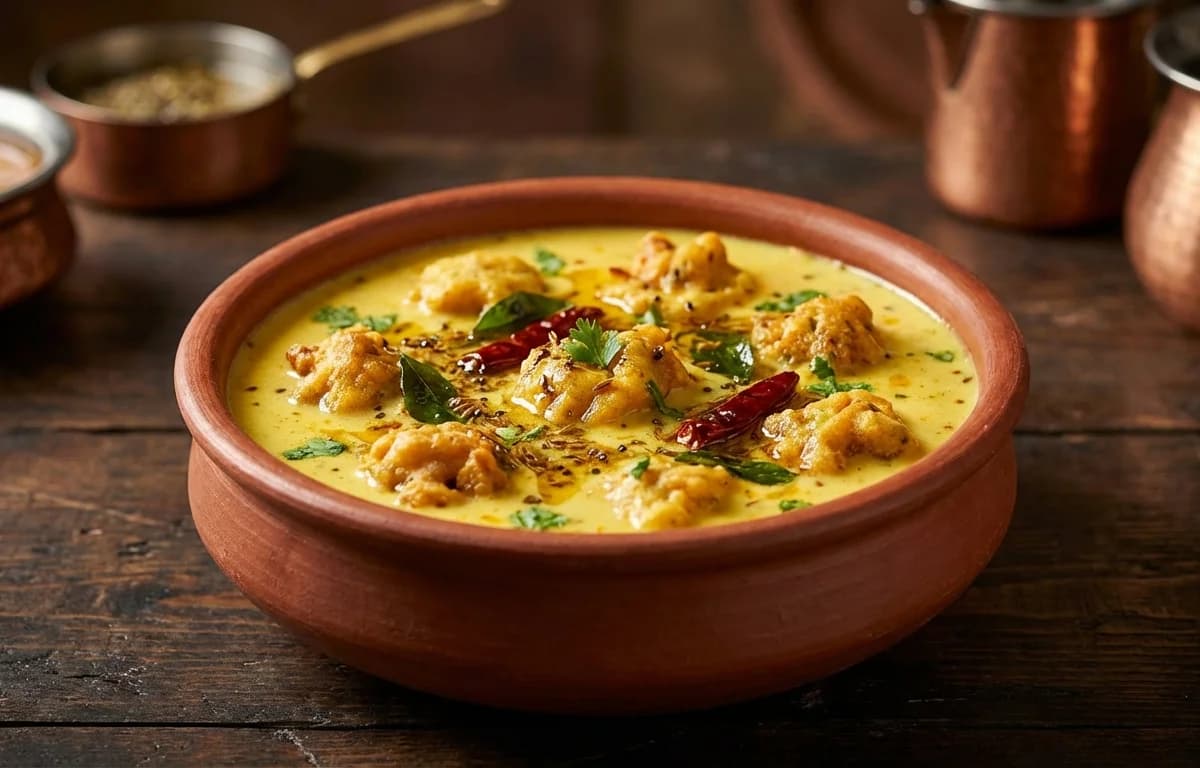
A beloved North Indian comfort food featuring tangy yogurt and chickpea flour curry with soft, spiced fritters. This creamy, savory dish is a weekend lunch staple, best enjoyed with steamed rice.
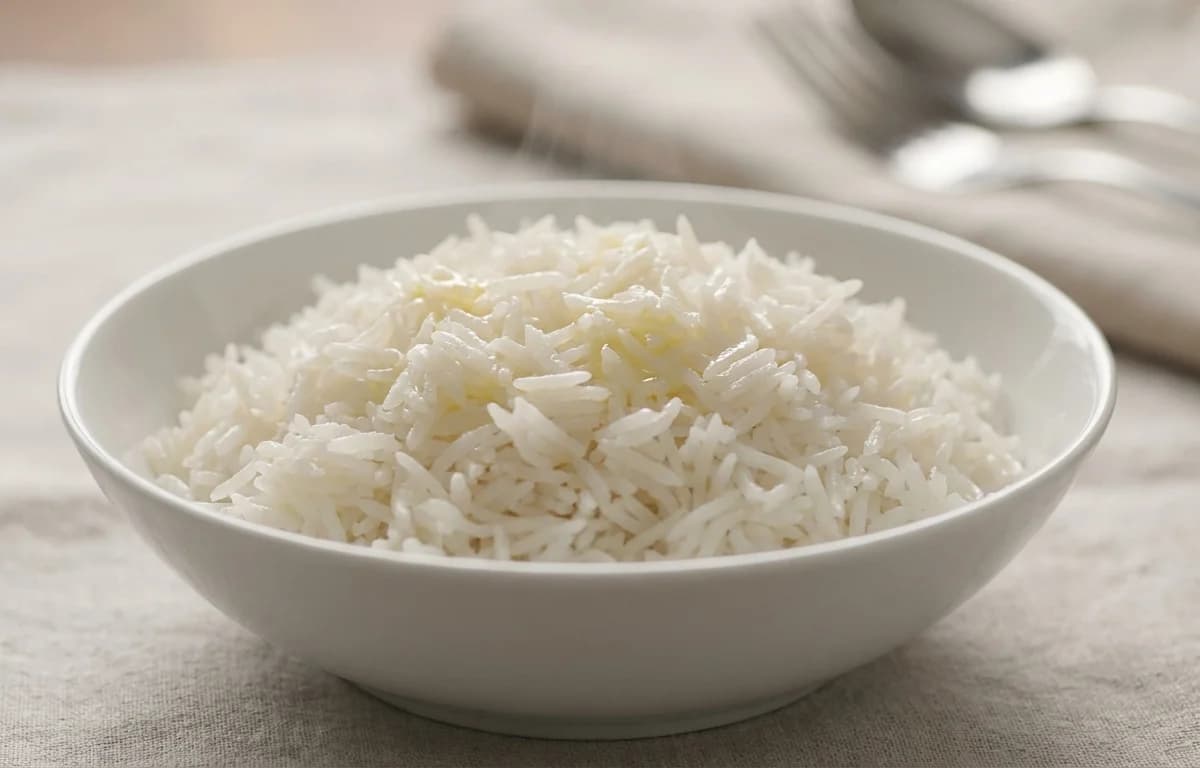
Perfectly fluffy, long-grained basmati rice with a delicate aroma. This simple, foolproof recipe gives you separate, non-sticky grains every time, making it the perfect base for any curry or dal.
About Mohanthal, Puri, Punjabi Kadhi Pakora and Steamed Basmati Rice
Creamy, energy-giving mohanthal with fluffy puri, tangy kadhi & rice. A soul-satisfying, festive treat!
This gujarati dish is perfect for lunch. With 1616.53 calories and 33.120000000000005g of protein per serving, it's a nutritious choice for your meal plan.
fat
1
Prepare the besan mixture (Dhrabo): In a large bowl, combine 2 cups of besan with 4 tablespoons of ghee and 3 tablespoons of milk. Rub the mixture between your palms for 2-3 minutes until it resembles coarse breadcrumbs. This process is crucial for the grainy texture. Cover and let it rest for 15 minutes.
2
Roast the besan: Heat the remaining ghee in a heavy-bottomed pan or kadai on low heat. Add the prepared besan mixture to the pan. Stir continuously on low heat for 20-25 minutes. The mixture will first become lumpy, then loosen up, and finally turn a golden brown color with a nutty aroma. Once roasted, turn off the heat and set aside.
3
Make the sugar syrup: While the besan is cooling slightly, combine 1.5 cups of sugar and 0.75 cup of water in a separate saucepan. Bring to a boil over medium heat, stirring until the sugar dissolves completely. Continue to cook for 5-7 minutes until the syrup reaches a one-string consistency. To check, take a drop between your thumb and index finger; it should form a single thread when pulled apart. Turn off the heat immediately once the consistency is reached.
4
Combine and set the Mohanthal: Carefully and slowly pour the hot sugar syrup into the roasted besan mixture, stirring constantly to avoid lumps. Place the pan back on low heat. Add the cardamom and nutmeg powder. Cook for another 2-3 minutes, stirring continuously, until the mixture thickens and starts to leave the sides of the pan. Quickly pour the mixture into a greased thali or a parchment-lined 8x8 inch tray. Spread it evenly with a spatula and sprinkle the slivered almonds and chopped pistachios on top. Gently press the nuts into the mixture.
5
Cool and cut: Let the Mohanthal cool at room temperature for at least 2-3 hours, or until completely set. Once set, use a sharp knife to cut it into squares or diamond shapes. Carefully remove the pieces from the tray. Mohanthal can be stored in an airtight container for up to two weeks.
426cal
9gprotein
47gcarbs
24gfat
Ingredients
2 cup Atta (Also known as whole wheat flour.)
2 tbsp Rava (Use fine semolina (sooji) for extra crispiness.)
1 tsp Salt (Adjust to taste.)
1 tbsp Ghee (Can be substituted with a neutral oil.)
0.75 cup Lukewarm Water (Add gradually as needed to form a stiff dough.)
3 cup Vegetable Oil (For deep frying. Use a high smoke point oil like canola or sunflower.)
Instructions
1
Prepare the Dough
In a large mixing bowl, combine the atta, rava, and salt. Whisk to mix everything evenly.
Add the ghee to the flour mixture. Using your fingertips, rub the ghee into the flour until it resembles coarse breadcrumbs. This process, known as 'moin', is key for a flaky texture.
Gradually add lukewarm water, a little at a time, while mixing. Knead to form a stiff and firm dough. It should be noticeably tighter than a chapati dough to prevent it from absorbing too much oil during frying.
2
Knead and Rest the Dough
Transfer the dough to a clean work surface and knead for 5-7 minutes until it is smooth and firm.
Cover the dough with a damp cloth or place it in a container with a lid. Let it rest for at least 20-30 minutes. This step is crucial for relaxing the gluten, which makes rolling easier and the puris softer inside.
3
Shape and Roll the Puris
After resting, knead the dough again for one minute to make it smooth.
Divide the dough into 16-20 small, equal-sized balls. Roll each ball between your palms until smooth and crack-free.
Lightly grease your rolling pin and rolling surface with a drop of oil. Avoid using dry flour for dusting, as it can burn in the hot oil and affect its quality and color.
Take one dough ball and roll it into an even circle, about 3-4 inches in diameter and 2-3 mm thick. Ensure the thickness is uniform to help it puff up perfectly.
4
Fry the Puris
Heat the oil for deep-frying in a kadai or deep pan over medium-high heat. The ideal temperature is 180-190°C (355-375°F). To test, drop a tiny piece of dough into the oil; it should sizzle and rise to the top quickly without changing color too fast.
Gently slide a rolled puri into the hot oil. It will sink briefly before floating to the surface.
Using a slotted spoon, gently press down on the center of the puri as it fries. This pressure helps trap steam inside, causing it to puff up beautifully.
Once puffed (this takes about 10-15 seconds), flip it over and fry the other side for another 10-15 seconds until it's a light golden brown.
Fry one or two puris at a time to maintain the oil temperature and avoid overcrowding the pan.
5
Drain and Serve
Remove the fried puri with the slotted spoon, allowing excess oil to drip back into the pan.
Place the puris on a wire rack or a plate lined with paper towels to drain any remaining oil.
Repeat the frying process for all the dough balls.
Serve immediately while hot and puffy with your favorite accompaniments like Aloo Sabzi, Chole, or Shrikhand.
1.5 cup Besan (1 cup for pakoras, 0.5 cup for kadhi)
2 cup Sour Yogurt (Full-fat, whisked until smooth)
1 medium Onion (Finely chopped)
2 pcs Green Chili (Finely chopped)
0.5 tsp Ginger Paste
0.75 tsp Turmeric Powder (0.25 tsp for pakoras, 0.5 tsp for kadhi)
1 tsp Red Chili Powder (0.5 tsp for pakoras, 0.5 tsp for kadhi)
1.75 tsp Salt (0.75 tsp for pakoras, 1 tsp for kadhi, or to taste)
0.5 tsp Ajwain
0.125 tsp Baking Soda (A small pinch)
4.5 cup Water (Approx. 0.5 cup for pakora batter, 4 cups for kadhi)
2 cup Vegetable Oil (For deep frying)
2 tbsp Ghee (For tempering)
1 tsp Mustard Seeds
1 tsp Cumin Seeds
0.5 tsp Fenugreek Seeds
0.25 tsp Asafoetida
2 pcs Dried Red Chilies (Broken in half)
1 sprig Curry Leaves
1 inch Ginger (Peeled and julienned)
0.5 tsp Garam Masala
2 tbsp Coriander Leaves (Freshly chopped, for garnish)
Instructions
1
Prepare the Pakora Batter (15 minutes)
In a mixing bowl, combine 1 cup besan, finely chopped onion, green chili, ginger paste, ajwain, 0.25 tsp turmeric powder, 0.5 tsp red chili powder, 0.75 tsp salt, and baking soda.
Gradually add about 1/2 cup of water while whisking vigorously to form a thick, smooth, and lump-free batter. The consistency should be like thick pancake batter. Whisk for 2-3 minutes to incorporate air, which makes the pakoras light.
Cover and let the batter rest for 10-15 minutes.
2
Fry the Pakoras (10 minutes)
Heat 2 cups of oil in a kadai or deep pan over medium-high heat. To test if the oil is ready, drop a small amount of batter; it should sizzle and rise to the surface immediately.
Carefully drop spoonfuls of the batter into the hot oil, ensuring not to overcrowd the pan.
Fry the pakoras, turning occasionally, for 4-5 minutes per batch, until they are golden brown and crisp.
Use a slotted spoon to remove the pakoras and drain them on a plate lined with paper towels. Set aside.
1.5 cup Basmati Rice (Use good quality, aged basmati rice for best results)
2.25 cup Water (For the absorption cooking method)
0.75 tsp Salt (Adjust to taste)
1 tsp Ghee (Optional, for flavor and to prevent sticking)
Instructions
1
Rinse and Soak the Rice (35 minutes)
Place the basmati rice in a large bowl. Add cold water and gently swirl the rice with your fingers. Drain the cloudy water. Repeat this process 3-4 times until the water runs mostly clear. This removes excess starch and prevents stickiness.
Cover the rinsed rice with fresh water and let it soak for 30 minutes. Soaking allows the grains to absorb water, ensuring they cook evenly and elongate beautifully.
After 30 minutes, drain the rice completely using a fine-mesh sieve and set aside.
2
Cook the Rice (15 minutes)
In a medium, heavy-bottomed saucepan with a tight-fitting lid, combine the drained rice, 2.25 cups of fresh water, salt, and ghee (if using).
Bring the mixture to a rolling boil over medium-high heat, uncovered.
As soon as it boils, give it one gentle stir, then immediately reduce the heat to the lowest possible setting. Cover the saucepan tightly with the lid.
Let the rice simmer for 12-15 minutes, or until all the water has been absorbed. Do not lift the lid during this time to prevent steam from escaping.
3
Rest and Fluff (10 minutes)
Turn off the heat but leave the saucepan on the stove, still covered. Let the rice rest and steam for 10 minutes. This step is crucial for finishing the cooking process and achieving a perfect texture.
After resting, remove the lid. Use a fork to gently fluff the rice, separating the long, delicate grains.
Serve hot as a perfect accompaniment to curries, dals, or grilled dishes.
In a large, heavy-bottomed pot, whisk 2 cups of sour yogurt until completely smooth.
Add 1/2 cup besan, 0.5 tsp turmeric powder, 0.5 tsp red chili powder, and 1 tsp salt. Whisk again until no lumps remain.
Slowly pour in 4 cups of water, whisking continuously to create a smooth, thin mixture.
Place the pot on medium heat and bring it to a boil, stirring constantly to prevent the mixture from splitting or sticking to the bottom. This will take about 5-7 minutes.
Once it reaches a rolling boil, reduce the heat to low and let it simmer for 20-25 minutes, stirring occasionally. The kadhi will thicken, change to a deeper yellow color, and the raw taste of besan will disappear.
4
Combine Kadhi and Pakoras (5 minutes)
Gently add the fried pakoras to the simmering kadhi.
Allow them to cook in the kadhi for another 5 minutes on low heat. This helps the pakoras absorb the flavors and become soft.
Turn off the heat. The kadhi is now ready for tempering.
5
Prepare the Tempering (Tadka) (3 minutes)
Heat 2 tbsp of ghee in a small pan (tadka pan) over medium heat.
Once the ghee is hot, add the mustard seeds and let them splutter.
Add cumin seeds, fenugreek seeds, and asafoetida. Sauté for 30 seconds until fragrant.
Add the broken dried red chilies, curry leaves, and julienned ginger. Cook for another 30 seconds, being careful not to burn the spices.
Turn off the heat and immediately stir in the garam masala.
6
Finish and Serve
Pour the hot tempering over the kadhi pakora. You will hear a satisfying sizzle.
Garnish with fresh chopped coriander leaves.
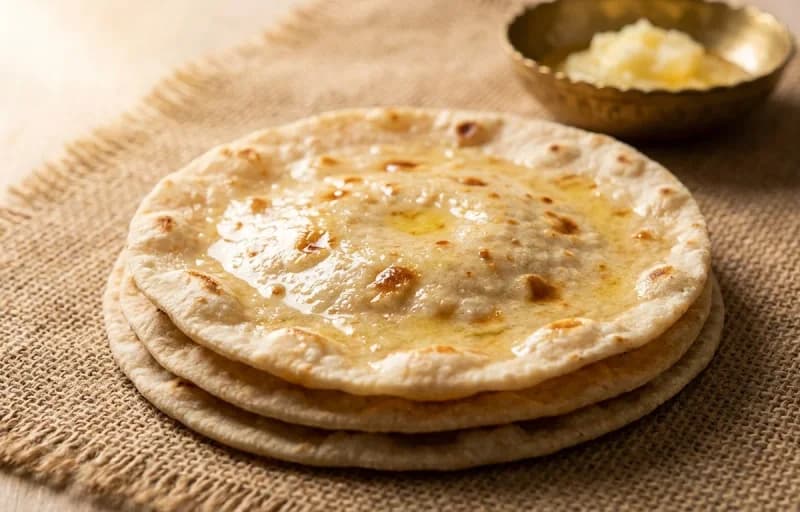
Let the kadhi rest for at least 10 minutes before serving to allow the flavors to meld. Serve hot with steamed basmati rice or roti.