Punjabi Kadhi Pakora
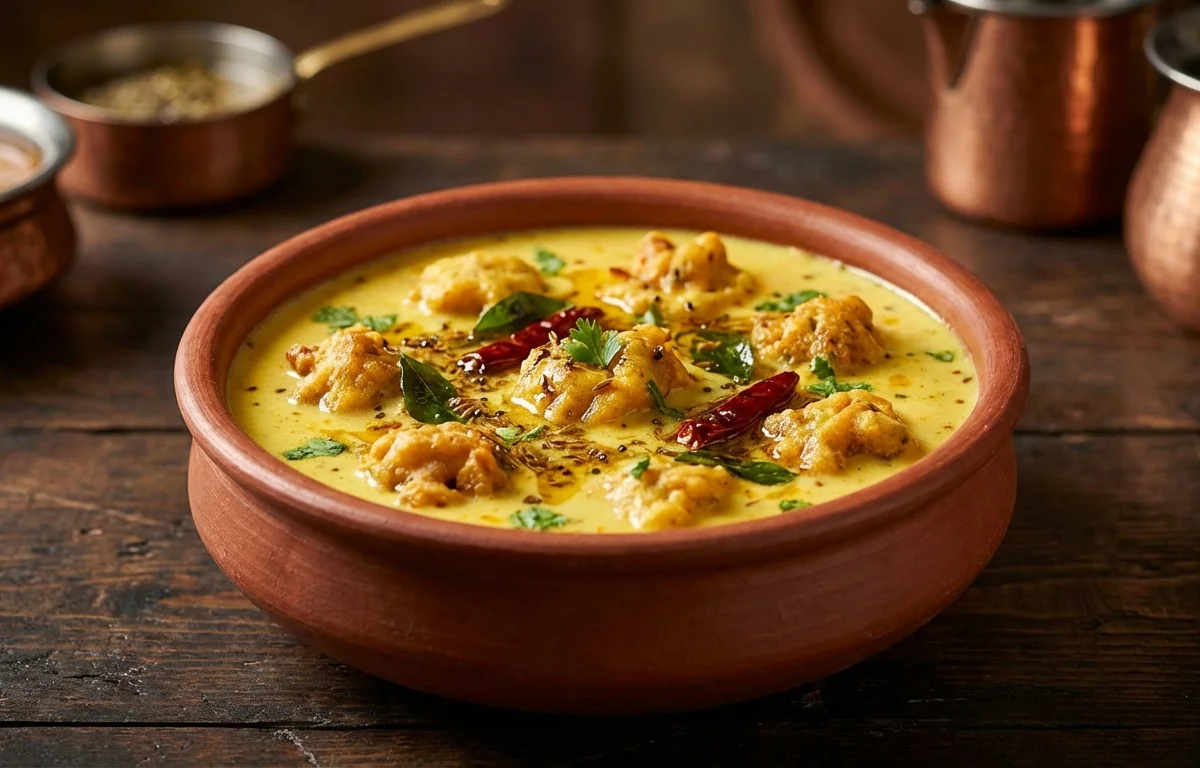
Tangy yogurt and chickpea flour curry simmered until silky, then topped with onion pakoras that soak up all the spiced flavor. This Punjabi favorite is comforting, hearty, and made for serving with rice.
For 4 servings
- mix · ~5 min
Whisk the kadhi base.
1.Add yogurt, 0.5 cup chickpea flour, 4 cups water, turmeric powder, coriander powder, 0.25 tsp red chili powder, and half the salt to a large bowl.2.Whisk until completely smooth with no lumps of chickpea flour left.3.Set the mixture aside while you make the pakora batter.TIPA smooth batter is key. Lumps are hard to fix once the kadhi starts cooking. - mix · ~5 min
Make the pakora batter.
1.Add sliced onion, remaining 0.5 cup chickpea flour, 1 chopped green chili, and half the cumin seeds to a bowl.2.Add a small pinch of salt and mix well so the onions release a little moisture.3.Sprinkle in 2 to 3 tbsp water as needed and mix into a thick batter that coats the onions well.TIPKeep the batter thick so the pakoras stay light and hold their shape in the oil. - fry · ~15 min
Fry the pakoras.
1.Heat oil for frying in a deep pan over medium heat.2.Drop small portions of the onion batter into the hot oil.3.Fry until golden and crisp on all sides, turning as needed, about 4 to 5 minutes per batch.4.Lift out and drain well. Fry the remaining batter the same way.TIPDo not overcrowd the pan or the pakoras will absorb more oil and soften too quickly. - temper · ~3 min
Make the tempering for the kadhi.
1.Heat 1 tbsp oil in a heavy pot over medium heat.2.Add mustard seeds, remaining cumin seeds, and fenugreek seeds; let them crackle for 20 to 30 seconds.3.Add asafoetida, dried red chili, curry leaves, remaining green chili, and grated ginger.4.Cook for 30 seconds until fragrant.TIPKeep the heat medium. Fenugreek seeds turn bitter fast if they burn. - simmer · ~30 min
Cook the kadhi until thick and smooth.
1.Pour the whisked yogurt mixture into the pot and stir right away.2.Bring it to a gentle simmer, stirring often so it does not catch at the bottom.3.Add the remaining red chili powder and cook on low heat until the kadhi thickens and the raw chickpea flour taste disappears, about 25 to 30 minutes.TIPStir frequently, especially in the first 10 minutes, to keep the yogurt from splitting. - assemble · ~5 min
Add the pakoras to the kadhi.
Slide the fried pakoras into the simmering kadhi and cook for 5 minutes so they soften slightly but still hold their shape.
- garnish
Garnish with coriander leaves.
- serve
Serve hot.
Serve Punjabi Kadhi Pakora hot with plain rice or jeera rice.
What to keep in mind.
7 tips from the recipe — small details that make a real difference to the final dish.
- 1Whisk the yogurt and besan completely smooth before heating, or the kadhi can turn lumpy as it simmers.
- 2Let the sliced onions sit with salt for a minute before adding water; their moisture helps form a better pakora batter.
- 3Keep the pakora batter thick and shaggy, not pourable, so the fritters stay craggy and absorb kadhi without falling apart.
- 4Fry pakoras on medium heat until deep golden; pale pakoras go soggy too fast once added to the kadhi.
- 5Stir the kadhi often during the first 10 minutes of simmering to prevent the yogurt from catching or splitting.
- 6Add pakoras just 5 to 10 minutes before serving if you want them soft but still textured.
- 7Kadhi tastes even better after a short rest, so let it sit 10 minutes before serving to settle and thicken.
Adapt it for your goals.
Low-oil
Air-fry or shallow-fry small pakoras instead of deep frying for a lighter version that still gives you oniony bites in the kadhi.
extra pakoraExtra-pakora
Make slightly larger pakoras and add some at serving time instead of simmering all of them if you like a mix of soft and crisp textures.
milderMilder
Reduce the green and red chilies for a gentler heat while keeping the tangy yogurt, cumin, and fenugreek flavors intact.
no onionNo-onion
Use spinach or chopped methi leaves in the pakoras instead of onion for a different classic-style variation.
Why this is on our healthy list.
Protein from Yogurt and Besan
The yogurt and chickpea flour together make this dish more filling and add plant and dairy protein to the meal.
Digestive Spice Support
Ginger, cumin, asafoetida, and fenugreek are traditional spices often used to make rich, gram flour-based dishes feel easier to digest.
Fermented Dairy Goodness
Yogurt brings tang and nourishing dairy components, which pair well with the hearty chickpea flour curry base.
Frequently asked questions
This usually happens if the heat is too high or the mixture was not stirred enough at the start. Keep the simmer gentle and stir frequently, especially in the first several minutes.



.webp)