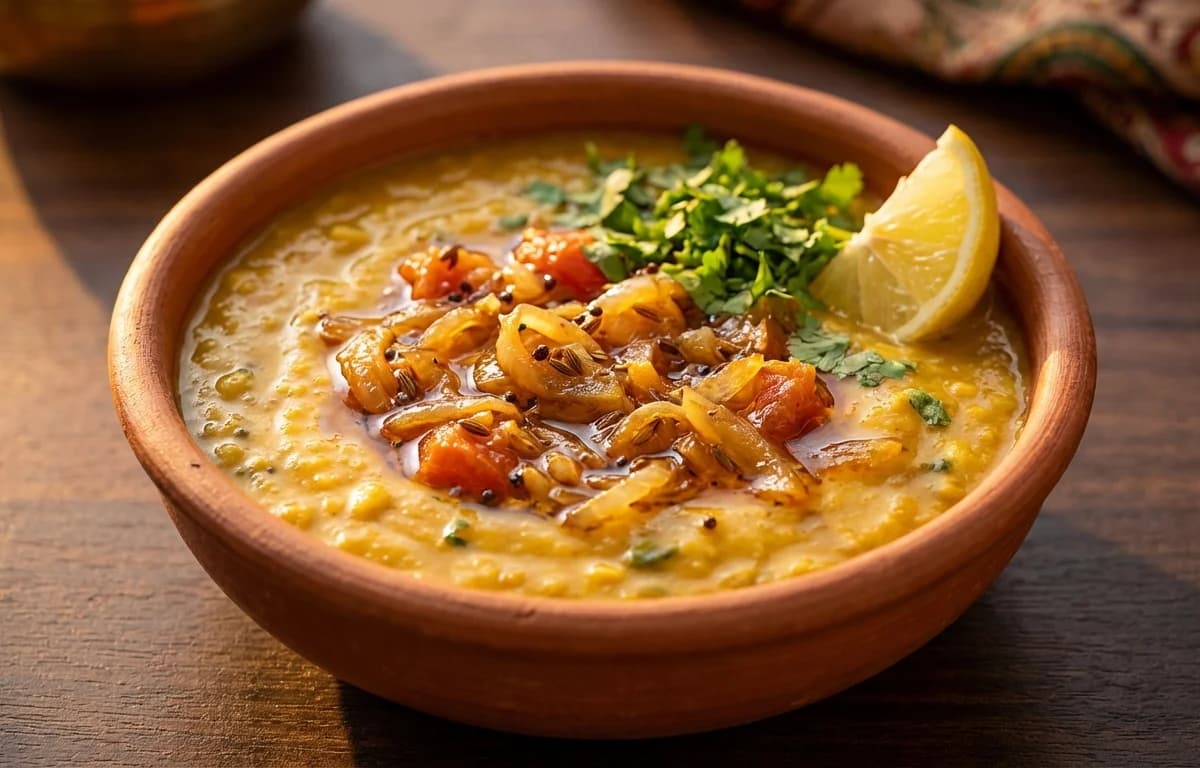
A wholesome and nutty dal from Rajasthan, made with moth beans. This simple, protein-rich curry is finished with a fragrant tempering of ghee and spices, making it a perfect and authentic accompaniment to roti or rice.
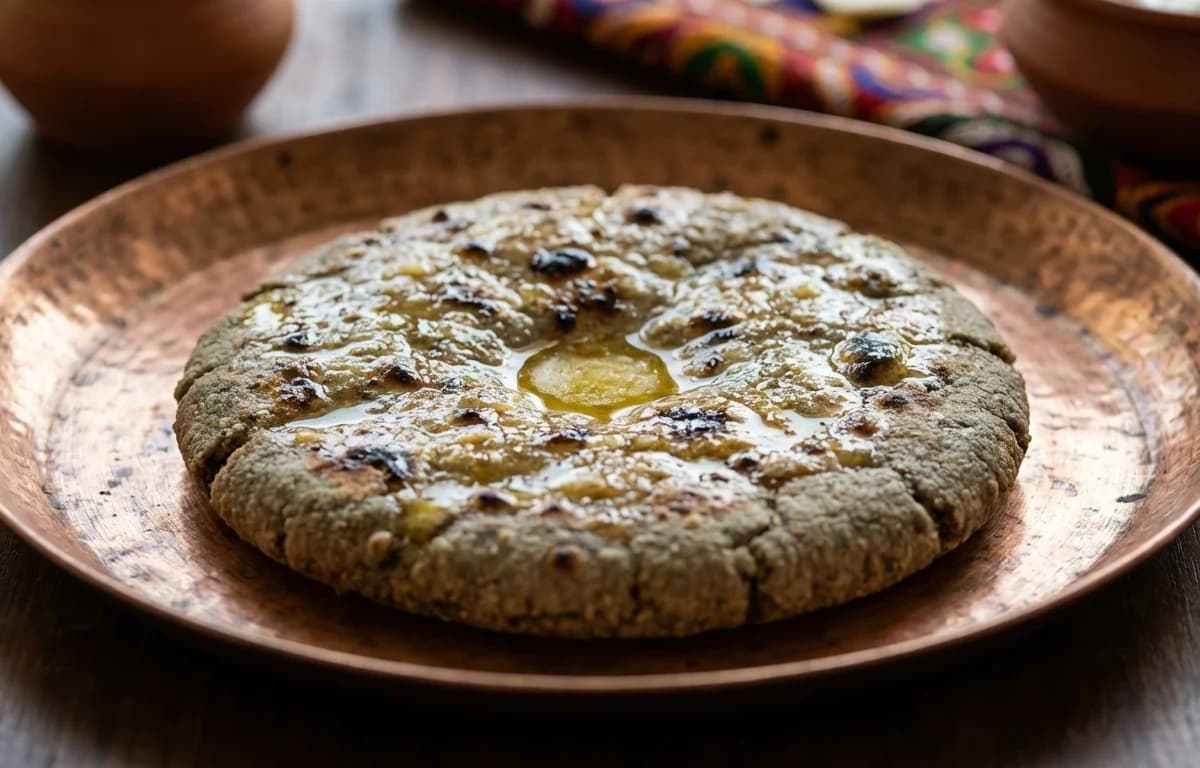
A rustic, gluten-free flatbread from Rajasthan, made from pearl millet flour. It has a nutty, earthy flavor and a slightly coarse texture, perfect for pairing with spicy curries or simply with a dollop of ghee and jaggery.
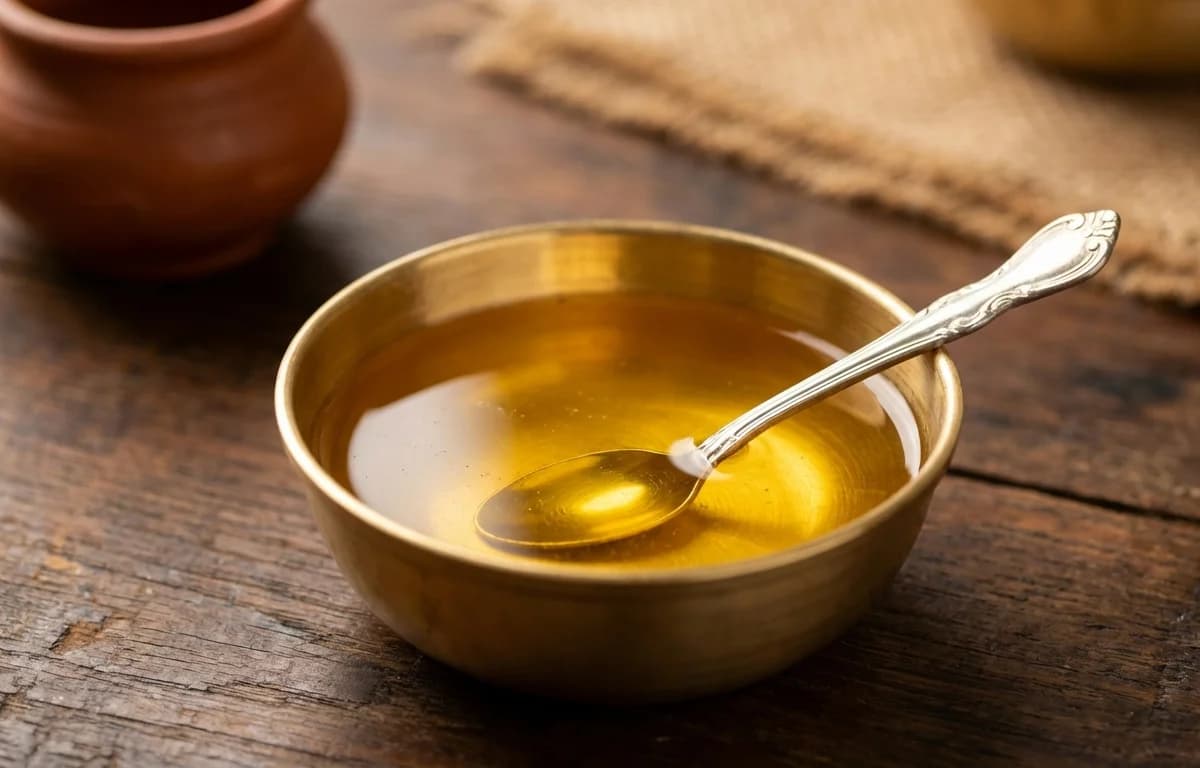
Aromatic and nutty clarified butter, a staple in Indian cooking. Making ghee at home is simple, rewarding, and results in a pure, flavorful cooking fat perfect for sautéing, frying, and tempering.
Prep5 min
Cook25 min
Servings24
Serving size: 1 serving
About Moth Dal Tadka, Bajra Roti and Ghee
Protein-packed Moth Dal with fiber-rich Bajra Roti and a dollop of ghee – an energy-giving, homestyle delight!
This marwari dish is perfect for dinner. With 718.03 calories and 19.96g of protein per serving, it's a nutritious choice for your meal plan.
Other Cuisines to Explore
Discover authentic meals from cuisines around the world.
Drain the soaked moth dal. In a pressure cooker, combine the dal, 3 cups of fresh water, turmeric powder, and 0.5 tsp of salt.
Secure the lid and pressure cook on medium heat for 4-5 whistles, or for about 15 minutes, until the dal is soft but still holds its shape.
Allow the pressure to release naturally. Once safe, open the lid and gently mash the dal with the back of a spoon to create a slightly creamy consistency. Set aside.
2
Prepare the Masala Base
Heat oil in a kadai or deep pan over medium heat. Add 0.5 tsp of cumin seeds and let them sizzle.
Add the finely chopped onion and sauté for 5-6 minutes until it becomes soft and translucent.
Stir in the ginger-garlic paste and slit green chilies. Cook for 1 minute until the raw aroma disappears.
Add the tomato puree, red chili powder, coriander powder, and the remaining 0.5 tsp of salt. Cook for 4-5 minutes, stirring occasionally, until the masala thickens and oil begins to separate at the edges.
3
Combine and Simmer
Pour the cooked moth dal into the prepared masala. Mix everything together thoroughly.
Add about 0.5 cup of hot water, or more, to adjust the consistency to your liking. The dal will thicken as it cools.
Bring the dal to a gentle boil, then reduce the heat and let it simmer for 5-7 minutes to allow the flavors to meld.
Stir in the garam masala and fresh lemon juice. Turn off the heat and cover.
4
Prepare the Tempering (Tadka)
In a small tadka pan, heat the ghee over medium heat until it's hot but not smoking.
Add the mustard seeds and wait for them to splutter.
Immediately add the remaining 0.5 tsp of cumin seeds, broken dried red chilies, and hing. Sauté for about 30 seconds until fragrant, being careful not to burn the spices.
5
Garnish and Serve
Pour the sizzling hot tempering over the dal in the pan. You should hear a satisfying sizzle.
Garnish with freshly chopped coriander leaves.
Serve hot with jeera rice, steamed basmati rice, or fresh rotis.
276cal
7gprotein
42gcarbs
9gfat
Ingredients
2 cup Bajra Flour (Also known as pearl millet flour)
0.5 tsp Salt (Adjust to taste)
1 cup Warm Water (Use as needed, the amount may vary)
2 tbsp Ghee (For serving)
Instructions
1
Prepare the Dough
In a wide bowl or parat, combine the 2 cups of bajra flour and 0.5 tsp of salt. Mix well.
Gradually add warm water, a little at a time, and start gathering the flour to form a shaggy dough.
Once the flour comes together, begin kneading. Use the heel of your palm to push and press the dough for 5-7 minutes. This process is crucial for a smooth, crack-free roti.
The final dough should be soft, smooth, and pliable, similar to the consistency of chapati dough. It should not be sticky or too stiff.
Cover the dough with a damp cloth and let it rest for 15 minutes. Do not rest it for too long as it can become dry.
2
Shape the Rotis
After resting, knead the dough again for one minute.
Divide the dough into 8 equal portions and roll them into smooth, crack-free balls.
Take one ball of dough. Dust your palms with a little dry bajra flour.
Gently flatten the ball and start patting it between your palms, rotating it as you go, to form a thin disc of about 4-5 inches in diameter. This is the traditional method.
For an easier method, place a dough ball on a piece of parchment paper or a plastic sheet. Flatten it slightly, cover with another sheet, and use a rolling pin to gently roll it into a 4-5 inch circle of about 1/4 inch thickness.
3
Cook the Rotis
Heat a cast-iron or earthen tawa (griddle) over medium-high heat. The tawa should be hot before you place the roti on it.
Carefully lift the rolled roti and place it on the hot tawa.
Cook for about 45-60 seconds on the first side, or until you see small bubbles and the color changes slightly.
Flip the roti using tongs and cook the other side for about a minute until light brown spots appear.
For a soft, puffed roti, you can now place it directly on a low open flame using tongs. It will puff up in seconds. Flip to cook both sides evenly. Alternatively, press the roti gently on the tawa with a folded kitchen towel to help it puff up.
Repeat the process for all the remaining dough balls.
4
Serve
Once cooked, remove the roti from the heat and immediately brush it generously with ghee.
Serve the hot Bajra Roti with Rajasthani curries like Gatte ki Sabzi, dal, or simply with a dollop of white butter (makhan) and a piece of jaggery (gur).
1 lb Unsalted Butter (High-quality, grass-fed butter will yield the most flavorful and nutritious ghee.)
Instructions
1
Melt the Butter
Cut the unsalted butter into 1-inch cubes to ensure even melting.
Place the butter cubes in a heavy-bottomed, medium-sized saucepan or pot.
Heat the pot over medium-low heat. Allow the butter to melt completely without stirring, which should take about 5-7 minutes.
2
Simmer and Clarify
Once melted, increase the heat slightly to a medium-low simmer. The butter will go through several stages.
First, it will come to a boil and a layer of white foam (milk solids) will form on top. Let it simmer gently.
After 10-15 minutes, the foam will start to thin, the bubbling will become finer, and the liquid will turn more transparent.
Continue simmering. The milk solids will begin to sink to the bottom and turn a golden-brown color. The bubbling will become very quiet, and the liquid will be clear and golden. This process takes about 10 more minutes.
The key indicator that the ghee is ready is a distinct nutty, popcorn-like aroma. Be very watchful at this stage to prevent the solids from burning.
3
Strain the Ghee
Immediately remove the pot from the heat once the milk solids are golden brown and the aroma is nutty.
Let the ghee cool in the pot for about 5-10 minutes to reduce the risk of burns.
Line a fine-mesh sieve with 2-3 layers of cheesecloth and place it over a clean, completely dry, heatproof glass jar.
Carefully and slowly pour the hot ghee through the cheesecloth-lined sieve, leaving the browned milk solids behind in the pot.
4
Cool and Store
Allow the strained ghee to cool completely to room temperature in the jar, uncovered. As it cools, it will solidify and become opaque.
Once fully cooled and solidified, seal the jar with an airtight lid.
Store the ghee in a cool, dark pantry for up to 3 months, or in the refrigerator for up to a year.