
Tender, fall-off-the-bone mutton slow-cooked in a rich, creamy yogurt gravy infused with whole spices. This classic Mughlai Ishtew is a fragrant and hearty dish, perfect for a special meal with naan or rice.
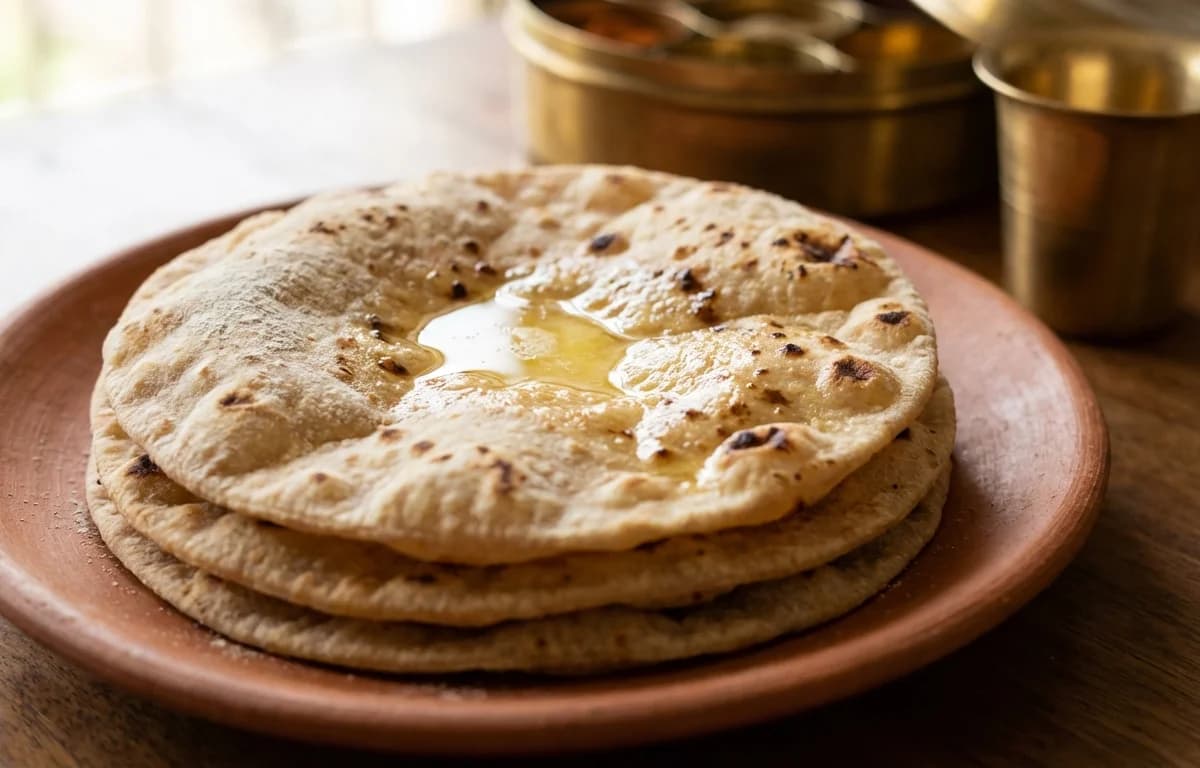
Soft, unleavened whole wheat flatbread, a daily staple in Indian households. Perfect for scooping up curries and dals, this simple, wholesome bread is puffed up on an open flame for that classic, airy texture.
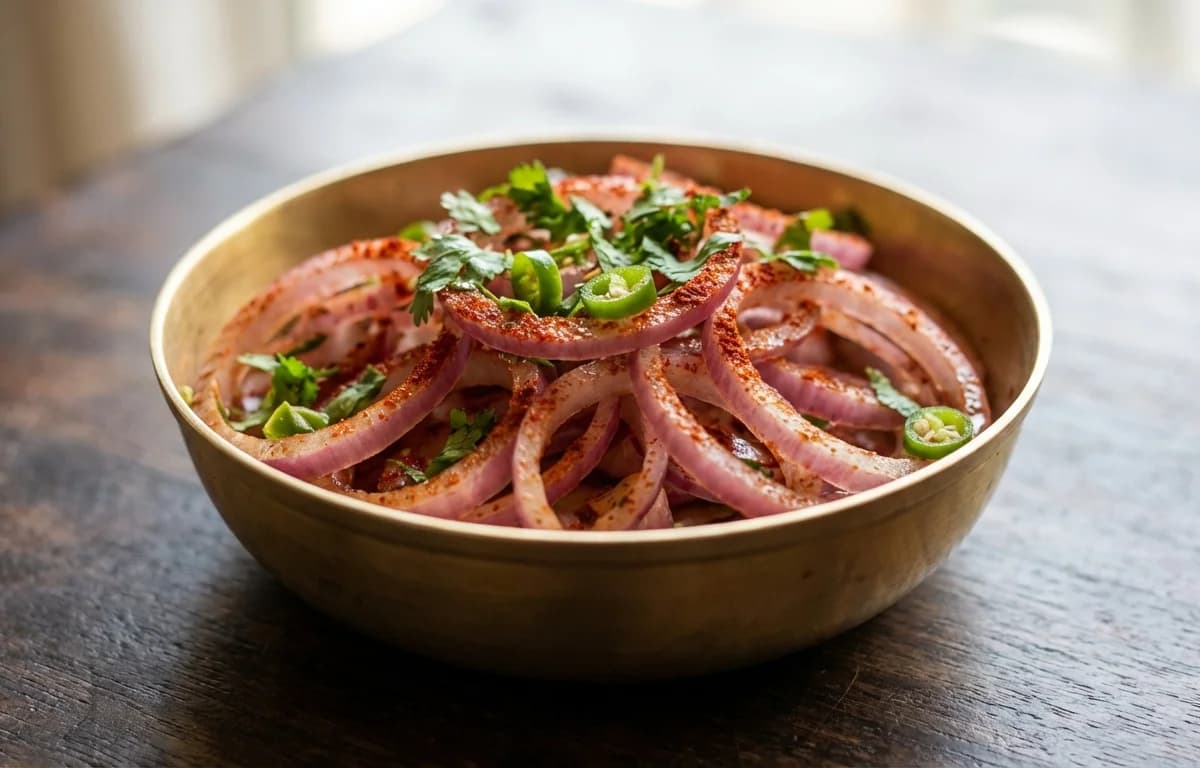
Crisp, tangy rings of onion tossed with fresh lemon juice, herbs, and a hint of spice. This classic Indian side salad, known as Laccha Pyaz, is the perfect refreshing accompaniment to rich curries and grilled kebabs.
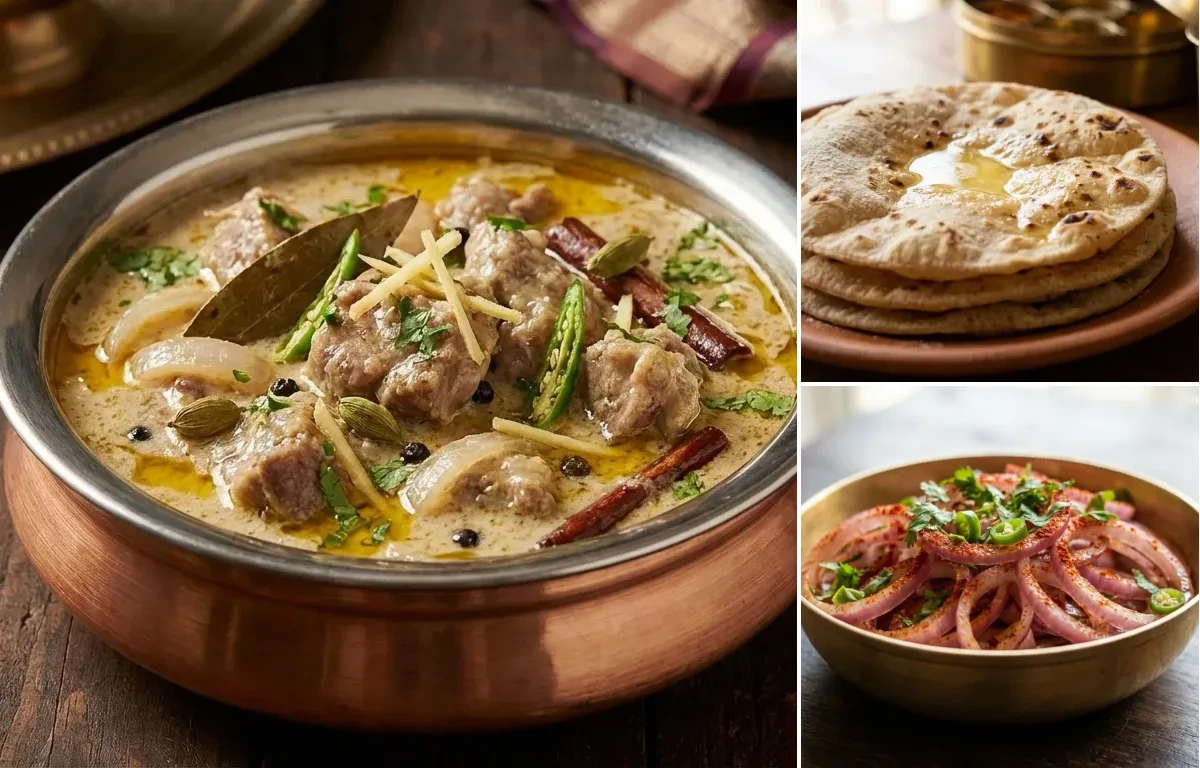
Melt-in-mouth Mutton Ishtew with soft rotis and crisp onion salad. A true comfort food delight!
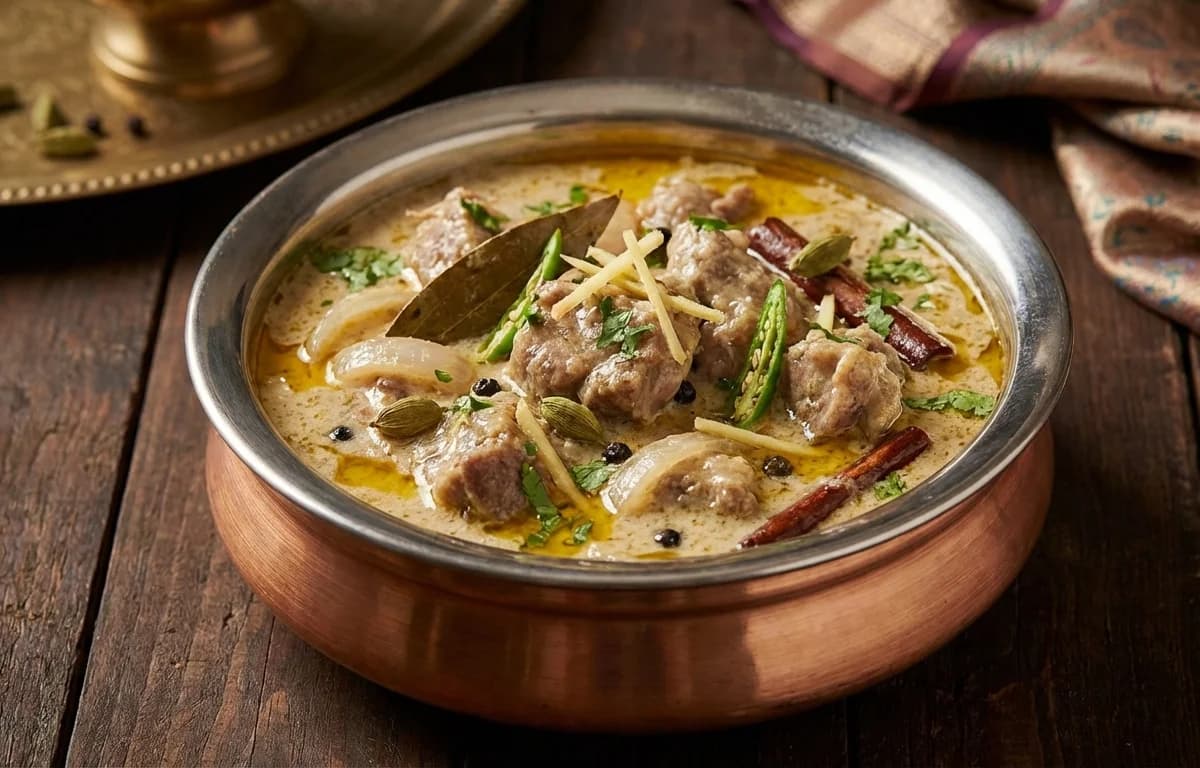
This bihari dish is perfect for lunch. With 753.7900000000001 calories and 64.47g of protein per serving, it's a nutritious choice for your meal plan.
fat
Black Cardamom
(lightly crushed)
5 pcs Cloves
1 tsp Black Peppercorns
1.5 tsp Coriander Powder
0.5 tsp Cumin Powder
1 tsp Garam Masala
1.5 tsp Salt (or to taste)
1.5 cup Water (hot)
2 tbsp Coriander Leaves (chopped, for garnish)
1 inch Ginger (cut into juliennes, for garnish)
Instructions
1
Marinate the Mutton
In a large bowl, combine the mutton pieces, ginger-garlic paste, and 0.5 tsp of salt.
Mix thoroughly to ensure each piece is well-coated.
Cover and let it marinate for at least 30 minutes at room temperature, or up to 2 hours in the refrigerator.
2
Sauté Onions and Whole Spices
Heat ghee in a pressure cooker or a heavy-bottomed pot over medium heat.
Add the whole spices: bay leaves, cinnamon stick, green and black cardamoms, cloves, and black peppercorns. Sauté for about 30-45 seconds until they release their aroma.
Add the thinly sliced onions. Cook for 10-12 minutes, stirring occasionally, until the onions are very soft, limp, and translucent. Do not let them brown, as this is key to the Ishtew's signature pale color.
3
Sear Mutton and Add Spices
Increase the heat to medium-high and add the marinated mutton to the pot.
Sauté for 7-8 minutes, stirring frequently, until the mutton is seared and has changed color on all sides.
Add the coriander powder, cumin powder, and slit green chilies. Stir and cook for one more minute until the raw smell of the spices disappears.
4
Incorporate Yogurt and Pressure Cook
Reduce the heat to the lowest setting. Add the whisked yogurt a little at a time, stirring continuously and vigorously to prevent it from curdling.
Once all the yogurt is incorporated, increase the heat to medium and cook for 4-5 minutes, until you see oil separating from the masala at the edges.
Pour in 1.5 cups of hot water and the remaining 1 tsp of salt. Stir everything together well.
Secure the lid of the pressure cooker. Cook on high heat for one whistle, then reduce the heat to low and let it cook for 25-30 minutes.
If using a pot, cover and simmer on low heat for 75-90 minutes, or until the mutton is fork-tender.
5
Finish and Serve
Turn off the heat and allow the pressure to release naturally from the cooker. This step is crucial for tender meat.
Open the lid. Check if the mutton is tender. If the gravy seems too thin, simmer it uncovered for 5-7 minutes to thicken to your desired consistency.
Stir in the garam masala powder.
Garnish with chopped coriander leaves and fresh ginger juliennes.
Serve the Mutton Ishtew hot with naan, sheermal, or steamed basmati rice.
213cal
8gprotein
44gcarbs
2gfat
Ingredients
2 cup atta (Use a fine-milled whole wheat flour for best results.)
1 cup lukewarm water (Adjust quantity as needed; dough should be soft and pliable.)
1 tsp ghee (For the dough, plus extra for brushing (optional).)
Instructions
1
Prepare the dough
In a large mixing bowl, combine the atta and 1 tsp of ghee.
Gradually add lukewarm water, a little at a time, mixing with your fingers to form a shaggy dough.
Knead the dough on a clean surface for 8-10 minutes, using the heel of your palm to push and fold until it is smooth, soft, and pliable, but not sticky.
Cover the dough with a damp cloth or a lid and let it rest for at least 20-30 minutes. This step is crucial for relaxing the gluten and ensuring soft rotis.
2
Divide and roll the rotis
After resting, knead the dough for another minute.
Divide the dough into 8 equal-sized portions and roll each into a smooth, crack-free ball.
Take one dough ball, flatten it, and dip it in dry atta for dusting.
On a rolling board, use a rolling pin to roll it into an even circle about 6-7 inches in diameter. Ensure the edges are as thin as the center for proper puffing.
3
Cook the roti
Heat a flat griddle (tawa) over medium-high heat. It's ready when a pinch of flour sprinkled on it sizzles and turns brown in seconds.
Place the rolled roti on the hot tawa. Cook for about 20-30 seconds, until you see small bubbles appear on the surface.
Using tongs, flip the roti. Cook the second side for about 45-60 seconds, until light brown spots appear.
4
Puff the roti
Using tongs, carefully remove the roti from the tawa and place it directly over a medium-high open flame. It should puff up into a ball almost instantly. Flip it once and remove immediately to avoid burning.
Alternatively, if you don't have a gas stove, flip the roti back onto the tawa and gently press the edges with a folded kitchen towel. This traps steam and helps the roti puff up.
Once puffed, immediately remove the roti from the heat.
5
Finish and serve
Brush one side with ghee, if desired, for extra flavor and softness.
Place the finished roti in a casserole dish or a container lined with a clean kitchen towel to keep them soft and warm.
Repeat the process for all remaining dough balls. Serve hot with your favorite dal, curry, or sabzi.