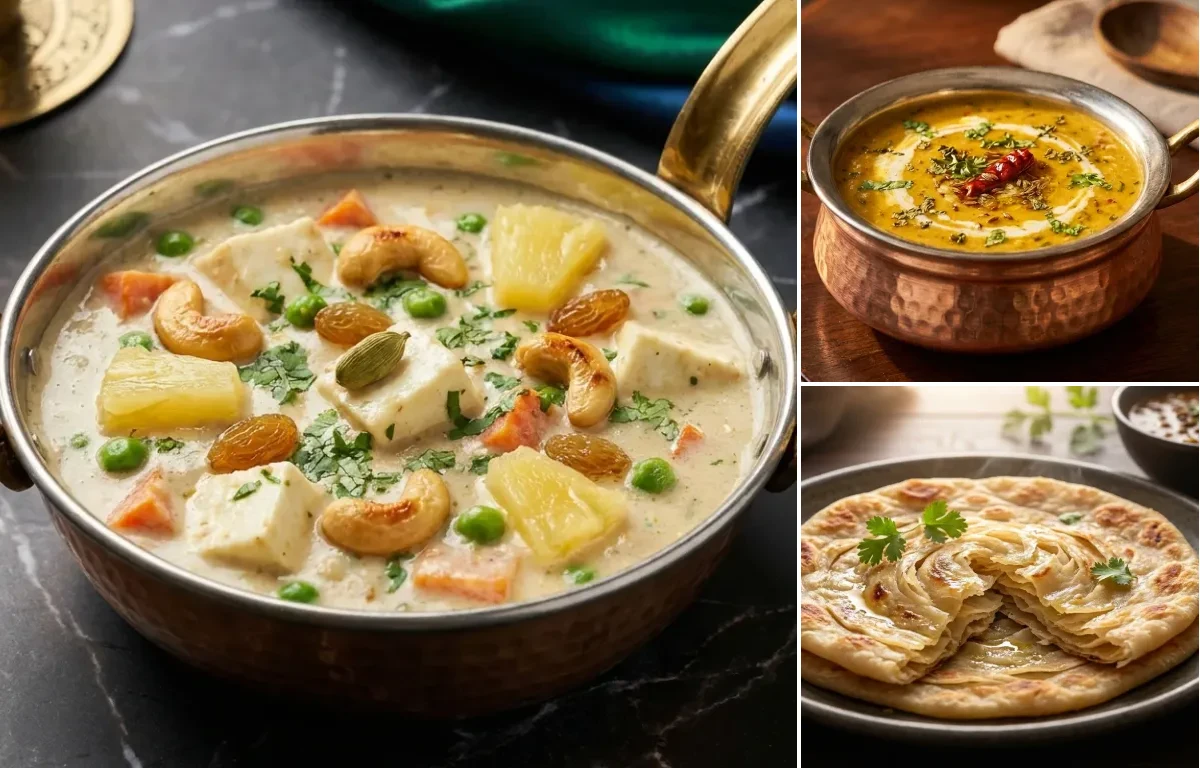
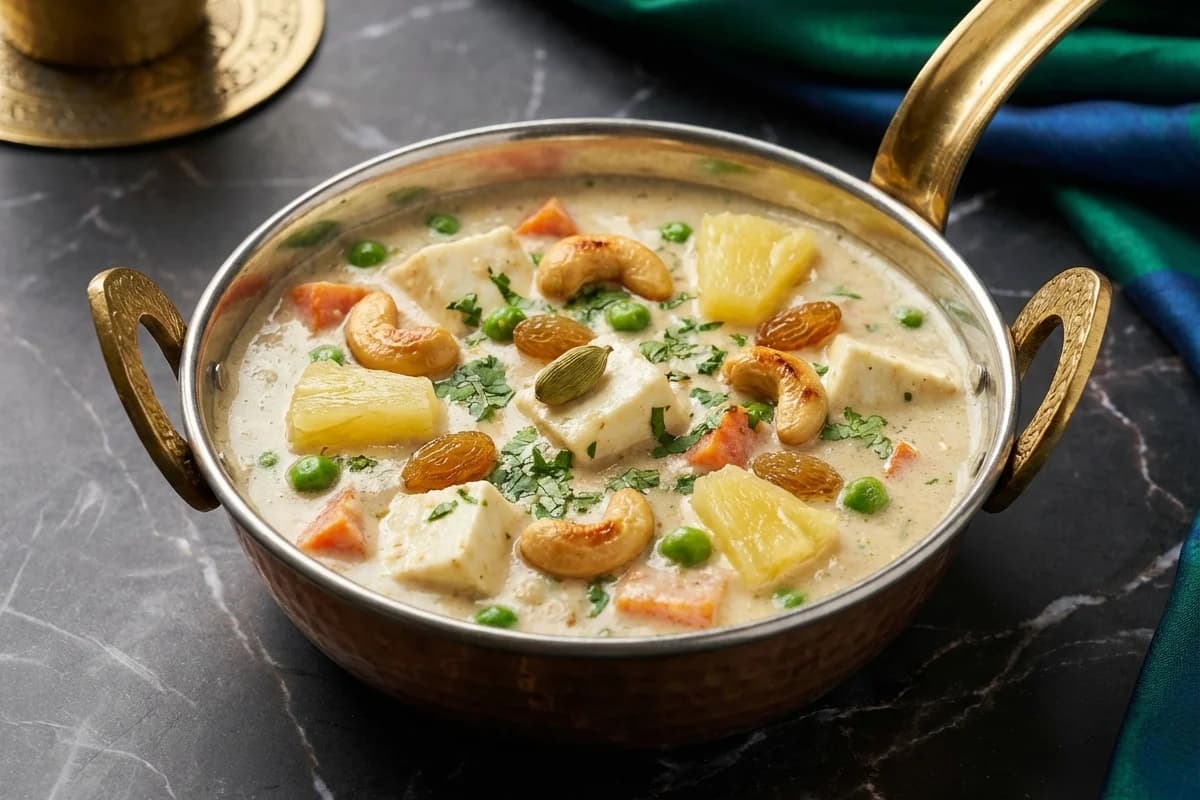
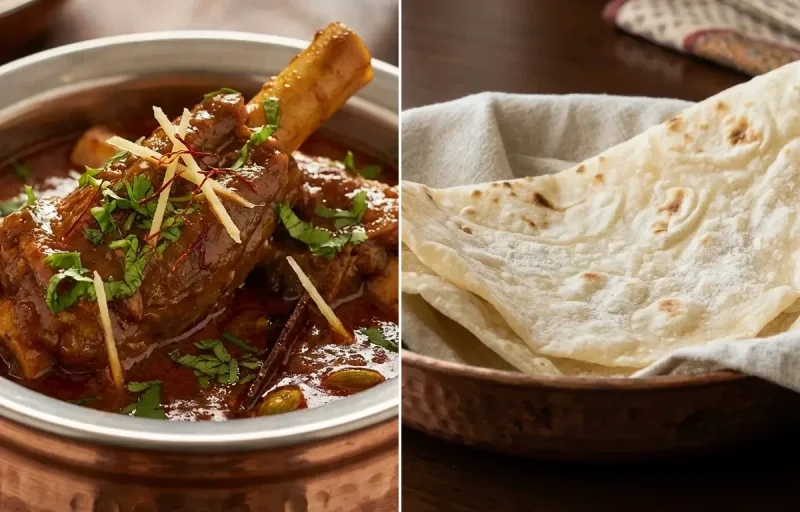
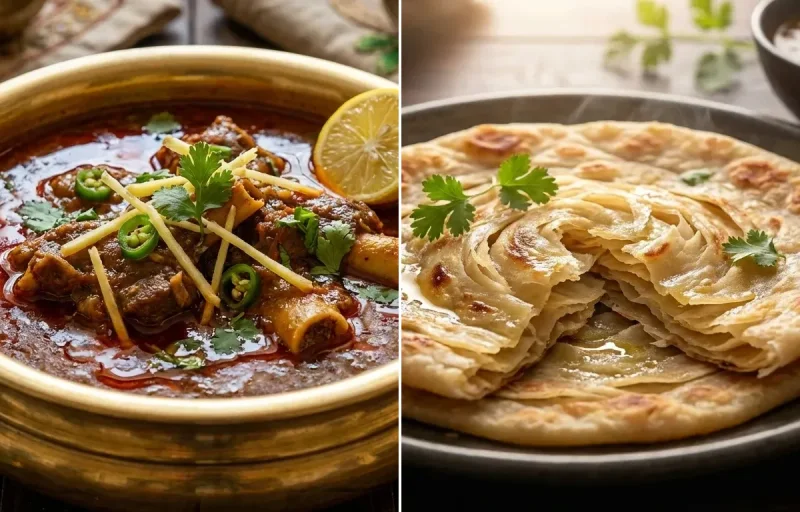
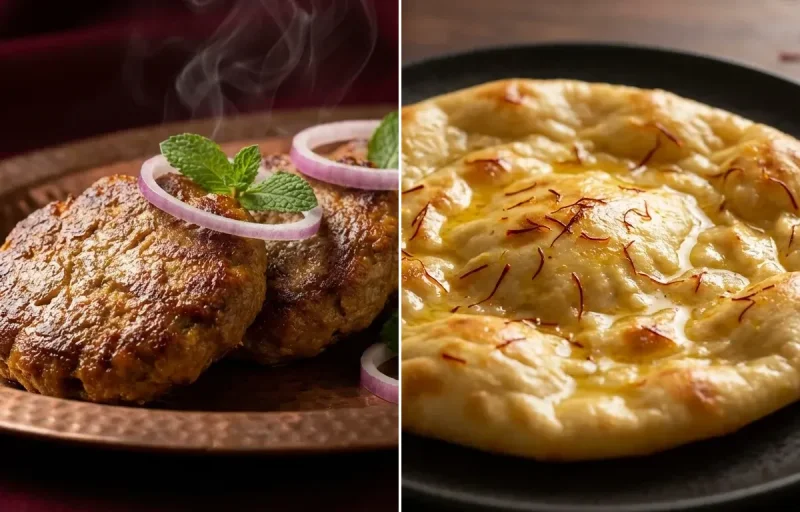
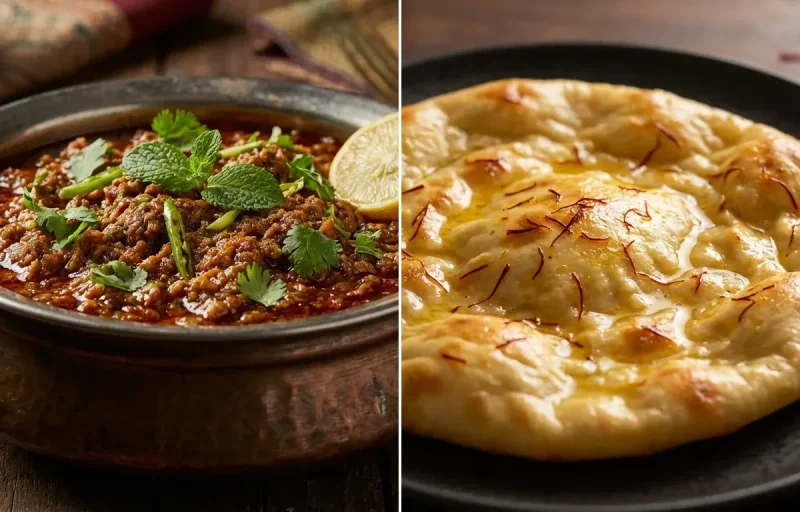
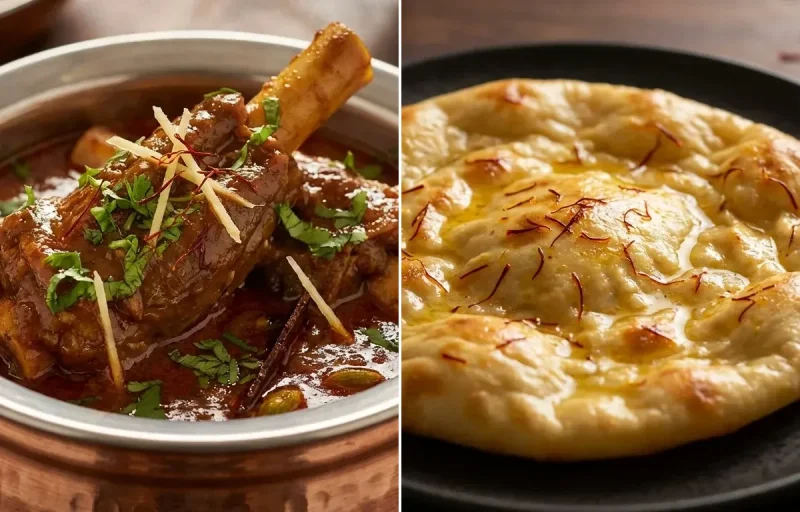
A luxurious Mughlai curry featuring nine 'gems'—a mix of vegetables, fruits, and nuts in a rich, creamy, and mildly sweet white gravy. This festive dish is perfect for special occasions and pairs beautifully with naan or jeera rice.
Prep30 min
Cook40 min
Soak30 min
Servings4
Serving size: 1 serving
511cal
14gprotein
31gcarbs
Ingredients
1 medium Carrot (diced)
0.5 cup French Beans (chopped)
1 medium Potato (peeled and diced)
1 cup Cauliflower Florets
0.5 cup Green Peas (fresh or frozen)
150 g Paneer (cut into 1/2-inch cubes)
0.25 cup Cashews (for the gravy paste, soaked in hot water for 20 minutes)
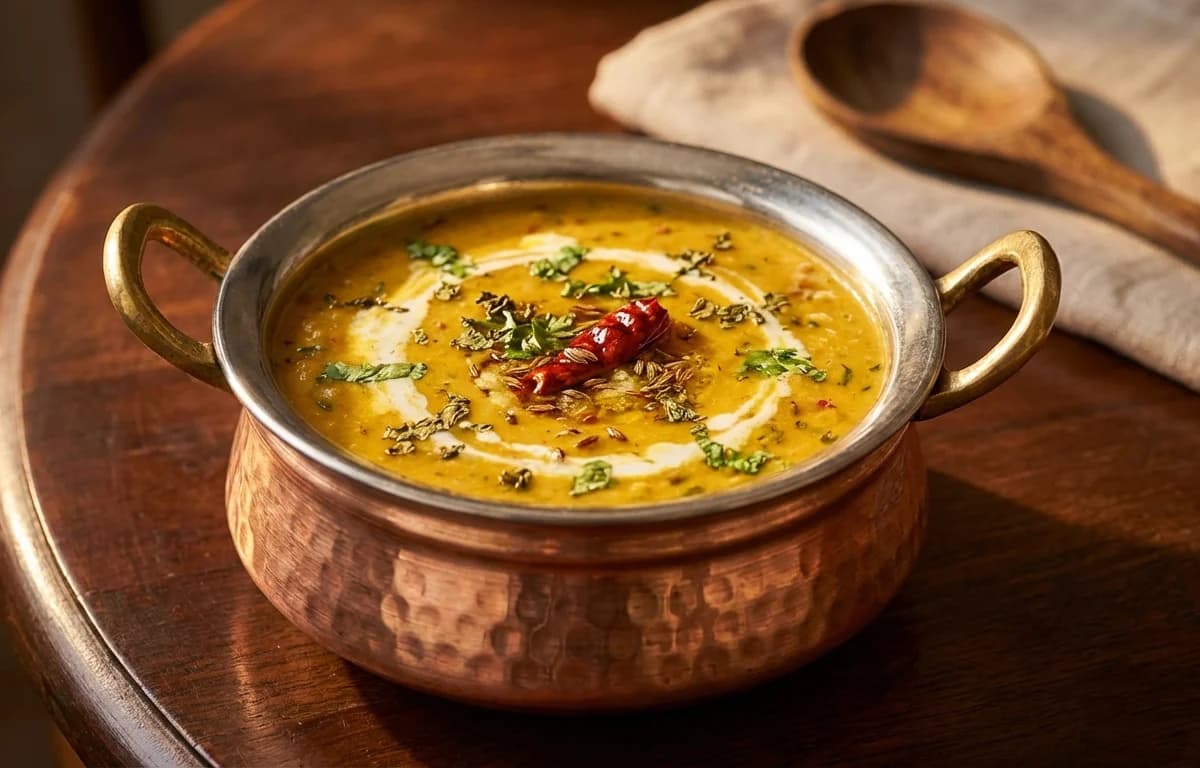
A rich and creamy Mughlai lentil dish made with toor dal, yogurt, and a blend of aromatic spices. Its royal flavor and velvety texture make it a perfect centerpiece for a special meal, paired with naan or rice.
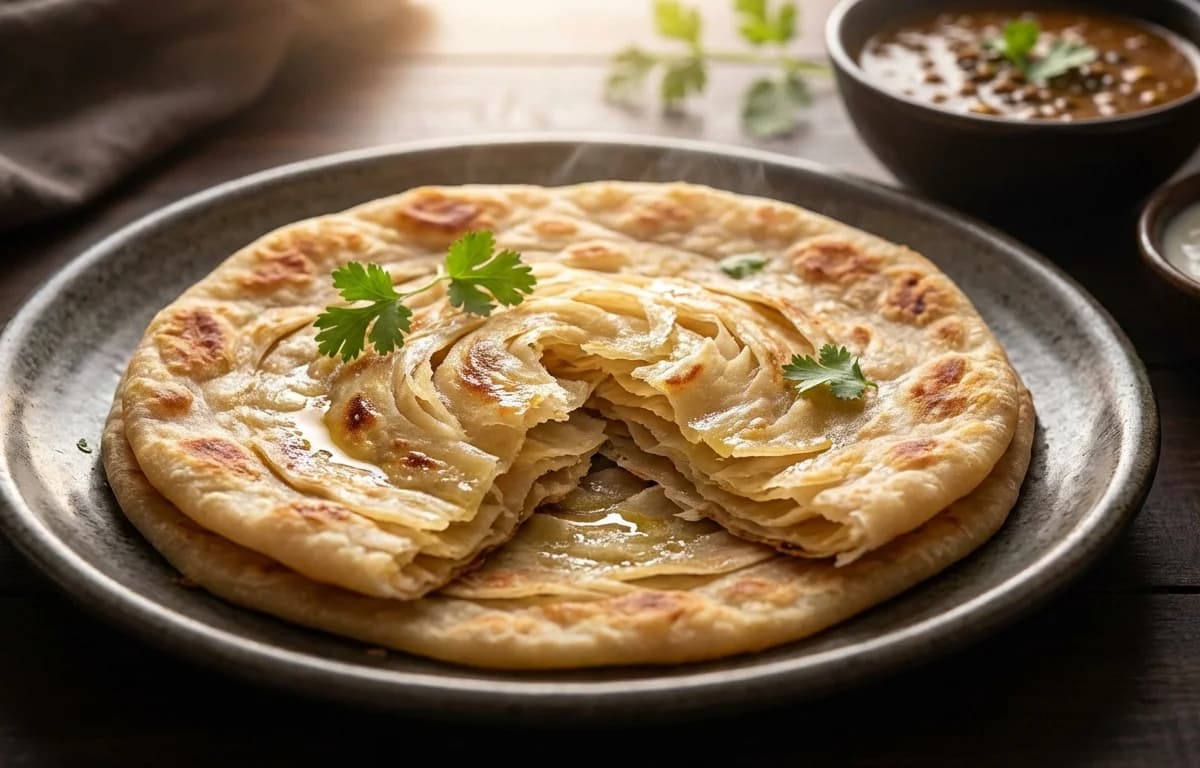
A classic Awadhi flatbread, famously cooked on an inverted griddle (ulta tawa). This paratha is wonderfully soft with a slightly crisp exterior and a unique dome shape, making it the perfect vessel for scooping up rich curries like Galouti Kebab or Korma.
Prep40 min
Cook20 min
Servings4
Serving size: 1 serving
About Navratan Korma, Sultani Dal and Ulte Tawa Paratha
Creamy Navratan Korma and protein-packed Sultani Dal with crispy Ulte Tawe ka Paratha. Perfectly spiced comfort!
This awadhi dish is perfect for dinner. With 1150.19 calories and 36.03g of protein per serving, it's a nutritious choice for your meal plan.
Other Cuisines to Explore
Discover authentic meals from cuisines around the world.
2 tbsp Coriander Leaves (finely chopped, for garnish)
Instructions
1
Prepare the Vegetables and Paneer (The 'Gems')
In a pot, bring water to a boil. Add the diced carrots, beans, potatoes, and cauliflower. Cook for 5-7 minutes until they are tender but still have a slight bite. Add the green peas in the last minute of cooking. Drain all vegetables and set aside.
Heat 2 tbsp of oil in a non-stick pan over medium heat. Gently slide in the paneer cubes and shallow-fry for 2-3 minutes, turning occasionally, until they are light golden. Remove with a slotted spoon and set aside. You can place them in a bowl of warm water to keep them soft.
In the same pan, add the 8 cashews and raisins for garnish. Fry for 30-60 seconds until the cashews are golden and the raisins plump up. Remove and set aside.
2
Create the Smooth Korma Paste
Drain the soaked cashews and poppy seeds.
In a small pot, add the chopped onion and cover with water. Boil for 5-7 minutes until the onions are soft and translucent. This step removes the raw pungency. Drain thoroughly.
In a high-speed blender, combine the soaked cashews, poppy seeds, boiled onion, and green chillies. Blend into a very smooth, fine paste. Add 2-3 tablespoons of water if needed to help it blend.
3
Cook the Royal Gravy
Heat 3 tbsp of ghee in a heavy-bottomed pan or kadai over medium heat. Add the whole spices: bay leaf, cinnamon stick, green cardamom pods, and cloves. Sauté for about 30-45 seconds until they become fragrant.
Add the ginger-garlic paste and sauté for another minute until the raw smell disappears.
Lower the heat and add the prepared korma paste. Cook for 6-8 minutes, stirring continuously, until the paste thickens, darkens slightly, and you see ghee separating from the sides.
Stir in the coriander powder and cook for one more minute.
Turn the heat to the absolute lowest setting. Slowly pour in the whisked curd while stirring constantly and vigorously to prevent it from splitting. Cook for 2-3 minutes until the ghee starts to surface again.
Add 1.5 cups of water, salt, and sugar. Mix well and bring the gravy to a gentle simmer. Let it cook for 3-4 minutes.
4
Combine and Finish the Korma
Gently add the boiled vegetables, fried paneer, and pineapple chunks to the simmering gravy.
Mix carefully to coat everything. Cover and let it simmer on low heat for 5-6 minutes, allowing the vegetables and paneer to absorb the flavors of the rich gravy.
Reduce the heat to low. Stir in the fresh cream, crushed kasuri methi, and garam masala. Mix gently and cook for just one more minute. Do not let the korma boil after adding the cream.
Turn off the heat. Garnish with the fried cashews, raisins, and freshly chopped coriander leaves.
5
Serve
Serve the Navratan Korma hot with naan, roti, paratha, or jeera rice.
4
Serving size: 1 serving
321cal
14gprotein
39gcarbs
13gfat
Ingredients
1 cup Toor Dal (Also known as split pigeon peas)
3 cup Water (For pressure cooking the dal)
0.5 tsp Turmeric Powder
1 tsp Salt (Divided, or to taste)
1 cup Curd (Use full-fat and whisked until smooth)
1 tbsp Besan (Chickpea flour, acts as a stabilizer)
1 tsp Kashmiri Red Chili Powder (For color and mild heat)
2 tbsp Coriander Leaves (Freshly chopped, for garnish)
Instructions
1
Cook the Dal (15-20 minutes)
Rinse the toor dal under running water until the water runs clear. Soak it in fresh water for at least 30 minutes.
Drain the soaked dal and transfer it to a pressure cooker. Add 3 cups of water, turmeric powder, and 0.5 tsp of salt.
Secure the lid and pressure cook on medium heat for 4-5 whistles, or until the dal is completely soft and mushy (about 15 minutes).
Allow the pressure to release naturally. Open the cooker and use a whisk or an immersion blender to mash the dal until it's smooth and creamy. Set aside.
2
Prepare the Yogurt Base (3 minutes)
In a medium bowl, add the whisked curd.
Add besan, Kashmiri red chili powder, coriander powder, and garam masala to the curd.
Whisk vigorously until the mixture is completely smooth and free of lumps. This step is crucial to prevent the curd from splitting when cooked.
3
Prepare the Tempering (Tadka) (8-10 minutes)
Heat ghee in a heavy-bottomed pan or kadai over medium heat.
Prepare the Dough (10 minutes + 30 minutes resting)
In a large mixing bowl, combine 2 cups of maida, 0.75 tsp salt, and sugar.
Add 2 tbsp of ghee and rub it into the flour with your fingertips until the mixture resembles coarse breadcrumbs. This process is called 'moyan'.
Gradually add the warm milk and knead for 8-10 minutes to form a very soft, smooth, and pliable dough. It should be softer than regular chapati dough.
Cover the dough with a damp cloth and let it rest for at least 30 minutes. This helps the gluten to relax, making the parathas softer.
2
Prepare the Tawa and Salt Water (5 minutes)
Place a heavy-bottomed kadhai or a convex tawa upside down on your stove over medium-high heat. Let it get very hot; you should see faint smoke rising from it.
While the tawa heats, mix 0.5 tsp of salt in 0.25 cup of water in a small bowl. Stir until the salt dissolves completely. This salt water will act as an adhesive.
3
Roll the Parathas (5 minutes)
After the dough has rested, knead it again for one minute.
Divide the dough into 8 equal-sized balls.
Take one ball, dust it lightly with dry maida, and roll it into a thin circle, about 6-7 inches in diameter. Keep the rolled parathas covered to prevent them from drying out.
4
Cook the Paratha (2-3 minutes per paratha)
Take one rolled paratha. Dip your fingers in the salt water and apply a thin, even layer over one entire surface.
Carefully lift the paratha and place the water-coated side down onto the hot inverted tawa. Gently press the edges to ensure it sticks well.
Cook for about 1-2 minutes. You will see bubbles forming on the surface as it cooks.
Using a kitchen towel or oven mitts, carefully lift the tawa by its handle, flip it over, and hold it directly over the open flame, about 4-5 inches away.
Cook the top side by moving the tawa in a circular motion to ensure even cooking. This should take 30-60 seconds, until golden-brown spots appear all over.
Flip the tawa back to its original position on the stove.
5
Finish and Serve
Using a pair of tongs, carefully peel the cooked paratha off the tawa. It should come off easily.
Place the hot paratha on a plate and generously brush it with melted ghee.
Repeat the process for the remaining dough balls. Stack the cooked parathas in a casserole or wrap them in a cloth to keep them soft and warm.
Serve immediately with your favorite rich curry or kebabs.
Once the ghee is hot, add the cumin seeds, hing, and dried red chilies. Sauté for 30-40 seconds until the seeds splutter and become aromatic.
Add the finely chopped onion and sauté for 5-7 minutes, stirring occasionally, until it turns a deep golden brown.
Add the ginger-garlic paste and slit green chilies. Cook for another minute until the raw aroma disappears.
4
Combine and Simmer (8-10 minutes)
Reduce the heat to the lowest setting. Slowly pour the prepared yogurt mixture into the pan, stirring continuously and briskly.
Continue to stir and cook the yogurt masala on low heat for 2-3 minutes until it thickens slightly and you see ghee separating at the edges.
Carefully pour this entire tempering mixture into the pressure cooker with the cooked dal.
Add the remaining 0.5 tsp of salt and the crushed kasuri methi. Stir well to combine.
Bring the dal to a gentle simmer over low heat. Let it cook for 5-7 minutes, allowing the flavors to meld. Do not boil vigorously. Adjust consistency with a little hot water if it's too thick.
5
Finishing Touches (2 minutes)
Turn off the heat. Gently stir in the fresh cream for a final touch of richness and a velvety texture.
Garnish with freshly chopped coriander leaves.
Serve the Sultani Dal hot with naan, roti, or steamed basmati rice.