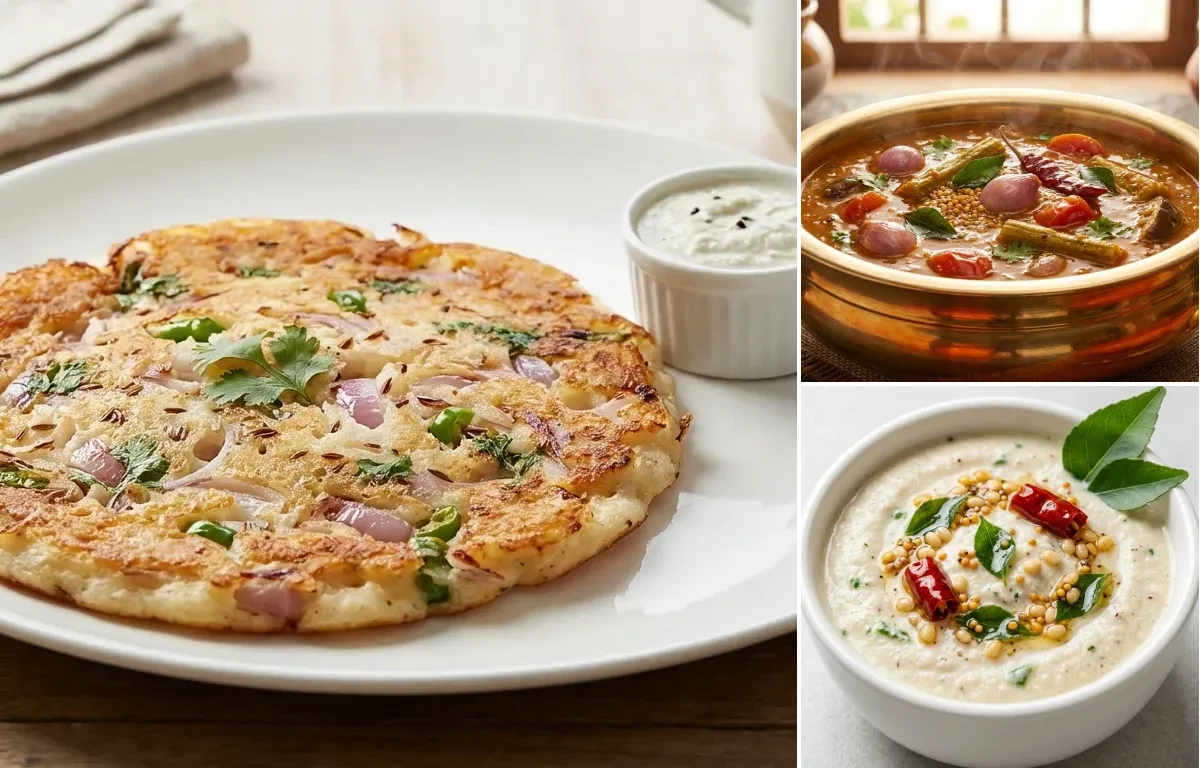
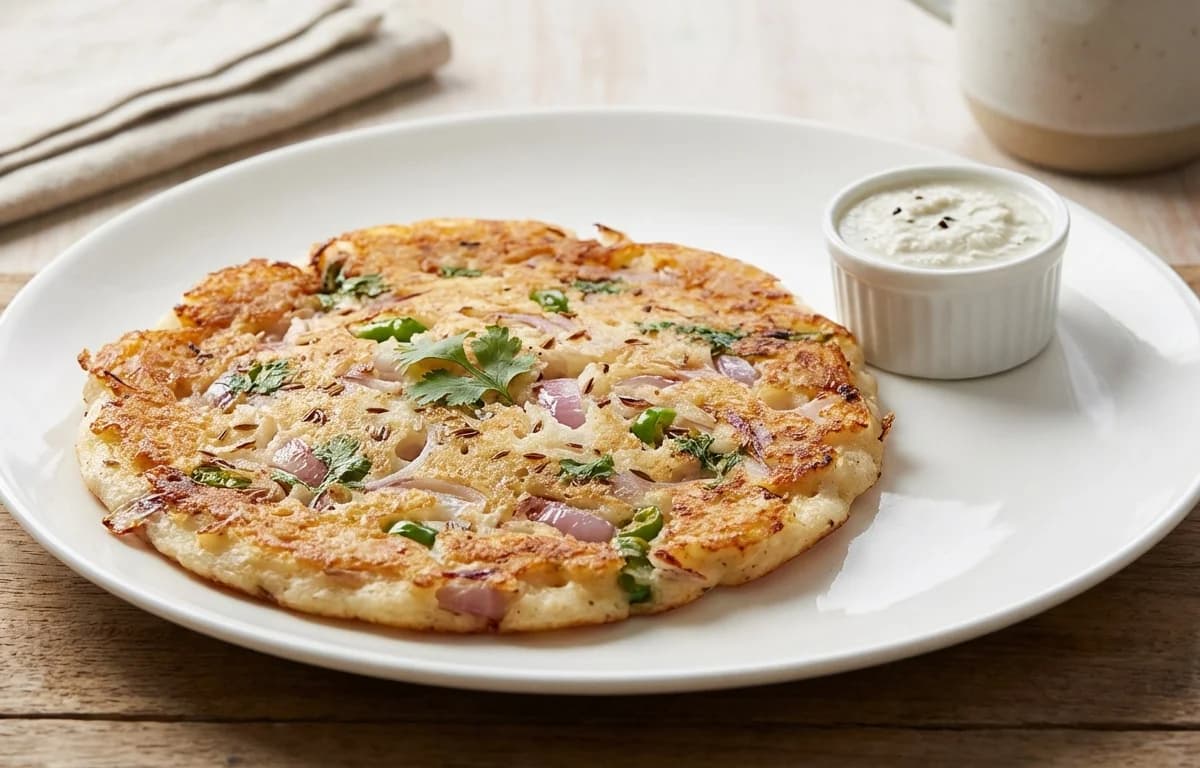
A savory South Indian pancake made from a fermented rice and lentil batter, generously topped with finely chopped onions, green chilies, and fresh herbs. Featuring a delightfully soft and spongy center with perfectly crisp edges, it's a wholesome and popular choice for breakfast, brunch, or a light meal.
Prep15 min
Cook25 min
Ferment480 min
Servings4
Serving size: 1 serving
473cal
10gprotein
79gcarbs
Ingredients
4 cup Dosa Batter (Use well-fermented, thick batter. Store-bought or homemade.)
2 cup Red Onion (Finely chopped)
3 piece Green Chili (Finely chopped, adjust to taste)
4 tbsp Coriander Leaves (Freshly chopped)
1 tbsp Ginger (Finely grated)
1 tsp Cumin Seeds (Optional, but adds a nice flavor)
0.5 tsp Salt (Adjust to taste, as some batters are pre-salted)
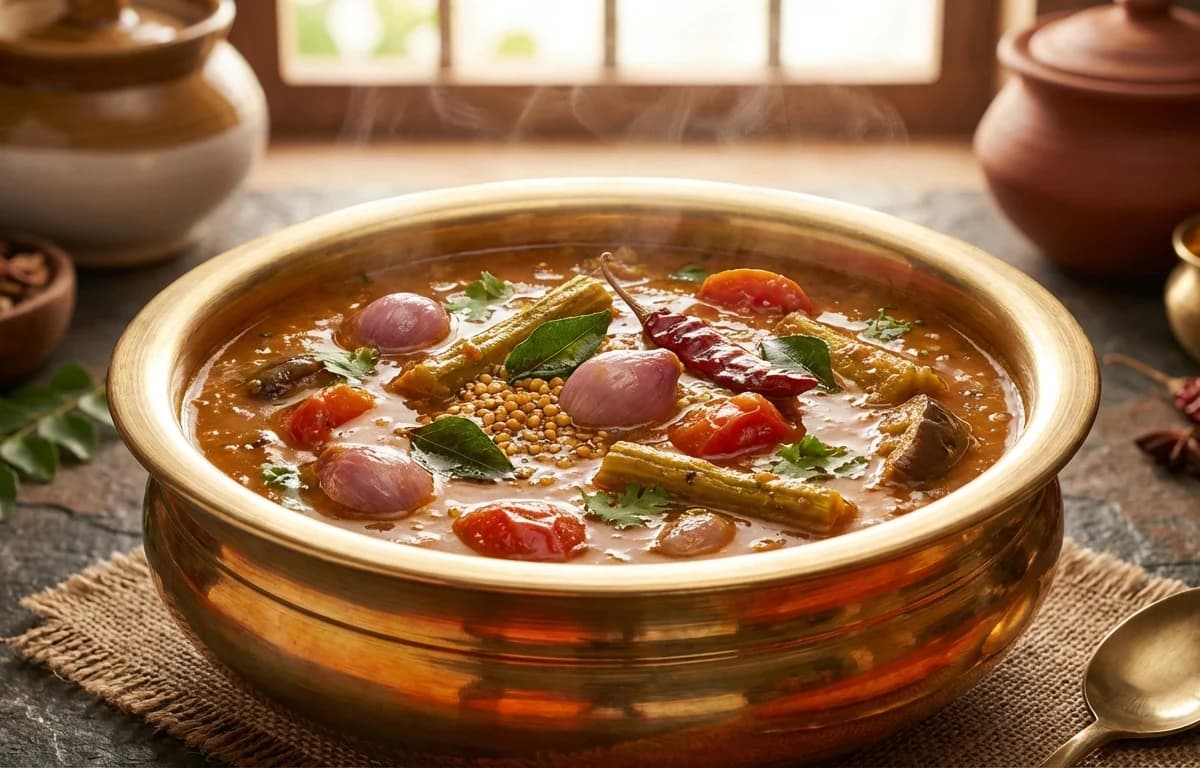
Aromatic and spicy lentil stew from the Chettinad region of Tamil Nadu. Made with freshly ground spices, tamarind, and mixed vegetables, it's a flavorful twist on the classic sambar, perfect with rice or idli.
A creamy, savory, and slightly tangy South Indian staple. This fresh coconut chutney is the perfect accompaniment for idli, dosa, vada, and upma. Made with freshly grated coconut and aromatic spices, it's finished with a classic tempering (tadka) that elevates its flavor.
Prep10 min
Cook5 min
Servings4
Serving size: 1 serving
About Onion Uttapam, Chettinad Sambar and Coconut Chutney
Savory Onion Uttapam with aromatic Chettinad Sambar and creamy coconut chutney. A kid-approved, energy-giving meal!
This chettinad dish is perfect for lunch. With 1000.62 calories and 28.11g of protein per serving, it's a nutritious choice for your meal plan.
Other Cuisines to Explore
Discover authentic meals from cuisines around the world.
In a medium bowl, combine the 2 cups of finely chopped onions, 3 finely chopped green chilies, 1 tbsp of grated ginger, 1 tsp of cumin seeds, and 4 tbsp of chopped coriander leaves.
Mix everything together thoroughly. This ensures the toppings are evenly distributed on each uttapam. Set aside.
2
Prepare the Batter
Take the 4 cups of dosa batter in a large bowl. If it's refrigerated, allow it to sit at room temperature for 20-30 minutes.
The ideal consistency is thick but pourable, like pancake batter. If too thick, add 1-2 tablespoons of water at a time to adjust.
Add 1/2 tsp of salt (or to taste) and mix well. Many store-bought batters are already salted, so taste first.
3
Heat the Tawa and Cook the Uttapam
Place a non-stick tawa or a well-seasoned cast-iron skillet over medium heat. To check if it's ready, sprinkle a few drops of water; they should sizzle and evaporate immediately.
Lightly grease the tawa with about 1/2 teaspoon of oil.
Pour a ladleful of batter (about 1/2 cup) onto the center of the hot tawa. Do not spread it thin like a dosa; gently spread it into a thick circle, about 5-6 inches in diameter.
Immediately sprinkle a generous amount of the prepared onion topping mixture evenly over the batter.
4
Cook and Flip
Using a flat spatula, gently press the toppings into the wet batter to help them adhere.
Drizzle about 1 teaspoon of oil around the edges and a little on top of the uttapam.
Cover with a lid and cook on medium heat for 2-3 minutes, until the bottom is golden brown and the top surface appears set.
Carefully slide the spatula underneath and flip the uttapam.
Cook the other side for another 1-2 minutes, until the onions are slightly caramelized and have light golden-brown spots.
5
Serve
Remove the uttapam from the tawa and place it on a serving plate.
Repeat the process with the remaining batter and toppings, greasing the tawa lightly before each one.
Serve the Onion Uttapams immediately while hot with coconut chutney, tomato chutney, or sambar.
4
Serving size: 1 serving
365cal
15gprotein
53gcarbs
12gfat
Ingredients
1 cup Toor Dal (Also known as split pigeon peas)
0.5 tsp Turmeric Powder
3 cup Water (For pressure cooking the dal)
2 tbsp Coriander Seeds
1 tbsp Chana Dal
1 tsp Urad Dal
0.25 tsp Fenugreek Seeds
1 tsp Cumin Seeds
1 tsp Black Peppercorns
5 pcs Dry Red Chillies (For the masala powder)
3 tbsp Grated Coconut (Fresh or desiccated)
1 tsp Sesame Oil (For roasting masala)
20 g Tamarind (Seedless, about a small lemon-sized ball)
1 pcs Drumstick (Cut into 2-inch pieces)
1 pcs Brinjal (Small, quartered)
0.5 cup Yellow Pumpkin (Peeled and cubed)
15 pcs Sambar Onions (Peeled, also known as pearl onions)
1 pcs Tomato (Medium, chopped)
1.5 tsp Salt (Adjust to taste)
0.5 tsp Jaggery (Optional, to balance flavors)
2 tbsp Ghee (For tempering)
1 tsp Mustard Seeds
10 pcs Curry Leaves
0.25 tsp Asafoetida
1 pcs Dry Red Chilli (Broken, for tempering)
2 tbsp Coriander Leaves (Freshly chopped, for garnish)
Instructions
1
Cook the Lentils
Rinse the toor dal thoroughly under running water. In a pressure cooker, combine the rinsed dal, 3 cups of water, and turmeric powder.
Secure the lid and pressure cook on medium heat for 4-5 whistles, or for about 15 minutes, until the dal is completely soft and mushy.
Allow the pressure to release naturally. Open the cooker, whisk the dal until smooth, and set aside.
2
Prepare the Chettinad Masala
Heat 1 tsp of sesame oil in a small pan over low-medium heat. Add the coriander seeds, chana dal, urad dal, fenugreek seeds, cumin seeds, black peppercorns, and 5 dry red chillies.
Roast for 3-4 minutes, stirring continuously, until the dals turn golden and the spices become fragrant. Be careful not to burn them.
Add the grated coconut and continue to roast for another 1-2 minutes until it is lightly toasted and aromatic.
Remove the mixture from the heat and let it cool down completely. Once cooled, transfer to a blender and grind into a fine powder without adding any water.
3
Cook the Vegetables and Tamarind
While the masala cools, soak the tamarind in 1 cup of hot water for 15 minutes. Squeeze the pulp thoroughly to extract the juice, then discard the solids.
1 cup Fresh Coconut (Grated and tightly packed. Frozen can be used after thawing.)
2 tbsp Pottukadalai (Also known as roasted chana dal or chutney dal.)
2 pcs Green Chili (Adjust to your spice preference.)
0.5 inch Ginger (Peeled and roughly chopped.)
1 tsp Tamarind Paste (Or a small marble-sized piece of whole tamarind, deseeded.)
0.5 tsp Salt (Adjust to taste.)
0.5 cup Water (Use as needed for grinding to desired consistency.)
2 tsp Coconut Oil (For tempering. Ghee or another neutral oil can be used.)
0.5 tsp Mustard Seeds
1 tsp Urad Dal (Split and skinned black gram lentils.)
2 pcs Dry Red Chili (Broken into halves.)
1 sprig Curry Leaves (About 10-12 leaves.)
1 pinch Asafoetida (Also known as hing. Optional but recommended.)
Instructions
1
Grind the Chutney Base (5 minutes)
In a blender or mixie jar, combine the fresh grated coconut, pottukadalai (roasted chana dal), green chilies, chopped ginger, tamarind paste, and salt.
Add 1/4 cup of water to begin.
Blend in short bursts, scraping down the sides as needed, until you get a thick, smooth paste. Avoid over-blending to prevent the coconut from releasing excess oil.
Add more water, one tablespoon at a time, and blend briefly until you reach your desired consistency. Transfer the chutney to a serving bowl.
2
Prepare the Tempering (Tadka) (5 minutes)
Heat the coconut oil in a small tadka pan over medium heat. Test if the oil is hot enough by dropping in one mustard seed; it should sizzle immediately.
Add the mustard seeds and allow them to splutter completely, which takes about 30 seconds.
Lower the heat, then add the urad dal. Sauté for 30-40 seconds, stirring continuously, until it turns a pale golden brown.
Quickly add the broken dry red chilies, fresh curry leaves, and a pinch of asafoetida. Stir for another 15-20 seconds until the curry leaves become crisp and fragrant. Immediately remove from heat to prevent burning.
In a large pot or kadai, add the prepared tamarind extract, chopped vegetables (drumstick, brinjal, pumpkin), sambar onions, and chopped tomato.
Add 1 more cup of water and the salt. Bring the mixture to a boil over medium-high heat.
Reduce the heat to a simmer and cook for 10-12 minutes, or until the vegetables are tender but still hold their shape. The raw smell of the tamarind should also be gone.
4
Combine and Simmer
Pour the cooked, mashed dal into the pot with the vegetables. Stir well to combine.
Add the freshly ground Chettinad masala powder and the optional jaggery. Mix thoroughly, ensuring there are no lumps.
Check the consistency. If the sambar is too thick, add up to 1 cup of hot water to reach your desired consistency.
Allow the sambar to simmer gently on low heat for 8-10 minutes, allowing all the flavors to meld together beautifully.
5
Prepare the Tempering (Tadka)
In a small tempering pan (tadka pan), heat the ghee over medium heat.
Once the ghee is hot, add the mustard seeds and allow them to splutter completely.
Add the broken dry red chilli, curry leaves, and asafoetida. Sauté for 30 seconds until the curry leaves are crisp and the mixture is fragrant.
6
Garnish and Serve
Immediately pour the hot tempering over the simmering sambar. This will create a sizzle and release a wonderful aroma.
Garnish with freshly chopped coriander leaves, give it a final gentle stir, and turn off the heat.
Serve hot with steamed rice, idli, dosa, or pongal.
Combine and Serve (5 minutes rest)
Pour the hot, sizzling tempering directly over the ground chutney in the bowl.
Gently mix the tempering into the chutney. Do not overmix.
Let the chutney rest for at least 5 minutes to allow the flavors to meld together.
Serve fresh with hot idlis, dosas, vadas, or uttapam.