
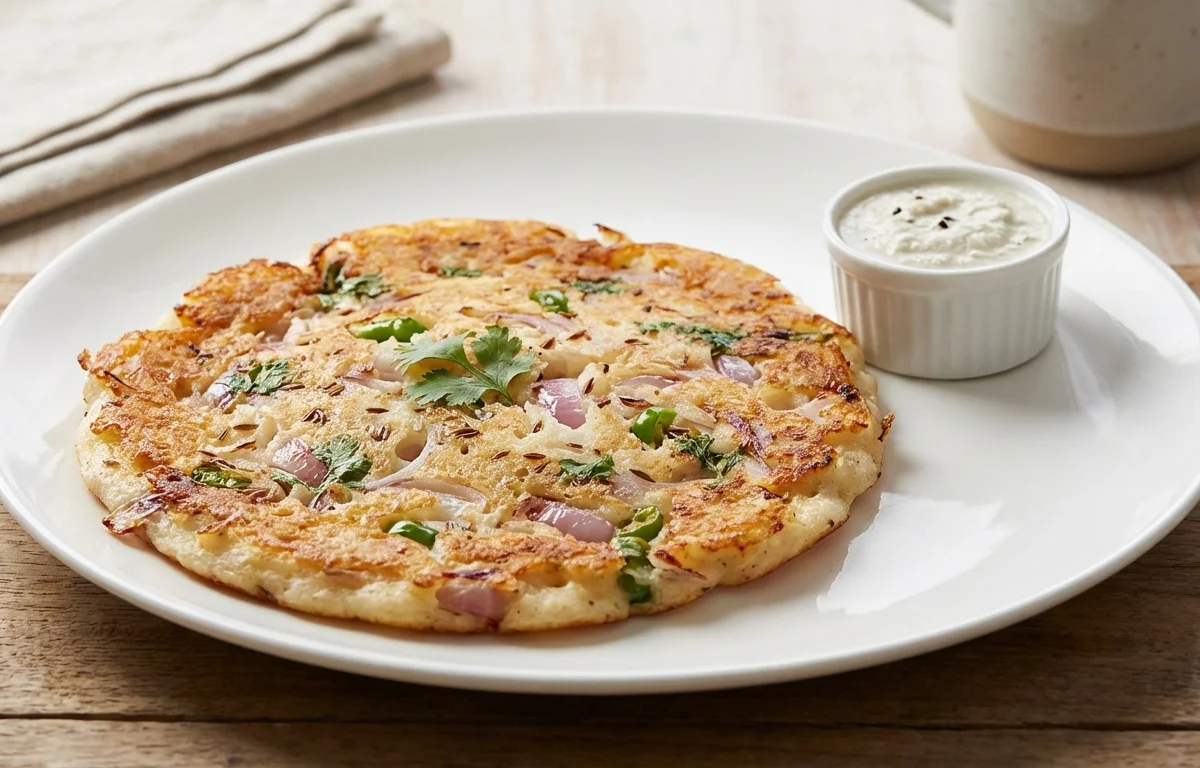
Onion Uttapam
Thick, soft South Indian pancakes topped with finely chopped onions, green chili, and fresh coriander. Crisp at the edges and tender in the middle, they make a comforting breakfast or light meal with chutney and sambar.
For 4 servings
- prep · ~6 min
Soak the rice and dal.
1.Rinse the idli rice well until the water runs mostly clear.2.Soak the rice in enough water for 6 hours.3.Rinse the urad dal and soak it with fenugreek seeds in enough water for 6 hours. - mix · ~15 min
Grind the batter.
1.Drain the rice and dal, keeping a little soaking water aside.2.Grind the urad dal and fenugreek seeds with water to a light, fluffy batter.3.Grind the rice with water to a slightly coarse batter.4.Mix both batters together in a large bowl until smooth and airy.TIPKeep the batter slightly thick so it can hold the onion topping without spreading too thin. - rest · ~480 min
Ferment the batter.
Cover the bowl loosely and leave the batter in a warm spot for 8 hours, or until it looks airy and has risen well.
- prep · ~3 min
Prepare the topping and season the batter.
1.Add salt to the fermented batter and mix gently.2.Combine the chopped onion, green chili, and coriander leaves in a small bowl.3.Stir the batter once and add a splash of water only if it looks very thick. - fry · ~6 min
Cook the first uttapam.
1.Heat a tawa or flat pan over medium heat and grease it lightly with oil.2.Pour a ladleful of batter onto the pan and spread gently into a thick round uttapam.3.Sprinkle a quarter of the onion topping evenly over the surface and press it in lightly.4.Drizzle a little oil around the edges, cover, and cook until the base turns golden and the top looks set.5.Flip and cook the other side for 1 to 2 minutes.TIPCook on medium heat so the center cooks through before the bottom gets too dark. - fry · ~15 min
Cook the remaining uttapam.
Repeat with the remaining batter, onion topping, and oil to make 4 uttapam in total.
- serve
Serve the onion uttapam hot.
What to keep in mind.
7 tips from the recipe — small details that make a real difference to the final dish.
- 1Grind the urad dal until very fluffy; that trapped air helps the uttapam rise and stay soft.
- 2Keep the rice batter slightly coarse, not silky smooth, so the uttapam gets its classic texture and crisp edges.
- 3After fermentation, mix the batter gently to avoid knocking out too much air before cooking.
- 4If the onions are very juicy, pat them dry a little so they do not water down the top surface.
- 5Covering the uttapam while the first side cooks helps the thick center set without burning the bottom.
- 6Press the onion-chili-coriander topping in lightly so it sticks when you flip, but do not flatten the batter.
- 7Leftover batter keeps well in the fridge for 2 to 3 days; let it come closer to room temperature before making more uttapam.
Adapt it for your goals.
Masala-onion
Add a little grated carrot and chopped tomato with the onion topping for a more colorful, slightly juicier uttapam.
low oilLow-oil
Use a well-seasoned cast-iron or nonstick pan and reduce the oil to a light brushing while still keeping the edges lightly crisp.
spicierSpicier
Increase the green chili or add crushed black pepper to the topping if you want a sharper heat with the sweet onion.
mixed vegMixed-veg
Top with finely chopped capsicum, grated beetroot, or carrots along with onion for extra texture and a fuller breakfast.
Why this is on our healthy list.
Fermented and Gentle on Digestion
The naturally fermented rice and urad dal batter is traditional, flavorful, and often easier to digest than an unfermented batter.
Plant Protein from Urad Dal
Urad dal adds plant-based protein and makes the uttapam more satisfying than a rice-only pancake.
Includes Fresh Aromatics
Onion, green chili, and coriander add flavor along with beneficial plant compounds without relying on heavy sauces.
Frequently asked questions
It usually needs a warmer spot and enough time. The batter should rise, look airy, and smell mildly tangy before you make uttapam.


