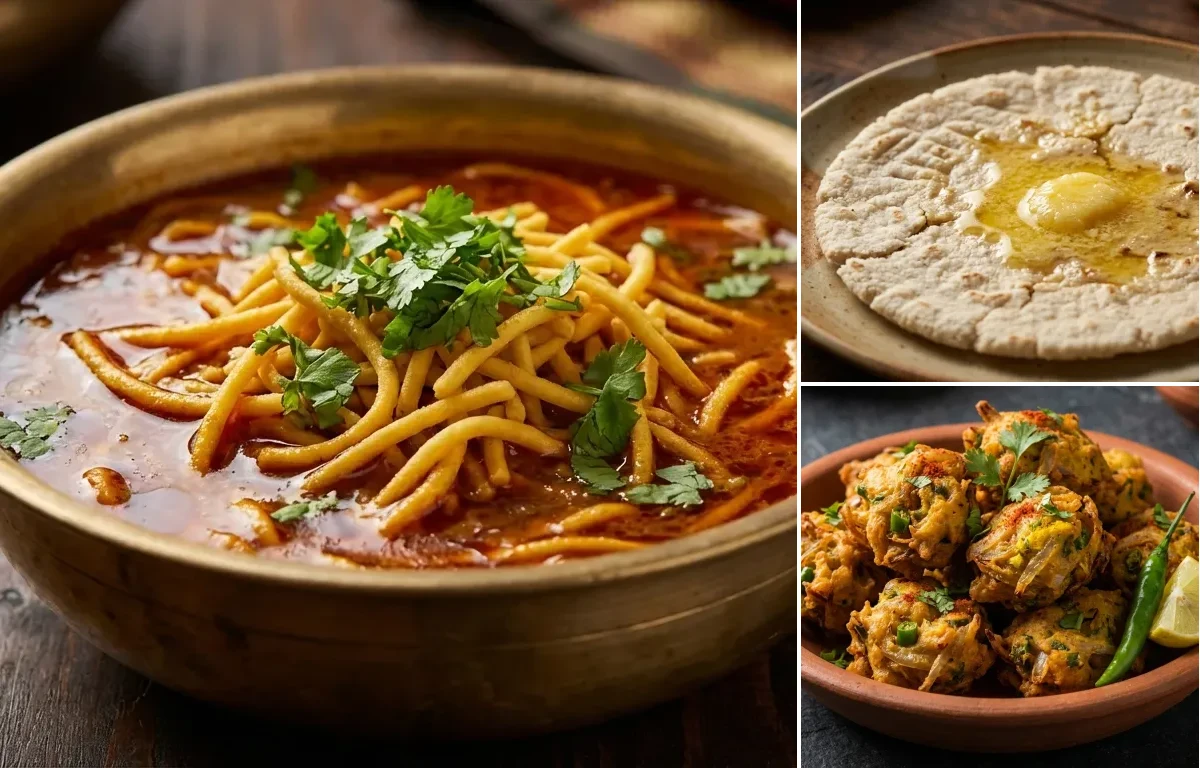
A fiery and savory Maharashtrian curry made with a base of onion, tomato, and coconut, served with a generous topping of crispy chickpea flour noodles (shev). It's a rustic, flavorful dish best enjoyed with bhakri or chapati.
A rustic, gluten-free flatbread from Maharashtra made with sorghum flour. This wholesome bhakri is traditionally patted by hand and cooked on a griddle until it puffs up beautifully. Perfect with spicy curries or chutneys.
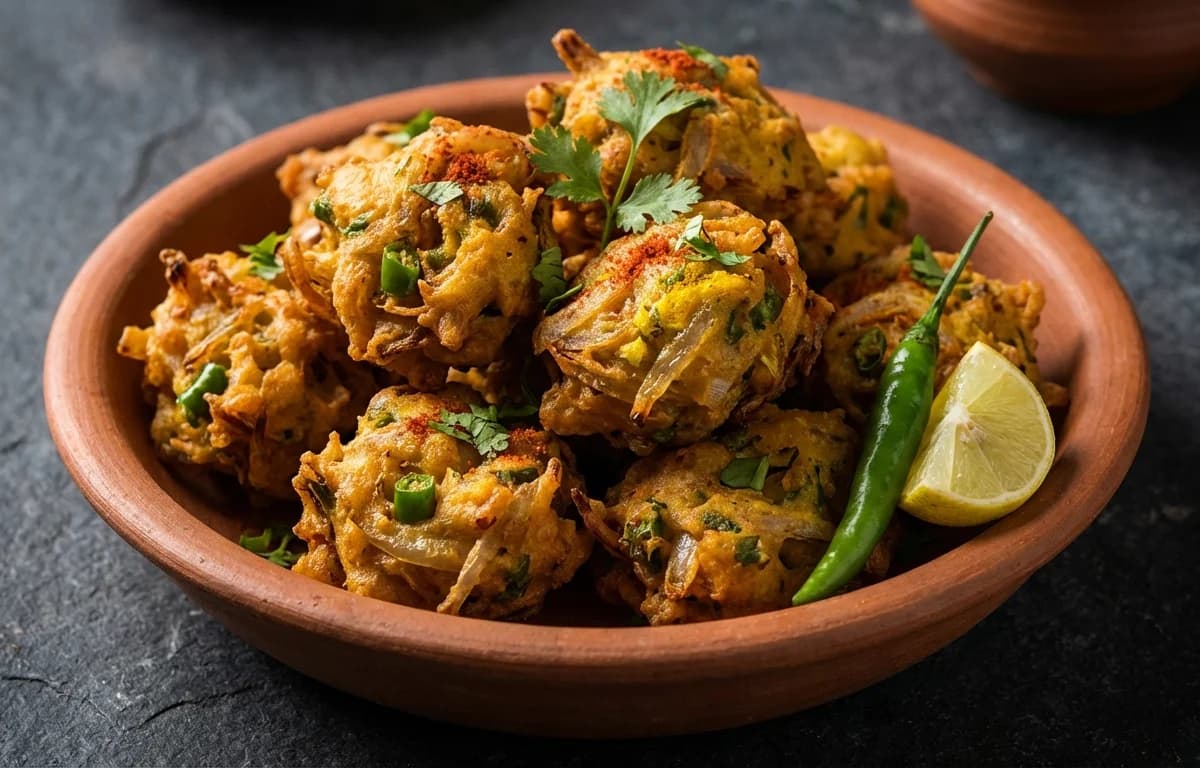
Crispy, golden onion fritters made with chickpea flour and spices. This popular Maharashtrian street food is the perfect crunchy snack to enjoy with a cup of chai, especially on a rainy day.
1.5 tsp Red Chili Powder (use Kashmiri for color, adjust to taste)
1.5 tsp Goda Masala (or Kala Masala for authentic flavor)
1 tsp Salt (to taste)
0.5 tsp Jaggery (optional, powdered)
3 cup Water (use hot water for best results)
2 cup Thick Shev (also known as Tikhat Shev or Gathiya)
3 tbsp Coriander Leaves (chopped, for garnish)
Instructions
1
Prepare the Masala Paste
In a pan over low heat, dry roast the grated dried coconut for 2-3 minutes until it turns light brown and aromatic. Remove from the pan and set aside.
In the same pan, heat 1 tbsp of oil. Add the roughly sliced onion and sauté for 5-7 minutes until it turns deep golden brown.
Add the garlic cloves and ginger, and cook for another minute until fragrant.
Allow the onion mixture to cool completely. Transfer the roasted coconut and the cooled onion-ginger-garlic mixture to a grinder. Add a few tablespoons of water and grind to a very smooth paste.
2
Cook the Bhaji (Gravy)
Heat the remaining 2 tbsp of oil in a deep pan or kadai over medium heat. Add the mustard seeds and let them splutter.
Add the cumin seeds and asafoetida, and sauté for 30 seconds.
Add the finely chopped onion and cook for 3-4 minutes until it becomes soft and translucent.
Add the ground masala paste. Sauté on medium-low heat for 5-6 minutes, stirring frequently, until the paste darkens in color and starts to release oil from the sides.
Stir in the tomato puree and cook for another 4-5 minutes until the raw smell disappears and the mixture thickens.
Add the turmeric powder, red chili powder, and goda masala. Mix well and cook for one minute to toast the spices.
Pour in 3 cups of hot water, add salt and the optional jaggery. Stir everything together well.
Bring the gravy to a rolling boil, then reduce the heat to low, cover the pan, and let it simmer for 10-12 minutes. This allows the flavors to meld and the gravy to develop a rich taste. The gravy should have a medium consistency, not too thick or too thin.
3
Assemble and Serve
To serve, ladle the hot gravy into individual serving bowls.
Just before serving, top each bowl generously with the thick shev. Do not mix it in.
Garnish with freshly chopped coriander leaves.
Serve immediately with jowar bhakri, chapati, or steamed rice to enjoy the crunchy shev.
262cal
8gprotein
44gcarbs
8gfat
Ingredients
2 cup jowar atta
1.5 cup hot water (for kneading)
0.75 tsp salt
2 tbsp ghee (optional, for serving)
Instructions
1
Prepare the dough: In a large bowl, mix together the jowar flour and salt. Gradually pour in the hot water while mixing with a spoon. The water should be hot but manageable to touch. Once the flour comes together, knead it with the heel of your palm for 5-7 minutes until you get a smooth, soft, and pliable dough. It should not be sticky. Cover the dough with a damp cloth and let it rest for 10 minutes.
2
Divide the dough into equal portions.
3
Pat the bhakri: Take one portion of the dough and roll it into a smooth ball. Sprinkle some dry jowar flour on a clean, flat surface or a chakla (rolling board). Place the dough ball on the floured surface and gently flatten it with your palm. Using your fingers and palm, start patting the dough, rotating it simultaneously to form an even, thin circle of about 5-6 inches in diameter. Dust with more flour as needed to prevent sticking.
4
Cook the bhakri: Heat a cast iron tawa or griddle over medium-high heat. It should be hot before you place the bhakri on it. Carefully lift the patted bhakri and place it on the hot tawa. Sprinkle a little water on the top surface and spread it evenly with your fingers. Cook for about 1 minute, until the water evaporates and the top looks dry. Flip the bhakri and cook the other side for another 1-2 minutes, until light brown spots appear. Using tongs, lift the bhakri and place it directly on a medium flame. It will puff up like a balloon. Flip and cook the other side on the direct flame for a few seconds. Avoid burning it. Repeat the process for all the remaining dough balls.
5
Serve the Jowar Bhakri immediately, smearing a little ghee on top if you like.
Place the thinly sliced onions in a large mixing bowl.
Add the salt, mix well with your hands, and set aside for 10-15 minutes. This process, called maceration, draws out moisture from the onions, which is key for a crispy bhaji.
2
Create the Bhaji Mixture
After 15 minutes, you will see water released from the onions. Do not drain this water.
To the onions, add the besan, rice flour, chopped green chilies, coriander leaves, crushed ajwain, red chili powder, turmeric powder, and hing.
Using your hands, mix everything together thoroughly. The moisture from the onions should be enough to form a thick, coarse, and sticky batter that coats the onion strands. Avoid overmixing or kneading.
If the mixture feels excessively dry, add water 1 tablespoon at a time until it just comes together. The goal is a thick batter, not a runny one.
3
Heat the Oil
Pour the vegetable oil into a kadai or a deep, heavy-bottomed pan. Heat over medium-high flame.
To test if the oil is ready (around 175°C or 350°F), drop a small piece of the batter into it. If it sizzles and rises to the surface immediately without browning too fast, the oil is at the perfect temperature.
Carefully take small, irregular portions of the onion mixture and drop them into the hot oil. Do not shape them into perfect balls; the irregular shape helps them get crispier.
Fry in batches of 5-6 at a time to avoid overcrowding the pan, which can lower the oil temperature.
Fry for about 3-4 minutes, turning them occasionally, until they are a deep golden brown and uniformly crispy.
Maintain a consistent medium heat throughout the frying process.
5
Drain and Serve
Using a slotted spoon, remove the fried bhajis from the oil.
Place them on a wire rack or a plate lined with paper towels to drain any excess oil.
Serve immediately while hot and crispy with green chutney, tomato ketchup, or alongside a cup of hot masala chai.