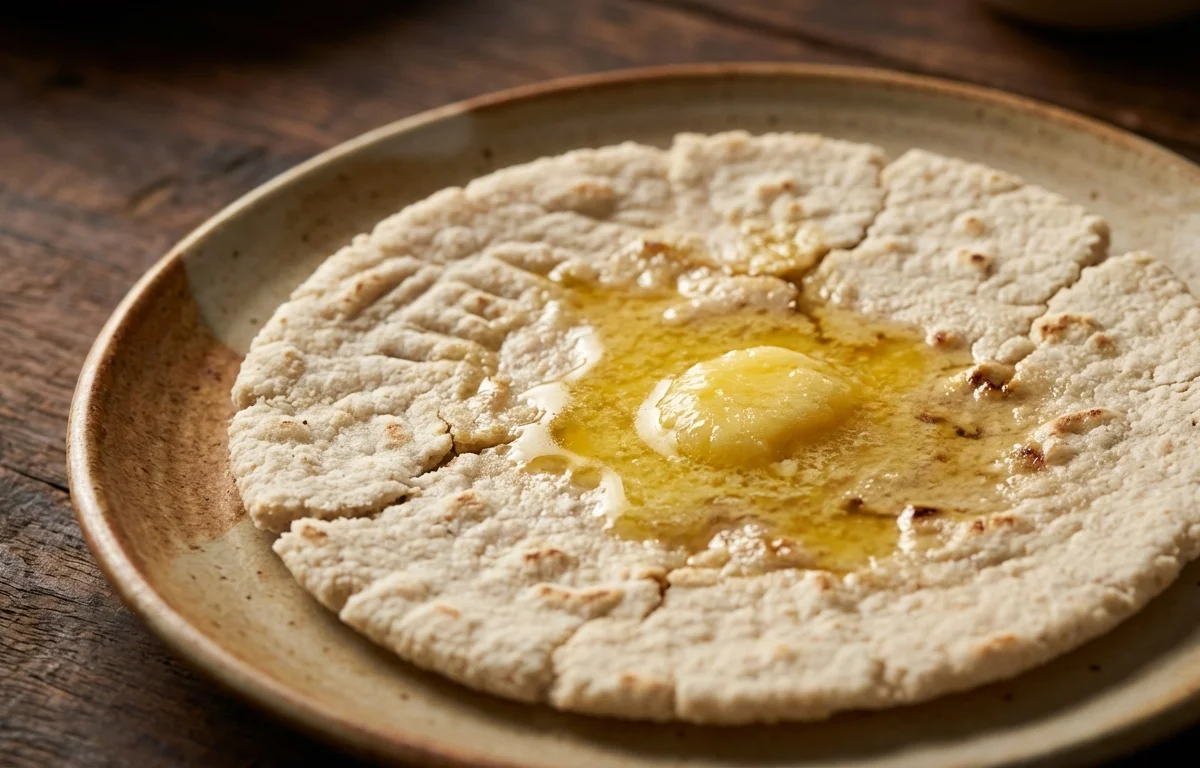
Jowar Bhakri
Rustic flatbreads made with jowar flour, warm water, and a little salt. Soft in the center with gently toasted spots, these wholesome bhakris are a classic match for thecha, pithla, and everyday sabzi.
For 4 servings
- boil · ~2 min
Heat the water.
Warm the water until hot but not boiling. Keep it ready so the flour hydrates quickly and the dough stays easy to pat.
- mix · ~3 min
Mix the flour and salt.
Place the jowar flour and salt in a wide bowl. Pour in most of the warm water and mix with a spoon or fingertips until the flour starts coming together.
- knead · ~7 min
Knead the dough while warm.
When cool enough to handle, knead to a soft, smooth dough, adding the remaining warm water only if needed. Divide into 4 equal balls and keep them covered with a cloth.
TIPJowar dough dries fast, so shape each bhakri while the dough is still warm and covered. - prep · ~5 min
Pat one bhakri at a time.
1.Dust the work surface lightly with jowar flour.2.Place one dough ball on the surface and flatten it gently with your fingers.3.Pat outward in small motions to form a round bhakri about 5 to 6 inches wide.4.Keep the edges even and press any cracks back together.TIPUse light hands and little dusting flour so the bhakri stays soft instead of dry. - fry · ~3 min
Cook the bhakri on a hot tawa.
1.Heat a tawa over medium-high heat.2.Lift the bhakri carefully and place it on the hot tawa.3.Cook until the surface changes color and small spots appear, about 40 to 50 seconds.4.Spread a little water over the top surface, then flip and cook the second side until light brown spots appear. - fry · ~7 min
Finish cooking until puffed.
Flip again and cook, pressing the edges gently with a cloth or spatula until the bhakri puffs in places and is cooked through. Repeat with the remaining dough balls.
TIPDo not cook on low heat or the bhakri will turn hard before the center cooks. - serve
Serve the bhakri hot.
Stack the bhakris in a cloth-lined container to keep them soft. Serve hot with thecha, pithla, curd, or a simple vegetable sabzi.
What to keep in mind.
7 tips from the recipe — small details that make a real difference to the final dish.
- 1Knead the dough while it is still warm; cold jowar dough cracks much more easily.
- 2Keep the divided dough balls covered with a damp cloth so the surface does not dry out.
- 3Use only a light dusting of jowar flour while patting, or the bhakri can turn dry and dusty.
- 4Pat from the center outward in small motions to keep the thickness even and prevent edge splits.
- 5The tawa should be medium-high hot; if it is too cool, the bhakri hardens before the center cooks.
- 6Moistening the top with water before flipping helps steam the dough and improves puffing.
- 7Store cooked bhakris stacked in a cloth-lined box so trapped steam keeps them soft.
Adapt it for your goals.
Thalipeeth-style
Mix in finely chopped onion, green chili, cumin, and coriander, then pat carefully for a more flavorful everyday flatbread.
low saltLow-salt
Reduce or skip the salt if serving with bold sides like thecha or spicy sabzi that already bring plenty of seasoning.
mixed milletMixed-millet
Replace part of the jowar flour with bajra flour for a deeper earthy taste and a slightly denser rustic texture.
Why this is on our healthy list.
Naturally Gluten-Free
Made entirely with jowar flour, this bhakri is a traditional wheat-free option for everyday meals.
Whole Grain Goodness
Jowar is a whole grain, so the flatbread is more wholesome and filling than refined-flour breads.
Very Simple Ingredients
With just jowar flour, water, and salt, this dish is minimally processed and free from added fats in the dough.
Frequently asked questions
Usually the dough is too dry or too cool. Use warm water, knead until smooth, and shape each bhakri while the dough is still warm and covered.



.webp)