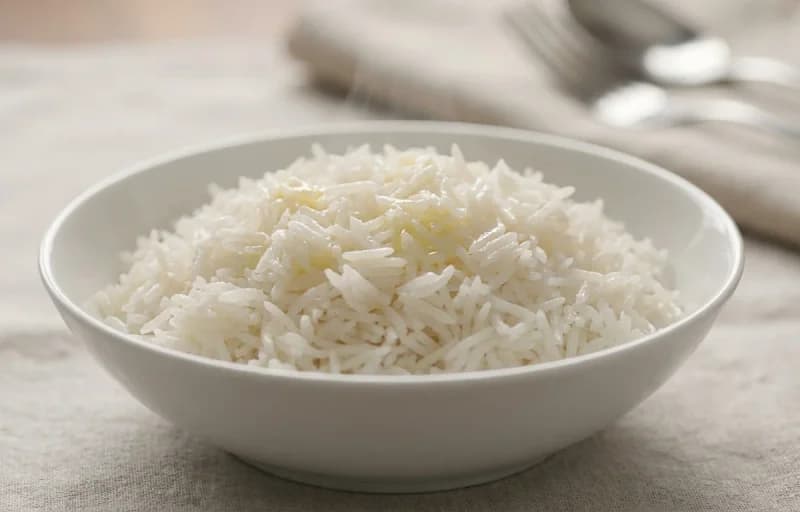
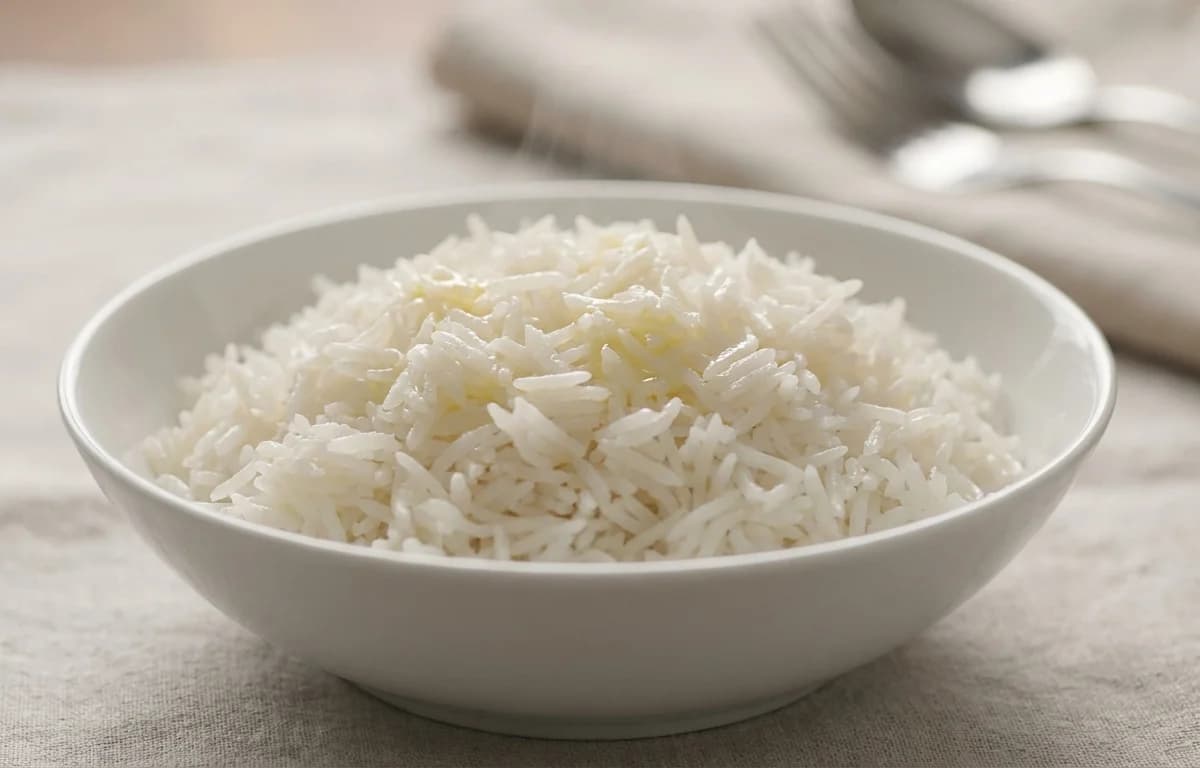
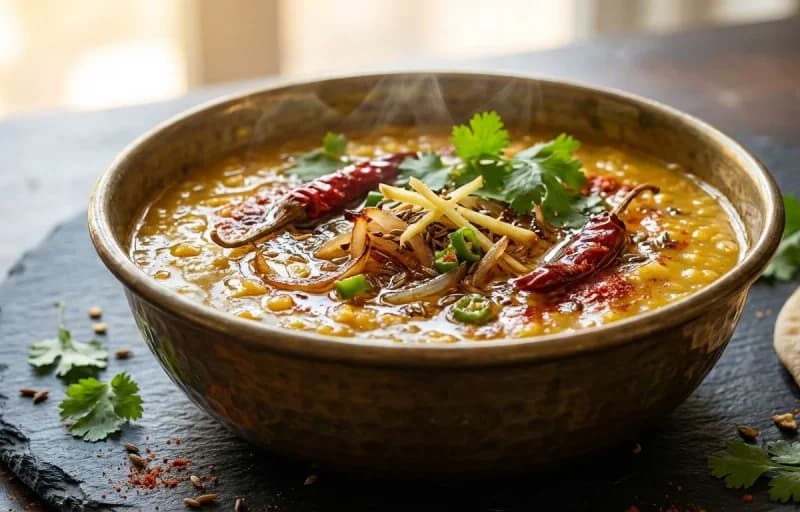
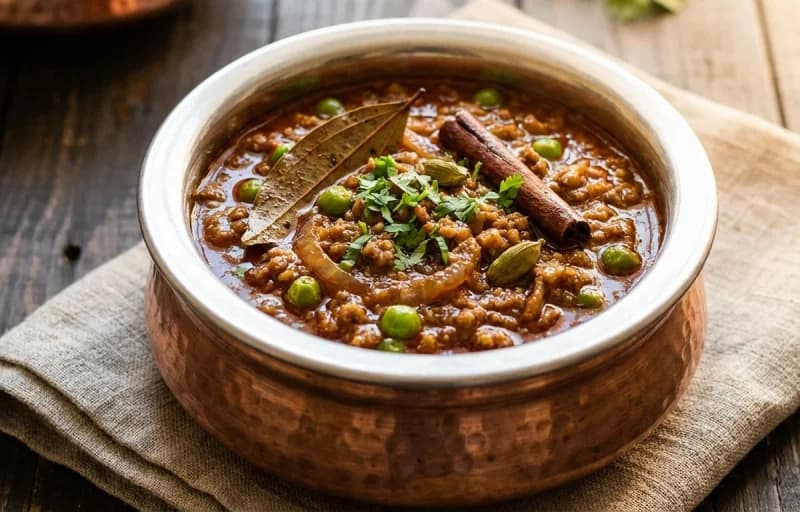
Perfectly fluffy, long-grained basmati rice with a delicate aroma. This simple, foolproof recipe gives you separate, non-sticky grains every time, making it the perfect base for any curry or dal.
Prep35 min
Cook25 min
Soak30 min
Servings4
Serving size: 1 serving
262cal
5gprotein
55gcarbs
Ingredients
1.5 cup Basmati Rice (Use good quality, aged basmati rice for best results)
2.25 cup Water (For the absorption cooking method)
0.75 tsp Salt (Adjust to taste)
1 tsp Ghee (Optional, for flavor and to prevent sticking)
Instructions
1
Rinse and Soak the Rice (35 minutes)
Place the basmati rice in a large bowl. Add cold water and gently swirl the rice with your fingers. Drain the cloudy water. Repeat this process 3-4 times until the water runs mostly clear. This removes excess starch and prevents stickiness.
Cover the rinsed rice with fresh water and let it soak for 30 minutes. Soaking allows the grains to absorb water, ensuring they cook evenly and elongate beautifully.
After 30 minutes, drain the rice completely using a fine-mesh sieve and set aside.
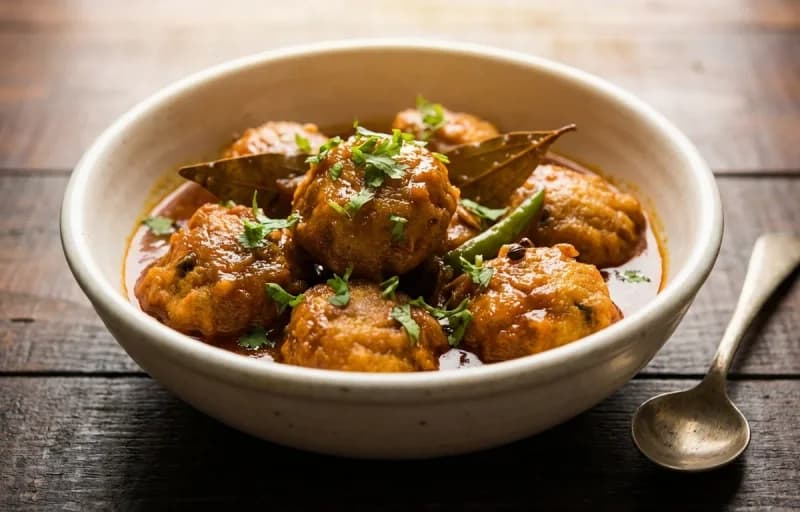
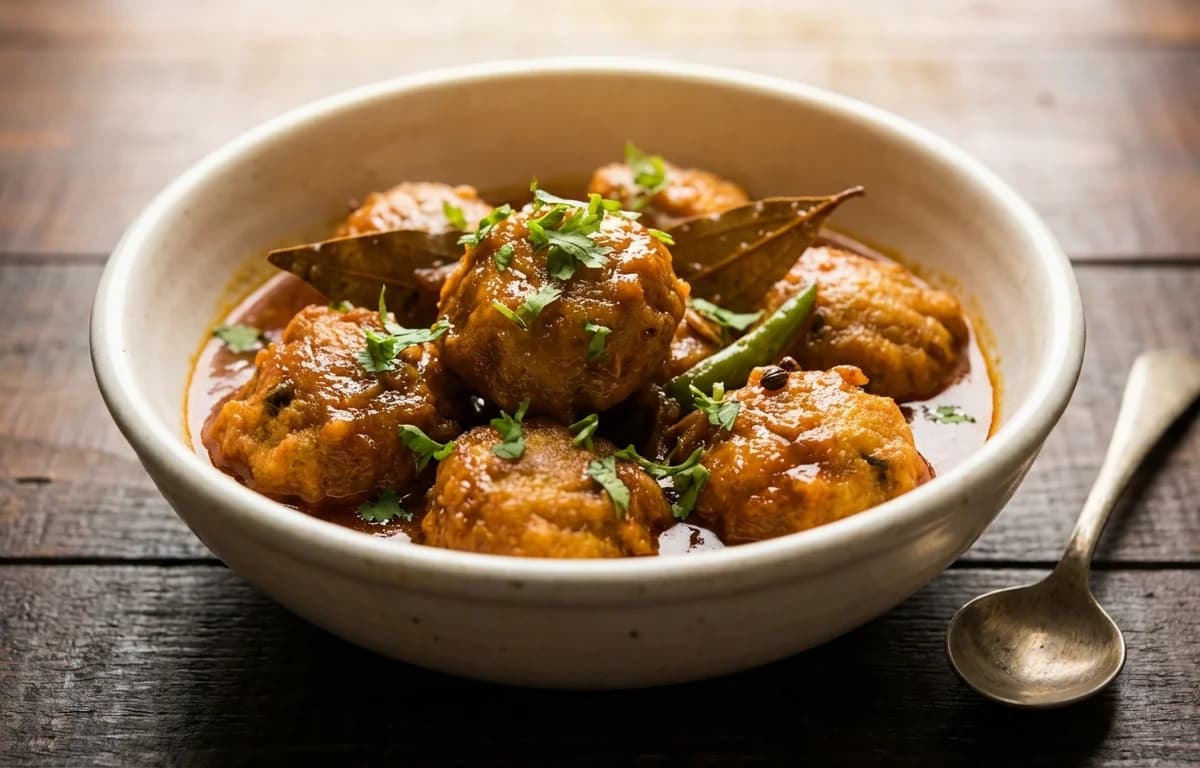
A heritage Bengali delicacy where flavorful dumplings made from Chital fish meat and spices are first steamed, then fried, and finally simmered in a rich, aromatic gravy. A true celebration of Bengali cuisine.
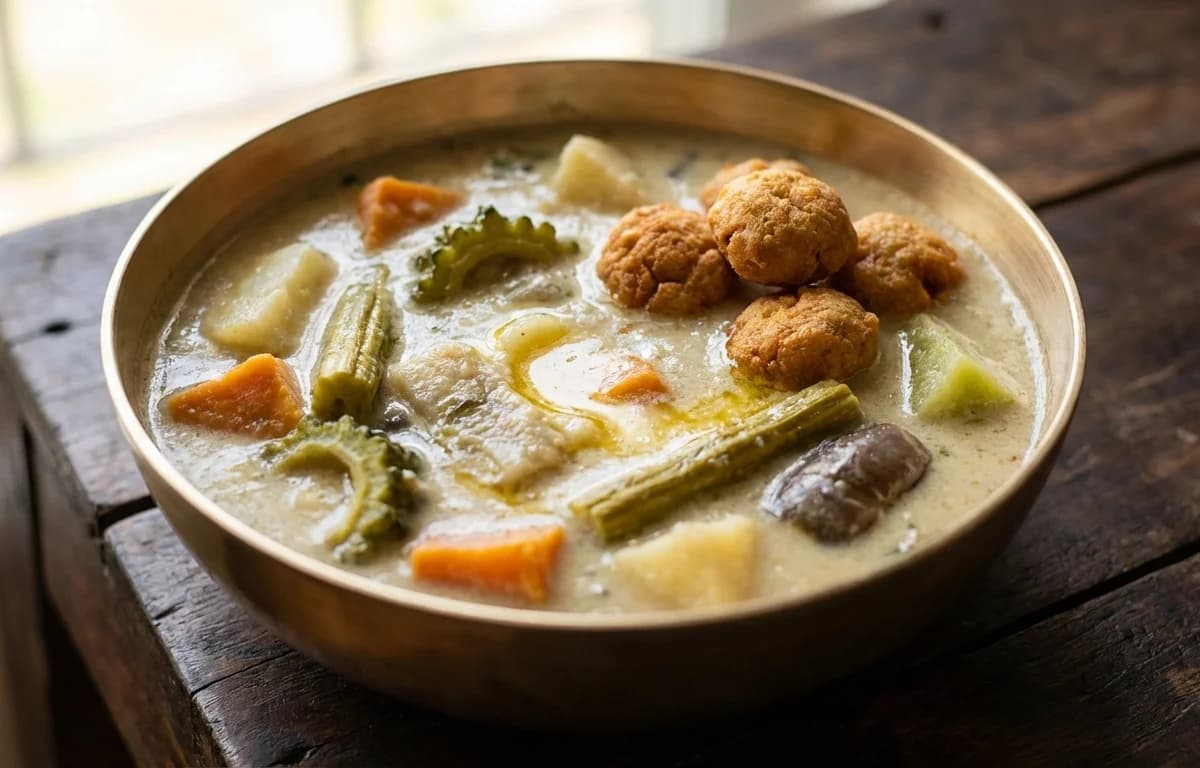
A quintessential Bengali mixed vegetable stew, celebrated for its unique bitter-sweet flavor profile. It combines a medley of vegetables with a creamy mustard-poppy seed gravy, traditionally served as the first course to cleanse the palate.
About Steamed Basmati Rice, Chitol Macher Muitha and Shukto
Melt-in-mouth Chitol Macher Muitha with gut-friendly Shukto – a creamy, soul-satisfying homestyle dish!
This bengali dish is perfect for lunch. With 1059.22 calories and 43.12g of protein per serving, it's a nutritious choice for your meal plan.
1gfat
Cook the Rice (15 minutes)
In a medium, heavy-bottomed saucepan with a tight-fitting lid, combine the drained rice, 2.25 cups of fresh water, salt, and ghee (if using).
Bring the mixture to a rolling boil over medium-high heat, uncovered.
As soon as it boils, give it one gentle stir, then immediately reduce the heat to the lowest possible setting. Cover the saucepan tightly with the lid.
Let the rice simmer for 12-15 minutes, or until all the water has been absorbed. Do not lift the lid during this time to prevent steam from escaping.
3
Rest and Fluff (10 minutes)
Turn off the heat but leave the saucepan on the stove, still covered. Let the rice rest and steam for 10 minutes. This step is crucial for finishing the cooking process and achieving a perfect texture.
After resting, remove the lid. Use a fork to gently fluff the rice, separating the long, delicate grains.
Serve hot as a perfect accompaniment to curries, dals, or grilled dishes.
399cal
29gprotein
30gcarbs
19gfat
Ingredients
500 g Chital Fish Meat (Scraped from the belly part (peti))
1 large Potato (Boiled, peeled, and mashed smoothly)
2 medium Onion (Ground into a fine paste)
2 tbsp Ginger Paste (1 tbsp for muitha, 1 tbsp for gravy)
2 tbsp Garlic Paste (1 tbsp for muitha, 1 tbsp for gravy)
4 pcs Green Chili (2 finely chopped for muitha, 2 slit for gravy)
1 tsp Cumin Powder (For the muitha mixture)
1.5 tsp Garam Masala (0.5 tsp for muitha, 1 tsp for gravy)
2 tsp Salt (Adjust to taste; 1 tsp for muitha, 1 tsp for gravy)
180 ml Mustard Oil (Approx. 120ml for frying and 60ml for gravy)
2 pcs Bay Leaf
1 inch Cinnamon Stick
3 pcs Green Cardamom (Slightly crushed)
3 pcs Cloves
2 medium Tomato (Pureed)
1 tsp Turmeric Powder
1 tsp Kashmiri Red Chili Powder (For color, adjust for heat)
1 tsp Coriander Powder
0.5 tsp Sugar (Balances the flavors)
500 ml Hot Water (For the gravy)
1 tbsp Ghee (For finishing)
2 tbsp Coriander Leaves (Freshly chopped, for garnish)
1 tbsp Besan (Optional, as a binding agent if needed)
Instructions
1
Prepare the Muitha Mixture
In a large mixing bowl, combine the scraped Chital fish meat, cooled mashed potato, 1 tbsp ginger paste, 1 tbsp garlic paste, finely chopped green chilies, 1 tsp cumin powder, 0.5 tsp garam masala, and 1 tsp salt.
Knead the mixture vigorously with your palm for 5-7 minutes until it forms a smooth, pliable, and non-sticky dough. If the mixture feels too wet, add 1 tbsp of besan (chickpea flour) to help bind it.
2
Shape and Steam the Muitha
Lightly grease your palms with oil. Divide the fish dough into 10-12 equal portions.
Roll each portion between your palms to form a compact oval or cylindrical shape (muitha). Ensure there are no cracks.
In a wide pot, bring 5-6 cups of water to a rolling boil. Gently slide the shaped muitha into the water. Do not overcrowd the pot; cook in two batches if necessary.
Boil for 8-10 minutes. The muitha are cooked when they become firm and float to the surface.
Using a slotted spoon, carefully remove the steamed muitha and place them on a plate to cool down slightly.
100 g Bitter Gourd (Known as Uchhe, sliced into thin rounds)
150 g Potato (Peeled and cut into 2-inch batons)
150 g Raw Banana (Known as Kanchkola, peeled and cut into 2-inch batons)
150 g Sweet Potato (Known as Ranga Alu, peeled and cut into 2-inch batons)
100 g Raw Papaya (Known as Pepe, peeled and cut into 2-inch batons)
150 g Eggplant (Known as Begun, cut into 2-inch batons)
100 g Drumsticks (Known as Sojne Danta, cut into 2-inch pieces)
1 tbsp Yellow Mustard Seeds (For the spice paste)
2 tbsp Poppy Seeds (Known as Posto, for the spice paste)
1 inch Ginger (Peeled, for the spice paste)
1 Green Chili (For the spice paste)
1 tsp Panch Phoron (Bengali five-spice blend)
1 Bay Leaf (Known as Tej Pata)
1 Dried Red Chili (Broken in half)
1 cup Whole Milk (Full-fat recommended for creaminess)
1 cup Water
1.5 tsp Sugar (Adjust to balance the bitterness)
1 tsp Salt (Adjust to taste)
1 tsp Ghee (For finishing aroma)
0.25 tsp Radhuni (Wild celery seeds, lightly toasted and ground. Highly recommended for authentic flavor.)
Instructions
1
Prepare the Spice Paste
Soak the yellow mustard seeds and poppy seeds in 1/4 cup of warm water for at least 20 minutes. This helps in grinding them to a smooth paste.
Drain the excess water and transfer the soaked seeds to a small grinder jar.
Add the peeled ginger and green chili. Grind to a very smooth paste, adding a tablespoon of water if needed to facilitate grinding. Set aside.
2
Fry Bori and Bitter Gourd
Heat 2 tablespoons of mustard oil in a kadai or heavy-bottomed pan over medium heat until it is slightly smoking.
Add the bori (lentil dumplings) and fry for 1-2 minutes until they are golden brown and crisp. Remove with a slotted spoon and keep aside.
In the same oil, add the sliced bitter gourd. Sauté for 3-4 minutes until the edges are lightly browned and crisp. Do not over-fry. Remove and set aside.
3
Temper Spices and Sauté Vegetables
Add the remaining 2 tablespoons of mustard oil to the pan. Heat it up.
Add the panch phoron, bay leaf, and dried red chili. Let them crackle for about 30 seconds until fragrant.
Heat about 120ml (1/2 cup) of mustard oil in a kadai or deep pan over medium-high heat until it is very hot and you see faint smoke.
Gently place the steamed muitha into the hot oil, ensuring not to overcrowd the pan. Fry in batches.
Shallow-fry for 4-5 minutes, turning them occasionally, until all sides are an even golden-brown color.
Remove the fried muitha with a slotted spoon and set aside.
4
Prepare the Gravy
In the same kadai, use the remaining oil or add about 60ml (4 tbsp) of fresh mustard oil. Heat over a medium flame.
Add the bay leaves, cinnamon stick, green cardamoms, and cloves. Sauté for 30-40 seconds until they release their aroma.
Add the onion paste and sauté for 7-8 minutes, stirring frequently, until it turns light brown and the raw smell is gone.
Add the remaining 1 tbsp each of ginger and garlic paste. Cook for another 2 minutes until fragrant.
Add the tomato puree, turmeric powder, Kashmiri red chili powder, coriander powder, and 1 tsp salt. Mix well and cook the masala on low-medium heat for 6-8 minutes, until it thickens and oil begins to separate at the edges.
5
Simmer and Finish the Curry
Pour in 500ml (about 2 cups) of hot water and add the sugar. Stir everything together and bring the gravy to a gentle boil.
Reduce the heat to low. Very carefully, place the fried muitha into the simmering gravy.
Cover the kadai and let it simmer for 6-8 minutes, allowing the muitha to absorb the flavors. Avoid stirring too much to prevent them from breaking.
Turn off the heat. Sprinkle the remaining 1 tsp of garam masala, add the slit green chilies, and drizzle the ghee on top.
Garnish with freshly chopped coriander leaves. Let the curry rest, covered, for at least 10 minutes before serving hot with steamed rice.
Add the hard vegetables: potato, raw banana, sweet potato, and raw papaya. Sauté on medium heat for 5-6 minutes, stirring occasionally.
Now, add the softer vegetables: eggplant and drumsticks. Sauté for another 4-5 minutes until the eggplant softens slightly.
4
Simmer the Shukto
Add the prepared mustard-poppy seed paste to the vegetables. Stir gently and cook for 2 minutes until the raw aroma of the paste disappears.
Reduce the heat to low. Slowly pour in the milk and water, stirring continuously to prevent the milk from curdling.
Add salt and sugar. Mix everything well.
Bring the gravy to a gentle simmer, then cover the pan and cook for 10-12 minutes, or until all the vegetables are tender but still hold their shape.
5
Finishing Touches
Gently stir in the fried bitter gourd and half of the fried bori (lightly crushed). Simmer for another 2 minutes.
Turn off the heat. Drizzle the ghee over the top and sprinkle the ground radhuni powder.
Cover the pan and let the Shukto rest for 5-10 minutes. This step is crucial for the flavors to meld together.
Garnish with the remaining whole fried bori just before serving. Serve warm with steamed rice.