
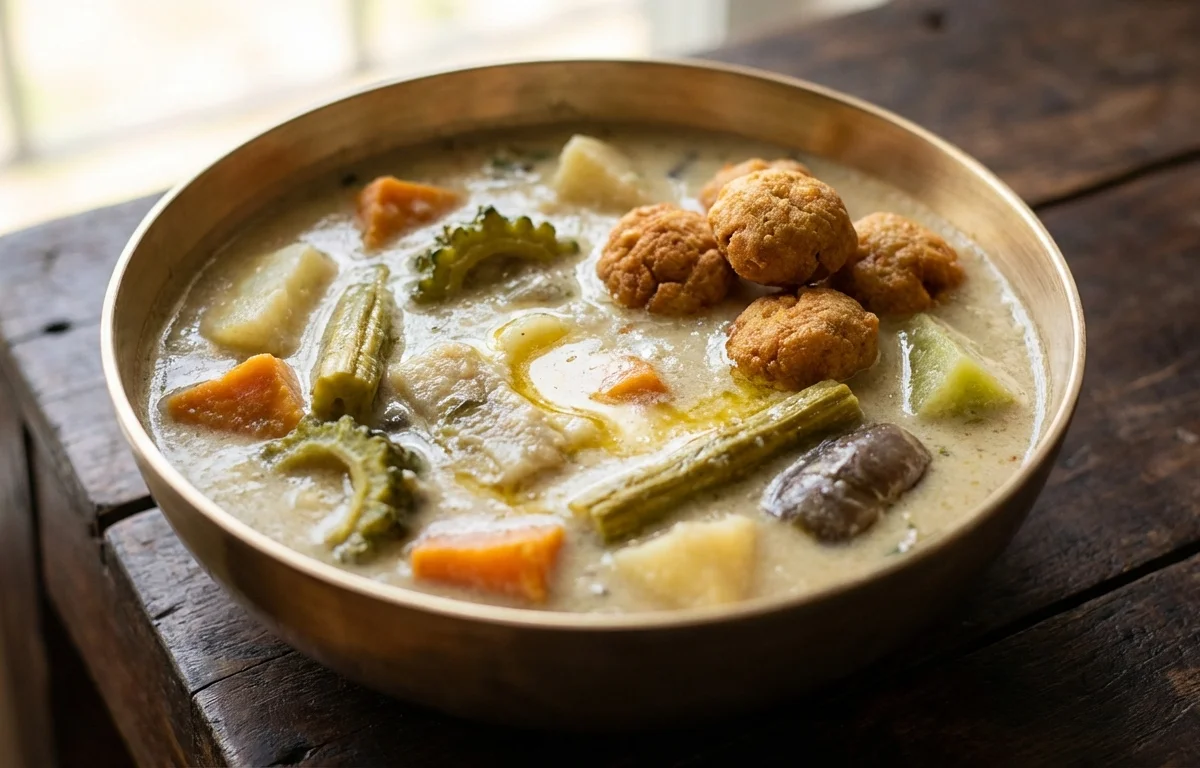
Shukto
A gently bitter Bengali mixed vegetable stew that balances soft vegetables, light spice, and a creamy finish from milk. It is comforting, delicate, and usually served at the start of a traditional meal with rice.
For 4 servings
- prep · ~10 min
Cut all the vegetables evenly.
1.Peel and cut the raw banana, potato, and sweet potato into thick batons.2.Slice the bitter gourd into thick batons.3.Cut the eggplant into thick batons and the drumstick into 2 inch pieces.4.Trim and cut the flat beans into short pieces. - mix · ~2 min
Make the milk mixture.
Whisk the flour into the warm milk until smooth. Keep the poppy seed paste, mustard paste, fennel powder, sugar, and salt ready nearby.
- fry · ~5 min
Lightly fry the bitter gourd.
Heat the mustard oil in a pan and fry the bitter gourd on medium heat until lightly colored and slightly softened. Remove to a plate.
TIPDo not brown it too much. Light frying keeps the pleasant bitterness without making it harsh. - temper · ~1 min
Make the tempering.
1.Add the ghee to the same pan.2.Drop in the bay leaf, panch phoron, and radhuni.3.Let the spices sizzle for a few seconds until fragrant. - saute · ~5 min
Cook the vegetables and ginger.
1.Add the raw banana, potato, sweet potato, drumstick, flat beans, and eggplant to the pan.2.Add the ginger paste and stir gently to coat the vegetables.3.Cook on medium heat for 4 to 5 minutes, stirring carefully so the pieces hold their shape. - simmer · ~10 min
Simmer the vegetables until tender.
1.Add the fried bitter gourd back to the pan.2.Pour in the water and add the salt and sugar.3.Cover and simmer on low heat until the vegetables are almost tender, about 10 minutes. - simmer · ~6 min
Add the pastes and finish the stew.
1.Stir in the poppy seed paste, mustard paste, and fennel powder.2.Cook gently for 2 minutes, stirring very lightly.3.Lower the heat and pour in the milk mixture.4.Simmer for 3 to 4 minutes until the gravy looks light and silky.TIPKeep the heat low after adding milk so the gravy stays smooth and does not split. - serve · ~2 min
Serve the shukto warm.
Rest it for 2 minutes, then serve warm as the first course of a Bengali meal, usually with plain rice.
What to keep in mind.
7 tips from the recipe — small details that make a real difference to the final dish.
- 1Cut the vegetables into similar thick batons so they turn tender at the same time without breaking apart.
- 2Lightly fry the bitter gourd only until pale golden; deep browning can make the bitterness harsh.
- 3Keep the eggplant pieces larger and stir gently, since they soften faster than potato and raw banana.
- 4Whisk the flour fully into warm milk before adding it, or the final gravy can turn lumpy.
- 5Add the milk mixture only over low heat and do not boil hard, or the stew may split.
- 6Let the shukto rest for a couple of minutes before serving; the bitterness, sweetness, and mustard settle into a more rounded taste.
- 7This dish reheats well on very low heat with a splash of water, but avoid vigorous stirring so the vegetables stay intact.
Adapt it for your goals.
Vegan
Replace milk with thin coconut milk or unsweetened cashew milk, skip ghee, and use only mustard oil for a fully plant-based but still creamy finish.
no onion no garlic festiveNo-onion-no-garlic festive
This recipe already suits a traditional satvik-style table; serve it as the opening course with steamed rice for a classic festive Bengali meal.
lighter bitterLighter-bitter
Reduce the bitter gourd slightly and add a few cubes of pumpkin or more sweet potato if you prefer a softer, more family-friendly bitterness.
traditional boriTraditional-bori
Add lightly fried bori near the end for extra texture and a more old-style Bengali shukto character.
Why this is on our healthy list.
Mixed Vegetable Variety
Bitter gourd, raw banana, potato, sweet potato, beans, eggplant, and drumstick provide a broad mix of plant nutrients and fiber.
Fiber-Rich Meal Starter
The combination of multiple vegetables can make this first course satisfying and gentle when served with plain rice.
Digestive Spice Support
Ginger, fennel, panch phoron, and radhuni are traditional spices used to add aroma while making vegetable dishes feel easier to eat.
Moderate Creaminess Without Heavy Richness
A small amount of milk, ghee, and poppy seed paste gives body and softness to the gravy without turning the dish overly heavy.
Frequently asked questions
The bitter gourd was likely browned too much or used in excess. Light frying, balanced sugar, and the creamy milk-poppy finish help keep the bitterness pleasant.





-curry.webp)
.webp)