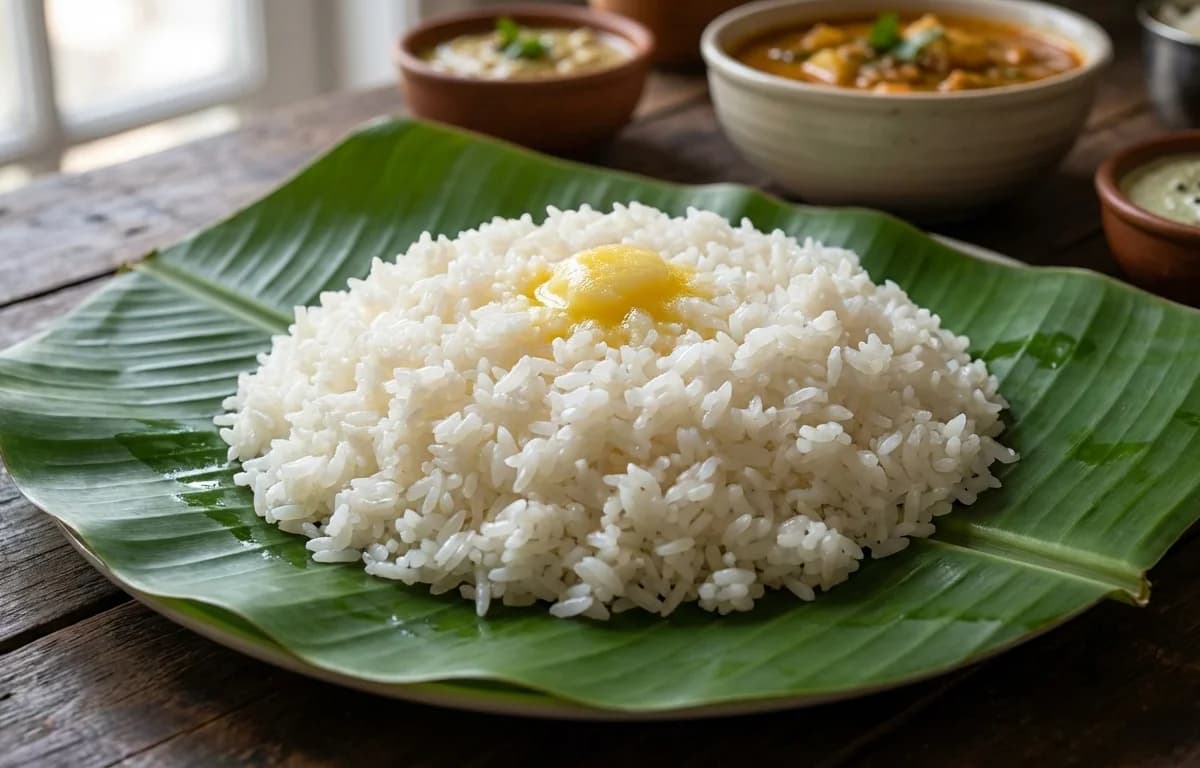
Achieve perfectly fluffy, soft, and separate grains of steamed rice every time with this foolproof recipe. An essential staple in Indian cuisine, this simple method forms the ideal base for a multitude of dishes like dal, sabzi, and rich curries.
Prep5 min
Cook20 min
Soak30 min
Servings4
Serving size: 1 serving
253cal
5gprotein
55gcarbs
Ingredients
1.5 cup basmati rice
3 cup water (for cooking, plus more for rinsing)
Instructions
1
Rinse and Soak the Rice
Place 1.5 cups of basmati rice in a medium bowl.
Add cool water and gently swirl the rice with your fingertips. The water will become cloudy.
Carefully drain the starchy water. Repeat this rinsing process 3-4 times, until the water runs mostly clear.
Add enough fresh water to cover the rice by an inch and let it soak for 30 minutes. This is key for long, fluffy grains.
After soaking, drain the rice completely using a fine-mesh sieve.
2
Cook the Rice
Transfer the drained rice to a heavy-bottomed saucepan with a tight-fitting lid.
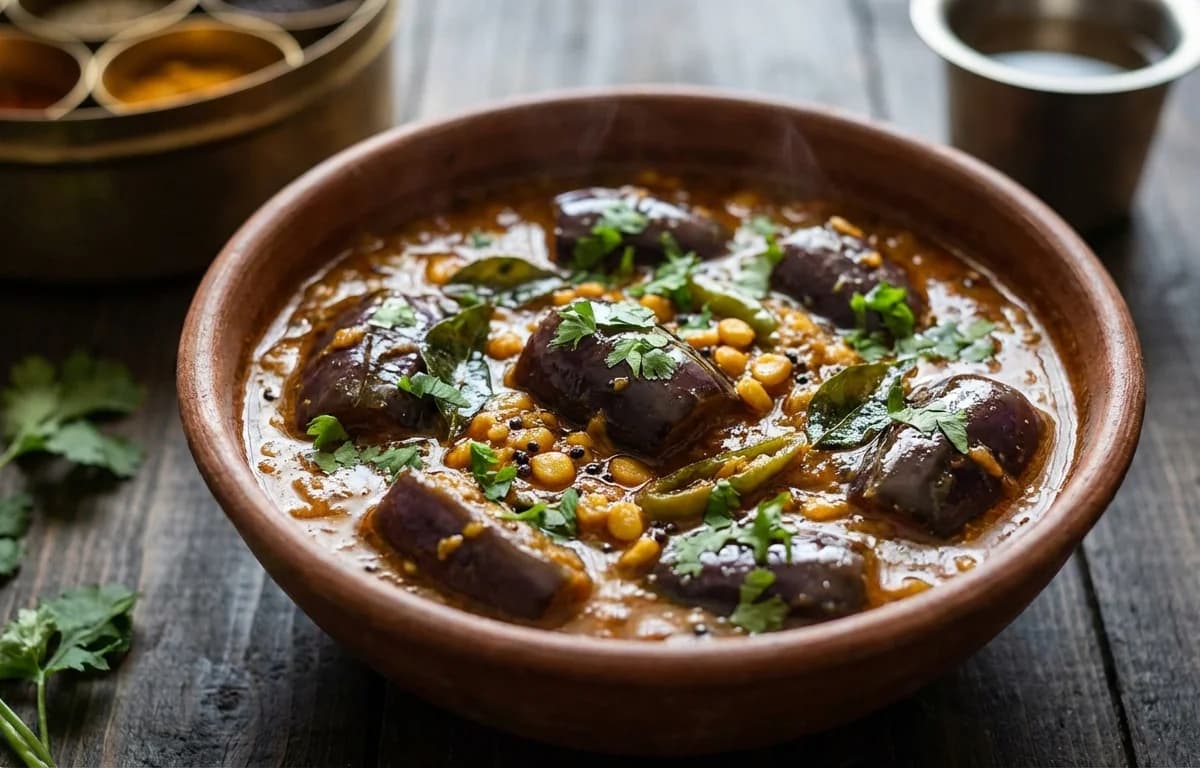
A classic Andhra dish where tender eggplants are simmered in a tangy tamarind gravy, balanced with a hint of jaggery and aromatic spices. This flavorful stew is a perfect side for hot rice and ghee.
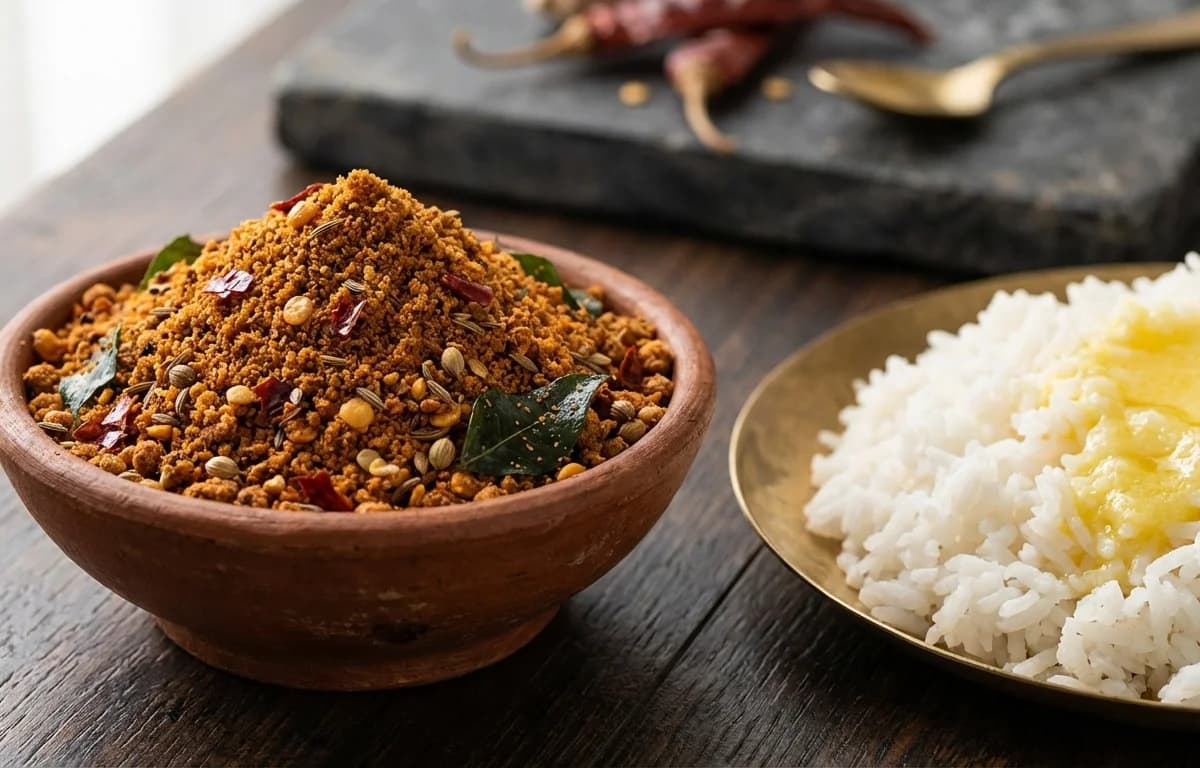
A fragrant and nutty lentil spice powder from Andhra Pradesh. Made by roasting lentils and spices, this 'gun powder' is perfect mixed with hot rice and a dollop of ghee or sesame oil for a simple, comforting meal.
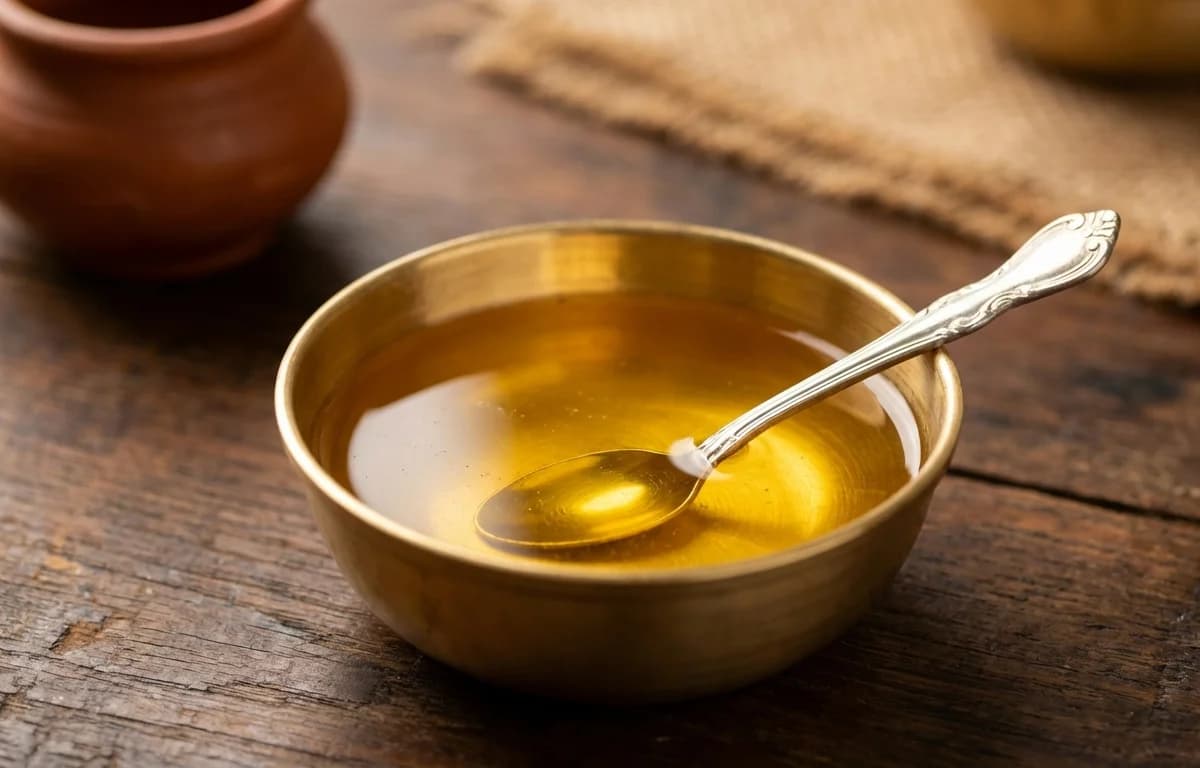
Aromatic and nutty clarified butter, a staple in Indian cooking. Making ghee at home is simple, rewarding, and results in a pure, flavorful cooking fat perfect for sautéing, frying, and tempering.
Prep5 min
Cook25 min
Servings24
Serving size: 1 serving
About Steamed Rice, Vankaya Pulusu, Kandi Podi and Ghee
Tangy brinjal stew with aromatic Kandi Podi – a perfectly spiced, energy-giving homestyle meal!
This andhra dish is perfect for lunch. With 622.76 calories and 12.48g of protein per serving, it's a high-fiber option for your meal plan.
Other Cuisines to Explore
Discover authentic meals from cuisines around the world.
0.25 cup Chana Dal (Also known as split Bengal gram.)
2 tbsp Urad Dal (Also known as split black gram.)
10 pcs Dried Red Chilies (Use Byadgi for color or Guntur for heat. Adjust to taste.)
1 tbsp Cumin Seeds
1 tbsp Coriander Seeds
5 cloves Garlic (Optional, but adds a pungent flavor.)
10 leaves Curry Leaves (Optional, use fresh for best aroma.)
0.5 tsp Hing (Also known as asafoetida.)
1 tsp Salt (Adjust to taste.)
1 tsp Sesame Oil (For roasting chilies, can use any neutral oil.)
Instructions
1
Roast the Lentils
Heat a heavy-bottomed pan or kadai over low-medium heat. Add the toor dal and dry roast, stirring continuously for 6-8 minutes until it turns light golden brown and releases a nutty aroma.
Transfer the roasted toor dal to a large plate to cool.
In the same pan, roast the chana dal for 4-5 minutes until golden, then add it to the plate.
Finally, roast the urad dal for 2-3 minutes until it turns a pale golden color and add it to the plate with the other lentils.
2
Roast Spices and Aromatics
Return the pan to the heat. Add the cumin and coriander seeds and roast for about 1 minute until they become fragrant and slightly darker. Transfer them to the plate.
Add 1 tsp of sesame oil to the pan. Add the dried red chilies and roast for 1-2 minutes until they puff up and turn a deeper red. Be careful not to burn them. Add them to the plate.
If using, add the curry leaves and roast until crisp. If using garlic, add the cloves and roast until light brown spots appear. Add both to the plate.
3
Cool Completely
Spread all the roasted ingredients on the plate in a single layer and let them cool down completely to room temperature. This is a crucial step and takes about 30-40 minutes.
1 lb Unsalted Butter (High-quality, grass-fed butter will yield the most flavorful and nutritious ghee.)
Instructions
1
Melt the Butter
Cut the unsalted butter into 1-inch cubes to ensure even melting.
Place the butter cubes in a heavy-bottomed, medium-sized saucepan or pot.
Heat the pot over medium-low heat. Allow the butter to melt completely without stirring, which should take about 5-7 minutes.
2
Simmer and Clarify
Once melted, increase the heat slightly to a medium-low simmer. The butter will go through several stages.
First, it will come to a boil and a layer of white foam (milk solids) will form on top. Let it simmer gently.
After 10-15 minutes, the foam will start to thin, the bubbling will become finer, and the liquid will turn more transparent.
Continue simmering. The milk solids will begin to sink to the bottom and turn a golden-brown color. The bubbling will become very quiet, and the liquid will be clear and golden. This process takes about 10 more minutes.
The key indicator that the ghee is ready is a distinct nutty, popcorn-like aroma. Be very watchful at this stage to prevent the solids from burning.
3
Strain the Ghee
Immediately remove the pot from the heat once the milk solids are golden brown and the aroma is nutty.
Let the ghee cool in the pot for about 5-10 minutes to reduce the risk of burns.
Line a fine-mesh sieve with 2-3 layers of cheesecloth and place it over a clean, completely dry, heatproof glass jar.
Carefully and slowly pour the hot ghee through the cheesecloth-lined sieve, leaving the browned milk solids behind in the pot.
4
Cool and Store
Allow the strained ghee to cool completely to room temperature in the jar, uncovered. As it cools, it will solidify and become opaque.
Once fully cooled and solidified, seal the jar with an airtight lid.
Store the ghee in a cool, dark pantry for up to 3 months, or in the refrigerator for up to a year.
Add the ginger-garlic paste and cook for 1 minute until the raw aroma disappears.
Add the chopped tomatoes and cook until they become soft and mushy, breaking down easily with a spoon, about 5-6 minutes.
4
Cook the Eggplant
Stir in the turmeric powder, red chili powder, and coriander powder. Cook the spice powders for 1 minute on low heat.
Drain the eggplant pieces completely and add them to the pot.
Gently sauté for 2-3 minutes, ensuring the eggplant is well-coated with the masala.
5
Simmer the Pulusu
Pour in the prepared tamarind water, add the remaining 1 cup of water, salt, and jaggery. Stir well to combine.
Bring the mixture to a rolling boil over medium-high heat.
Reduce the heat to low, cover the pot with a lid, and let it simmer for 15-20 minutes, or until the eggplant is fork-tender and the oil starts to separate at the edges.
The gravy should have a thin, soupy consistency; it will thicken slightly as it cools.
6
Garnish and Serve
Turn off the heat and garnish with freshly chopped coriander leaves.
Let the pulusu rest for 10 minutes before serving to allow the flavors to meld.
Serve hot with steamed rice and a dollop of ghee.
Do not proceed to grind while the ingredients are even slightly warm, as this will result in a pasty, clumpy texture.
4
Grind the Podi
Once completely cool, transfer all the ingredients to a dry mixer grinder jar.
Add the hing and salt.
Pulse the grinder in short bursts of a few seconds each, scraping down the sides if needed. This prevents the grinder from heating up.
Grind to a slightly coarse powder, which is the traditional texture. Avoid over-grinding into a fine powder.
5
Store
Transfer the freshly ground Kandi Podi to a clean, dry, airtight glass jar.
Let the podi sit with the lid off for about an hour to release any residual heat before sealing it. This prevents condensation and extends shelf life.
Store at room temperature for up to 2 months. Serve with hot rice and ghee.