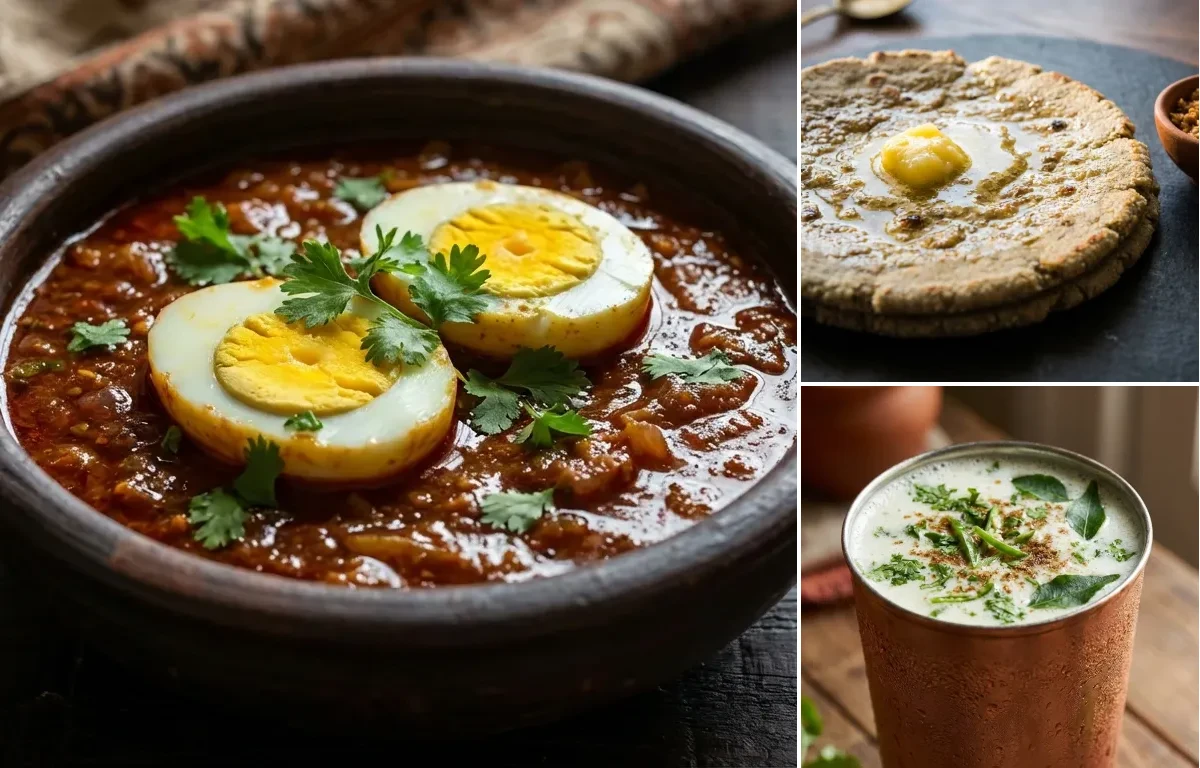
A fiery and aromatic egg curry from the Vidarbha region of Maharashtra. Hard-boiled eggs simmered in a rich, thick gravy made with roasted coconut and a special blend of rustic spices. A true taste of Nagpuri cuisine.
Prep20 min
Cook40 min
Servings4
Serving size: 2 pieces(2 eggs and about 1 cup of curry)
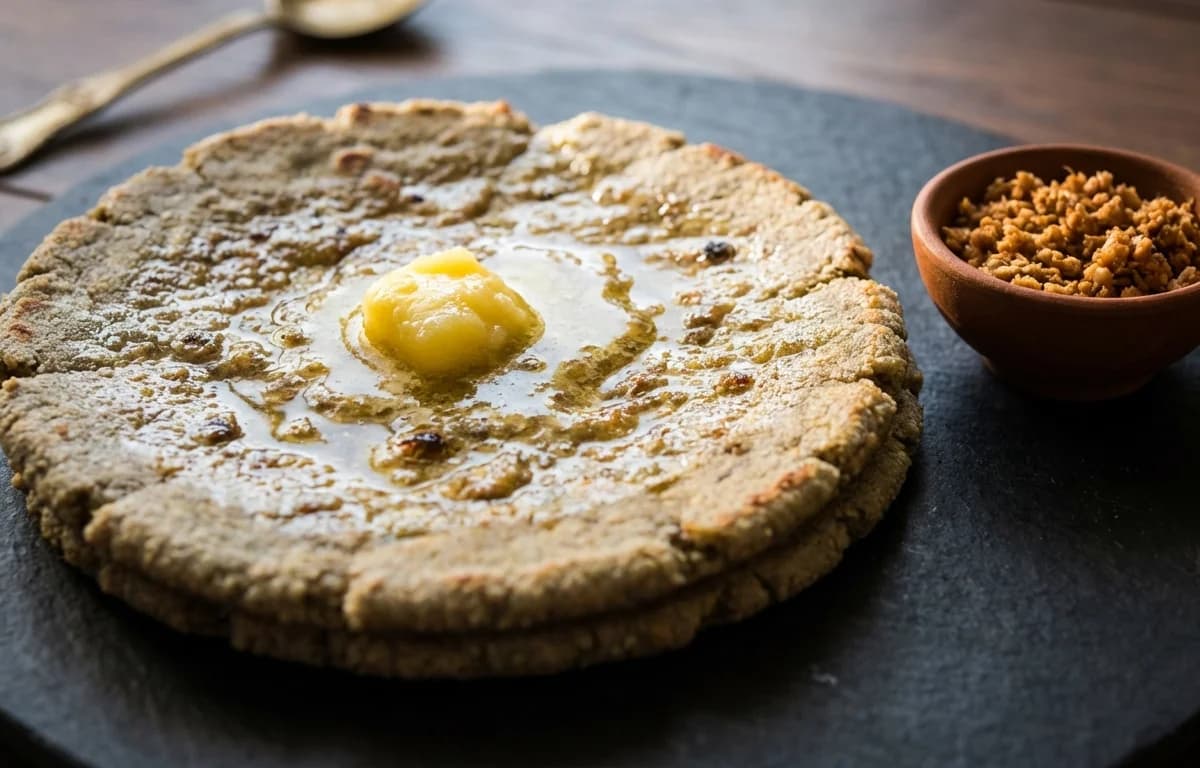
A rustic, gluten-free flatbread from Maharashtra made with pearl millet flour. This wholesome bhakri has a nutty flavor and pairs perfectly with spicy curries, chutneys, or a simple dollop of white butter.
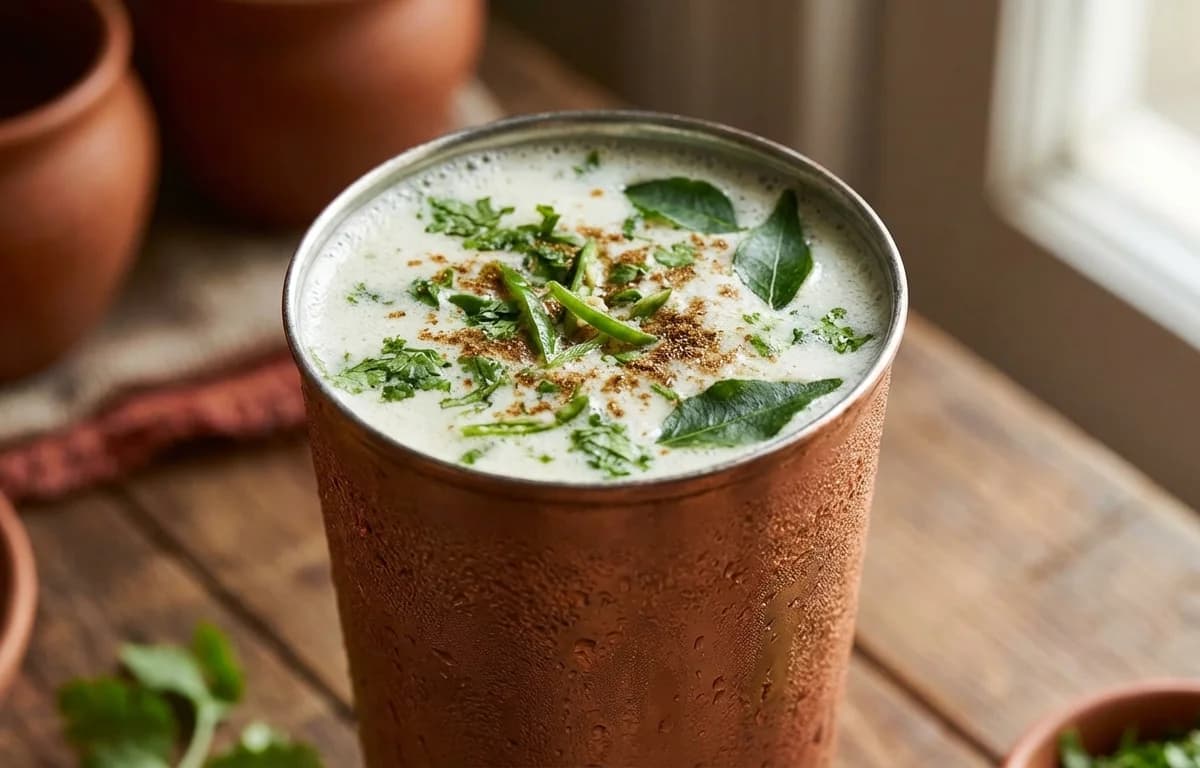
A refreshing and savory yogurt-based drink, lightly spiced with cumin and fresh herbs. This traditional Indian buttermilk is the perfect cooling beverage to aid digestion and beat the summer heat.
Perfectly spiced Varhadi Anda Curry with fiber-rich Bajra Bhakri and cool Matha. Energy-giving and delicious!
This maharashtrian dish is perfect for lunch. With 702.35 calories and 26.169999999999998g of protein per serving, it's a nutritious choice for your meal plan.
fat
1 pc Star Anise
1 pc Bay Leaf
1 tsp Mustard Seeds
1 tsp Cumin Seeds
0.25 tsp Hing (Asafoetida)
0.5 tsp Turmeric Powder
2 tsp Red Chili Powder (adjust to taste)
1.5 tsp Coriander Powder
1 tsp Garam Masala
1.5 tsp Salt (to taste)
2 cup Hot Water
3 tbsp Coriander Leaves (finely chopped, for garnish)
Instructions
1
Boil and Prepare the Eggs
Place 8 eggs in a saucepan and cover with cold water by at least an inch. Bring to a rolling boil over high heat.
Once boiling, reduce heat to a simmer and cook for 10 minutes for hard-boiled eggs.
Drain the hot water and immediately transfer the eggs to an ice bath or run under cold water for 5 minutes to stop the cooking process.
Peel the eggs carefully. Using a small knife, make 2-3 shallow slits on each egg. This helps them absorb the gravy's flavor. Set aside.
2
Roast Ingredients for Varhadi Masala
Heat a heavy-bottomed pan or kadai over medium-low heat. Add the grated dry coconut and dry roast, stirring constantly, for 4-5 minutes until it turns a deep golden brown. Remove and set aside.
In the same pan, add 1 tbsp of oil. Add the sliced onion and sauté for 8-10 minutes, until it becomes deep brown and caramelized at the edges. This step is crucial for the authentic color and taste.
Add the ginger, garlic, cloves, black peppercorns, cinnamon stick, star anise, and bay leaf to the onions. Sauté for another 2 minutes until the spices are fragrant.
Turn off the heat and let this mixture cool down completely.
3
Grind the Masala Paste
Transfer the cooled roasted coconut, onion-spice mixture to a grinder jar.
Add 3-4 tablespoons of water and grind to a smooth, thick paste. Scrape down the sides as needed. Set this Varhadi masala paste aside.
4
Prepare the Curry Base
Heat the remaining 3 tbsp of oil in the same kadai over medium heat. When the oil is hot, add mustard seeds and cumin seeds. Let them splutter.
Add the hing, followed by the finely chopped onion. Sauté for 6-7 minutes until the onion turns soft and golden brown.
Add the tomato puree and cook for 7-8 minutes, stirring frequently, until the mixture thickens and you see oil separating from the sides.
5
Cook the Curry
Lower the heat and add the turmeric powder, red chili powder, and coriander powder. Stir for 30 seconds until aromatic.
Add the prepared Varhadi masala paste. Mix well and cook for 5-7 minutes, stirring often, until the paste is well-cooked and releases oil.
Pour in 2 cups of hot water and add salt. Stir everything together to form a cohesive gravy.
Bring the curry to a boil, then reduce the heat to low, cover the pan, and let it simmer for 10-12 minutes to allow the flavors to meld.
6
Finish and Serve
Gently add the slit boiled eggs to the simmering gravy.
Sprinkle the garam masala over the top and stir gently to combine.
Cover and cook for a final 5 minutes on low heat, allowing the eggs to soak up the flavors.
Turn off the heat, garnish with freshly chopped coriander leaves. Let it rest for 10 minutes before serving.
Serve hot with jowar bhakri, chapati, or steamed rice.
235cal
7gprotein
42gcarbs
5gfat
Ingredients
2 cup Bajra Flour
0.5 tsp Salt
1.5 cup Hot Water (or as needed)
2 tsp Ghee (optional, for serving)
Instructions
1
Prepare the Dough
In a wide bowl or parat, combine 2 cups of bajra flour and salt.
Gradually pour in about 1 cup of hot water. Use a spoon to mix initially as the water is hot.
Once the mixture is warm enough to handle, begin to knead. Add more hot water, a tablespoon at a time, as needed.
Knead the dough for a solid 5-7 minutes using the heel of your palm, pushing and folding until it becomes a smooth, pliable, and crack-free ball. This step is crucial for soft bhakris.
Divide the dough into 8 equal portions and roll them into smooth balls. Keep the dough balls covered with a damp cloth to prevent them from drying out.
2
Shape the Bhakris
Take one dough ball and flatten it slightly. Dust your work surface lightly with some dry bajra flour.
Place the dough ball on the surface. Using your palm and fingers, gently pat and rotate the dough simultaneously to form an even circle about 5-6 inches in diameter and 1/4 inch thick.
Alternatively, for beginners, place the dough ball between two sheets of parchment paper and roll gently with a rolling pin to the desired thickness.
3
Cook the Bhakri on a Tawa
Heat a cast-iron tawa (griddle) over medium-high heat. The tawa should be hot but not smoking.
Carefully lift the patted bhakri and place it on the hot tawa.
Cook the first side for about 45-60 seconds, or until you see small bubbles appear and the color changes slightly.
Flip the bhakri using a spatula. Cook the second side for 1-2 minutes until light brown spots appear.
Using a folded, clean kitchen towel, gently press down on the bhakri, especially around the edges, to ensure it cooks evenly.
4
Puff and Serve
Using a pair of tongs, carefully lift the bhakri from the tawa and place it directly on a medium open flame.
The bhakri should puff up like a balloon within seconds. Rotate it quickly to cook evenly for about 10-15 seconds.
Remove from the flame and place it on a plate. Immediately smear with ghee, if desired.
Repeat the shaping and cooking process for the remaining dough balls. Serve hot.