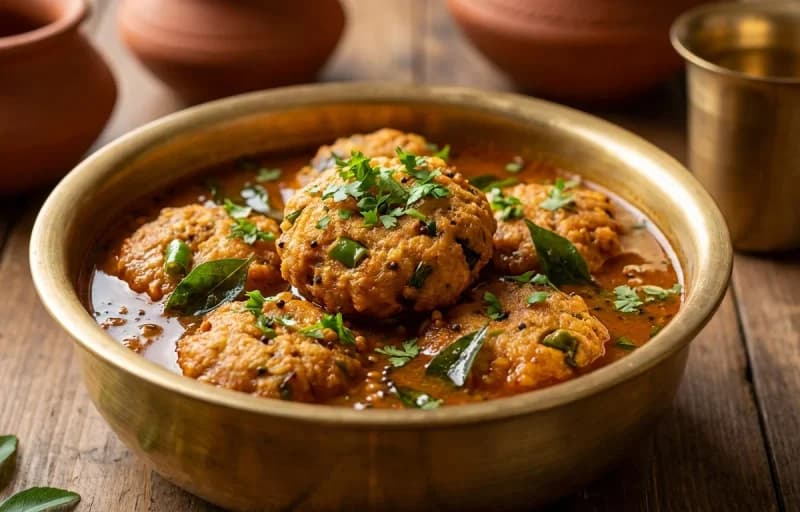
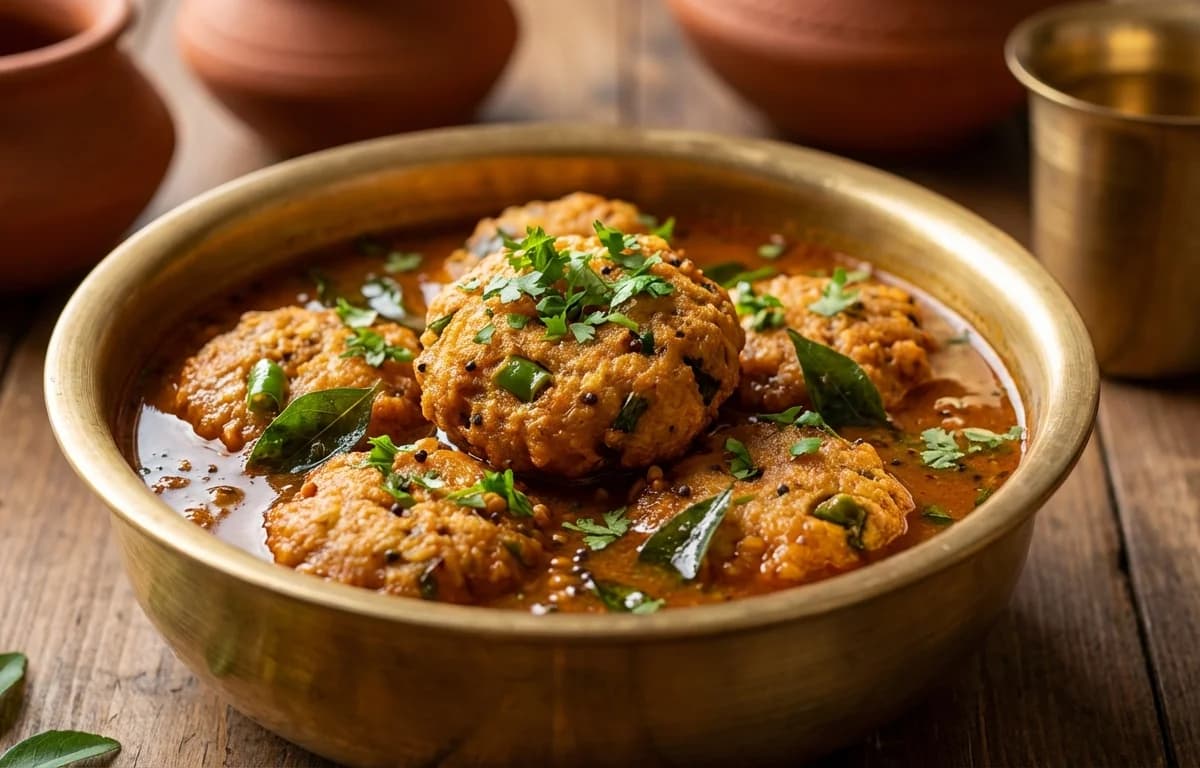
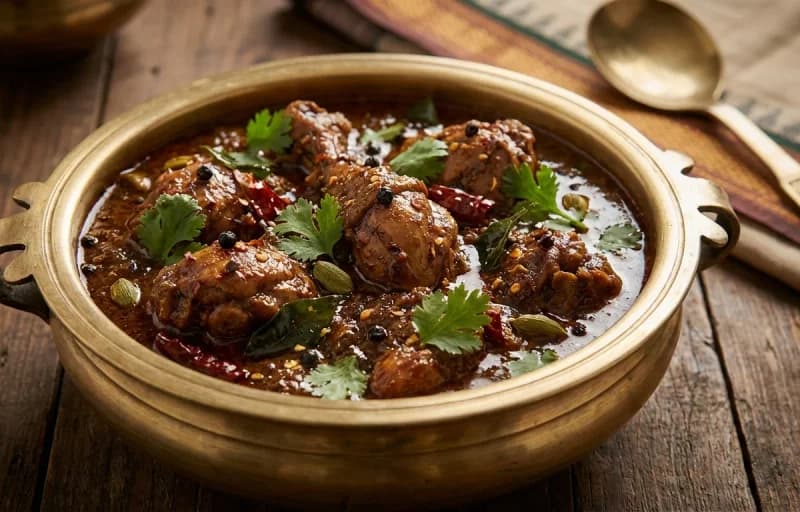
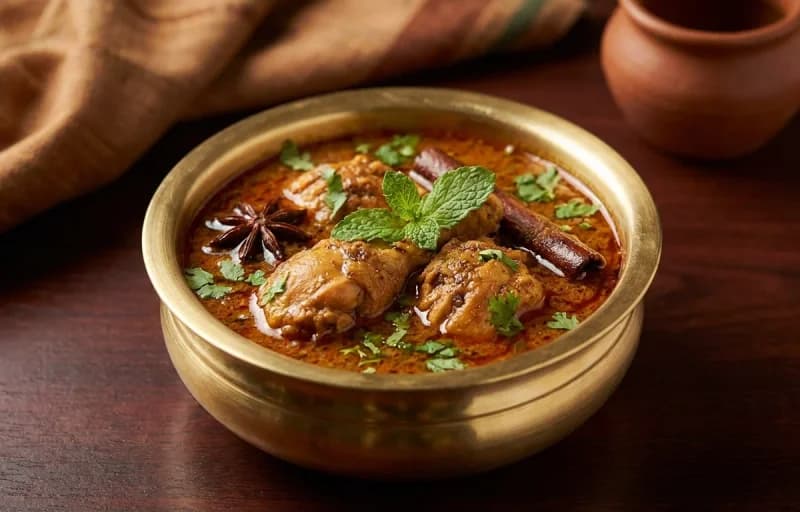
A classic Tamil dish where crispy, savory banana flower and lentil fritters are dunked into a tangy, spicy tamarind gravy. The vadas soak up the flavorful kuzhambu, creating a wonderfully unique texture and taste.
Prep45 min
Cook40 min
Soak120 min
Servings4
Serving size: 1 serving(1 cup of kuzhambu with 3-4 vadas per serving)
544cal
15gprotein
65gcarbs
Ingredients
1 medium Banana Flower (cleaned and finely chopped, yields about 2 cups)
0.75 cup Chana Dal (soaked for at least 2 hours and drained)
0.25 cup Toor Dal (soaked for at least 2 hours and drained)
1 small Red Onion (finely chopped, for vadas)
12 pearl onions Sambar Onions (peeled, for kuzhambu)
1 medium Tomato (finely chopped)
4 whole Dried Red Chillies (2 for vada batter, 2 for tempering)
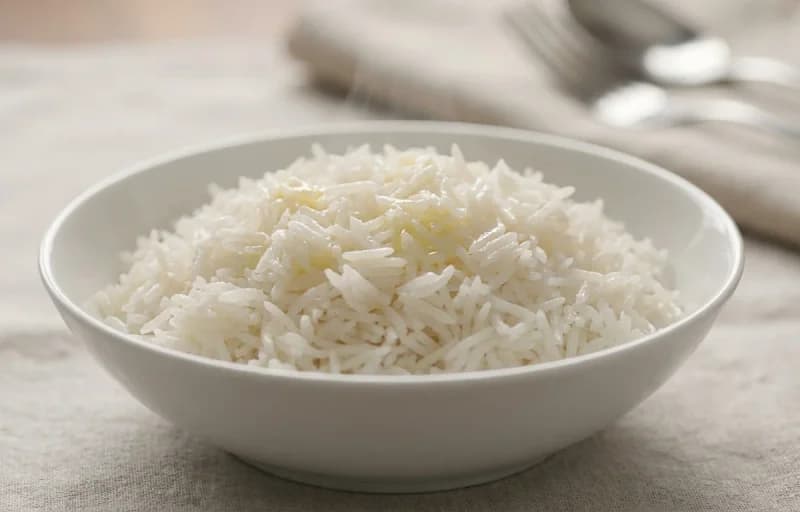
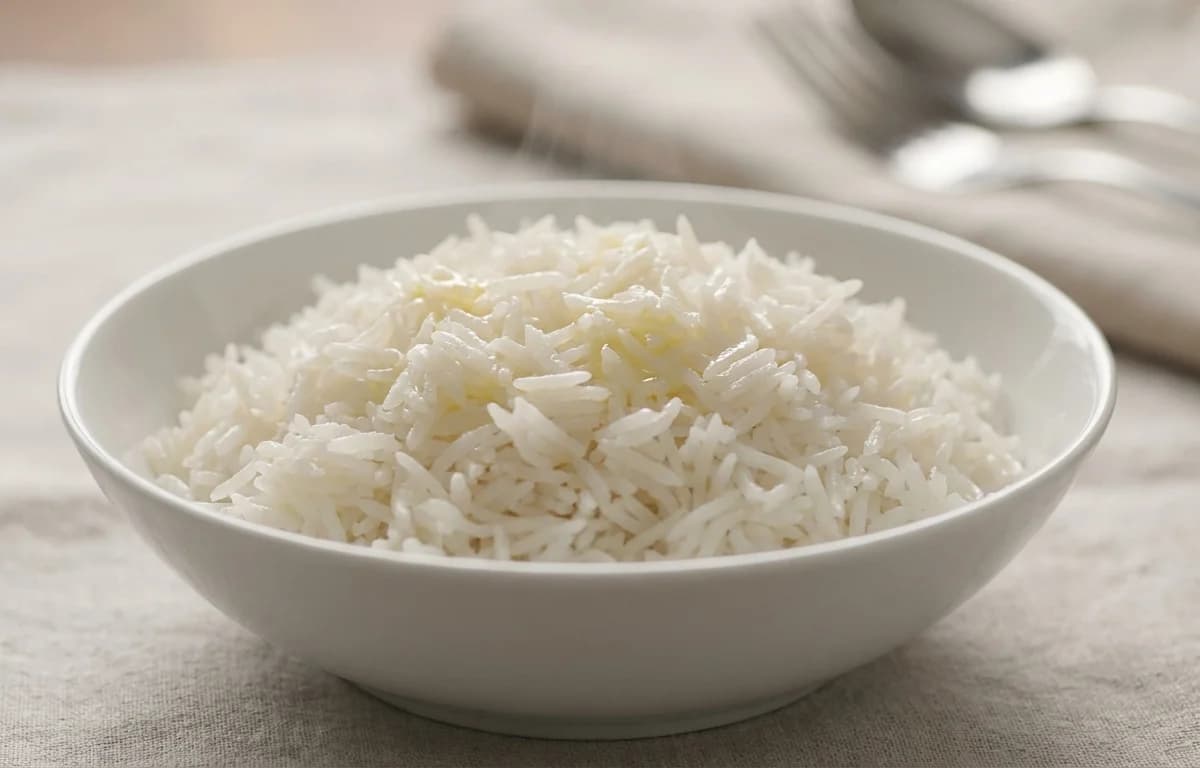
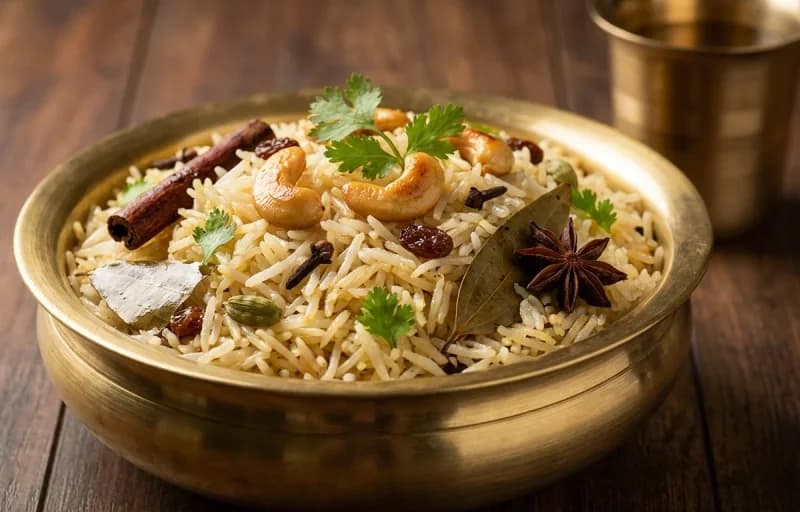
Perfectly fluffy, long-grained basmati rice with a delicate aroma. This simple, foolproof recipe gives you separate, non-sticky grains every time, making it the perfect base for any curry or dal.
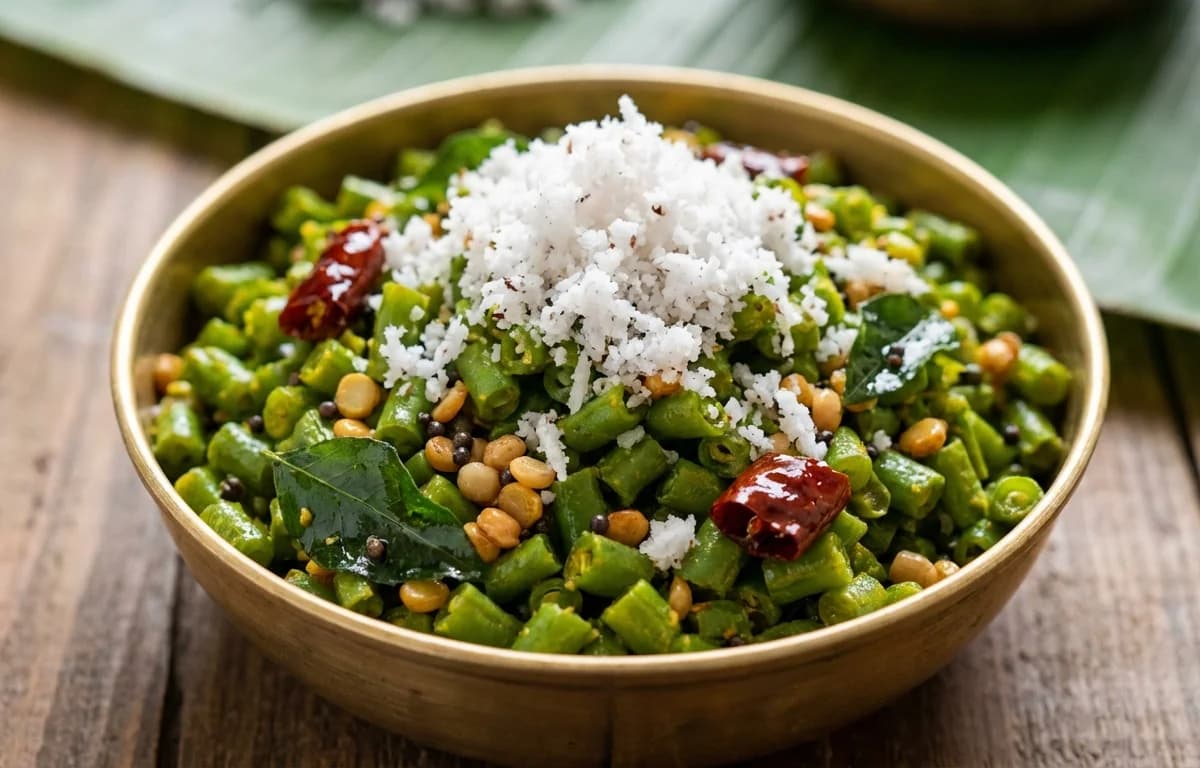
A simple and healthy South Indian stir-fry where tender green beans are cooked with aromatic spices and finished with fresh grated coconut. This classic side dish comes together in under 30 minutes and pairs perfectly with rice and sambar.
About Vazhaipoo Vadai Kuzhambu, Steamed Basmati Rice and Beans Poriyal
Aromatic banana flower vadai kuzhambu with rice & fiber-rich beans poriyal. A soul-satisfying homestyle meal!
This chettinad dish is perfect for lunch. With 969.82 calories and 23.480000000000004g of protein per serving, it's a nutritious choice for your meal plan.
28gfat
8 cloves
Garlic Cloves
(4 for vada batter, 4 for kuzhambu)
1 tsp Fennel Seeds
0.25 tsp Asafoetida
2 tbsp Tamarind Paste (diluted in 1 cup of warm water)
2 tbsp Sambar Powder
0.5 tsp Turmeric Powder
1 tsp Jaggery (powdered or grated)
1.75 tsp Salt (divided, or to taste)
3 tbsp Sesame Oil (also known as gingelly oil)
1 tsp Mustard Seeds
0.25 tsp Fenugreek Seeds
1 sprig Curry Leaves
2 cup Oil (for deep frying)
3 cup Water (1 for tamarind extract, 2 for kuzhambu)
Instructions
1
Prepare the Vada Batter
Ensure the soaked chana dal and toor dal are completely drained of water.
In a mixie jar or food processor, combine the drained dals, 2 dried red chillies, ginger, 4 garlic cloves, and fennel seeds.
Pulse in short bursts without adding any water until you get a coarse, thick batter. Avoid grinding it into a smooth paste.
Transfer the batter to a large bowl. Add the finely chopped banana flower, chopped red onion, asafoetida, and 0.75 tsp of salt. Mix everything together thoroughly.
2
Fry the Vadas
Heat oil for deep frying in a kadai or deep pan over medium flame. To check if the oil is ready, drop a tiny piece of batter; it should sizzle and rise to the top.
Take a small lemon-sized portion of the batter, flatten it slightly between your palms to form a disc (vadai).
Carefully slide the vadai into the hot oil. Fry 4-5 vadas at a time, ensuring not to overcrowd the pan.
Fry for about 3-4 minutes on each side, until they turn a deep golden brown and become crisp.
Remove the fried vadas with a slotted spoon and place them on a plate lined with paper towels to absorb excess oil. Set aside.
3
Prepare the Kuzhambu
In a heavy-bottomed pan or clay pot, heat the sesame oil over medium heat.
Add the mustard seeds. Once they begin to splutter, add the fenugreek seeds, the remaining 2 dried red chillies, and the sprig of curry leaves. Sauté for 30 seconds until fragrant.
Add the peeled sambar onions and the remaining 4 garlic cloves. Sauté for 3-4 minutes until the onions turn soft and translucent.
Add the chopped tomato and cook for 4-5 minutes until it becomes soft and mushy.
Lower the heat and add the turmeric powder and sambar powder. Stir and cook for one minute, being careful not to burn the spices.
4
Simmer the Kuzhambu
Pour in the tamarind water (2 tbsp tamarind paste dissolved in 1 cup of water), followed by another 2 cups of plain water.
Add 1 tsp of salt and the powdered jaggery. Stir well to combine.
Bring the mixture to a rolling boil, then reduce the heat to low-medium and let it simmer for 10-15 minutes. The kuzhambu should thicken slightly, and the raw smell of tamarind should disappear.
5
Assemble and Serve
Just before you are ready to serve, bring the kuzhambu to a gentle simmer.
Gently place the fried vadas into the hot kuzhambu. Let them soak for 5-10 minutes. The vadas will absorb the gravy and soften.
Ladle the kuzhambu with the soaked vadas into serving bowls. Serve immediately with hot steamed rice and a dollop of ghee for an authentic experience.
Servings
4
Serving size: 1 serving
262cal
5gprotein
55gcarbs
1gfat
Ingredients
1.5 cup Basmati Rice (Use good quality, aged basmati rice for best results)
2.25 cup Water (For the absorption cooking method)
0.75 tsp Salt (Adjust to taste)
1 tsp Ghee (Optional, for flavor and to prevent sticking)
Instructions
1
Rinse and Soak the Rice (35 minutes)
Place the basmati rice in a large bowl. Add cold water and gently swirl the rice with your fingers. Drain the cloudy water. Repeat this process 3-4 times until the water runs mostly clear. This removes excess starch and prevents stickiness.
Cover the rinsed rice with fresh water and let it soak for 30 minutes. Soaking allows the grains to absorb water, ensuring they cook evenly and elongate beautifully.
After 30 minutes, drain the rice completely using a fine-mesh sieve and set aside.
2
Cook the Rice (15 minutes)
In a medium, heavy-bottomed saucepan with a tight-fitting lid, combine the drained rice, 2.25 cups of fresh water, salt, and ghee (if using).
Bring the mixture to a rolling boil over medium-high heat, uncovered.
As soon as it boils, give it one gentle stir, then immediately reduce the heat to the lowest possible setting. Cover the saucepan tightly with the lid.
Let the rice simmer for 12-15 minutes, or until all the water has been absorbed. Do not lift the lid during this time to prevent steam from escaping.
3
Rest and Fluff (10 minutes)
Turn off the heat but leave the saucepan on the stove, still covered. Let the rice rest and steam for 10 minutes. This step is crucial for finishing the cooking process and achieving a perfect texture.
After resting, remove the lid. Use a fork to gently fluff the rice, separating the long, delicate grains.
Serve hot as a perfect accompaniment to curries, dals, or grilled dishes.
500 g Green Beans (Trimmed and finely chopped into ¼-inch pieces)
1 medium Onion (Finely chopped)
0.5 cup Fresh Grated Coconut (Fresh is preferred, but frozen (thawed) works too)
2 tbsp Coconut Oil
1 tsp Mustard Seeds
1 tsp Urad Dal (Split and skinned black gram lentils)
1 tsp Chana Dal (Split Bengal gram)
2 whole Dried Red Chili (Broken into halves)
1 sprig Curry Leaves (About 10-12 leaves)
0.25 tsp Asafoetida (Also known as Hing)
0.25 tsp Turmeric Powder
0.75 tsp Salt (Adjust to taste)
3 tbsp Water (For steaming the beans)
Instructions
1
Prepare the Vegetables
Wash the green beans thoroughly under running water.
Trim the ends and finely chop them into uniform ¼-inch pieces. This ensures they cook quickly and evenly.
Finely chop the onion and set aside.
2
Temper the Spices (Tadka)
Heat coconut oil in a heavy-bottomed pan or kadai over medium heat.
Once the oil is hot, add the mustard seeds and wait for them to splutter completely, which should take about 30-45 seconds.
Lower the heat and add the urad dal and chana dal. Sauté for 1-2 minutes, stirring continuously, until they turn golden brown and become aromatic. Be careful not to burn them.
Add the broken dried red chilies, curry leaves, and a pinch of asafoetida. Sauté for another 30 seconds until the curry leaves are crisp.
3
Sauté and Cook the Beans
Add the finely chopped onion to the pan and sauté for 2-3 minutes until it becomes soft and translucent.
Add the chopped green beans, turmeric powder, and salt. Mix everything thoroughly to coat the beans with the spices.