Beans Poriyal
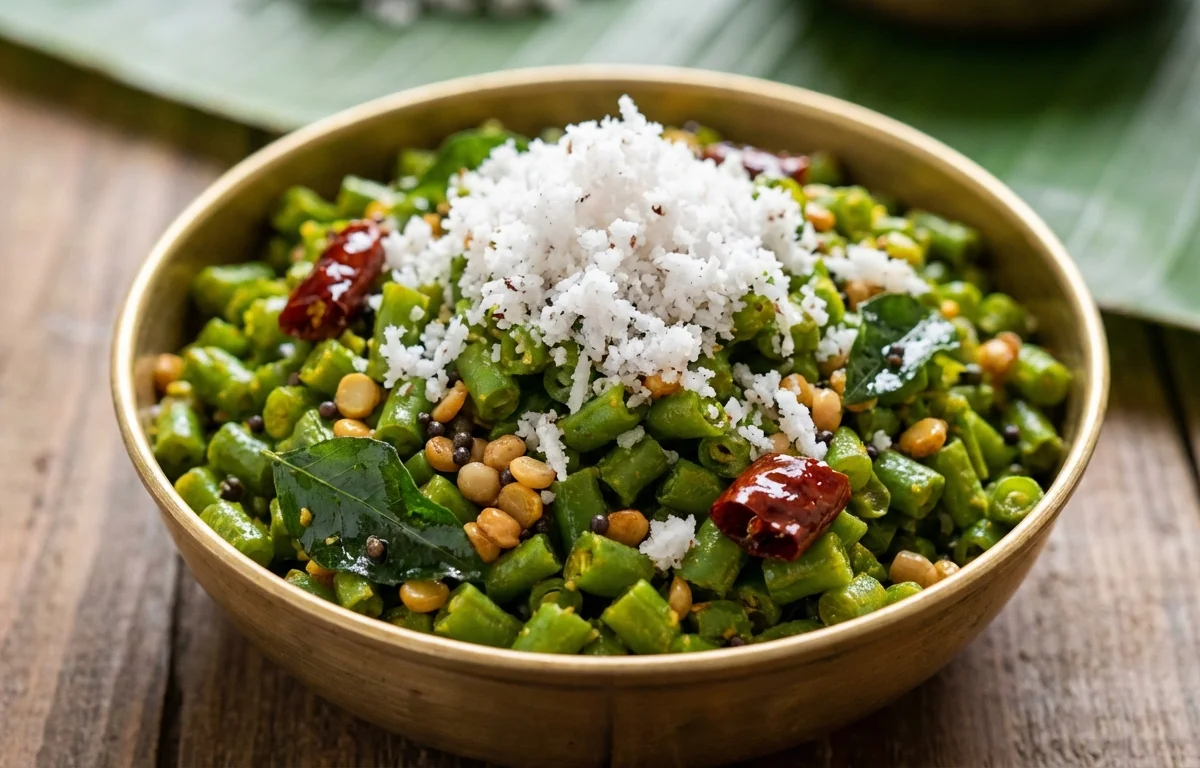
Finely chopped green beans cooked the South Indian way with mustard seeds, urad dal, curry leaves, and fresh coconut. This quick poriyal is light, homestyle, and goes beautifully with rice, rasam, or sambar.
For 4 servings
- prep · ~15 min
Prep the beans and aromatics.
1.Trim the ends of the green beans and chop them very finely for even cooking.2.Finely chop the onion.3.Slit the green chili and keep the grated coconut ready. - temper · ~2 min
Make the tempering.
1.Heat oil in a kadai over medium heat.2.Add mustard seeds and let them splutter.3.Add urad dal and cook until lightly golden.4.Add dried red chili, curry leaves, and asafoetida and stir for a few seconds.TIPKeep the heat medium so the urad dal turns golden without burning. - saute · ~3 min
Cook the onion and chili.
Add the onion and green chili to the pan. Sauté for 2 to 3 minutes until the onion softens and turns translucent.
- saute · ~2 min
Cook the beans.
1.Add the chopped green beans and salt.2.Mix well so the tempering coats the beans evenly.3.Sprinkle in the water and stir once. - simmer · ~7 min
Cover and cook until tender.
Cover the pan and cook on low heat for 6 to 8 minutes, stirring once or twice, until the beans are just tender and the water has dried up.
TIPDo not overcook the beans; they should stay bright and lightly crisp, not mushy. - mix · ~1 min
Mix in the coconut.
Add the grated coconut and toss well for 1 minute until it is warmed through and evenly mixed with the beans.
- serve
Serve the beans poriyal hot or warm.
What to keep in mind.
7 tips from the recipe — small details that make a real difference to the final dish.
- 1Chop the beans very finely so they cook through in minutes and absorb the tempering evenly.
- 2Let the mustard seeds fully splutter before adding urad dal, or the tempering will taste raw.
- 3Cook the urad dal only to light golden; dark brown dal will make the poriyal slightly bitter.
- 4Use just the listed splash of water and keep the pan covered so the beans steam, not boil.
- 5Stop cooking when the beans are tender but still bright green and lightly crisp.
- 6Add the fresh coconut at the end and toss briefly so it stays sweet and fluffy, not greasy.
- 7This poriyal keeps well for lunchboxes; cool completely before storing so the coconut stays fresh longer.
Adapt it for your goals.
No-onion
Skip the onion for a simpler, more traditional-style poriyal that pairs especially well with rasam and curd rice.
spicierSpicier
Add an extra green chili or one more dried red chili if you want a sharper heat that stands up to plain rice.
low coconutLow-coconut
Reduce the grated coconut for a lighter finish while keeping the same tempering and bean texture.
carrot beansCarrot-beans
Mix in finely chopped carrot with the beans for a sweeter poriyal with more color and a classic homestyle variation.
Why this is on our healthy list.
Fiber-Rich Vegetable Side
Green beans and onion add plant fiber, making this poriyal a satisfying side that fits well into everyday meals.
Lightly Cooked With Minimal Oil
The dish uses only a small amount of oil and relies on steaming in the pan rather than heavy frying.
Includes Beneficial Plant Ingredients
Curry leaves, chilies, coconut, and beans bring a mix of plant compounds and natural flavor without rich sauces.
Frequently asked questions
Yes, but chop them small and cook uncovered for a little longer if needed so any extra moisture evaporates before adding coconut.