10-Minute Sardine Pasta
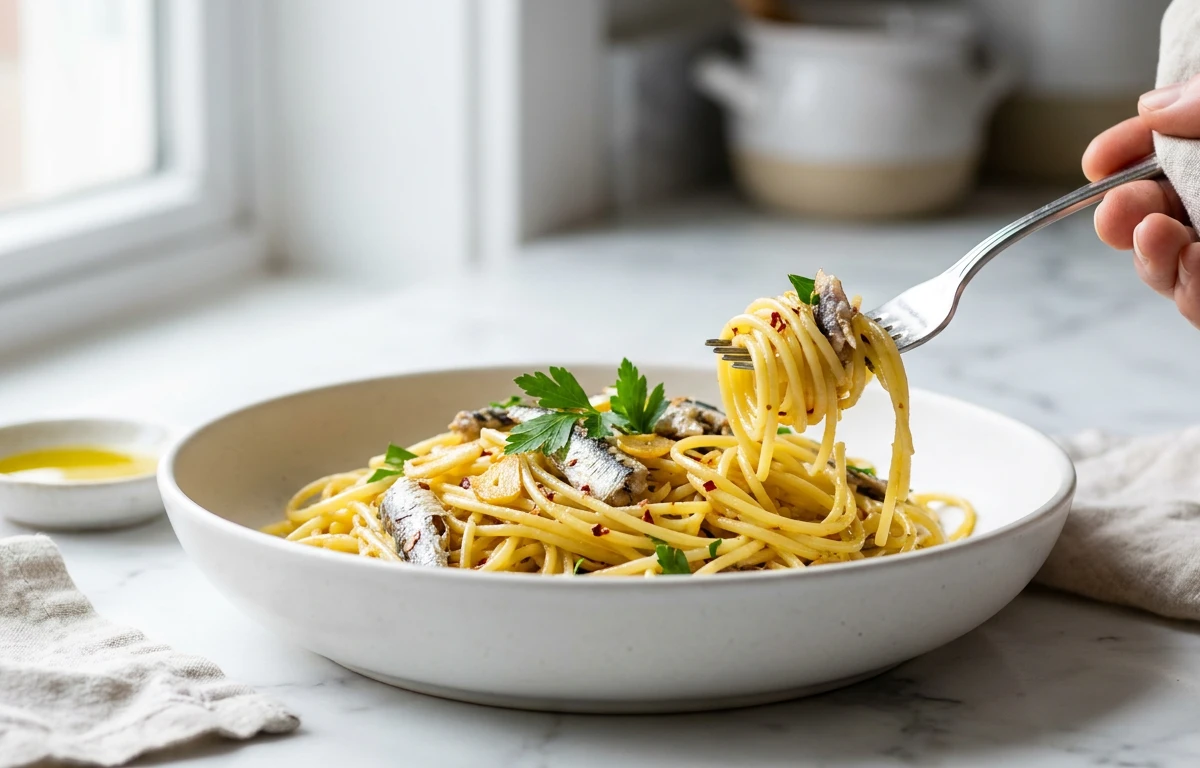
A lightning-fast weeknight pasta that feels like a slow-simmered Italian classic. Canned sardines melt into a savory, garlicky sauce with capers and lemon, coating every strand of spaghetti in briny, bright flavor. Ready in the time it takes to boil water.
For 4 servings
- boil · ~9 min
Cook the spaghetti.
1.Bring a large pot of salted water to a rolling boil.2.Add spaghetti and cook 1 minute less than package instructions for al dente.3.Before draining, scoop out 1 cup of the starchy pasta water. Set aside.4.Drain the spaghetti in a colander. - saute · ~2 min
Sizzle garlic and capers in olive oil.
1.Heat olive oil in a large skillet over medium heat.2.Add sliced garlic and cook until fragrant and just turning golden at the edges, about 1 minute.3.Add capers and chili flakes. Sizzle for 30 seconds until capers start to crisp.TIPWatch the garlic — medium heat only. Burnt garlic turns bitter. - mix · ~1 min
Flake the sardines into the skillet.
1.Open the sardine cans and flake the fish directly into the skillet using a fork.2.Pour in the oil from the cans too — it's packed with flavor.3.Break the sardines into chunky pieces and let them warm through for 1 minute. - mix · ~2 min
Toss pasta with the sauce.
1.Add the drained spaghetti to the skillet.2.Pour in half the reserved pasta water and toss vigorously with tongs for 1 minute.3.The starchy water and sardine oil will emulsify into a light, glossy sauce that clings to the pasta.4.Add more pasta water a splash at a time if the pasta looks dry.TIPVigorous tossing is the key. The motion helps the oil, water, and starch bind into a silky coating. - garnish · ~1 min
Finish with lemon zest, juice, and parsley.
1.Remove the skillet from heat.2.Squeeze in lemon juice and sprinkle the zest over the pasta.3.Add chopped parsley and a pinch of salt and black pepper.4.Toss once more to combine and serve immediately in warm bowls.TIPThe lemon juice goes in off the heat so it keeps its bright, fresh zing — cooking dulls it.
What to keep in mind.
6 tips from the recipe — small details that make a real difference to the final dish.
- 1Reserve more pasta water than you think you need—the starch is key for a silky, emulsified sauce.
- 2Don't drain the sardine oil; pour it into the skillet for a double hit of savory flavor.
- 3Toss the pasta vigorously with tongs for a full minute to build a creamy, clingy sauce.
- 4Add lemon juice off the heat to preserve its bright acidity—cooking makes it flat.
- 5Cook the pasta 1 minute shy of al dente so it finishes cooking in the sauce without turning mushy.
- 6Rinse capers thoroughly to remove excess salt, then pat dry so they crisp up in the oil.
Adapt it for your goals.
Extra-herby
Swap parsley for a mix of fresh dill and basil—dill's anise notes pair beautifully with sardines, while basil adds sweetness.
low oilLow-oil
Reduce olive oil to 1 tablespoon and add the sardine packing oil for flavor; toss with a splash of vegetable broth instead of extra olive oil to keep it light.
spicy sicilianSpicy-sicilian
Add 1/4 cup toasted breadcrumbs tossed with lemon zest and a pinch more chili flakes for a crunchy, savory topping inspired by pasta con le sarde.
high proteinHigh-protein
Swap spaghetti for whole wheat or chickpea pasta for extra fiber and protein, and double the sardines for a protein-packed meal.
Why this is on our healthy list.
Rich in Omega-3s
Sardines are one of the best sources of omega-3 fatty acids, which support heart and brain health.
High-Quality Protein
A single can of sardines provides about 23 grams of complete protein, helping with muscle repair and satiety.
Good Source of Calcium
The soft, edible bones in canned sardines deliver a significant amount of calcium for bone health.
Antioxidant Boost
Fresh parsley and lemon zest provide vitamin C and antioxidants that support the immune system and reduce inflammation.
Frequently asked questions
Yes, but the texture will be less rustic. For extra calcium and flavor, keep the skin and bones—they soften during cooking.