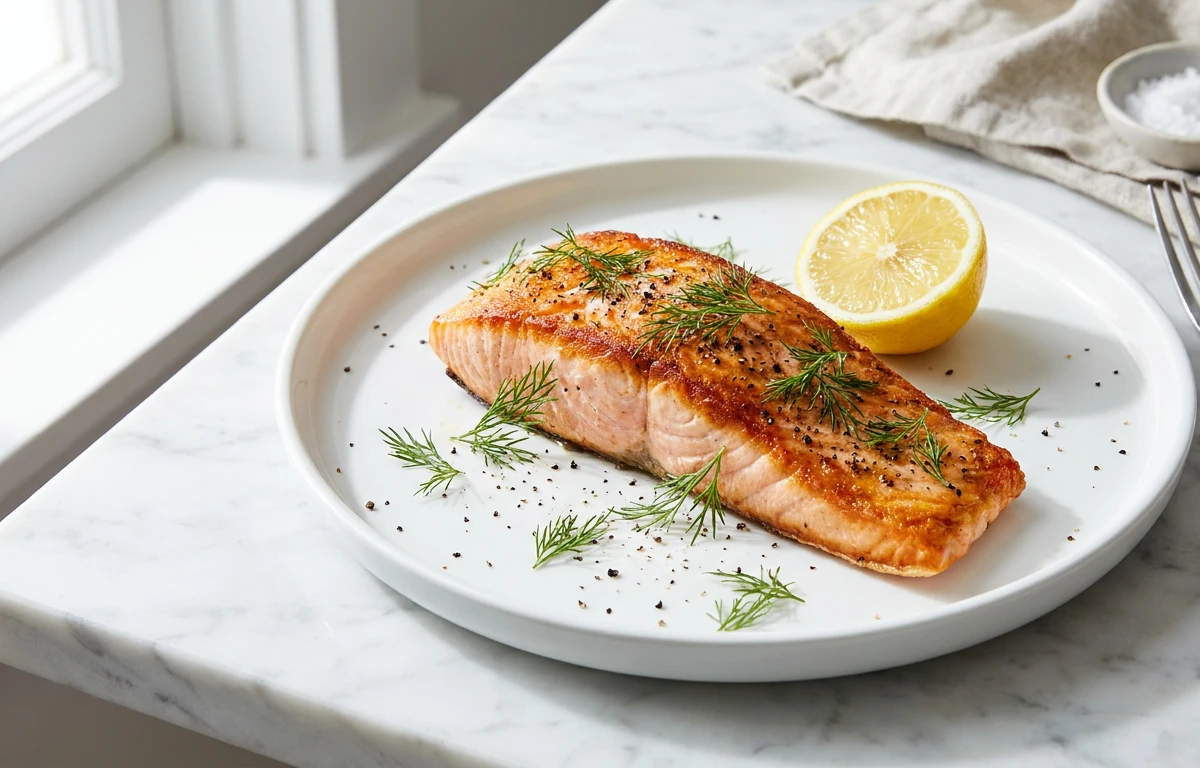
15-Minute Pan-Seared Salmon
Beautifully crisp-skinned salmon fillets with a tender, flaky interior, ready in just 15 minutes. The high-heat sear creates a gorgeous golden crust while locking in all the moisture. A simple weeknight hero that feels restaurant-worthy.
For 4 servings
- prep
Pat the salmon dry and season.
1.Pat salmon fillets thoroughly dry with paper towels — moisture is the enemy of crisp skin.2.Season the flesh side with salt and black pepper.TIPLet the fillets sit at room temperature for 10 minutes if you have time. Cold fish hits a hot pan unevenly. - fry · ~6 min
Heat the oil and sear skin-side down.
1.Heat olive oil in a large non-stick or cast-iron skillet over medium-high heat until shimmering.2.Carefully lay the salmon fillets skin-side down in the pan.3.Press gently with a spatula for the first 10 seconds to ensure full skin contact.4.Sear for 5 to 6 minutes, until the skin is deep golden and crisp. Do not move the fillets.TIPIf the salmon sticks, it hasn't released yet. Wait another minute — it will lift naturally. - fry · ~3 min
Flip and finish cooking.
1.Flip each fillet gently using a fish spatula.2.Cook for 2 to 3 minutes more for medium doneness, or until the internal temperature reaches 130-135°F (54-57°C).3.The salmon should flake easily with a fork but still be moist and slightly translucent at the center.TIPCarryover cooking will raise the temp another 5 degrees after resting. Pull it off just before you think it's done. - rest · ~1 min
Rest for a minute and serve.
Transfer salmon to plates, skin-side up to keep it crispy. Rest 1 minute, then serve with lemon wedges.
TIPAlways rest the salmon skin-side up — resting skin-down traps steam and softens the crackling.
What to keep in mind.
5 tips from the recipe — small details that make a real difference to the final dish.
- 1For the crispiest skin, pat the fillets dry with paper towels and let them sit uncovered in the fridge for 10 minutes before cooking.
- 2Bring the salmon to room temperature for 10 minutes before searing to ensure even cooking and prevent a cold center.
- 3Use a fish spatula to flip the fillets — it's thin and flexible, minimizing breakage of the delicate flesh.
- 4If the skin sticks when you try to flip, wait another 30-60 seconds; it will release naturally when fully crisped.
- 5After cooking, rest the salmon skin-side up on a wire rack or plate to keep the skin from steaming and softening.
Adapt it for your goals.
Herb-crusted
Press a mixture of fresh dill, parsley, and minced garlic into the flesh side before searing for a fragrant, aromatic crust.
spicy glazeSpicy glaze
Brush the fillets with a blend of honey, sriracha, and soy sauce during the last minute of cooking for a sweet-heat glaze.
butter bastedButter-basted
After flipping, add a tablespoon of butter, a sprig of thyme, and a crushed garlic clove to the pan, then spoon the foaming butter over the salmon for extra richness.
blackening styleBlackening style
Coat the flesh side with a homemade blackening spice mix (paprika, cayenne, garlic powder, thyme, oregano) before searing for a smoky, Louisiana-inspired kick.
Why this is on our healthy list.
Rich in Omega-3s
Salmon is packed with EPA and DHA omega-3 fatty acids, which support heart and brain health.
High-Quality Protein
Each serving provides about 30g of complete protein, essential for muscle repair and satiety.
Natural Vitamin D Source
Wild-caught salmon is one of the best dietary sources of vitamin D, important for bone health and immunity.
Low in Saturated Fat
Compared to red meats, salmon is low in saturated fat while delivering heart-healthy unsaturated fats.
Frequently asked questions
Use an instant-read thermometer — 130-135°F (54-57°C) at the thickest part for medium. The flesh should flake easily and look slightly translucent in the center.