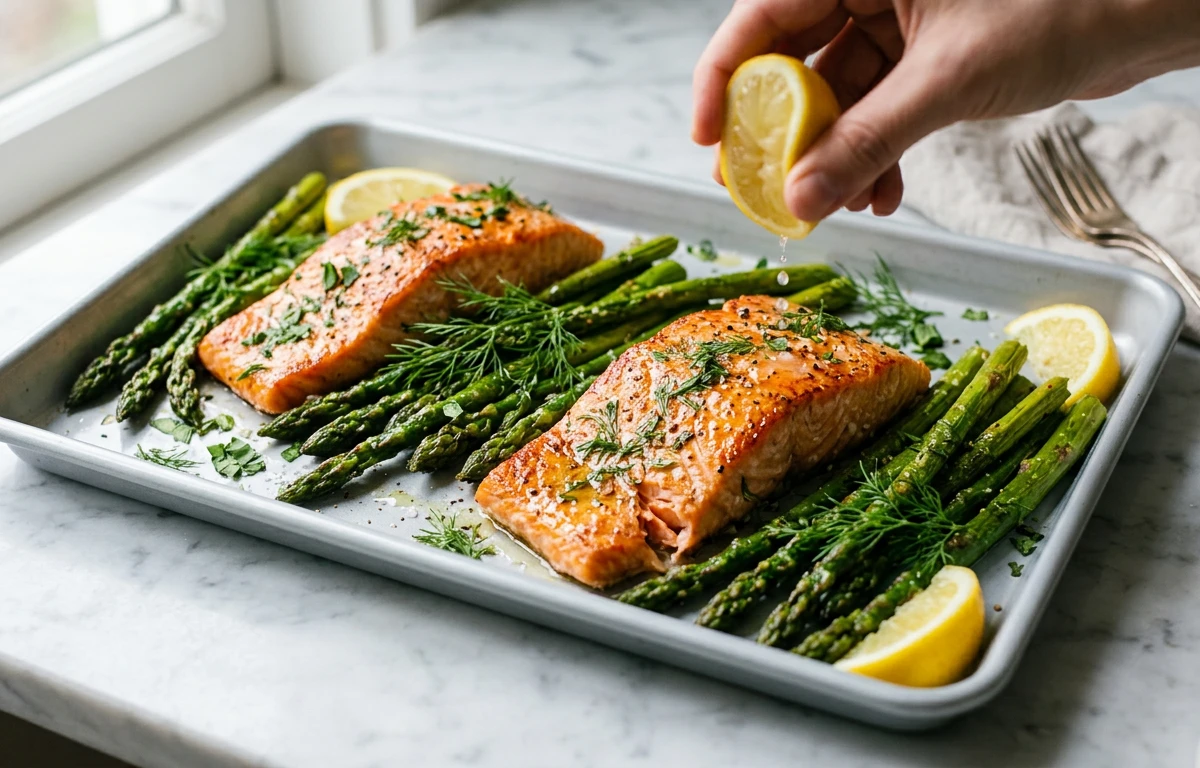
20-Minute Sheet-Pan Salmon & Asparagus
Flaky, tender salmon fillets and crisp-tender asparagus spears, all roasted together on one sheet pan with lemon and herbs. A vibrant, healthy dinner that goes from fridge to table in just 20 minutes with barely any cleanup.
For 4 servings
- prep · ~5 min
Preheat the oven and prep the sheet pan.
1.Preheat oven to 425°F (220°C).2.Line a large rimmed sheet pan with parchment paper or foil. - prep · ~2 min
Season the asparagus.
1.Place trimmed asparagus on one half of the sheet pan.2.Drizzle with 1 tablespoon olive oil, half the minced garlic, a pinch of salt, and a pinch of pepper.3.Toss to coat evenly, then spread in a single layer. - prep · ~3 min
Season the salmon.
1.Pat salmon fillets dry with a paper towel.2.Place fillets skin-side down on the empty half of the sheet pan.3.In a small bowl, mix the remaining olive oil, Dijon mustard, remaining garlic, and lemon juice.4.Brush or spoon the mustard mixture evenly over the salmon fillets.5.Season salmon with oregano and the remaining salt and pepper.6.Lay lemon slices on top of and around the salmon.TIPPatting the salmon dry ensures the mustard glaze sticks and helps the fish roast instead of steam. - bake · ~13 min
Bake the salmon and asparagus.
Place the sheet pan in the preheated oven on the middle rack. Bake for 12-15 minutes, until the salmon is opaque and flakes easily with a fork, and the asparagus is tender with lightly browned tips.
TIPFor extra browning on the asparagus, switch the oven to broil for the final 1-2 minutes — watch carefully so it doesn't burn. - garnish · ~1 min
Garnish with fresh parsley and serve.
Remove the sheet pan from the oven. Sprinkle chopped fresh parsley over the salmon and asparagus. Serve immediately directly from the pan or transfer to plates.
What to keep in mind.
7 tips from the recipe — small details that make a real difference to the final dish.
- 1Pat the salmon dry with paper towels to help the mustard glaze adhere and prevent steaming.
- 2Place asparagus in a single layer so it roasts evenly; overcrowding makes it steam instead.
- 3Use center-cut salmon fillets of even thickness (about 150g each) for uniform cooking.
- 4For crispy asparagus tips, switch the oven to broil for the final 1-2 minutes and watch carefully.
- 5Rest the salmon for 1-2 minutes after baking — residual heat finishes cooking it and keeps it moist.
- 6Make ahead: trim the asparagus and mix the mustard glaze up to a day ahead to speed prep.
- 7Leftovers keep in the fridge for up to 2 days; reheat gently in a low oven to avoid drying out.
Adapt it for your goals.
Garlic-herb butter swap
Replace the olive oil and Dijon glaze with 2 tablespoons melted butter mixed with minced garlic and fresh dill for a richer, buttery profile.
spicy mapleSpicy maple
Add 1 tablespoon maple syrup and a pinch of cayenne to the mustard glaze for sweet heat. Great for those who like a glaze that caramelizes deeply.
low carb / ketoLow-carb / keto
Replace the asparagus with zucchini or bell pepper strips and increase the olive oil to 3 tablespoons to keep it keto-friendly while maintaining veggie volume.
dairy free & paleoDairy-free & paleo
Use avocado oil instead of olive oil and swap Dijon for a paleo-friendly mustard (no wine). The dish is naturally dairy-free but this ensures compliance.
Why this is on our healthy list.
Rich in Omega-3s
Salmon is one of the best natural sources of omega-3 fatty acids, which support heart and brain health.
High in Vitamin K
Asparagus provides a generous amount of vitamin K, important for bone health and blood clotting.
Good Source of Protein
Each salmon fillet supplies around 30 grams of high-quality protein, helping keep you full and supporting muscle repair.
Low in Saturated Fat
This dish uses olive oil and salmon, both rich in unsaturated fats, making it a heart-friendly meal.
Packed with Antioxidants
Garlic, lemon, and parsley supply antioxidants like vitamin C and flavonoids that help fight inflammation.
Frequently asked questions
The salmon is cooked when it turns opaque and flakes easily with a fork. An instant-read thermometer inserted into the thickest part should read 125-130°F (52-54°C) for medium.