25-Minute Sheet Pan Lemon Salmon & Broccoli
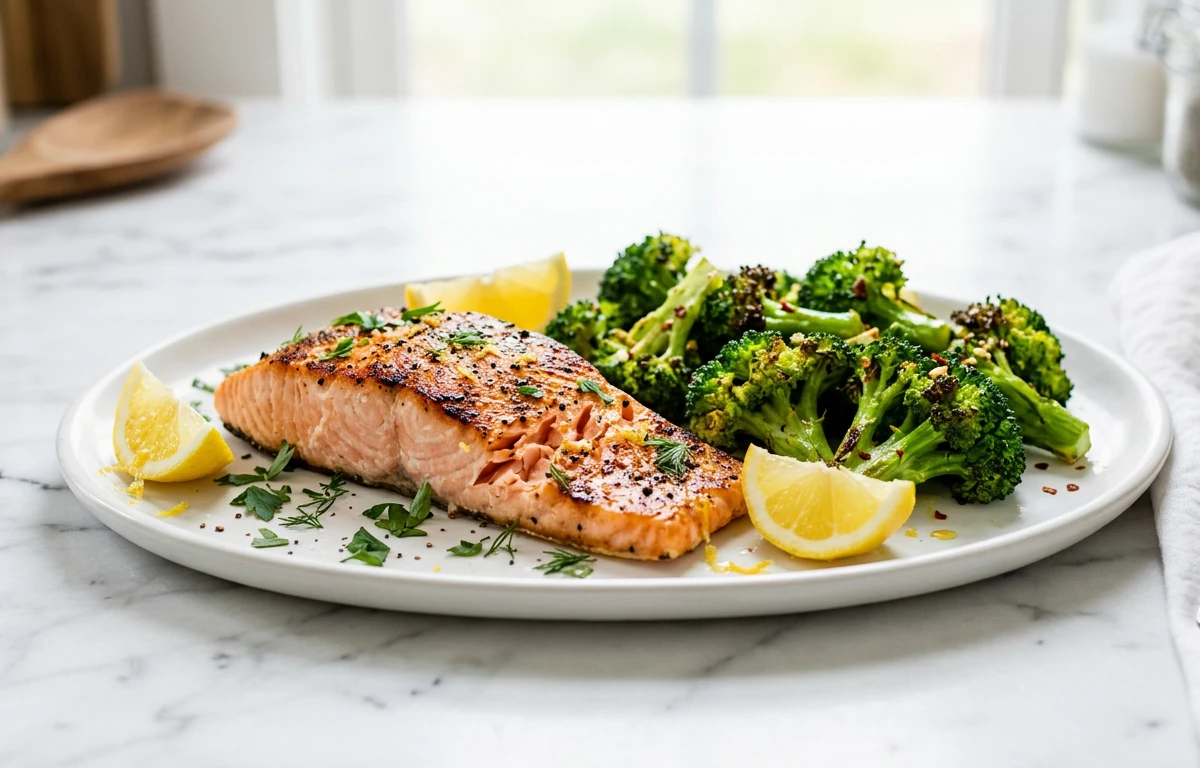
Flaky, tender salmon fillets roasted alongside crisp-tender broccoli florets, all brightened with fresh lemon and a touch of garlic. Everything cooks on one sheet pan in under 25 minutes, making it a weeknight lifesaver with minimal cleanup.
For 4 servings
- prep
Preheat the oven and prep the pan.
1.Position a rack in the center of the oven and preheat to 400°F (200°C).2.Line a large rimmed sheet pan with parchment paper for easy cleanup, if using. - mix
Make the lemon-garlic dressing.
1.In a small bowl, whisk together the olive oil, lemon zest, lemon juice, minced garlic, and dijon mustard until emulsified.2.Season the mixture with salt and black pepper. - prep
Toss the broccoli.
Place the broccoli florets on the prepared sheet pan. Drizzle with 2 tablespoons of the lemon-garlic dressing and toss well to coat every piece. Spread into an even layer on half the pan.
- bake · ~5 min
Roast the broccoli first for 5 minutes.
Slide the sheet pan into the preheated oven and roast the broccoli alone for 5 minutes. This gives it a head start so everything finishes together.
TIPDon't crowd the pan — give the florets space so they brown instead of steam. - prep
Season the salmon fillets.
Pat the salmon fillets dry with paper towels. Nestle them skin-side down on the empty half of the sheet pan. Brush the remaining lemon-garlic dressing evenly over the top and sides of each fillet.
- bake · ~12 min
Bake until salmon is just cooked through.
Return the pan to the oven and bake until the salmon flakes easily with a fork and the thickest part registers 130-135°F for medium or 145°F for well-done. This will take 10 to 12 minutes. The broccoli should be tender with lightly charred edges.
TIPSalmon carries over a few degrees after leaving the oven. Pull it at 130°F for perfectly moist results. - garnish
Finish with fresh lemon and serve.
Transfer the salmon and broccoli to plates. Spoon any pan juices over the fish, garnish with lemon slices, and serve immediately.
What to keep in mind.
7 tips from the recipe — small details that make a real difference to the final dish.
- 1Pat the salmon fillets dry with paper towels to ensure the dressing clings and the skin crisps up.
- 2Cut broccoli florets into similar sizes so they cook evenly alongside the salmon.
- 3Give the broccoli a 5-minute head start in the oven to ensure it's tender-crisp, not crunchy.
- 4Use a digital instant-read thermometer to check salmon doneness; pull it at 130°F for medium.
- 5Arrange the salmon skin-side down and avoid moving it during baking to get a crispy skin.
- 6For even browning, spread broccoli in a single layer and don't overcrowd the sheet pan.
- 7Make-ahead: You can prep the dressing and cut the broccoli up to 1 day in advance.
Adapt it for your goals.
Low-carb
Replace broccoli with asparagus or zucchini ribbons for a keto-friendly version that roasts in the same time frame.
spicySpicy
Add 1/2 teaspoon red pepper flakes to the lemon-garlic dressing for a subtle heat that complements the salmon and broccoli.
herbyHerby
Stir in 2 tablespoons of chopped fresh dill or parsley into the dressing for a fresh, herbal lift.
dairy freeDairy-free
This recipe is naturally dairy-free — just ensure your Dijon mustard doesn't contain any milk solids (most don't).
Why this is on our healthy list.
Rich in Omega-3s
Salmon is an excellent source of anti-inflammatory omega-3 fatty acids, which support heart and brain health.
High in Vitamin C
Broccoli and fresh lemon juice both provide immune-supporting vitamin C for a balanced meal.
Good Source of Fiber
Broccoli contributes dietary fiber to aid digestion and promote satiety without added calories.
Low in Saturated Fat
This dish uses heart-healthy olive oil and naturally lean salmon, keeping saturated fat minimal.
Frequently asked questions
Yes, but thaw them completely in the refrigerator overnight and pat very dry to avoid excess moisture that would steam the fish.