
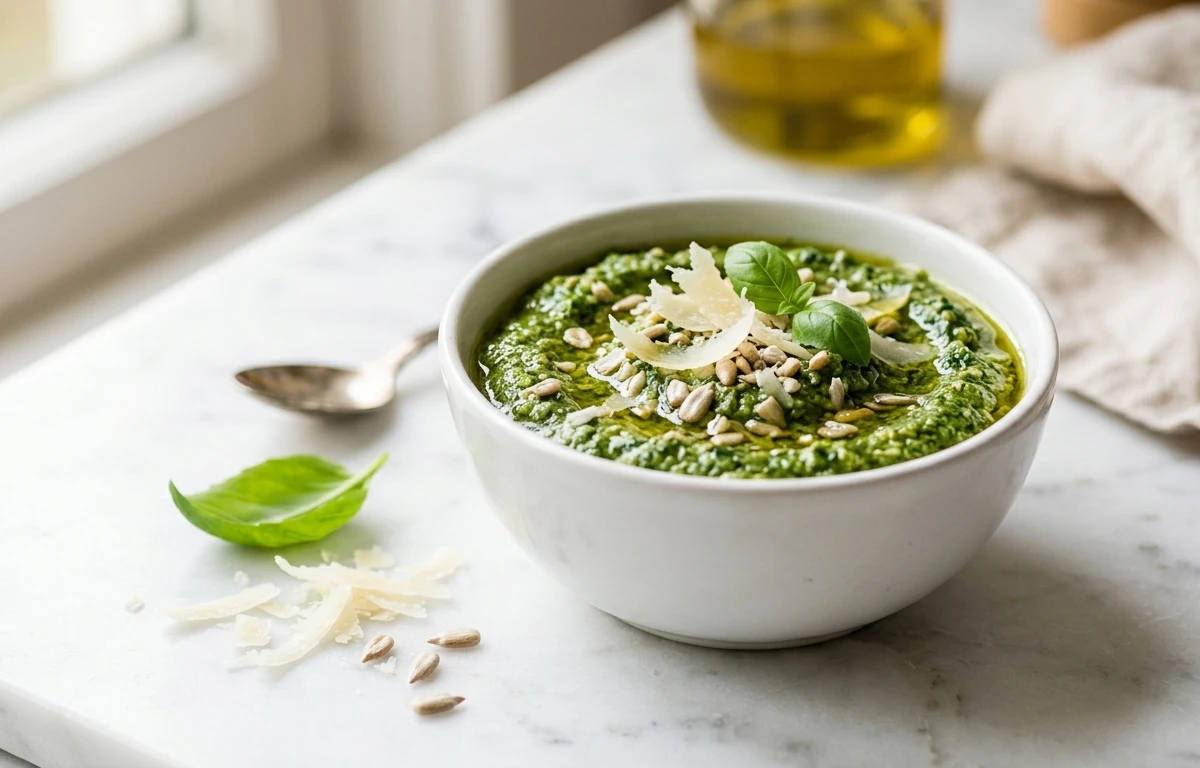
5-Minute Sunflower Seed Pesto
A bright, nutty pesto that comes together in just 5 minutes. Roasted sunflower seeds stand in for pricey pine nuts, blended with fresh basil, garlic, and olive oil. Perfect for tossing with pasta, spreading on sandwiches, or drizzling over roasted vegetables.
For 8 servings
- prep · ~1 min
Wash and dry the basil leaves.
Rinse 2 cups of fresh basil leaves under cold water. Pat completely dry with a clean kitchen towel or spin in a salad spinner. Excess water will make the pesto watery.
TIPMake sure the basil is completely dry — water dilutes the flavor and makes the pesto spoil faster. - mix · ~1 min
Blitz sunflower seeds and garlic.
Add sunflower seeds and the peeled garlic clove to the food processor bowl. Pulse 6–8 times until the seeds are broken down to a coarse crumb. Don't over-process into a paste yet.
TIPPausing to scrape the sides halfway through ensures even grinding. - mix · ~1 min
Add basil, lemon juice, salt, and pepper.
Pack the basil leaves into the processor. Add lemon juice, salt, and black pepper. Pulse in short bursts, scraping down the sides, until the basil is finely chopped and everything is combined.
- mix · ~1 min
Stream in olive oil while blending.
With the food processor running, slowly drizzle in the olive oil through the feed tube. Blend until the pesto reaches a smooth, slightly coarse consistency. Stop and scrape the sides once more. If the pesto is too thick, blend in cold water 1 teaspoon at a time.
TIPCold water (not more oil) helps the pesto loosen up without getting greasy. - garnish
Taste, adjust, and serve.
Taste the pesto and add an extra pinch of salt or a drop of lemon juice if needed. Transfer to a clean jar and use immediately, or press plastic wrap directly onto the surface and refrigerate.
TIPPressing plastic wrap onto the surface stops the basil from oxidizing and turning brown.
What to keep in mind.
7 tips from the recipe — small details that make a real difference to the final dish.
- 1Dry the basil leaves thoroughly before blending to prevent a watery pesto.
- 2Use roasted, unsalted sunflower seeds for the deepest nutty flavor without extra salt.
- 3Pulse the seeds and garlic to a coarse crumb before adding basil to avoid over-processing.
- 4Drizzle olive oil slowly with the processor running for a smooth, emulsified texture.
- 5If the pesto is too thick, add cold water a teaspoon at a time instead of more oil.
- 6Press plastic wrap directly onto the surface of stored pesto to prevent oxidation and browning.
- 7This pesto keeps well in the fridge for up to 5 days, or freeze in ice cube trays for longer storage.
Adapt it for your goals.
Vegan
Already fully vegan! Replace Parmesan (if you usually add it) with a tablespoon of nutritional yeast for a cheesy, umami boost without dairy.
nut freeNut-free
This pesto is naturally nut-free thanks to sunflower seeds, making it safe for those with tree nut allergies.
high proteinHigh-protein
Add a handful of hemp seeds or a tablespoon of hemp hearts along with the sunflower seeds for an extra protein punch without altering the flavor.
low oilLow-oil
Reduce olive oil to 2 tablespoons and add an extra tablespoon of cold water or unsweetened oat milk for a lighter, lower-fat sauce that still clings to pasta.
Why this is on our healthy list.
Rich in Vitamin E
Sunflower seeds and olive oil are both excellent sources of vitamin E, an antioxidant that supports skin health and immune function.
Good Source of Magnesium
Sunflower seeds provide magnesium, which plays a role in muscle function, nerve health, and energy production.
Heart-Healthy Fats
Extra virgin olive oil is rich in monounsaturated fats and polyphenols, which are linked to reduced inflammation and better heart health.
Low in Saturated Fat
Using sunflower seeds instead of cheese keeps the saturated fat content low, making this a lighter pesto option.
Frequently asked questions
Yes, but the pesto will have a milder, less nutty flavor. For best results, toast raw seeds in a dry skillet over medium heat for 3-4 minutes until fragrant before using.


