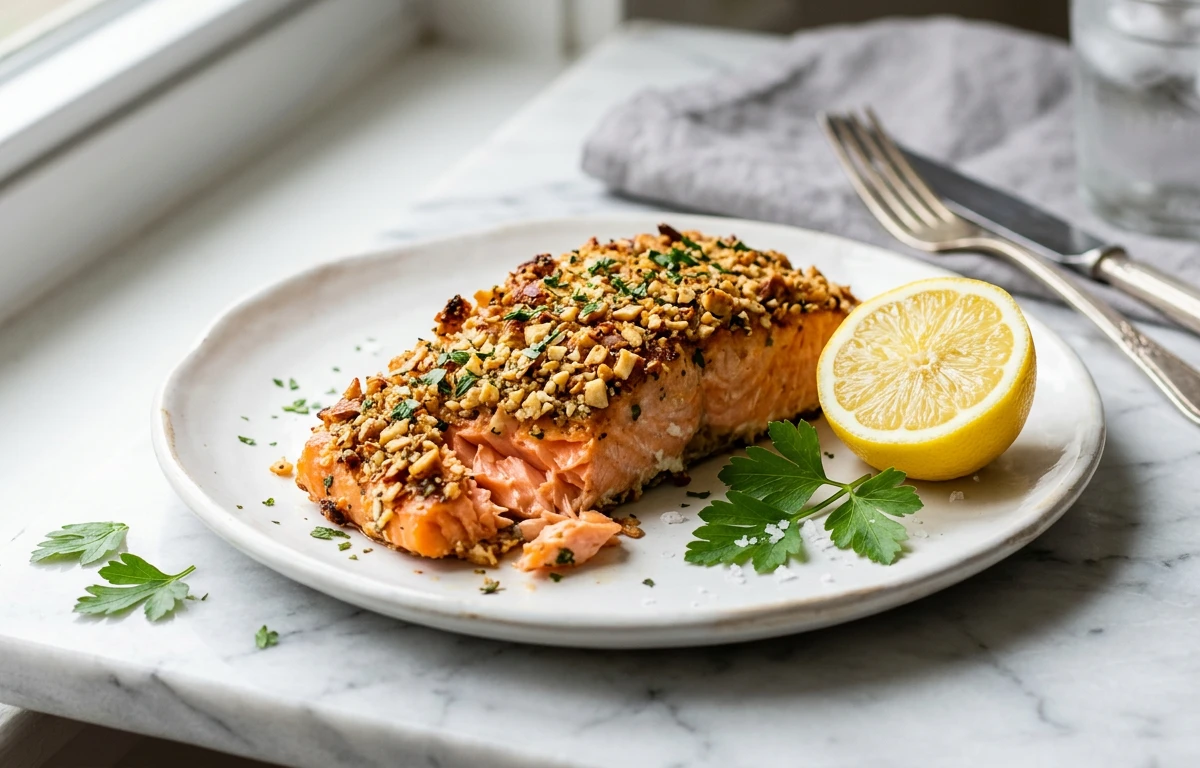
Almond-Crusted Salmon
Crispy, golden almond crust hugging tender, flaky salmon fillets. The nutty crunch pairs perfectly with the rich fish, and a squeeze of lemon brightens every bite. A stunning yet simple weeknight dinner ready in under 30 minutes.
For 4 servings
- prep
Preheat the oven and prep the baking sheet.
1.Preheat oven to 400°F (200°C).2.Line a baking sheet with parchment paper and lightly brush with olive oil. - prep
Make the almond crust mixture.
1.Pulse raw almonds in a food processor until finely chopped, like coarse sand. Avoid over-processing into butter.2.In a small bowl, combine chopped almonds, minced garlic, and a pinch of salt.TIPFinely chopped almonds stick better than sliced ones. Aim for a rough sand texture. - prep
Season the salmon and make the honey-mustard glaze.
1.Pat salmon fillets completely dry with paper towels.2.Season fillets all over with remaining salt and black pepper. - mix
Mix the honey-mustard spread.
1.In a small bowl, stir together Dijon mustard, honey, and lemon juice until smooth. - assemble
Coat the salmon with mustard glaze and almond crust.
1.Place salmon fillets skin-side down on the prepared baking sheet.2.Using a pastry brush or spoon, spread the honey-mustard mixture evenly over the top and sides of each fillet.3.Press the almond mixture firmly onto the mustard-coated surface, creating a thick, even crust.TIPPack the almonds on firmly so the crust stays in place while baking. - bake · ~13 min
Bake the almond-crusted salmon.
Bake for 12 to 15 minutes, until the almond crust is golden brown and the salmon is just cooked through. The fish should flake easily with a fork and reach an internal temperature of 145°F (63°C).
TIPWatch the crust after 10 minutes. If almonds brown too quickly, tent loosely with foil. - garnish
Garnish and serve.
Remove from oven and let rest for 2 minutes. Sprinkle with fresh chopped parsley and serve immediately with lemon wedges on the side.
TIPA fresh squeeze of lemon right before eating makes the flavors pop.
What to keep in mind.
6 tips from the recipe — small details that make a real difference to the final dish.
- 1Pat salmon fillets very dry so the honey-mustard glaze sticks evenly.
- 2Pulse almonds in short bursts to get a coarse sand texture; avoid turning them into almond butter.
- 3Pack the almond crust firmly onto the glaze to prevent it from falling off during baking.
- 4Check the crust after 10 minutes; tent with foil if browning too quickly.
- 5Rest the salmon for 2 minutes after baking so the juices redistribute for moist flakes.
- 6Make the almond mixture and glaze up to a day ahead; store covered in the fridge.
Adapt it for your goals.
Low-carb / keto
Replace honey with a sugar-free sweetener like monk fruit or allulose; the crust stays crunchy and the salmon remains keto-friendly.
spicySpicy
Add 1/4 teaspoon cayenne or smoked paprika to the almond mixture for a warm, smoky kick that contrasts the honey sweetness.
herb crustedHerb-crusted
Mix 2 tablespoons of fresh dill or thyme into the almond crumbs for an herby, aromatic twist.
gluten freeGluten-free
This recipe is naturally gluten-free; just verify your Dijon mustard is certified gluten-free if needed.
Why this is on our healthy list.
Rich in Omega-3s
Salmon is an excellent source of EPA and DHA omega‑3 fatty acids, which support heart and brain health.
Vitamin E from Almonds
Almonds provide vitamin E, a fat-soluble antioxidant that helps protect cells from oxidative stress.
Moderate in Healthy Fats
The olive oil and almonds contribute monounsaturated fats, which can support healthy cholesterol levels.
Frequently asked questions
Yes, but pulse sliced almonds briefly in a food processor to create a finer texture that adheres better to the fish.