
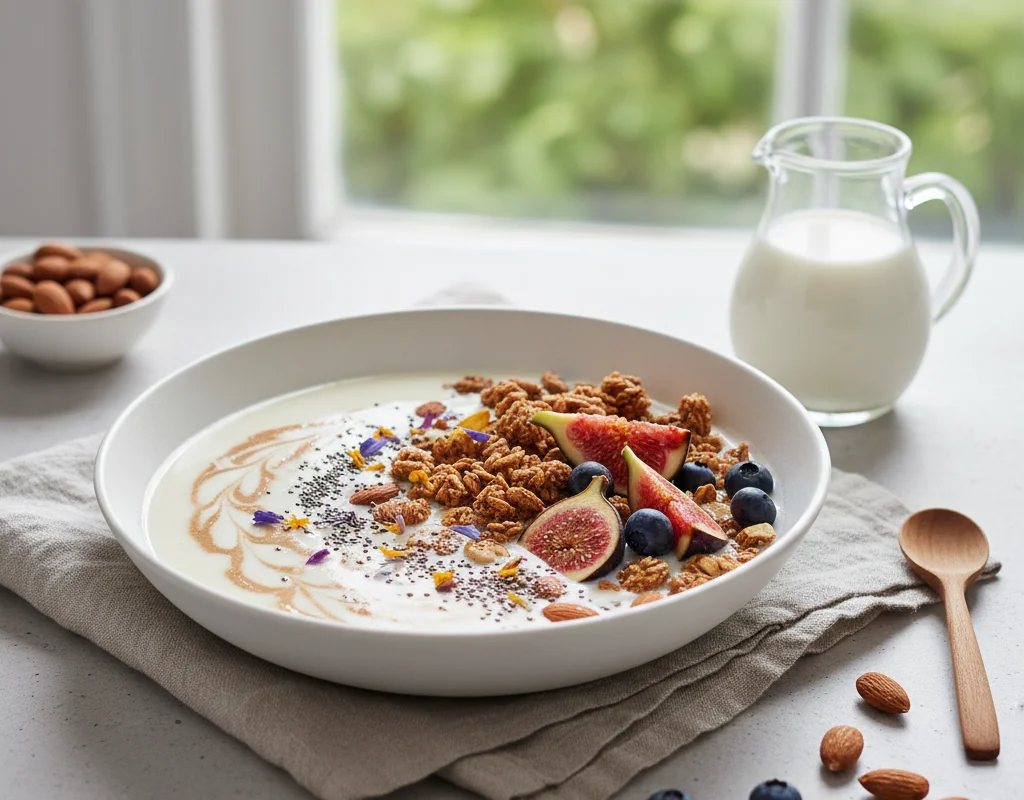
Almond Milk
Creamy, dairy-free milk made from just almonds and water. This homemade version is naturally sweet, free of additives, and ready in minutes after a quick overnight soak. Perfect for coffee, smoothies, cereal, or drinking straight from the glass.
For 4 servings
- prep
Soak the almonds overnight.
Place the almonds in a large bowl and cover with 2 inches of cold water. Let soak at room temperature for 8 to 12 hours, or overnight. The almonds will plump and soften.
TIPUse filtered water for the best flavor. Skipping the soak yields thin, chalky milk. - prep
Drain and rinse the soaked almonds.
Drain the soaking water and rinse the almonds under fresh running water until the water runs clear.
- mix · ~2 min
Blend almonds with fresh water.
Add the rinsed almonds and 4 cups of fresh water to a high-speed blender. Blend on high for 1 to 2 minutes until the mixture is opaque, creamy white, and the almonds are pulverized into a fine meal.
TIPDon't blend longer than 2 minutes or heat from the motor may alter the taste. - other · ~3 min
Strain through a nut milk bag.
Position the nut milk bag over a large bowl or pitcher. Slowly pour the blended mixture into the bag. Gather the top and twist gently, squeezing from top to bottom to extract every last drop of milk. Discard the almond pulp or reserve for another use.
TIPWring firmly but don't force pulp through the weave — patience makes clear milk. - mix · ~1 min
Whisk in a pinch of salt.
Add the salt to the strained almond milk and whisk or stir well until dissolved.
TIPA tiny pinch of salt brightens the natural sweetness of almonds. Taste and add a touch of maple syrup if you prefer it sweeter. - serve
Chill and serve.
Transfer the almond milk to a sealed bottle or jar and refrigerate for at least 1 hour before serving. Shake well before pouring.
What to keep in mind.
6 tips from the recipe — small details that make a real difference to the final dish.
- 1Soak almonds for at least 8 hours to achieve creamy, not chalky, milk.
- 2Use filtered water for soaking and blending to avoid off-flavors from tap water.
- 3Don't over-blend beyond 2 minutes; motor heat can subtly cook the milk.
- 4Squeeze the nut milk bag gently but firmly — forcing pulp through makes milk cloudy.
- 5Refrigerate at least 1 hour for fullest flavor; shake well before each use.
- 6Reserve the leftover almond pulp for baking, oatmeal, or smoothie boosters.
Adapt it for your goals.
Sweetened vanilla
Add 1/2 teaspoon vanilla extract and 1 to 2 pitted Medjool dates (or 1 tablespoon maple syrup) when blending, for a dessert-like milk perfect for coffee or cereal.
extra creamyExtra-creamy
Use 1 cup almonds to 3 cups water instead of 4, for a richer, thicker milk that works well in lattes or creamy sauces.
low oilLow-oil
Blanch the almonds by boiling them for 1 minute, then slipping off the skins, before soaking. Removing the skins reduces fat content slightly and yields a lighter, less rich milk.
chocolateChocolate
Add 2 tablespoons unsweetened cocoa powder and 1 tablespoon maple syrup when blending, for a dairy-free chocolate milk that kids love.
Why this is on our healthy list.
High in Vitamin E
Almonds are a top source of vitamin E, a fat-soluble antioxidant that supports skin health and immune function. One cup of this milk retains much of the almond's natural vitamin E.
Naturally Sugar-Free
Unlike many store-bought almond milks, this recipe contains no added sugars or sweeteners, making it a great choice for low-sugar or low-carb diets.
Dairy-Free & Lactose-Free
This milk is entirely free from dairy, making it suitable for lactose-intolerant individuals and those following a vegan or plant-based lifestyle.
Good Source of Healthy Fats
The monounsaturated fats from almonds help support heart health and provide a steady source of energy without the saturated fats found in dairy.
Frequently asked questions
Yes, soaking for at least 8 hours is crucial. It softens the nuts, allowing the blender to extract maximum creaminess. Skipping the soak yields thin, watery milk.


