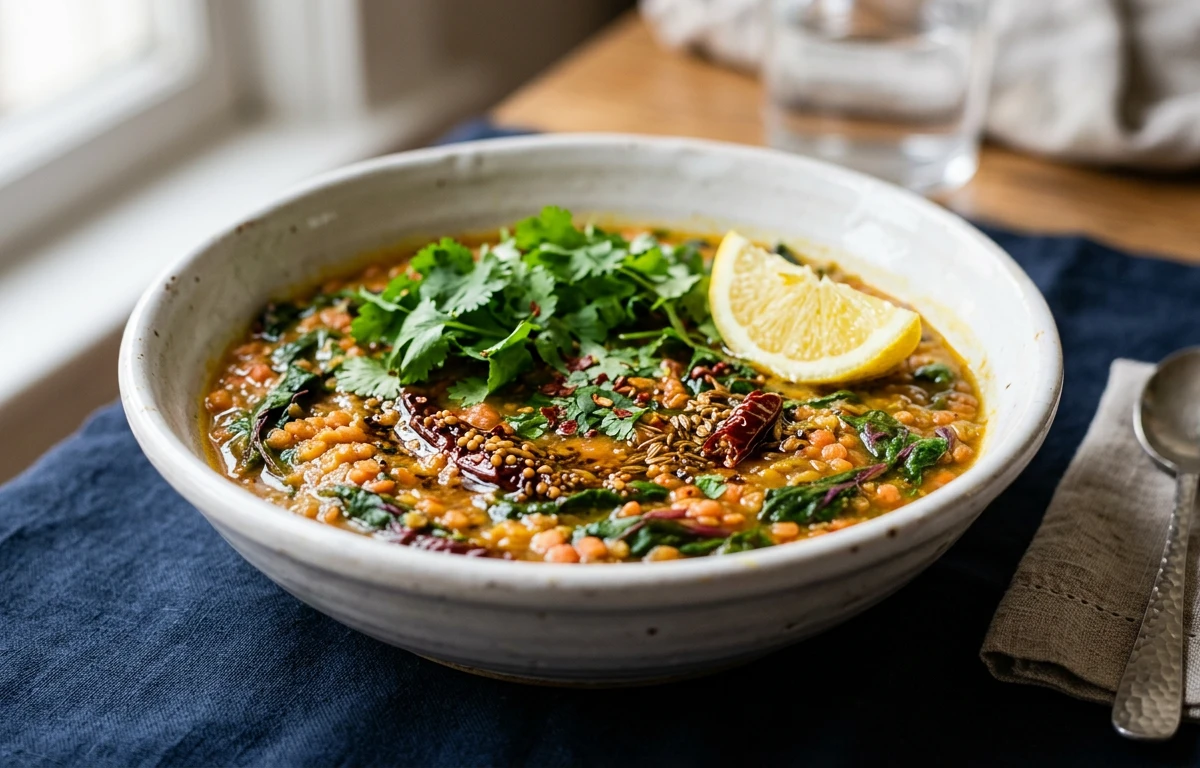
Amaranth and Red Lentil Dal
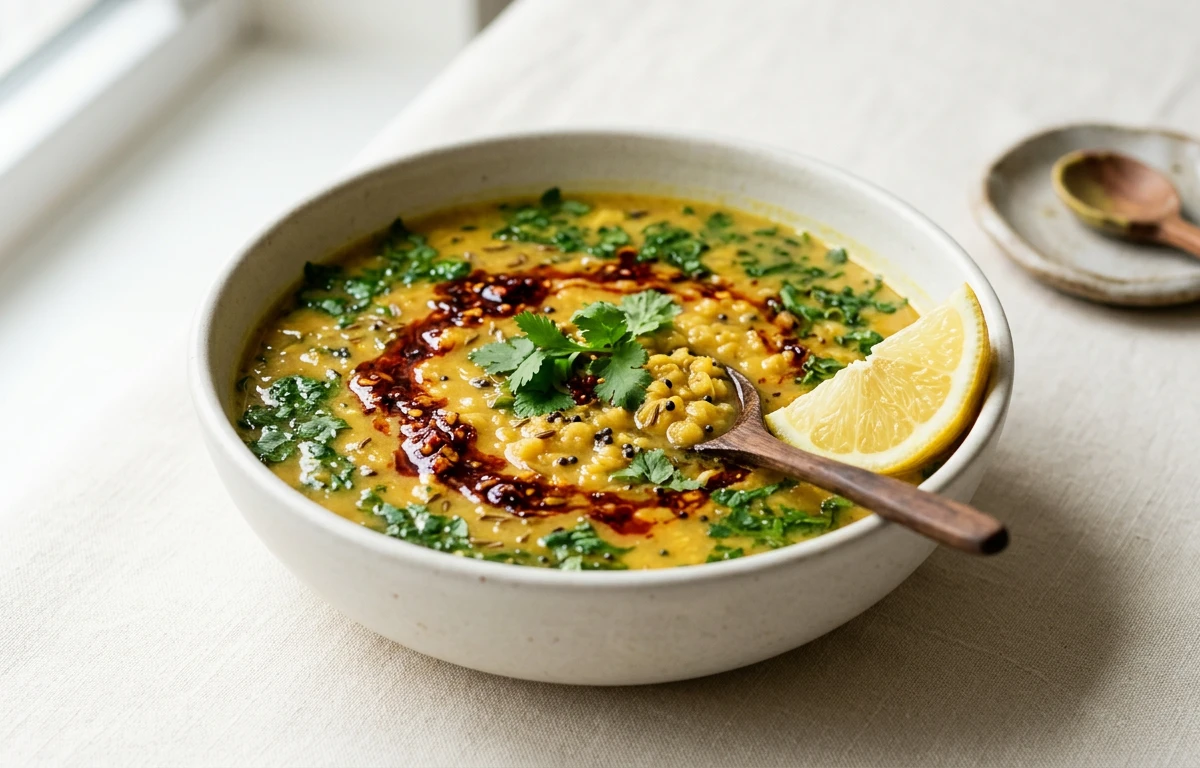
A humble yet deeply nourishing dal that brings together fluffy amaranth and quick-cooking red lentils. The grains swell softly in the spiced lentil base, absorbing the warmth of cumin, turmeric, and ginger. Finished with a crackling ghee tempering of garlic and dried red chili, it's comforting spoon food that's ready in under 30 minutes.
For 4 servings
- prep
Rinse the lentils and amaranth.
Wash the red lentils and amaranth seeds separately in water until the water runs clear. Drain well and set aside.
- pressure cook · ~10 min
Pressure cook the lentils.
1.Place rinsed lentils in the pressure cooker with 3 cups of water and turmeric powder.2.Close the lid and pressure cook on medium heat for 2 whistles.3.Let the pressure release naturally. Open the lid and mash the lentils lightly with a spoon. - simmer · ~15 min
Add amaranth and cook until tender.
1.Pour the mashed lentils into a heavy-bottomed pot.2.Add 1.5 cups of water and the rinsed amaranth. Stir well.3.Add the chopped tomato, red chili powder, and salt.4.Bring to a gentle simmer and cook uncovered for 12 to 15 minutes until the amaranth is soft and translucent. Stir occasionally to prevent sticking.TIPAmaranth releases a starch that thickens the dal naturally. Add a splash more water if it becomes too thick for your liking. - temper · ~2 min
Make the tempering.
1.Heat ghee in a small pan over medium heat.2.Add cumin seeds and let them crackle for 20 seconds.3.Add sliced garlic and sauté until lightly golden (30 to 40 seconds).4.Drop in the broken dried red chilies and chopped ginger. Sauté for another 20 seconds until fragrant. - mix · ~1 min
Pour the tempering over the dal and mix.
Immediately pour the sizzling tempering over the cooked amaranth dal. Stir well to incorporate all the flavors. Simmer for 1 more minute.
- garnish
Garnish with coriander leaves and serve hot.
What to keep in mind.
6 tips from the recipe — small details that make a real difference to the final dish.
- 1Rinse the amaranth seeds thoroughly to remove any natural bitterness before cooking.
- 2Cook the dal uncovered while simmering the amaranth to prevent it from foaming over.
- 3Let the pressure release naturally from the cooker for creamier, better-textured lentils.
- 4Add a splash of warm water if the dal thickens too much after standing before serving.
- 5For a deeper tempering, let the garlic turn deep golden but not burnt for max aroma.
- 6This dal thickens as it cools; store with an extra splash of water for reheating.
Adapt it for your goals.
Vegan
Replace ghee with coconut oil or a neutral oil for the tempering to keep the dish fully plant-based while still getting the crackling cumin and garlic.
low oilLow-oil
Skip the tempering entirely and stir in a pinch of asafoetida (hing) and cumin powder directly into the cooked dal for a lighter, oil-free version.
extra veggieExtra-veggie
Stir in a handful of chopped spinach or Swiss chard in the last 5 minutes of simmering for added color, iron, and a mild earthy flavor.
gluten freeGluten-free
This recipe is naturally gluten-free; just confirm your cumin seeds and red chili powder are from a trusted gluten-free source.
Why this is on our healthy list.
Excellent Plant-Based Protein
The combination of red lentils and amaranth provides a complete protein profile with all essential amino acids, perfect for vegetarian and vegan meals.
Rich in Dietary Fiber
Both amaranth and red lentils are high in soluble and insoluble fiber, supporting healthy digestion and sustained energy release.
Packed with Iron
Red lentils and amaranth are good sources of non-heme iron; the vitamin C from the tomato helps enhance absorption.
Naturally Gluten-Free
All ingredients in this dal are naturally free from gluten, making it a safe and nourishing option for those with celiac disease or gluten sensitivity.
Frequently asked questions
Yes, simmer the red lentils in 4 cups of water for 20-25 minutes until soft, then add amaranth and extra water as directed.