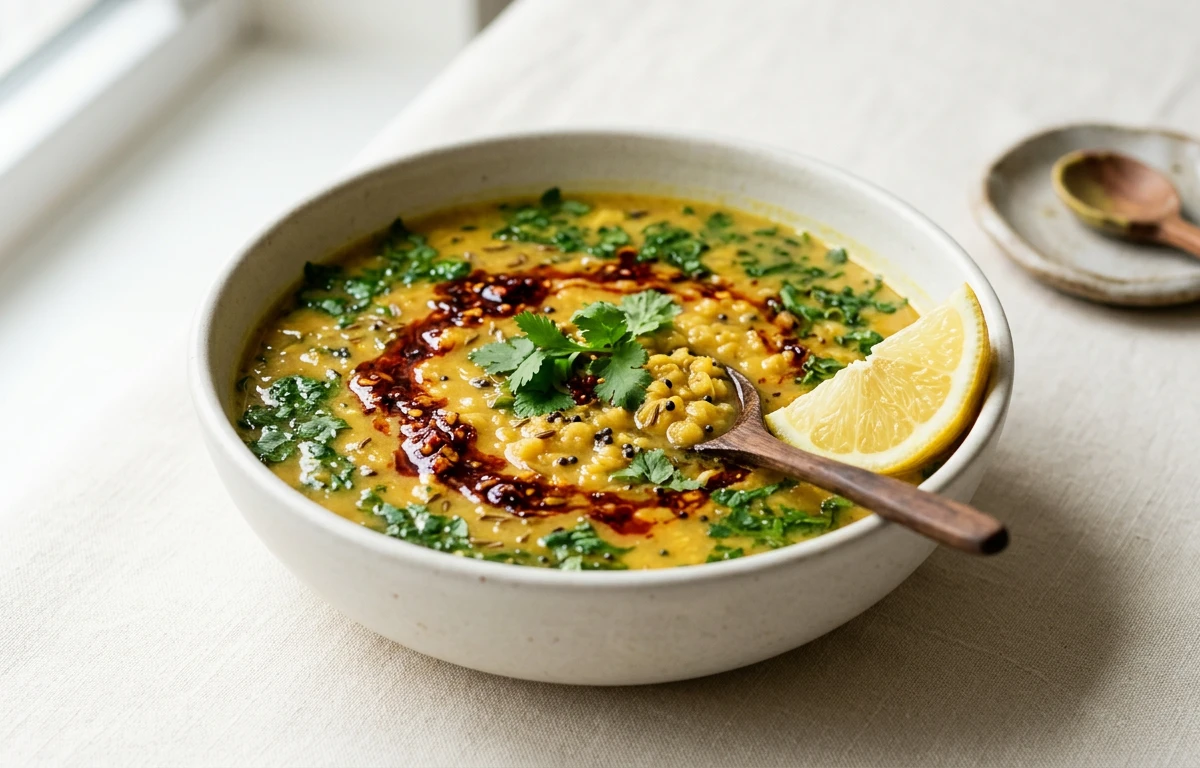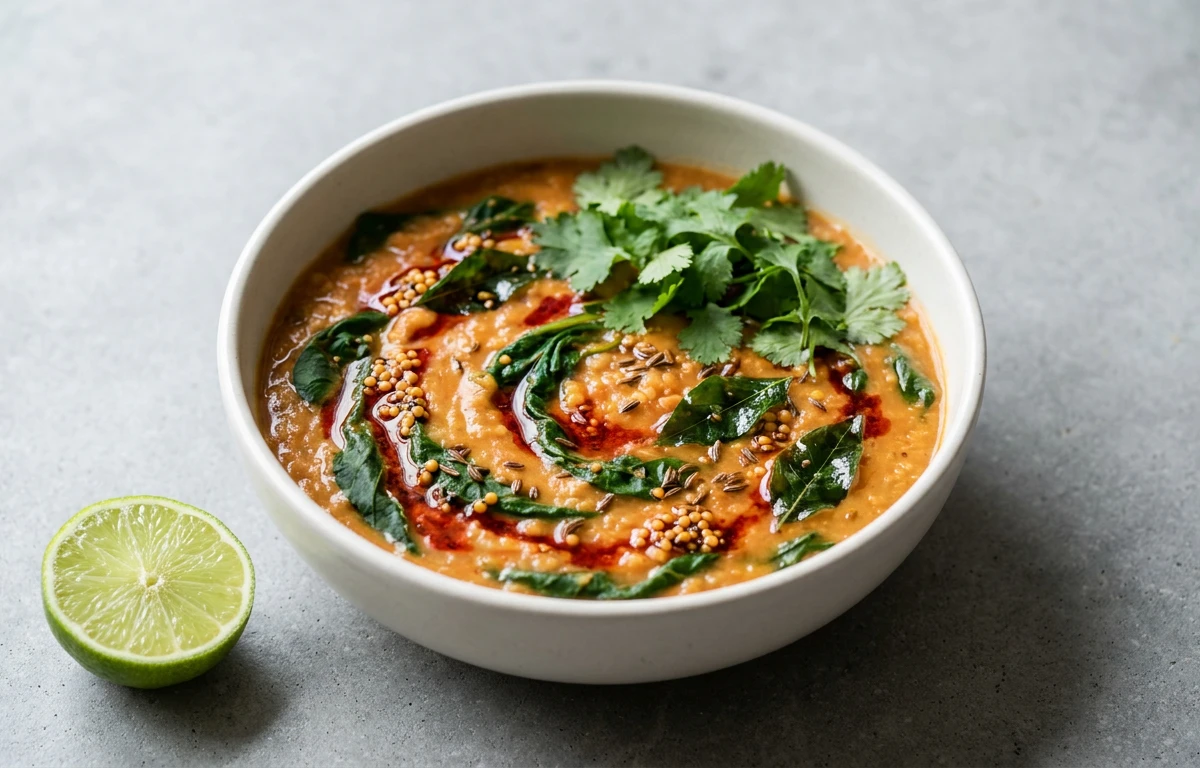
Amaranth & Red Lentil Dal
A comforting, protein-packed dal where nutty amaranth seeds meet creamy red lentils. Slow-simmered with gentle spices and finished with a crackling cumin-garlic tempering, this one-pot meal is earthy, satisfying, and ready in under 30 minutes.
For 4 servings
- prep · ~15 min
Soak and rinse the amaranth and lentils.
1.Soak amaranth seeds in water for 15 minutes, then drain.2.Rinse red lentils in cold water 2-3 times until water runs clear. - pressure cook · ~10 min
Pressure cook the amaranth-lentil mix.
1.Add drained amaranth and rinsed lentils to the pressure cooker.2.Pour in 2.5 cups water and add turmeric powder and salt.3.Close the lid and pressure cook on medium heat for 2 whistles.4.Let the pressure release naturally, then open and whisk lightly.TIPWhisking the dal after cooking gives it a creamier texture. - temper · ~8 min
Make the tempering.
1.Heat ghee in a small tadka pan over medium heat until shimmering.2.Add cumin seeds and let them crackle for 20 seconds.3.Add chopped garlic and dried red chilies, sauté until garlic is golden (30-40 seconds).4.Add chopped onion and slit green chilies, cook until onions turn translucent (3-4 minutes).5.Add chopped tomatoes, red chili powder, and garam masala.6.Cook until tomatoes soften and ghee separates at the edges (3-4 minutes).TIPDon't rush the onions — letting them soften fully builds a sweeter, deeper flavor. - simmer · ~5 min
Combine and simmer the dal.
1.Pour the tempering into the cooked dal and stir well to combine.2.Let it simmer on low heat for 5 minutes to blend the flavors.3.If too thick, add a splash of hot water to reach desired consistency. - garnish
Finish and serve hot.
Squeeze lemon juice over the dal and garnish with chopped coriander leaves. Serve hot with steamed rice or roti.
What to keep in mind.
6 tips from the recipe — small details that make a real difference to the final dish.
- 1Soak the amaranth seeds for a full 15 minutes to soften their outer hull for even cooking.
- 2Whisk the dal vigorously after pressure cooking to break down the amaranth and lentils for a creamier texture.
- 3Cook the onions in the tempering until they turn translucent and slightly golden to build a sweet, deep flavor base.
- 4Let the dal simmer for 5 minutes after adding the tempering so the spices meld into the lentils and amaranth.
- 5Add a splash of hot water if the dal thickens too much after resting — it loosens without diluting flavor.
- 6This dal thickens as it cools; if making ahead, reserve extra water to adjust consistency when reheating.
Adapt it for your goals.
Vegan
Replace ghee with coconut oil or any neutral vegetable oil in the tempering — the cumin-garlic flavor remains robust, making this fully plant-based without losing the aromatic punch.
Low SpiceLow-Spice
Skip the dried red chilies and green chilies, and reduce red chili powder to a bare pinch — ideal for sensitive palates or kids while keeping the earthy dal essence intact.
High Protein BoostHigh-Protein Boost
Add 1/4 cup of split pigeon peas (toor dal) or moong dal along with the red lentils — they cook similarly under pressure and increase the protein density without altering the flavor profile.
Grain Free / Keto FriendlyGrain-Free / Keto-Friendly
Replace amaranth with an extra 1/4 cup of red lentils or cooked cauliflower rice stirred in after pressure cooking — reduces carbs while preserving the dal's comforting, saucy texture.
Why this is on our healthy list.
Rich in Plant Protein
Red lentils and amaranth together provide a complete amino acid profile, making this dal an excellent protein source for vegetarian and vegan diets.
High in Dietary Fiber
Amaranth seeds and red lentils are both packed with soluble and insoluble fiber, supporting healthy digestion and promoting satiety.
Good Source of Iron
Red lentils contribute a significant amount of non-heme iron, which is better absorbed when paired with the vitamin C from lemon juice and tomatoes in this recipe.
Naturally Gluten-Free
Both amaranth and red lentils are gluten-free grains and legumes, making this dal suitable for those with celiac disease or gluten sensitivity.
Frequently asked questions
Yes — simmer the soaked amaranth and rinsed lentils in a pot with 3 cups of water for 25-30 minutes, stirring occasionally, until soft and creamy.