
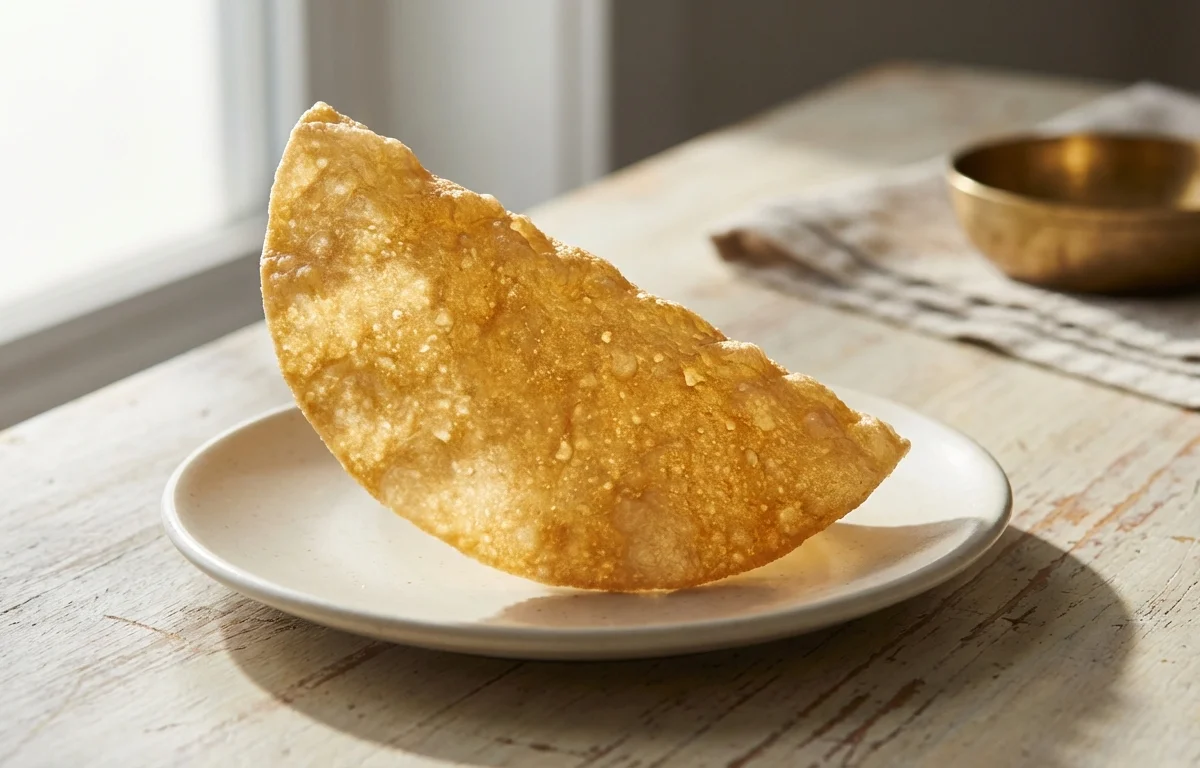
Appadam
Thin, crisp South Indian lentil wafers that puff quickly when fried and bring a salty, peppery crunch to the meal. Serve them alongside rice, dal, or curry for an easy traditional accompaniment.
For 8 servings
- prep · ~240 min
Soak the urad dal.
Rinse the urad dal well and soak it in plenty of water for 4 hours. Drain completely before grinding.
TIPDrain the dal well so the dough stays firm and easy to shape. - mix · ~7 min
Grind the dal into a thick paste.
Grind the soaked urad dal to a very smooth, thick paste without adding excess water. The paste should feel dense, not pourable.
- boil · ~7 min
Cook the dal paste lightly.
1.Transfer the dal paste to a heavy pan over low heat.2.Add cumin seeds, crushed black pepper, asafoetida, and salt.3.Stir continuously until the mixture thickens into a soft dough and leaves the sides of the pan.TIPKeep the heat low and stir constantly so the mixture does not catch at the bottom. - rest · ~10 min
Cool the dough slightly.
Take the pan off the heat and let the dough cool until it is warm enough to handle comfortably.
- knead · ~4 min
Knead the dough smooth.
Grease your palms with a little oil and knead the warm dough for 3 to 4 minutes until smooth and pliable. Divide it into 8 equal balls.
- assemble · ~10 min
Roll the appadams.
1.Grease the rolling surface lightly with oil.2.Place one dough ball at a time and roll it as thin as possible into a small disc.3.Repeat with the remaining dough balls and keep the discs covered with a cloth so they do not dry out too fast.TIPThin rolling gives the best puff and crisp texture. - fry · ~5 min
Deep fry the appadams.
1.Heat the oil for deep frying in a kadai over medium heat.2.Slide in one rolled disc at a time.3.Press gently with a slotted spoon as it puffs, then flip and fry for a few seconds more.4.Remove as soon as crisp and lightly golden.TIPDo not overcrowd the pan; frying one at a time helps them puff evenly. - serve · ~1 min
Serve the appadams.
Drain the fried appadams briefly and serve hot or at room temperature with rice, dal, sambar, or curd rice.
What to keep in mind.
8 tips from the recipe — small details that make a real difference to the final dish.
- 1Drain the soaked urad dal very thoroughly before grinding, or the paste will turn loose and the discs will be harder to roll thin.
- 2Cook the ground dal on low heat until it clearly leaves the sides of the pan; undercooked dough tends to absorb more oil while frying.
- 3Knead the dough while still warm, not cold, so it becomes smooth and stretches without cracking.
- 4Roll each disc as thin and even as possible, especially at the center, for the best puff and shatter-crisp texture.
- 5Keep rolled appadams covered with a cloth so the surface does not dry and split before frying.
- 6Fry one at a time in medium-hot oil and press gently with a slotted spoon to encourage full puffing.
- 7Remove them as soon as lightly golden; darker frying can make the pepper and asafoetida taste harsh.
- 8Once cooled, store in an airtight container lined with paper to help preserve their crispness for a day or two.
Adapt it for your goals.
Sun-dried
Roll the discs and dry them completely in the sun before storing; fry later for a more traditional make-ahead pantry version.
spicierSpicier
Increase the crushed black pepper slightly for a sharper, more assertive heat that pairs especially well with curd rice and dal.
jeera forwardJeera-forward
Add a little extra cumin for a warmer, earthier aroma if you want the appadams to stand out beside mild rice dishes.
air friedAir-fried
Brush lightly with oil and air-fry instead of deep frying for a lighter version, though the puff may be less dramatic.
Why this is on our healthy list.
Lentil-Based Protein
Urad dal brings plant protein and makes this accompaniment more nourishing than a purely starch-based crisp.
Digestive Spice Support
Cumin and asafoetida are traditional spices often used in South Indian cooking to add aroma and make legume dishes feel lighter.
Small Portion Crunch
Because appadam is served as a crisp side, a little can add texture and satisfaction alongside rice, dal, or sambar.
Frequently asked questions
They are usually either rolled too thick, the oil is not hot enough, or the dal dough was too wet from excess grinding water.


