
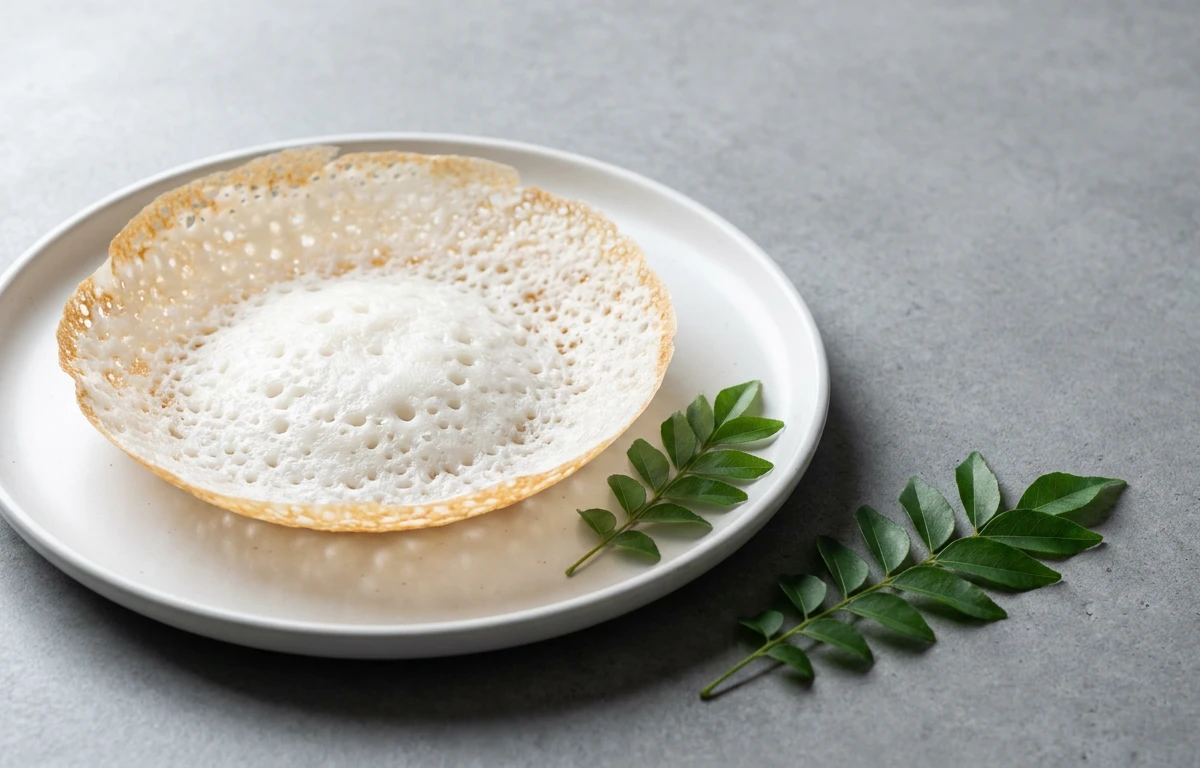
Appam
Soft, fluffy fermented rice pancakes with a delicate lacy edge and a pillowy centre. A Kerala classic that's naturally gluten-free, with a subtle tang from the fermented coconut-rice batter. Perfect for soaking up vegetable stew or coconut milk.
For 4 servings
- prep
Soak the rice.
Wash the rice thoroughly in 2-3 changes of water. Soak in enough water to cover for at least 4 hours or overnight for best results. Drain before grinding.
TIPParboiled rice gives the best lacy texture; raw rice yields softer appams. - mix
Grind the batter.
1.Add the soaked and drained rice to a blender along with the grated coconut and cooked rice.2.Add about ½ cup of water and grind to a smooth, fine paste.3.Add the remaining water little by little until the batter reaches a pouring consistency like thin pancake batter.4.The batter should coat the back of a spoon lightly but not be too thick or too thin.TIPUse warm water if the weather is cold — it helps kickstart fermentation. - mix
Stir in salt and sugar, then ferment.
Pour the batter into a large bowl. Add the salt and sugar, and whisk well with your hand to incorporate air — this helps fermentation. Cover loosely and leave in a warm place for 8 to 12 hours or overnight until the batter has risen and smells pleasantly sour.
TIPThe batter should double in volume and look frothy on top. If your kitchen is cold, place the bowl inside a turned-off oven with just the pilot light on. - prep
Adjust the batter consistency.
Gently stir the fermented batter without deflating it too much. Check the consistency — it should be thinner than dosa batter but thicker than crepe batter. Add 1-2 tablespoons of water if needed. Taste and adjust salt if required.
- fry · ~3 min
Heat the appam pan and swirl the batter.
1.Place the appam pan over medium heat. Once hot, grease lightly with a few drops of oil using a paper towel or onion half.2.Pour a ladleful of batter (about ¼ cup) into the centre of the hot pan.3.Immediately lift the pan off the heat, hold it by both handles, and swirl in a circular motion so the batter coats the sides thinly and pools at the centre.4.Cover with a lid and cook on medium-low heat for 2-3 minutes.TIPThe first appam is often a test; don't worry if it sticks. Wipe the pan with an oiled cloth and try again. - fry · ~2 min
Cook until the edges are golden and crisp.
Check after 2 minutes. The edges should be golden, lacy, and curling away from the pan while the centre remains soft and spongy. Do not flip the appam. The steam trapped under the lid will cook the centre through.
TIPKeep the heat on medium-low — high heat burns the lace edges before the centre is cooked. - serve
Gently lift out the appam and repeat.
Use a thin, flat spatula to loosen the edges and slide the appam onto a plate. Stack cooked appams in a covered casserole or on a plate under a clean kitchen towel to keep them soft. Repeat with the remaining batter, greasing the pan lightly between each appam.
TIPServe appams immediately while warm — they lose their lacy crispness as they sit.
What to keep in mind.
7 tips from the recipe — small details that make a real difference to the final dish.
- 1Use parboiled rice for the best lacy texture; raw rice makes softer, less defined edges.
- 2Ferment the batter in a warm spot (80-85°F) until it doubles in volume and smells tangy, usually 8-12 hours.
- 3Swirl the batter immediately after pouring while the pan is off the heat to coat the sides thinly.
- 4Cook on medium-low heat so the lacy edges crisp without burning before the centre sets.
- 5Don't flip the appam; steam trapped under the lid cooks the spongy centre perfectly.
- 6Stack cooked appams under a clean kitchen towel to keep them soft and pliable until serving.
- 7Wipe the pan with an oiled cloth between each appam for an even, non-stick surface.
Adapt it for your goals.
Sweet appam
Add 2-3 tbsp jaggery or brown sugar to the batter before fermenting for a mildly sweet version, often served with coconut milk or ripe banana.
egg appamEgg appam
Drop a whole egg into the centre of the appam as it cooks, then cover and steam until the egg is set — a popular street-food twist.
whole grain appamWhole-grain appam
Replace 1/4 cup of the raw rice with soaked brown rice or millet; the texture will be slightly denser but more fibrous and nutty.
Why this is on our healthy list.
Gluten-Free Base
Made entirely from rice and coconut, this dish is naturally free from gluten, making it suitable for celiacs or those with gluten sensitivity.
Good Source of Healthy Fats
Fresh coconut provides medium-chain triglycerides (MCTs), which are a quick source of energy and support satiety.
Low in Added Sugar
With only 1 teaspoon of sugar in the entire batch, appam is a low-sugar fermented food that relies on natural fermentation for its subtle sweetness.
Probiotic Potential
The overnight fermentation encourages beneficial lactic acid bacteria, which can support gut health when consumed fresh.
Frequently asked questions
The batter was likely too thick or you didn't swirl it immediately after pouring. Thin the batter to a pouring consistency and swirl off heat for thin edges.



.webp)

.webp)