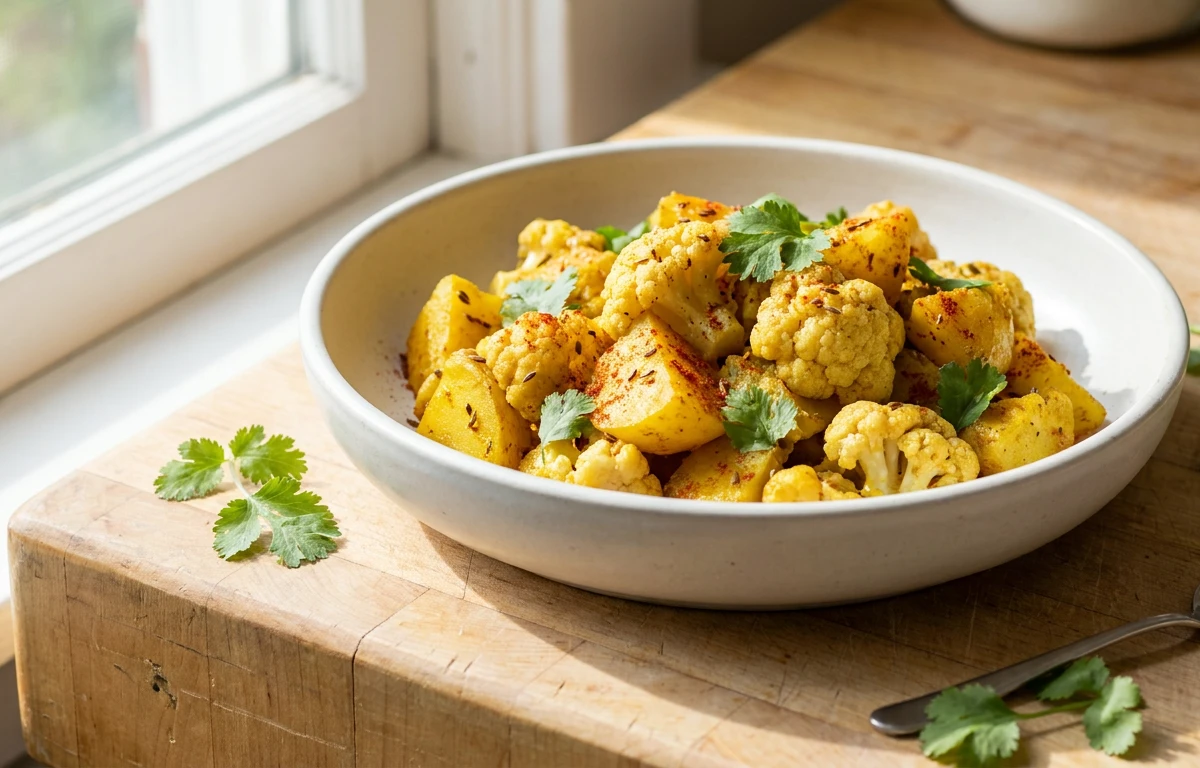
Authentic Aloo Gobi
A classic North Indian dry curry where tender potatoes and cauliflower florets are slow-cooked with onions, tomatoes, and aromatic spices. The vegetables soak up the earthy warmth of turmeric, cumin, and fresh ginger, turning beautifully golden. A staple home-cooked comfort dish that pairs perfectly with hot rotis and a dollop of yogurt.
For 4 servings
- prep
Prep the vegetables.
1.Peel potatoes and cut into 1-inch cubes.2.Separate cauliflower into medium florets, about the same size as the potato cubes.3.Finely chop the onions, tomatoes, mince garlic, and grate ginger.TIPCut potatoes and cauliflower to similar sizes so they cook evenly. - temper · ~1 min
Temper the whole spices.
1.Heat oil in a kadai or heavy-bottom pan over medium heat.2.Once the oil shimmers, add cumin seeds and let them crackle for 30 seconds until fragrant. - saute · ~11 min
Sauté the aromatics.
1.Add chopped onions to the crackling cumin and sauté until light golden, about 5 to 7 minutes.2.Stir in the grated ginger, minced garlic, and slit green chilies. Sauté for another minute until the raw smell disappears.3.Add chopped tomatoes, turmeric powder, red chili powder, and coriander powder. Cook until the tomatoes soften and the oil starts to separate, about 3 to 4 minutes.TIPThe onion-tomato masala should turn into a thick paste. Don't rush this step. - saute · ~20 min
Cook the potatoes and cauliflower.
1.Add the cubed potatoes and cauliflower florets to the pan.2.Sprinkle salt and mix gently so the masala coats all the vegetables evenly.3.Cover the pan with a lid and cook on low heat for 15 to 20 minutes, stirring occasionally.TIPResist the urge to add water. The vegetables release their own moisture on low heat. Adding water will make the dish mushy. - simmer · ~2 min
Finish the dish.
1.Remove the lid and check if potatoes and cauliflower are fork-tender.2.Increase heat to medium and sauté uncovered for 2 minutes to evaporate any excess moisture.3.Sprinkle garam masala and amchur powder on top. Gently mix to combine.TIPAmchur gives the dish its signature subtle tang. If you don't have it, add a squeeze of lemon juice at the very end. - garnish
Garnish with fresh coriander leaves and serve hot.
What to keep in mind.
7 tips from the recipe — small details that make a real difference to the final dish.
- 1Use waxy potatoes like Yukon Gold; they hold their shape better during slow cooking.
- 2Do not overcrowd the pan — cook the potato and cauliflower in a single layer for even browning.
- 3To test doneness, pierce a potato cube with a knife; it should offer slight resistance but slide in easily.
- 4For deeper flavor, let the onion-tomato masala cook until the oil visibly separates from the mixture.
- 5Avoid stirring too vigorously once the vegetables are added; use a gentle fold to keep florets intact.
- 6Leftover aloo gobi can be refrigerated for up to 3 days and tastes even better the next day as flavors meld.
- 7If reheating, use a dry pan or microwave instead of adding water to preserve the dry-curry texture.
Adapt it for your goals.
Kebab-or-snake
Add 1/2 cup of boiled chickpeas along with the vegetables for extra protein and a nutty texture.
low oilLow-oil
Use a non-stick pan and reduce oil to 1 tablespoon; cook with a splash of water when needed to prevent sticking, cutting fat without sacrificing taste.
jainJain
Skip the garlic and onion; instead, add asafoetida (hing) with the cumin seeds and increase ginger to 2 inches for a sattvic twist.
veganVegan
This recipe is already vegan — simply ensure you use a plant-based oil and serve without yogurt on the side.
Why this is on our healthy list.
Rich in Vitamin C
Cauliflower is an excellent source of vitamin C, supporting immune function and skin health.
High in Dietary Fiber
Both potatoes and cauliflower provide fiber, promoting digestive regularity and a feeling of fullness.
Anti-Inflammatory Spices
Turmeric and ginger contain curcumin and gingerol, compounds known for their anti-inflammatory properties.
Low in Saturated Fat
This dish uses minimal oil and no dairy, making it a heart-friendly option with very little saturated fat.
Frequently asked questions
Mushiness usually comes from adding water or overcooking. Use low heat and rely on the vegetables' own moisture — check doneness at the 15-minute mark.



.webp)