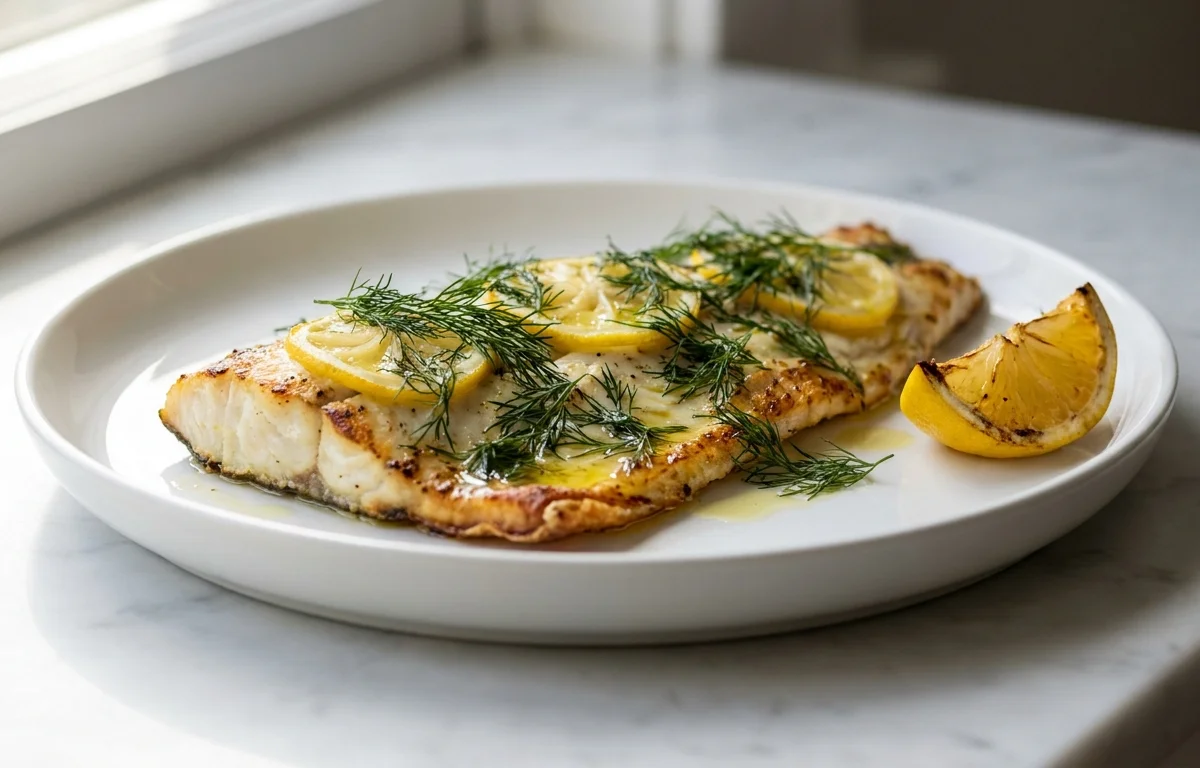
Baked Halibut with Lemon and Dill
Tender, flaky halibut fillets baked until just opaque, finished with a bright squeeze of lemon and fresh dill. A light, elegant dish that comes together in under 30 minutes — perfect for a weeknight dinner that feels special.
For 4 servings
- prep · ~5 min
Preheat the oven and prepare the baking dish.
1.Preheat oven to 400°F (200°C).2.Brush a 9x13-inch baking dish with a thin layer of olive oil.3.Pat the halibut fillets completely dry with paper towels. - mix · ~2 min
Make the lemon-dill butter sauce.
1.In a small bowl, combine melted butter, lemon zest, lemon juice, minced garlic, and chopped dill.2.Season the mixture with a pinch of black pepper and stir until well blended. - prep · ~3 min
Season the halibut and arrange in the dish.
1.Place the halibut fillets in the prepared baking dish in a single layer.2.Sprinkle both sides evenly with 0.25 tsp salt.3.Spoon the lemon-dill butter mixture evenly over the top of each fillet.4.Tuck the lemon slices around the fish. - bake · ~15 min
Bake until the halibut is just opaque and flakes easily.
1.Cover the dish loosely with aluminum foil.2.Bake for 12–15 minutes, or until the internal temperature of the thickest part reaches 130°F (54°C).3.The fish should look opaque and flake gently when tested with a fork.TIPHalibut dries out quickly — pull it at 130°F and let the carryover heat finish the cooking. - rest · ~2 min
Rest the fish briefly.
Remove the dish from the oven and let the halibut rest, covered, for 2 minutes. The internal temperature will rise to 135°F (57°C).
TIPThis short rest keeps the juices locked in. - serve
Serve the baked halibut.
Transfer the fillets to plates, spoon any pan juices over the top, and garnish with extra fresh dill and a generous squeeze of fresh lemon.
What to keep in mind.
5 tips from the recipe — small details that make a real difference to the final dish.
- 1Pat the halibut fillets completely dry to ensure even browning and prevent steaming.
- 2Check doneness at 12 minutes — halibut overcooks quickly and becomes dry.
- 3Use a digital thermometer to confirm 130°F at the thickest part for perfect flakiness.
- 4Let the fish rest covered for 2 minutes after baking; carryover heat raises it to 135°F.
- 5If your halibut fillets are thinner than 1 inch, reduce baking time by 2–3 minutes.
Adapt it for your goals.
Herb swap
Replace fresh dill with an equal amount of fresh parsley, tarragon, or chives — each herb brings a different aromatic profile while keeping the dish light and elegant.
dairy freeDairy-free
Substitute the melted butter with 2 tablespoons of extra-virgin olive oil or ghee (for lactose-intolerant cooks) — the dish remains rich and flaky.
citrus twistCitrus twist
Use one lemon and one orange (zest and juice) for a slightly sweeter, more complex citrus note that pairs beautifully with the dill.
cajun spicedCajun-spiced
Add 1/2 teaspoon smoked paprika and 1/4 teaspoon cayenne to the butter sauce for a warm, smoky kick that complements the mild halibut.
Why this is on our healthy list.
Lean Protein Powerhouse
Halibut is a lean, high-quality protein source that supports muscle maintenance and satiety without excess saturated fat.
Rich in Omega-3s
Halibut contains heart-supportive omega-3 fatty acids that may help reduce inflammation and support brain health.
Low in Carbohydrates
This dish contains no added carbs, making it suitable for low-carb, keto, or diabetic-friendly meal plans.
Good Source of Selenium
Halibut is naturally rich in selenium, an antioxidant mineral important for thyroid function and immune health.
Fresh Herbs for Antioxidants
Fresh dill and garlic provide antioxidant and antimicrobial compounds that support overall wellness.
Frequently asked questions
Yes, but thaw it completely in the refrigerator overnight and pat it very dry before baking, or excess moisture will make the fish steam.