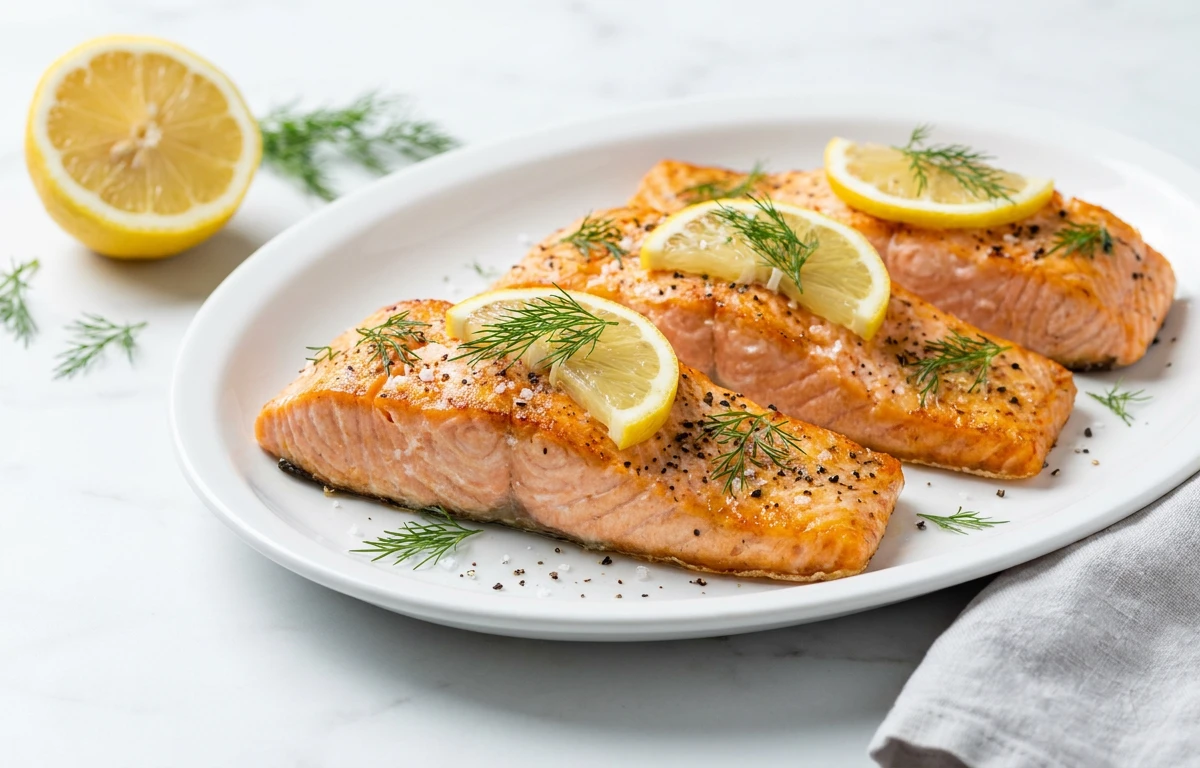
Baked Lemon Dill Salmon
Tender, flaky salmon fillets baked with bright lemon, fresh dill, and a touch of garlic. This light, elegant dish comes together in under 30 minutes and pairs beautifully with steamed vegetables or a simple salad.
For 4 servings
- prep
Preheat oven and prepare the baking dish.
Preheat the oven to 375°F. Lightly grease a baking dish with a drizzle of olive oil or line with parchment paper.
- prep
Pat the salmon dry and place in the dish.
Pat the salmon fillets thoroughly dry with paper towels. Place them skin-side down in the prepared baking dish, leaving a little space between each fillet.
TIPRemoving excess moisture helps the olive oil and seasonings adhere better and promotes even baking. - mix
Make the lemon dill seasoning.
In a small bowl, stir together the olive oil, lemon juice, lemon zest, minced garlic, chopped dill, salt, and black pepper until well combined.
- assemble
Coat the salmon with the lemon dill mixture.
Spoon or brush the lemon dill mixture evenly over the top and sides of each salmon fillet. Lay a few lemon slices over and around the salmon.
- bake · ~18 min
Bake the salmon until just cooked through.
Bake uncovered for 15 to 18 minutes, until the salmon flakes easily with a fork and reaches an internal temperature of 130-135°F for medium doneness.
TIPThe salmon will continue cooking for a minute or two after you pull it from the oven. Pull it at 130°F for perfectly moist, flaky fish. - rest · ~3 min
Rest the salmon briefly before serving.
Remove the baking dish from the oven and let the salmon rest for 3 minutes. The residual heat will gently finish cooking the fillets.
- garnish
Garnish with fresh dill and serve.
Scatter a pinch of fresh chopped dill over the top and serve immediately with the baked lemon slices from the dish.
What to keep in mind.
5 tips from the recipe — small details that make a real difference to the final dish.
- 1Remove pin bones with tweezers for a guaranteed smooth bite every time.
- 2Pat salmon extremely dry before seasoning to ensure the oil and spices stick and form a light crust.
- 3Use a fish spatula to lift fillets from the baking dish without breaking the delicate flakes.
- 4Let salmon rest 3 minutes after baking so juices redistribute and the fish stays moist.
- 5If your salmon is thinner than 6 oz, check doneness at 12 minutes to avoid overcooking.
Adapt it for your goals.
Low-oil
Reduce olive oil to 1 tablespoon and rely on lemon juice and a splash of white wine to keep salmon moist. Ideal for lighter cooking or low-fat diets.
high proteinHigh-protein
Add a sprinkle of hemp seeds or slivered almonds on top before baking for extra protein and a subtle nutty crunch.
jainJain
Skip the garlic and swap for a pinch of asafoetida (hing). Use a Jain-friendly oil and serve with rice or steamed vegetables. This keeps the dish compliant with Jain dietary practices.
veganVegan
Substitute salmon with large portobello mushroom caps or firm tofu slices. Use a little more olive oil and bake until tender. Fresh dill and lemon still shine as the flavor heroes.
Why this is on our healthy list.
Rich in Omega-3 Fatty Acids
Salmon is a top source of long-chain omega-3s (EPA and DHA), which support heart health, reduce inflammation, and benefit brain function.
Good Source of Lean Protein
Each 6 oz fillet provides around 34 grams of high-quality protein to help maintain muscle and keep you full and satisfied.
Vitamin D Boost
Wild-caught salmon is naturally rich in vitamin D, which is essential for bone health and immune function.
Antioxidants from Lemon and Dill
Lemon provides vitamin C, while dill contains flavonoids. Together they help combat oxidative stress and support your body's natural defenses.
Frequently asked questions
Use an instant-read thermometer inserted into the thickest part of the fillet. Pull it at 130°F for medium doneness; it will rise to about 135°F as it rests. The fish should flake easily with a fork.