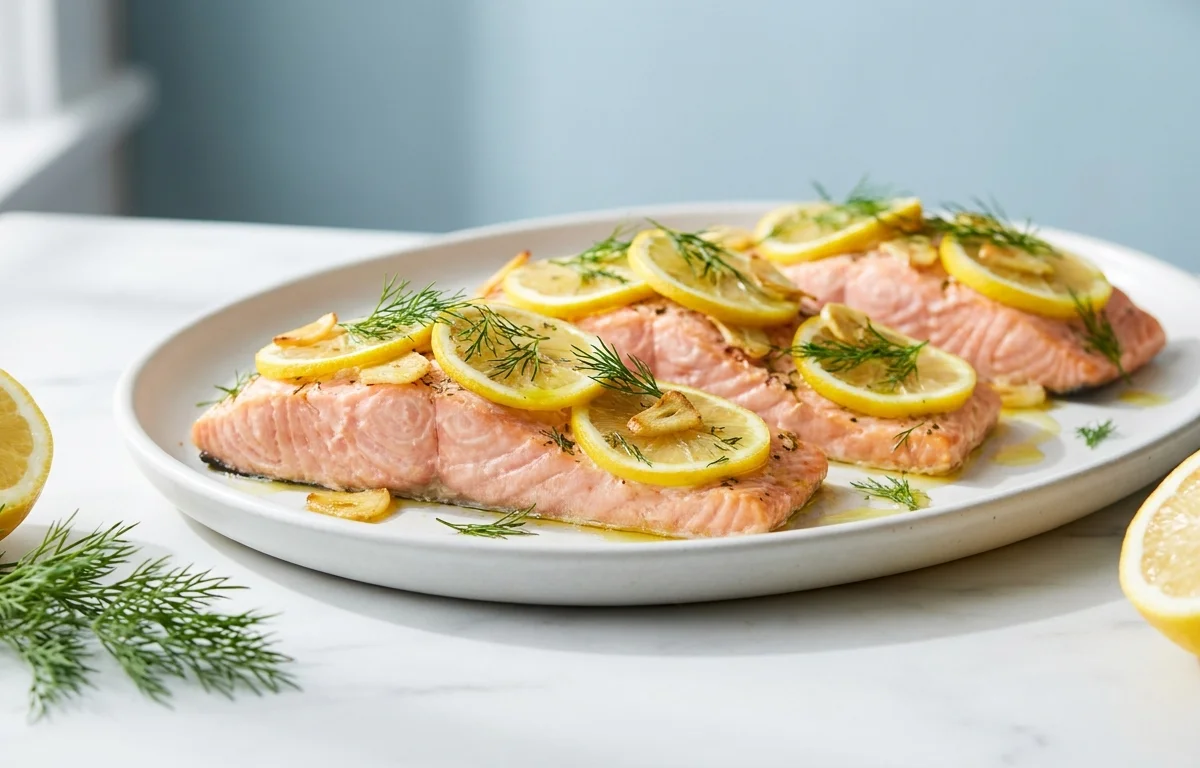
Baked Salmon with Lemon and Dill
Flaky, tender salmon fillets baked until just opaque and brightened with fresh lemon and fragrant dill. This quick, healthy weeknight dinner comes together in 25 minutes with minimal prep.
For 4 servings
- prep
Preheat the oven and prepare the baking sheet.
Preheat the oven to 400°F (200°C). Line a baking sheet with parchment paper or aluminum foil for easy cleanup.
- prep
Season the salmon fillets.
1.Pat each salmon fillet dry with paper towels.2.Place fillets skin-side down on the prepared baking sheet.3.Drizzle evenly with olive oil and lemon juice.4.Sprinkle minced garlic, half the chopped dill, salt, and pepper over the fillets.5.Arrange lemon slices on top of each fillet.TIPPatting the salmon dry helps the seasoning stick and promotes better browning. - bake · ~14 min
Bake the salmon until flaky.
Bake at 400°F for 12 to 15 minutes, until the salmon is opaque and flakes easily with a fork. The internal temperature should reach 145°F in the thickest part.
TIPStart checking at 12 minutes to avoid overcooking. Salmon continues cooking from residual heat after you pull it. - garnish
Garnish with fresh dill and serve.
Transfer the fillets to serving plates, sprinkle with the remaining fresh dill, and serve warm.
What to keep in mind.
6 tips from the recipe — small details that make a real difference to the final dish.
- 1Pat the salmon dry with paper towels before seasoning to ensure the oil and spices stick and the fish browns evenly in the oven.
- 2Use a fish spatula or thin metal turner to lift the baked salmon off the parchment — the skin may stick and tear if you use a wide spatula.
- 3For the most reliable doneness, insert an instant-read thermometer into the thickest part; pull the fish at 135°F (it will carry over to 145°F as it rests).
- 4If using frozen salmon, thaw it overnight in the fridge and pat thoroughly dry — excess moisture will steam the fillets instead of baking them.
- 5Line the baking sheet with parchment paper rather than foil to prevent the lemon acid from reacting with the metal and leaving a metallic taste.
- 6To make ahead, season the fillets up to 2 hours in advance and keep them covered in the fridge; bake just before serving.
Adapt it for your goals.
Herb-swap
Replace dill with fresh parsley, chives, or tarragon for a different herb profile — parsley gives a clean, grassy note, tarragon adds a mild anise flavor that pairs beautifully with salmon.
low oilLow-oil
Reduce olive oil to 1 tablespoon and add a splash of white wine or vegetable broth to the pan for a lighter, steam-baked effect that still keeps the fish moist.
spicySpicy
Add 1/2 teaspoon of smoked paprika and a pinch of cayenne pepper along with the garlic for a smoky, mildly spicy kick that complements the lemon and dill.
honey garlicHoney-garlic
Drizzle 1 tablespoon of honey over the fillets before baking for a sweet glaze that caramelizes slightly, balancing the tart lemon and savory garlic.
dairy freeDairy-free
This recipe is naturally dairy-free as written, but if you want a creamy element without dairy, serve with a dollop of cashew cream or avocado-lime sauce on the side.
Why this is on our healthy list.
Rich in Omega-3s
Salmon is one of the best natural sources of long-chain omega-3 fatty acids (EPA and DHA), which support heart health, reduce inflammation, and aid brain function.
High-Quality Protein
A single fillet provides about 35-40 grams of complete protein, containing all essential amino acids needed for muscle repair and satiety.
Low in Saturated Fat
This dish uses only 2 tablespoons of olive oil, keeping saturated fat low while the heart-healthy monounsaturated fats from the oil and the fish support overall wellness.
Packed with Vitamin D
Wild salmon is one of the few food sources rich in vitamin D, essential for bone health and immune function; even farmed salmon offers a substantial amount.
Antioxidant from Garlic and Dill
Fresh garlic and dill contribute allicin and flavonoids that have antioxidant and anti-inflammatory properties, adding a nutritional boost to the meal.
Low-Carb Friendly
With zero carbohydrates, this salmon dish is ideal for low-carb, keto, or diabetic-friendly diets, especially when paired with non-starchy vegetables.
Frequently asked questions
Insert a thin knife or fork into the thickest part of the fillet and twist gently — the flesh should flake easily and appear opaque all the way through, but still be moist and not dry or stringy.